

Arugam Bay is a surf town on Sri Lanka’s east coast, famous for its long right-hand point break that can run for several hundred meters on a good swell. The main season runs from May to October, when offshore winds and steady groundswells create clean, rideable waves from beginner to advanced level.
Arugam Bay draws surfers first, but its calm lagoon, laid-back beach bars, and nearby national parks make it just as good for travelers who don’t surf at all. Outside the main point, smaller breaks around the bay give beginners a gentler place to learn without the crowds. Most guesthouses sit within walking distance of the sand, so getting from bed to break takes just a few minutes.
Arugam Bay: Still Small, Still Wild, Still Worth the Trip
The bay lies in Sri Lanka’s Ampara District, next to the small town of Pottuvil on the island’s eastern coastline, roughly 320 kilometres from Colombo. For decades, this stretch stayed off the radar outside a small circle of traveling surfers, unlike the busier southern coast around Weligama and Hikkaduwa.
That has changed. The Sri Lanka Tourism Development Authority lists the Eastern Province among the country’s fastest-growing coastal regions, and the single main road through the village now fills with guesthouses, cafes and surf shops each season. Even so, there is no strip of high-rises here, no shopping mall, no real nightclub scene, just a handful of streets, a curve of sand, and jungle behind it.
Is Arugam Bay Worth Visiting?
Yes. Arugam Bay is worth visiting for its surf breaks, relaxed beach town feel, and nearby national parks. The east coast location runs opposite to the island’s south and west coasts, so a stop here fills a natural gap in a longer Sri Lanka itinerary.
Best Time to Visit Arugam Bay
The east coast runs on the opposite weather pattern to the south and west. Southern beaches see their driest months from December to March, while the east coast gets its calm, sunny stretch from roughly April through September, thanks to the island’s two monsoon systems.
Dry-season months bring offshore winds, cleaner swells, and long stretches of blue sky. July and August are the busiest, since the swell is most consistent. May, June, and September offer a good middle ground: solid conditions with noticeably fewer people around.

The table below lays out what to expect from the coast across the year.
| Season | Months | Conditions | Best For |
| Dry Season | April – September | Sunny, offshore winds, consistent swell | Surfing, beach days, safaris |
| Peak Season | July – August | Busiest, biggest crowds, reliable waves | Advanced surfers, nightlife |
| Shoulder Season | April, May, September | Good waves, thinner crowds | Budget travel, quieter beaches |
| Wet Season | November – March | Heavy rain, rough seas, many guesthouses closed | Not recommended for surf trips |
According to the Department of Meteorology, Sri Lanka, the northeast monsoon brings most of the island’s rainfall to the east coast between roughly November and February, which is why many surf camps close for the off-season months. Dates shift slightly year to year, so check a current forecast before booking.
What Is the Best Month to Surf Arugam Bay?
The most consistent surf generally runs from June through September, with July and August producing the biggest, most reliable swells. Surfers who prefer fewer people in the water often choose May or late September instead, trading slightly smaller waves for empty lineups.
Things to Do in Arugam Bay
Surfing is the obvious headline, but the area offers plenty for travellers who never plan to paddle out. The lagoon and national parks nearby round out a stay here, especially on days when the wind ruins the surf.
- Kumana National Park safari: A jeep tour through grassland, forest and wetland, with a good chance of spotting elephants, sometimes leopards, and hundreds of bird species.
- Pottuvil Lagoon boat tour: A quieter trip through mangrove channels, home to crocodiles, kingfishers and water monitors.
- Elephant Rock at sunset: A short climb for panoramic coastline views.
- Muhudu Maha Viharaya: An old Buddhist temple near the beach, worth a stop.
- Kudumbigala Forest Monastery: A remote hermitage with a rock climb, usually paired with the Kumana trip.
- Yoga sessions: Several guesthouses run morning classes timed around the surf schedule.
Discover the Best Things to Do in Arugam Bay. Read more in 7 Things to Do in Arugam Bay Before the Monsoon Rolls In.

Arugam Bay Surfing
The wave that put this village on the map is Main Point, a right-hand break that peels for hundreds of metres on a good swell. It sits close to the village centre and is walkable from most guesthouses, part of why the crowd can get thick during peak months.
Surf schools line the main road, offering everything from single lessons to week-long camps with guided sessions at the outer breaks. Qualifying events tied to the World Surf League circuit have run here in past seasons, a fair signal of how consistent and high-quality the swell can be. Board rental is easy to find, though bringing a personal board is common for longer stays.
Surf culture shapes daily life more than in most beach towns. Restaurants time breakfast around the dawn session, and the village quiets down once the onshore wind picks up around midday.
Arugam Bay Surf Spots
Several distinct breaks sit within a short tuk-tuk ride of the village, each suited to a different skill level.
| Surf Spot | Skill Level | Distance | Wave Style |
| Main Point | Intermediate – Advanced | In town | Long right-hand point break |
| Baby Point | Beginner | In town | Soft, short right, sandy bottom |
| Peanut Farm | Beginner – Intermediate | ~20 min south | Mellow inside section, punchier point |
| Elephant Rock | Beginner – Intermediate | ~20 min south | Gentle, forgiving right over sand |
| Whiskey Point | Intermediate | ~10–15 min north | Mellow right-hand point |
| Pottuvil Point | Intermediate – Advanced | ~15–20 min north | Long, powerful right, less crowded |
| Okanda | Advanced | ~40 min south | Remote, heavier waves, few crowds |
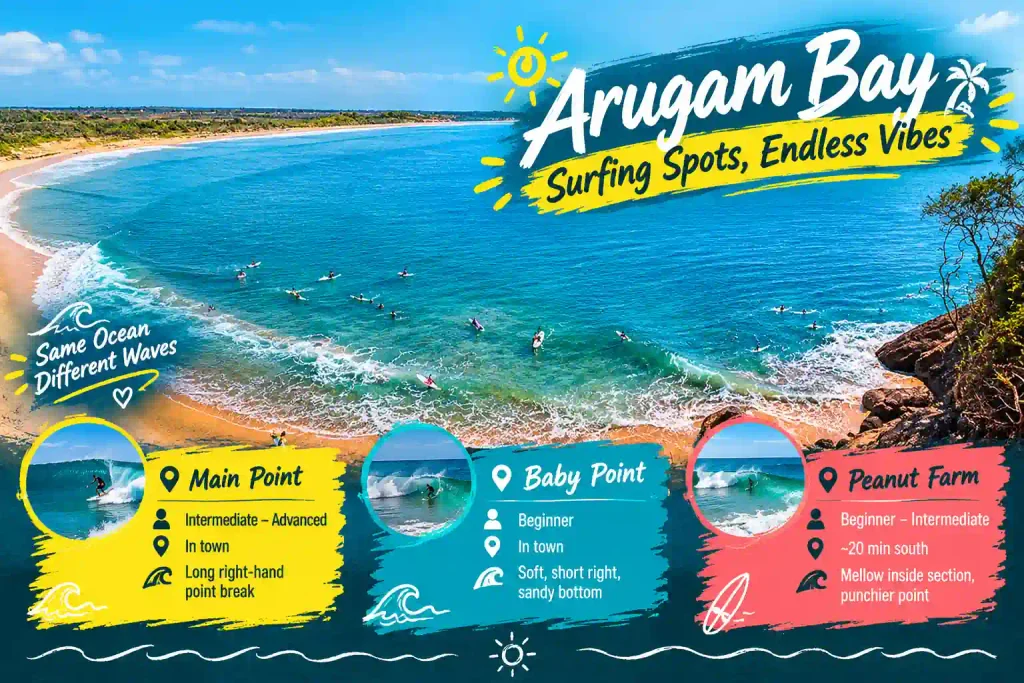
Beginners generally start at Baby Point or the inside section of Peanut Farm, both forgiving and close to shore. Okanda sits near the edge of Kumana National Park, and the drive there crosses genuine elephant territory, so travel in daylight with a local driver.
Arugam Bay Swimming
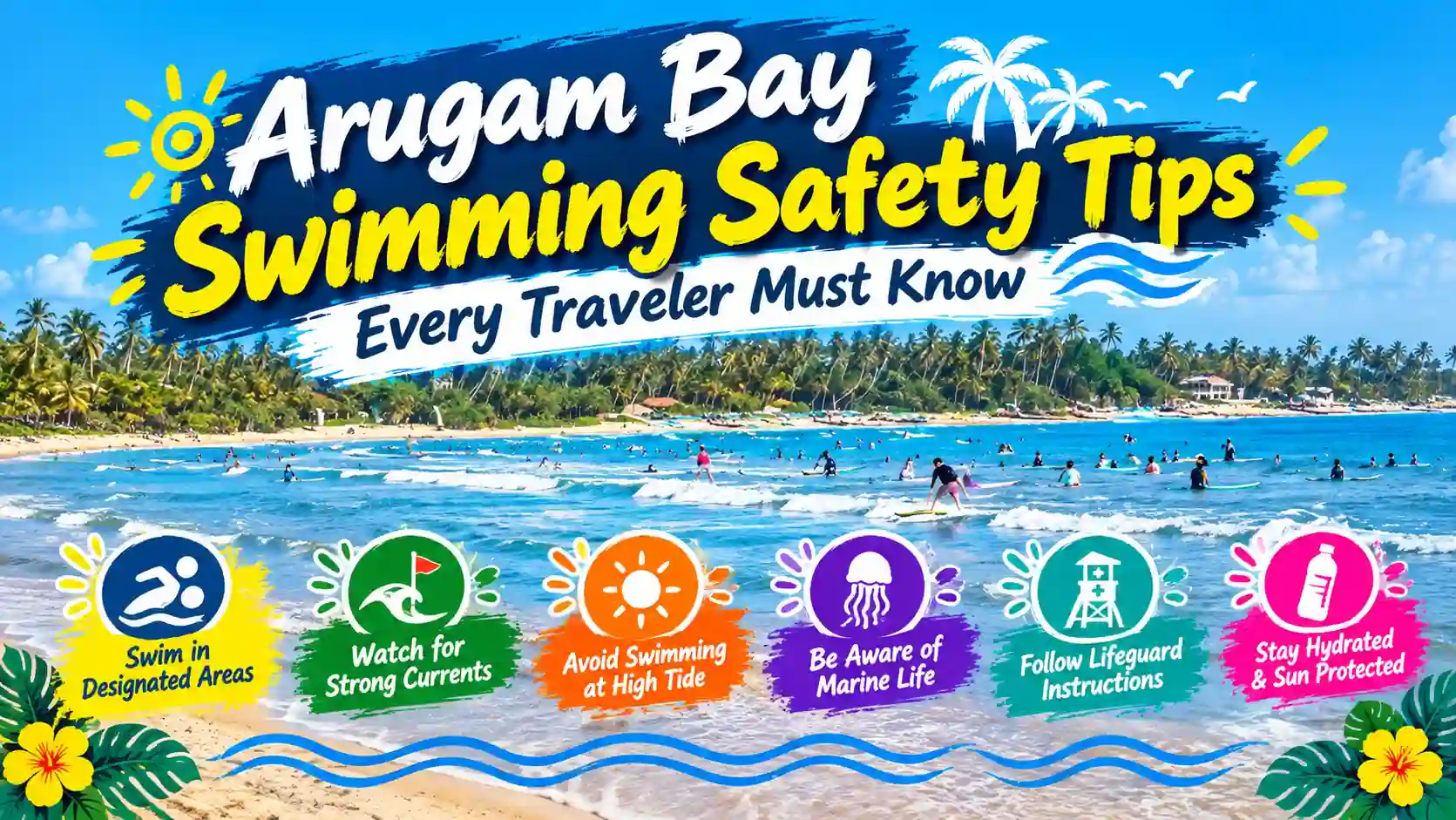
Swimming here differs from swimming in a calm, protected bay. This is primarily a surf coast, and most breaks work over sand or reef with real currents attached, especially near the points.
The stretch of sand near the village centre, away from the surf breaks, is the most practical spot for a casual swim. Mornings tend to be calmer, and it helps to watch the water for a few minutes before wading in, noting where locals and surfers enter. Lateral currents along the points can pull a swimmer sideways, so staying clear of the break matters more than depth.
Families wanting a straightforward swim often prefer a quieter cove further from the main breaks, or save serious swimming for one of Sri Lanka’s protected south-coast bays instead.
Is Arugam Bay Safe for Swimming?
Arugam Bay is generally safe for a casual swim in the central beach area during calm morning conditions, away from the surf breaks. It is not a protected swimming bay, so anyone unsure of local currents should ask at a guesthouse first.
Where to Stay in Arugam Bay
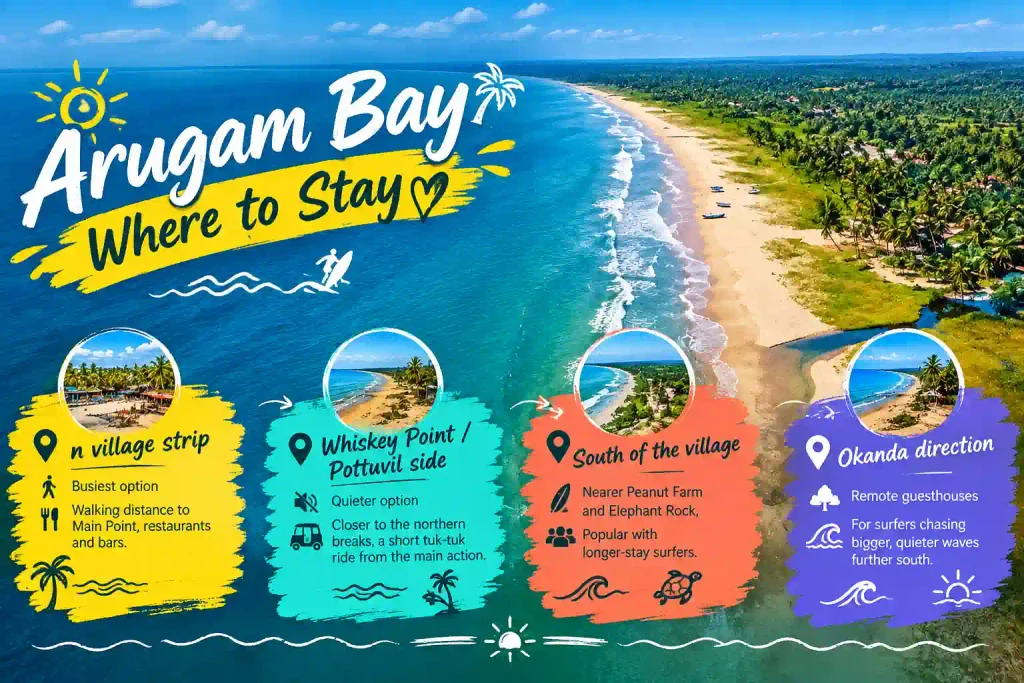
Accommodation clusters into a few distinct pockets, and picking the right one shapes the trip. Staying in the village centre puts guesthouses, restaurants and Main Point within walking distance, which suits first-time visitors without their own transport.
- Main village strip: The busiest option, within walking distance of Main Point, restaurants and bars.
- Whiskey Point / Pottuvil side: Quieter, closer to the northern breaks, a short tuk-tuk ride from the main action.
- South of the village: Nearer Peanut Farm and Elephant Rock, popular with longer-stay surfers.
- Okanda direction: Remote guesthouses aimed at surfers chasing bigger, quieter waves further south.
Booking ahead matters most in July and August, when rooms near Main Point fill fast. Outside the surf season, many smaller guesthouses close entirely, so confirm a property is open before travelling in the wet months.
Arugam Bay Hotels
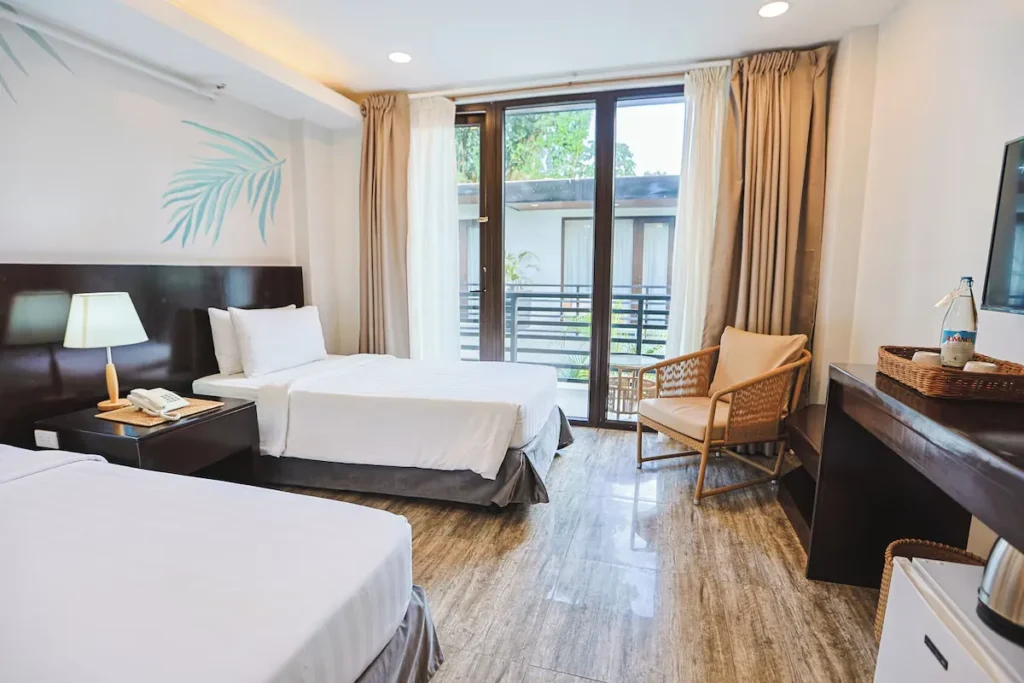
Rooms range from simple fan-cooled guesthouses to a small number of boutique beachfront properties, with very little in between in terms of large chain Arugam bay hotels. Prices shift with the season and can rise sharply during the July and August peak.
| Category | Typical Price (USD/night) | What to Expect |
| Budget guesthouse | $10 – $30 | Fan rooms, shared or basic bathroom, close to the beach |
| Mid-range guesthouse or boutique | $30 – $80 | Air-conditioning, private bathroom, often a restaurant on site |
| Upscale or boutique resort | $80 – $250+ | Sea views, pool, surf packages, higher-end dining |
Prices change often and vary by booking platform, so treat this table as a general guide and check current listings before booking. Many properties also sell surf-and-stay packages that bundle lessons and board rental into the room rate.
Arugam Bay Nightlife
Evenings here stay low-key compared with Sri Lanka’s south coast party towns, and that is largely the point. The scene is built around a handful of beach bars along the main strip rather than clubs.
- Siam View Hotel: A long-running bar known for cold beer, live music and sports screenings, often the social hub of the village.
- Hideaway Hide and Chill Bar: Known for cocktails and a more relaxed lounge setting.
- Beach bonfires: Informal gatherings on the sand after sunset, common on full-moon nights during peak season.
- Mambo’s: One of the longer-running party spots, popular with the surf crowd.
Arugam bay Nightlife activity tracks the surf season closely. Expect several live-music nights each week in July and August, and a much quieter village once the wet season sets in.
How to Get to Arugam Bay
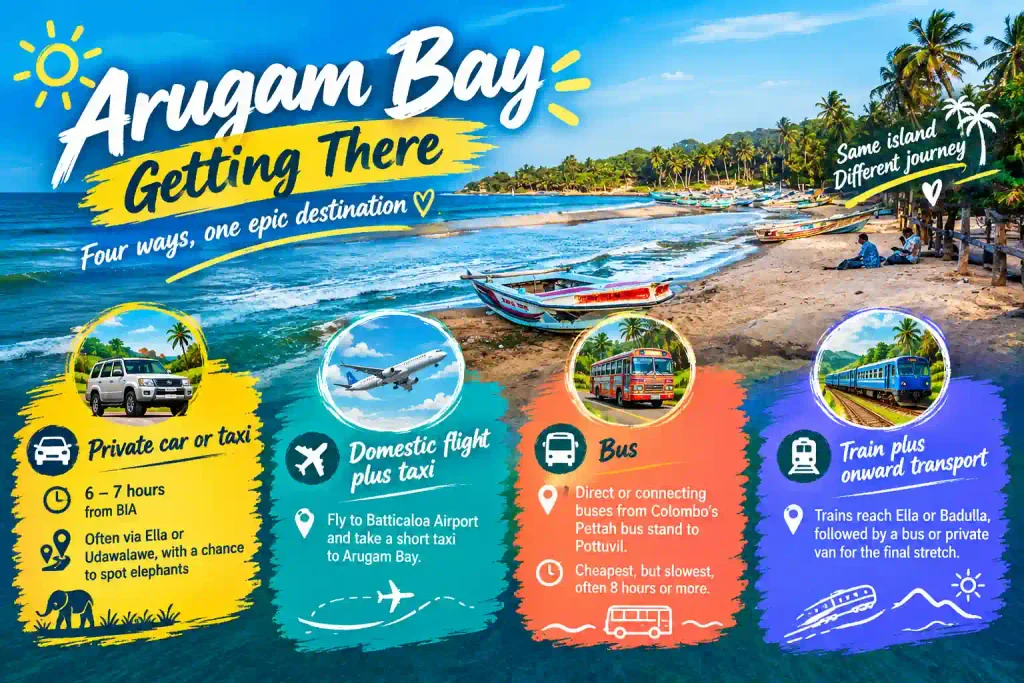
There is no direct flight or motorway link, so getting here takes effort regardless of route. Most journeys start in Colombo, roughly 320 kilometres away by road.
- Private car or taxi: The most comfortable option, around 6 to 7 hours from Bandaranaike International Airport, often via Ella or Udawalawe with a chance of roadside elephant sightings.
- Domestic flight plus taxi: Flying to Batticaloa Airport cuts the road portion down considerably.
- Bus: Direct or connecting buses run from Colombo’s Pettah bus stand to Pottuvil, cheapest but slowest, often 8 hours or more.
- Train plus onward transport: Trains reach Ella or Badulla, followed by a bus or private van for the final stretch.
Wondering How to Reach Arugam Bay? Find Out. Read more in How to Get to Arugam Bay From 4 Different Starting Points.
Most visitors need an Electronic Travel Authorization, issued through the Department of Immigration and Emigration. Requirements have changed more than once recently, including free entry for several nationalities, so confirm current rules on the official portal before departure.
Arugam Bay Itinerary
Four to five nights is a comfortable minimum, enough for a couple of surf sessions, a safari day, and at least one lazy beach day without rushing.
- Day 1: Arrive, settle in, evening walk or a Pottuvil lagoon boat trip at sunset.
- Day 2: Morning surf session at Main Point or a beginner spot, sunset at Elephant Rock.
- Day 3: Full-day Kumana National Park safari, early start for the best wildlife chances.
- Day 4: Explore spots further north or south depending on skill level, evening at a beach bar.
- Day 5: Visit Muhudu Maha Viharaya or Kudumbigala Monastery before departure, or add another surf day.
Travellers on a tighter schedule can compress this into three days by dropping the temple visit or one surf session, though the long travel time in and out makes a very short stopover less worthwhile.
Final Thoughts
Arugam Bay rewards visitors who plan around its seasons rather than fight them. Dry months bring the waves, calm mornings, and the busiest atmosphere, while the wet season quiets things down so much that some guesthouses simply close.
Getting here takes real effort, by long car ride, domestic flight, or a mix of train and bus. Surfing draws most visitors, but the surf spots scattered along the coast, lagoon safaris, and sunset climbs give non-surfers reasons to stay too. Swimming works fine in the calmer central stretch, hotels range from guesthouses to boutique resorts, and nightlife stays small and beach-based. Anyone building a longer Sri Lanka itinerary will find this stretch of coast fills a real gap that the busier south and west cannot.
FAQs About Arugam Bay
What makes Arugam Bay famous?
The village is best known for Main Point, a long right-hand point break considered one of Asia’s top surf waves, along with its laid-back guesthouse culture and nearby national parks.
How many days should I spend in Arugam Bay?
Four to five nights works well for most visitors, allowing time for surfing, a safari day, and one relaxed beach day without a rushed schedule.
Is Arugam Bay good for beginner surfers?
Yes. Spots such as Baby Point, the inside section of Peanut Farm, and Elephant Rock offer gentle, sandy-bottom waves, while Main Point and Pottuvil Point suit more experienced surfers.
Do I need a visa to visit?
Most nationalities need an Electronic Travel Authorization before arrival. Rules have changed recently, so check the official Department of Immigration and Emigration portal for current requirements.
What is the closest airport?
Bandaranaike International Airport near Colombo is the main gateway, roughly 320 kilometres away by road. Batticaloa Airport, served by domestic flights, sits considerably closer.
Is the village crowded during peak season?
July and August bring the biggest crowds, in the water and in the guesthouses. May, June and September offer similar conditions with fewer people.
Are there sharks or dangerous marine life?
Dangerous shark encounters are not a common concern here. The bigger practical risks are sunburn, reef cuts at low tide, and currents near the surf breaks, all manageable with basic precautions.





9 Responses