If you ask most travelers about things to do in Tangalle, they’ll probably mention the beach and move on. That’s a shame. This quiet corner of southern Sri Lanka has been sitting there, turtles nesting on moonlit sand, lagoons ringed with herons, ancient temple carvings cut into rock while the crowds pack into Mirissa and Unawatuna a few kilometers away.
I visited Tangalle for a long weekend and ended up staying nearly a week. That tells you something. The things to do in Tangalle go well beyond lying on a sun lounger, though you’ll absolutely want to do that too. From Rekawa’s famous turtle beach, protected by the Wildlife and Nature Protection Society of Sri Lanka, to the jaw-dropping Mulkirigala rock temple complex built into a 210-meter granite outcrop, this town rewards travelers who slow down and explore.
This guide covers everything. Real places, real prices, and the kind of local detail that doesn’t make it into generic travel lists.
Why Tangalle Should Be on Your Travel List
Tangalle sits about 240 km south of Colombo on the Southern Expressway, making it a roughly 3-hour drive from the capital, or an easy stop between Mirissa and Yala. Unlike its more developed neighbors, the Sri Lanka Tourism Development Authority rates Tangalle as one of the least commercialized beach destinations on the southern coast.
What that means in practice: fewer tour buses, fewer selfie stalls, cheaper guesthouses, and local restaurants that haven’t changed their menus in twenty years. Locals in Tangalle will tell you the town is changing fast, and honestly, they’re right. But for now, it still has that unhurried feeling that’s getting harder to find.
Quick Facts About Tangalle
| Detail | Info |
| Location | Southern Province, Sri Lanka |
| Distance from Colombo | ~240 km (3 hours via Southern Expressway) |
| Nearest airport | Mattala Rajapaksa International (~70 km) |
| Best time to visit | November to April (dry season) |
| Average hotel cost | USD 20–80/night (guesthouse to boutique) |
| Currency | Sri Lankan Rupee (LKR); 1 USD ≈ 320 LKR |
| Language | Sinhala; basic English widely understood |
Wondering what makes Tangalle so special? Read more in Goyambokka Beach Sri Lanka Travel Guide: This Beach Feels Like a Secret.
Relax on the Quiet Beaches of Tangalle
Tangalle isn’t one beach, it’s several, spread along a coastline that shifts in character every kilometer or two. The main beach near the town center has a calm, sheltered bay that’s great for swimming. Palm Bay Beach, a couple of kilometers east, is narrower but has brilliant white sand and almost no development. Medaketiya Beach, just north of the main bay, is where most guesthouses cluster and where the surf gets a bit livelier.
I spent a morning walking from Medaketiya down to Palm Bay and back, maybe four kilometers total, and passed maybe fifteen other people. The water was clear enough to see the bottom. It honestly felt like those pictures you see online and then assume have been heavily edited. They haven’t, at least not in Tangalle.
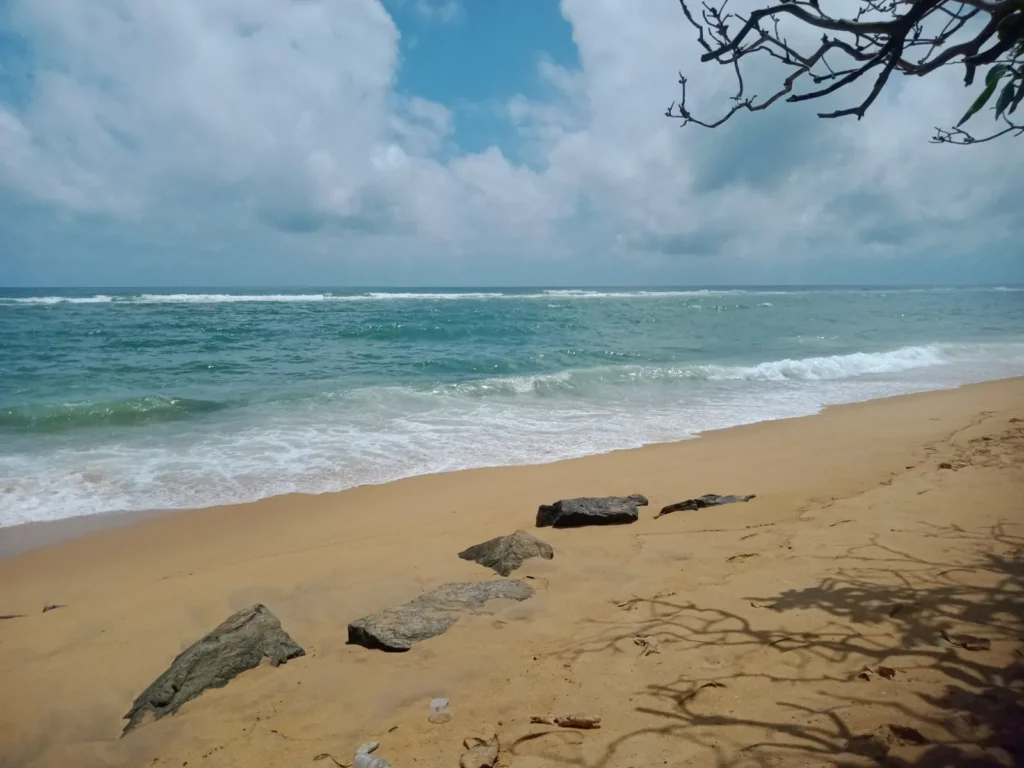
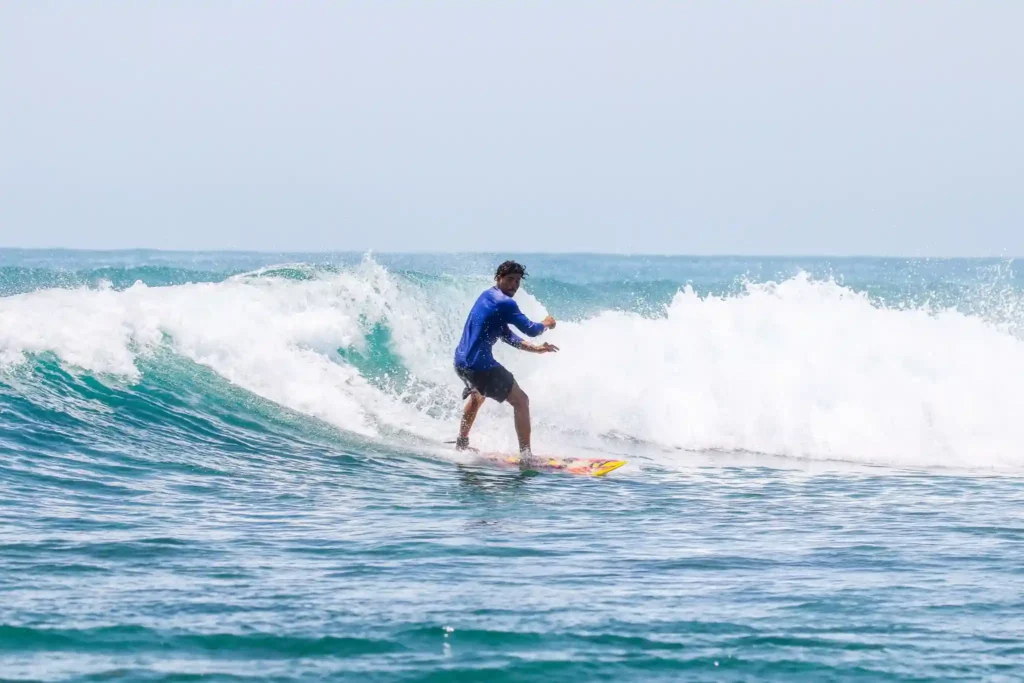
According to the Sri Lanka Surfing Association, the reefs around Tangalle produce consistent swells between November and March that work for intermediate surfers. Outside those months, the water is remarkably calm, which is great for families and swimmers.
Visit the Famous Rekawa Turtle Beach
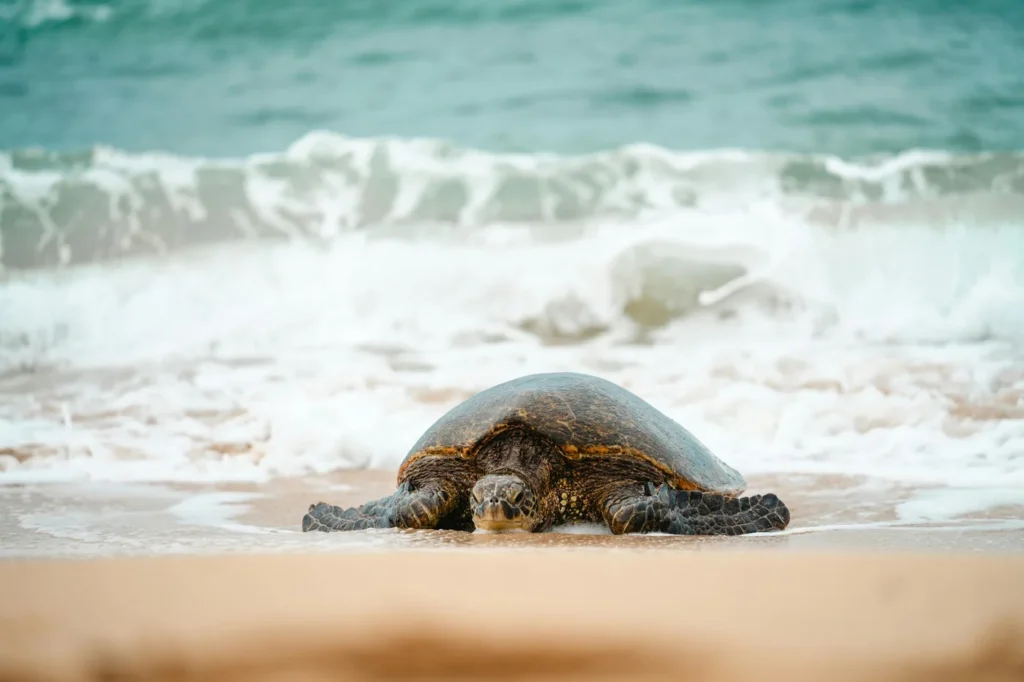
This is the one experience that will absolutely stick with you. Rekawa Beach, about 12 km east of Tangalle town, is one of the most important turtle nesting sites in Asia. Five species nest here: the green turtle, leatherback, hawksbill, olive ridley, and loggerhead, all listed under the IUCN Red List as threatened or endangered.
The Turtle Conservation Project (TCP) at Rekawa has been operating since 1995 and trains local villagers as conservation monitors rather than egg collectors, which was the previous norm. Joining a night watch session costs around LKR 2,500 per person (roughly USD 8), and every rupee goes directly to the TCP and its local staff. It’s one of the more direct forms of community-based ecotourism I’ve come across anywhere.
What is Rekawa Turtle Beach, and how do I visit?
Rekawa is a protected nesting beach 12 km east of Tangalle town. Managed by the Turtle Conservation Project since 1995, guided night-watch sessions cost ~LKR 2,500. Visits run after dark, typically between 8 PM and midnight, when nesting activity is highest. Booking through local guesthouses is recommended during peak season (November to March).
Bring a red-light torch, wear dark clothing, and follow the guides’ instructions. Watching a 200-kg leatherback make its way back to the ocean is an experience that’s genuinely hard to put into words.
Explore the Peaceful Tangalle Lagoon
The Tangalle Lagoon sits just behind the main beach, separated from the ocean by a narrow strip of land. The change in atmosphere from saltwater beach to calm lagoon is striking. The water is shallow and warm, ringed with mangroves and overhanging palms, and at certain hours the surface is so still it looks like a mirror.
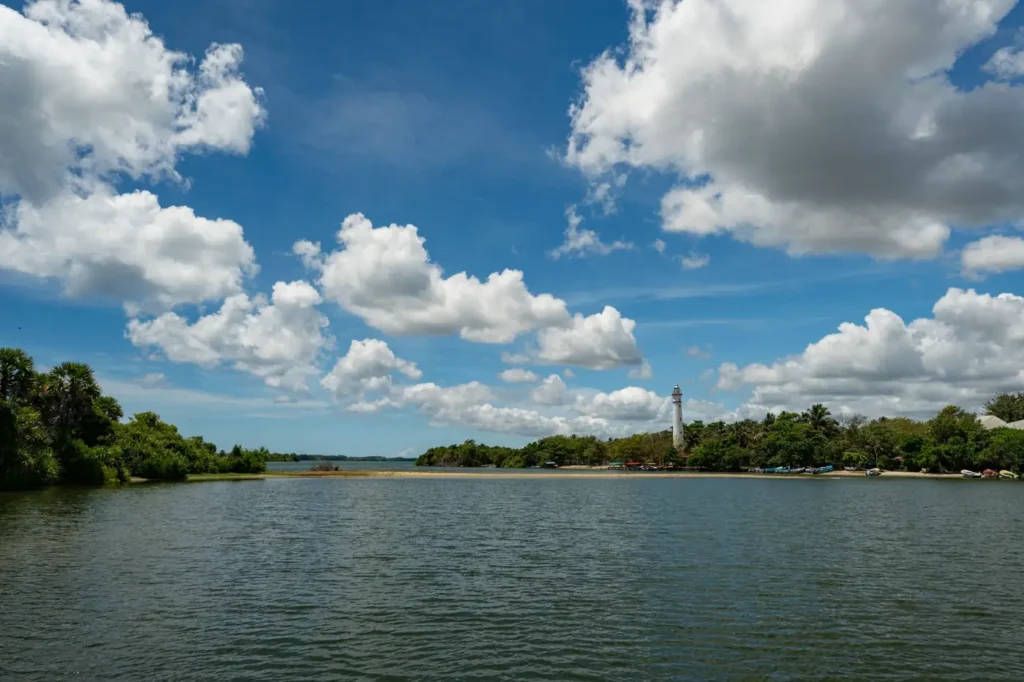
You can hire a small wooden boat from the lagoon’s edge for around LKR 1,500 to LKR 2,000 for a 45-minute paddle. Locals say the dawn hours between 6 and 8 AM are when the birdlife is most active, cormorants, kingfishers, painted storks, and occasionally a sea eagle gliding overhead. The Department of Wildlife Conservation, Sri Lanka, has documented over 60 bird species in and around the lagoon.
What can I do at Tangalle Lagoon?
The Tangalle Lagoon offers boat rides (LKR 1,500–2,000), birdwatching, kayaking, and photography. It is best visited at dawn when bird activity is highest, and the water is glassy. No formal booking is needed; local boatmen are available most mornings near the lagoon entrance off Beach Road.
Things to Do in Tangalle: Activity Overview
| Activity | Location | Approx. Cost | Best Time |
| Rekawa turtle watching | Rekawa Beach (12 km east) | LKR 2,500/person | Nov–Mar nights |
| Lagoon boat ride | Tangalle Lagoon | LKR 1,500–2,000 | 6–8 AM |
| Mulkirigala Temple visit | 22 km north of town | LKR 500 entry | Morning |
| Bundala birdwatching | Bundala National Park | USD 15 park entry | Nov–Mar |
| Beach swimming | Palm Bay / Medaketiya | Free | Dry season |
| Local seafood dinner | Tangalle harbor area | LKR 800–2,500 | Evening |
| Snorkeling (reef) | Rock reefs near Palm Bay | LKR 300–500 gear | Dec–Apr |
| Hidden cove hiking | Eastern coastline | Free | Morning |
Take a Day Trip to Mulkirigala Rock Temple
About 22 km north of Tangalle, the Mulkirigala Raja Maha Vihara is one of the most underrated historical sites in Sri Lanka. The complex is built into a series of natural caves and ledges cut into a 210-meter granite monolith, with five separate terrace levels containing ancient cave temples, reclining Buddhas, and murals dating back as far as the 1st century BCE.
According to the Central Cultural Fund of Sri Lanka, Mulkirigala is one of fewer than 30 sites in the country classified as an Ancient Monument under the Antiquities Ordinance, the same protected status as Sigiriya and Dambulla. Yet on the day I visited, I counted fewer than twenty other tourists over three hours.
The climb to the top involves around 533 steps. Wear lightweight clothing and start before 10 AM to beat the midday heat. Entry is LKR 500 for adults (foreigners). The view from the top over the southern plains and jungle is genuinely worth every step.
Is Mulkirigala Temple worth visiting from Tangalle?
Absolutely. Mulkirigala Raja Maha Vihara is a 1st-century BCE rock temple complex 22 km north of Tangalle, featuring 533 steps, five temple terraces, ancient murals, and a summit viewpoint. Entry costs LKR 500 for foreign visitors. The drive from Tangalle takes about 30–40 minutes. Best visited in the morning.
Dreaming of exploring beaches most travelers never find? Read more in Sri Lanka Secret Beaches Guide: 11 Hidden Shores Most Tourists Miss.
Enjoy Fresh Seafood by the Ocean
Tangalle’s fishing harbor is the heart of the town’s food culture. The boats go out at night and come back at dawn, and by 9 AM, the catch is already moving to restaurants. The freshness of the seafood here is on another level compared to tourist-facing places in Mirissa or Hikkaduwa, and the prices reflect that too.
A generous plate of garlic butter prawns at a harbor-side restaurant typically costs between LKR 1,200 and LKR 1,800. Crab curry, the local specialty, runs around LKR 2,000 to LKR 2,500 depending on size. The Roti Shop near the bus stand does a remarkable fish roti for LKR 200 that I kept going back to every morning.
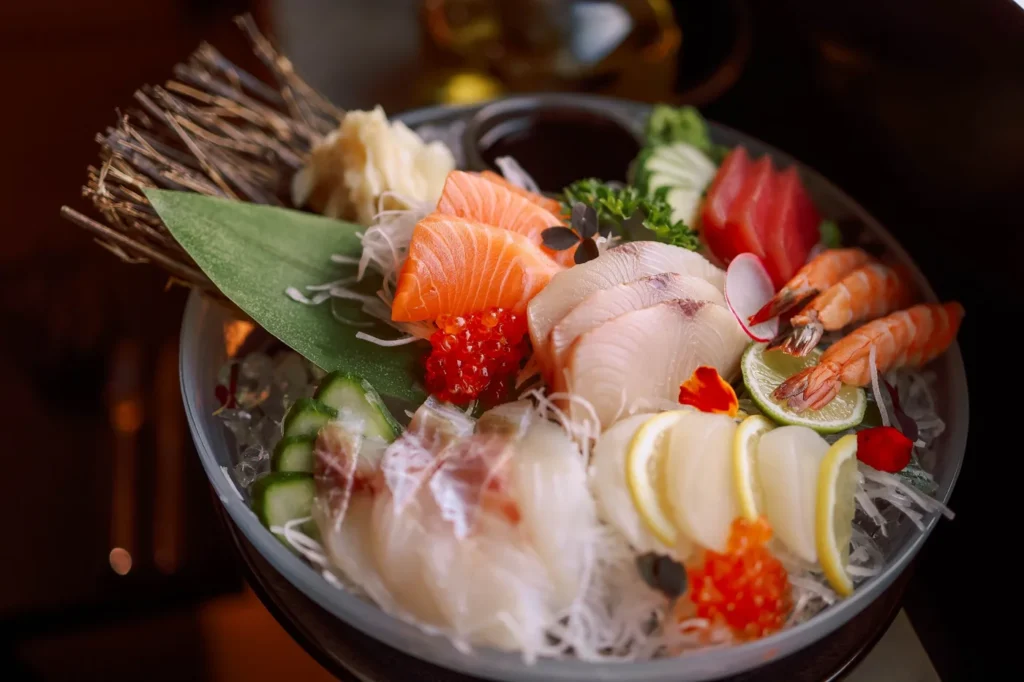
The Sri Lanka Fisheries and Aquatic Resources Ministry confirms that Tangalle is one of the primary artisanal fishing ports on the southern coast, with daily catch volumes that make the fresh-off-the-boat claim genuinely accurate.
Best Seafood Spots in Tangalle
| Restaurant / Spot | Specialty | Approx. Price | Location |
| Sunshine Restaurant | Crab curry, devilled prawns | LKR 1,500–2,500 | Harbour Road |
| Kingfisher Restaurant | Grilled catch of the day | LKR 1,000–1,800 | Main Beach Road |
| Roti Shop (local) | Fish roti, egg hoppers | LKR 150–300 | Near the bus stand |
| Sandy Beach Restaurant | Tuna steak, mixed grill | LKR 1,200–2,200 | Medaketiya Beach |
| Local harbor stalls | Grilled fish, short eats | LKR 100–400 | Fishing harbor |
Walk Through the Local Tangalle Market
The morning market near the bus station is the kind of place you wander into thinking you’ll spend ten minutes and end up staying for an hour. Stalls are piled with jackfruit, king coconuts, dried fish, spices, and produce that looks like it was picked an hour ago. Prices are dramatically lower than anything at tourist shops in bigger towns.
The best time to go is between 6:30 and 9 AM. By mid-morning, the freshest stock is gone. I bought a bag of cinnamon sticks for LKR 150 and a whole pineapple for LKR 80; the same pineapple would cost four times as much at a beach resort kiosk.
What is the best market to visit in Tangalle?
The main morning market near Tangalle bus station operates from around 6 AM daily. It sells fresh produce, spices, dried fish, coconuts, and local snacks at local prices. Most active between 6:30 and 9 AM. No entrance fee. Primarily a local market, with no tourist stalls, which is exactly what makes it worth visiting.
Watch a Magical Sunset Over the Indian Ocean
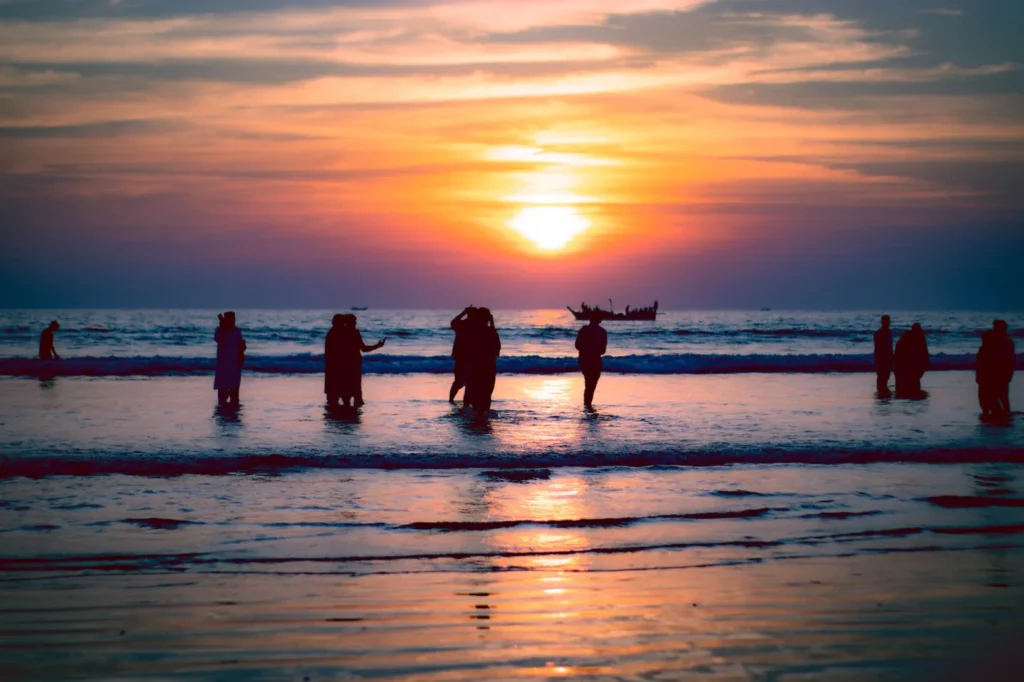
The stretch of coast between Medaketiya Beach and the rocky headland at the eastern end of the main bay gives you a clear, west-facing view over the Indian Ocean. On a clear evening, the sun drops in a long, slow blaze of orange and pink. No paid viewing platforms, no entrance fees, and usually only a handful of other people around.
The headland rocks are the best vantage point, slightly elevated, looking back along the bay with the silhouette of fishing boats and palms in the foreground. I sat up there for nearly an hour one evening with a king coconut from a vendor below and felt like I’d found something most travelers miss entirely.
Where is the best sunset spot in Tangalle?
The rocky headland at the eastern end of Tangalle’s main bay offers an elevated, west-facing view over the Indian Ocean with a clear horizon and fishing boats in the foreground. No entrance fee. Arrive 30 minutes before sunset to find a good spot. Alternatively, rooftops along Medaketiya Beach Road also offer a clear westward view.
Go Birdwatching in Bundala National Park
Bundala National Park sits about 20 km west of Tangalle and is one of Sri Lanka’s most important wetland reserves. Designated a Ramsar Wetland of International Importance in 1990, it covers 6,216 hectares of coastal lagoons, dunes, and scrub jungle. The park has recorded over 197 bird species, including large flocks of greater flamingos that winter here between September and March.
The Department of Wildlife Conservation runs official safaris into the park, costing around USD 15 for entry plus approximately LKR 6,000 to LKR 8,000 for a 2-hour morning jeep circuit. The best sightings happen in the first two hours after sunrise. Apart from flamingos, watch for painted storks, black-necked storks, lesser adjutants, and the rare Sri Lankan junglefowl near the scrub edges.
What birds can you see at Bundala National Park near Tangalle?
Bundala, a Ramsar wetland 20 km west of Tangalle, hosts over 197 species, including greater flamingos (Sep–Mar), painted storks, black-necked storks, lesser adjutants, and kingfishers. Entry ~USD 15 plus jeep hire (~LKR 6,000–8,000). Morning safaris between 6 and 8 AM offer the best sightings.
Try Water Activities Like Swimming and Snorkeling
The reefs around Tangalle, particularly near the eastern headland and off Palm Bay, support decent snorkeling during calm conditions between December and April. Visibility can reach 10 to 15 meters on good days, with reef fish, sea turtles, and small rays commonly spotted. The Sri Lanka Tourism Development Authority lists the Tangalle reef zone as one of six priority marine snorkeling areas on the southern coast.
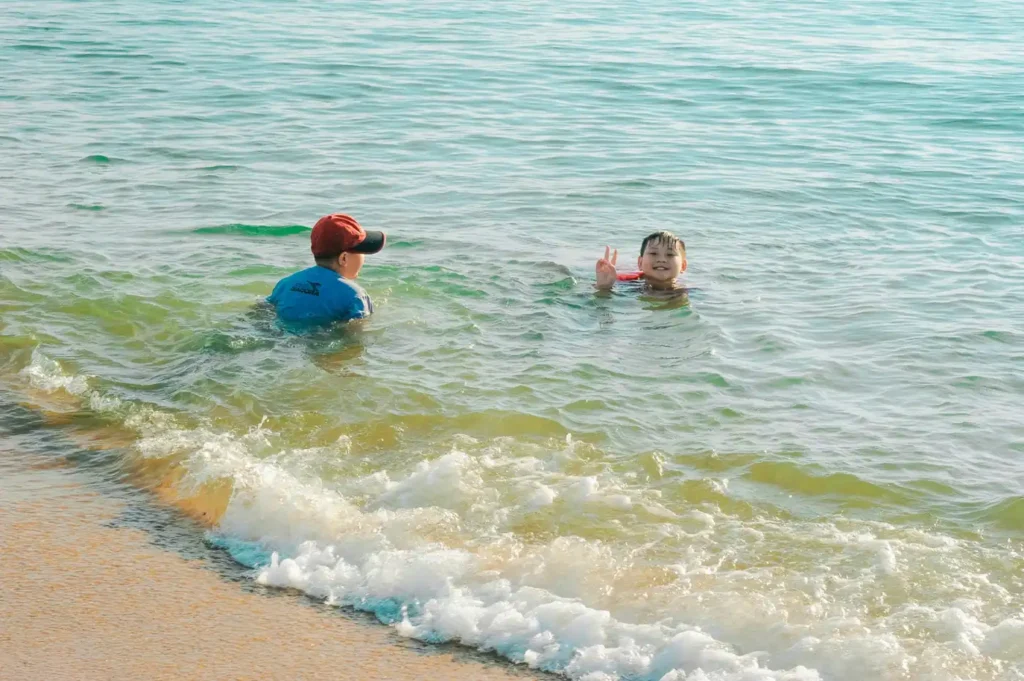
Several guesthouses along Medaketiya Beach rent out basic snorkeling gear for LKR 300 to LKR 500 per day. For something more structured, Mirissa (35 km west) has PADI-certified dive centres that run day trips including Tangalle’s reef. Swimming in the main bay is excellent during the dry season, with warm water, calm surface, and good visibility.
Water Activities in Tangalle: Conditions and Costs
| Activity | Best Conditions | Approx. Cost | Skill Level |
| Swimming (main bay) | Dry season, calm days | Free | Any |
| Snorkeling (reef) | Dec–Apr, low swell | LKR 300–500 gear rental | Beginner+ |
| Kayaking (lagoon) | Year-round | LKR 1,000–1,500/hr | Any |
| Surfing (Medaketiya) | Nov–Mar swell | LKR 2,000 board + lesson | Beginner friendly |
| Boat fishing (local) | Year-round | LKR 3,000–5,000 charter | Any |
Discover Hidden Coves Around the Coastline
East of the main Tangalle bay, the coastline breaks into a series of rocky headlands and small coves that most visitors never reach. The road between Tangalle and Rekawa passes several unsigned tracks leading down to pockets of sand, sheltered by large boulders, with nobody in sight except the occasional fisherman checking his nets.
One cove I found about 4 km east of town had a natural rock pool filled by wave action that was perfectly calm even when the surf outside it was rough. Locals said it had been used as a swimming spot for generations and that no tour operator had ever put it on a map. That kind of thing still exists in Tangalle.
Are there hidden beaches near Tangalle?
Yes. The coastal road east of Tangalle toward Rekawa passes several unsigned tracks leading to small, unnamed coves, no facilities, few visitors, and natural rock pools in sheltered bays. A scooter or bicycle is the best way to explore. There are no official maps of these spots; follow sandy tracks toward the water. Early morning visits are best.
Where to Stay in Tangalle for a Chill Vibe
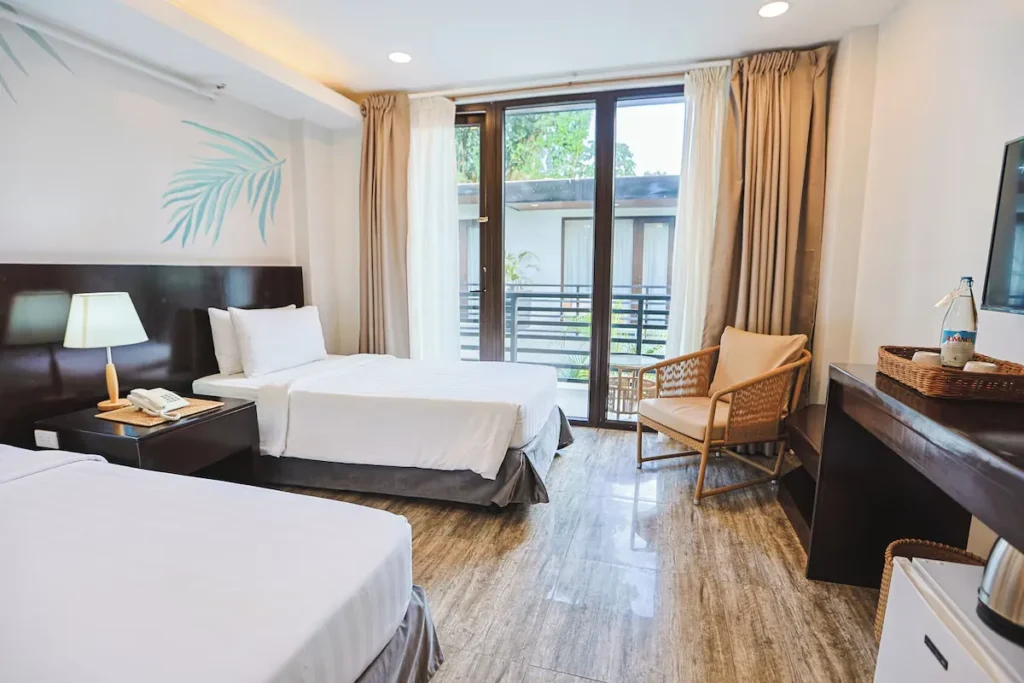
Tangalle’s guesthouse scene is one of its best features. Most of the best-loved places are owner-run, small (10 rooms or fewer), and priced between USD 20 and USD 60 per night. Guesthouses along Medaketiya Beach Road are closest to the water and have rooftop dining that’s genuinely lovely in the evening.
For those who want more comfort, a handful of boutique properties have opened in the last five years, pool villas and eco-lodges, in the USD 80 to USD 150 range. According to TripAdvisor’s 2024 annual report, Tangalle’s average guesthouse rating across 68 properties was 4.2/5. Most travelers who stay here say the biggest mistake is not booking enough nights.
Want a relaxed coastal stay? Read more about Goyambokka Beach Hotels & Villas: Where to Stay for Every Travel Style.
Tips for Traveling Around Tangalle Easily
Getting around Tangalle is straightforward once you have two wheels. Scooter rental costs around LKR 1,200 to LKR 1,800 per day from operators near the bus stand. Tuk-tuks are everywhere; a short trip within town should cost LKR 150 to LKR 250.
- Arrive with LKR cash, ATMs exist but can run out over long weekends
- Intercity bus from Colombo Fort to Tangalle costs ~LKR 380 and takes 4–5 hours
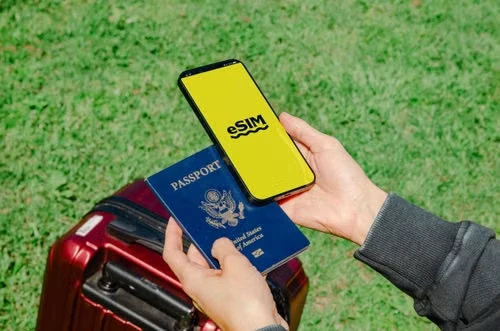
- Mobile data: Dialog and Hutch both have good 4G coverage; buy a SIM at Colombo airport
- Most guesthouses can arrange tuk-tuks, jeep safaris, and turtle-watch bookings with no extra commission
- Pharmacies are in town, but bring any specific medications; stock is limited
- Near temples: cover shoulders and knees (both men and women)
Frequently Asked Questions
Q1: What are the best things to do in Tangalle for first-time visitors?
For first-timers, the non-negotiables are: Rekawa turtle beach (night visit), the Tangalle Lagoon at dawn, Mulkirigala Rock Temple, and at least one full beach day at Palm Bay. Those four cover nature, culture, history, and relaxation in roughly three days.
Q2: Is Tangalle worth visiting compared to Mirissa or Unawatuna?
Yes, especially if you want fewer crowds. Mirissa has more nightlife and whale watching; Unawatuna has more party energy. Tangalle has better beaches, more authentic local life, and far fewer tourists. It’s quieter and arguably more memorable for travelers who prefer depth over convenience.
Q3: How many days do I need in Tangalle?
Three to five days is the sweet spot. Two days is doable, but it feels rushed if you want to do Rekawa, Mulkirigala, and Bundala. Five days lets you slow down, explore hidden coves, take time at the lagoon, and not feel like you’re checking off a list.
Q4: Is Tangalle safe for solo travelers?
Yes. Tangalle has a very low crime rate, and most guesthouse owners are used to solo travelers. The beach areas are generally safe during daylight hours. Standard travel caution applies at night; stick to lit areas, and arrange transport in advance.
Q5: What is the best time of year to visit Tangalle?
November to April is the dry season and generally the best period. December and January offer the calmest seas, best snorkeling visibility, and peak turtle nesting at Rekawa. May through September can see the southwest monsoon bringing heavy rain, though the landscape turns dramatically green.
Q6: Can I visit Tangalle on a budget?
Absolutely. A guesthouse room costs USD 20–30, local meals run LKR 200–800, and many of the best things to do are free. A comfortable three-day trip including Rekawa and Mulkirigala can realistically cost under USD 100 per person, including accommodation, food, and entry fees.