Most people go to Unawatuna or Mirissa and call it done. And honestly, fair enough, those beaches are beautiful. But if you’re after something that doesn’t show up in every travel reel, this Sri Lanka secret beaches guide is going to change the way you see this island. Because Sri Lanka is full of coastline that’s barely touched, barely visited, and completely real.
I’ve been up and down this coastline more times than I can count, and every single trip I find a new stretch of sand I didn’t know existed. The south coast has rocky coves that feel genuinely private. The East Coast has long, pale beaches where you might see more fishing boats than people. And the north? Don’t even get me started. This Sri Lanka secret beaches guide covers the ones worth the effort, with real directions, honest access notes, and none of the fluff.
According to the Sri Lanka Tourism Development Authority (SLTDA), the country welcomed over 1.48 million international arrivals in 2023, and that number is climbing. But the vast majority of those visitors cluster around the same five or six beaches. That leaves a lot of coastline beautifully, wonderfully empty.
Why Sri Lanka Is Full of Untouched Beach Paradise
Sri Lanka has 1,340 kilometers of coastline. Let that sink in. And yet, most of the tourist infrastructure sits on maybe 80 kilometers of it. The rest is fishing villages, jungle-backed coves, and stretches of sand that haven’t changed in decades.
Part of the reason so many beaches stay hidden is infrastructure. Getting to them requires a tuk-tuk, a local contact, or a willingness to bump down a dirt road for 20 minutes. Most tourists don’t bother. But that’s exactly why the reward is so good when you do.
The Ceylon Tourism Board, which has been tracking visitor patterns since the 1960s, has noted in several reports that beach tourism in Sri Lanka is highly concentrated. The top ten beaches receive roughly 70% of all coastal visits. Everything else? Quietly waiting.
| Best For | Beach |
| Best secret beach near Tangalle | Rekawa Beach |
| Best snorkeling | Polhena Beach |
| Best East Coast hidden beach | Pigeon Island |
| Best for solitude | Godellawela Beach |
| Best beginner-friendly water | Pasikuda Beach |
Best Time to Explore Secret Beaches in Sri Lanka
This is genuinely important, especially with hidden beaches, because access can completely disappear in the wrong season. Sri Lanka has two monsoon systems, which means the coast is always playable; you just have to know which side.
| Region | Best Months | Avoid | Why |
| South Coast (Mirissa, Tangalle) | Nov – Apr | May – Sep | The Southwest monsoon brings rough surf and rain |
| East Coast (Arugam Bay, Trinco) | May – Sep | Nov – Jan | The northeast monsoon affects the east |
| North Coast (Kalpitiya) | Jan – Mar, Jul – Sep | Oct – Dec | Variable; check locally |
| West Coast (Kalpitiya beaches) | Nov – Apr | Jun – Sep | Calm flat seas during the NE dry season |
Locals in Mirissa will tell you October is a transition month that feels genuinely uncertain. I visited in late October once and got three perfect days and one absolute washout. Plan around the seasons, not against them.
Hidden Beaches in the South Coast You’ll Want to Keep to Yourself
The south coast is where most travelers end up, but they stick to the main road. Step off it, and the landscape changes completely.
Hiriketiya: The Horseshoe Cove That’s Still Mostly Local
A few years ago, Hiriketiya was genuinely unknown outside the surf community. It’s a small horseshoe bay about 8 km east of Dickwella, and it’s one of the most photogenic beaches in all of Sri Lanka. Turquoise water, rocky headlands, a gentle left-hand wave. The Sri Lanka Surfing Association has classified Hiriketiya as a beginner-to-intermediate surf spot, which keeps the serious crew away and the vibe relaxed.
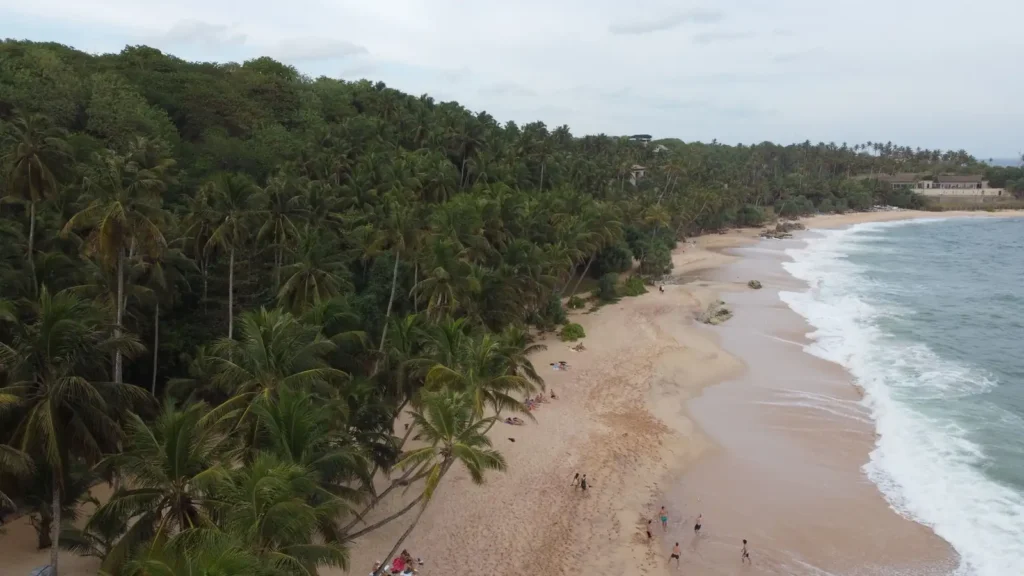
There are a handful of guesthouses now, and the beach does get busier in peak season. But compared to Unawatuna? Still a whisper.
Rekawa Beach: Where Turtles Come First
About 12 km east of Tangalle, Rekawa is famous among conservationists and almost nobody else. Five species of sea turtle nest here, and the Rekawa Lagoon Conservation Project, supported by the IUCN and Sri Lanka’s Department of Wildlife Conservation, runs nighttime turtle walks that are genuinely moving experiences. The beach is long, dark at night, and strangely peaceful. During the day, it’s empty.
| What makes Rekawa Beach special? Rekawa Beach is one of Sri Lanka’s most important sea turtle nesting sites. Five species nest here, including the endangered leatherback. The Rekawa Lagoon Conservation Project runs guided nighttime turtle watches from January to April, when nesting activity peaks. |
Polhena: The Snorkeler’s Secret Near Matara
Polhena is technically a suburb of Matara, but it feels like it exists in a different universe. A natural reef about 200 meters offshore protects the bay and creates some of the calmest snorkeling water on the south coast. The National Aquatic Resources Research and Development Agency (NARA) has documented healthy coral cover here despite heavy fishing pressure elsewhere along the coast. Locals swim here year-round. Tourists rarely find it.
Uncrowded Beaches Near Mirissa That Feel Like Private Islands
Coconut Tree Hill Beach: Not Just the Instagram Spot Above It
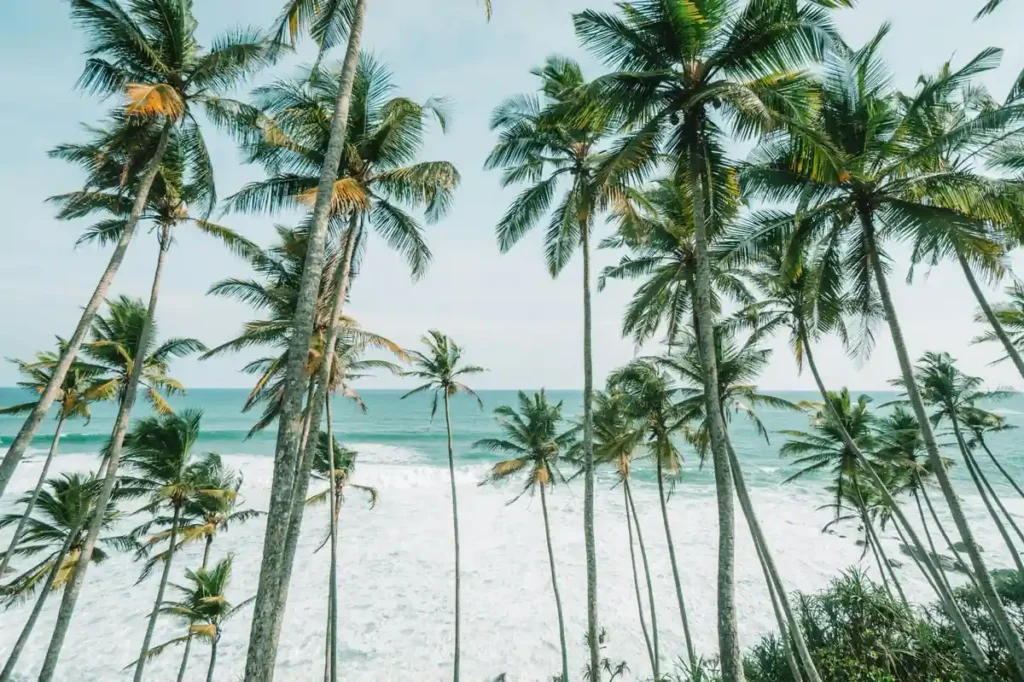
Everyone photographs the Coconut Tree Hill viewpoint. Almost nobody walks down to the small beach directly beneath it. It’s a rough scramble, but it rewards you with a crescent of sand that’s usually empty even when Mirissa’s main beach is packed. The water gets rough here, so swimming is only advisable in calm dry-season conditions.
Mirissa Harbour Beach: Fishermen’s Side
The western end of Mirissa, past the harbour, has a quieter stretch of sand where local fishing boats pull in at sunrise. I visited here one December morning around 5:30 AM and had what felt like a private show: dozens of traditional oruwa outriggers coming in against a pink sky, fishermen unloading yellowfin tuna, the smell of salt and diesel and fresh catch. The tourism end of Mirissa was still sleeping. This side of the beach was alive.
According to the Sri Lanka Marine Environment Protection Authority (MEPA), the waters off Mirissa have some of the highest blue whale encounter rates in the world between December and April. Even if you can’t get offshore, watching the whale-watching boats leave from this quiet side of the harbour in the early morning is its own experience.
Secret Sandy Spots Around Tangalle That Tourists Miss
Tangalle is one of those towns that travelers pass through without stopping properly. That’s a mistake. The coastline around Tangalle is some of the wildest on the south coast.
Medaketiya Beach: The Long Empty Stretch
East of Tangalle town, Medaketiya is a two-kilometer-long arc of sand backed by palm trees and low dunes. There’s almost nothing here in terms of facilities. A few simple guesthouses have opened up near the northern end in the last five years, but most of the beach remains genuinely quiet. The surf can be powerful; this is a watch-first, swim-second kind of beach.
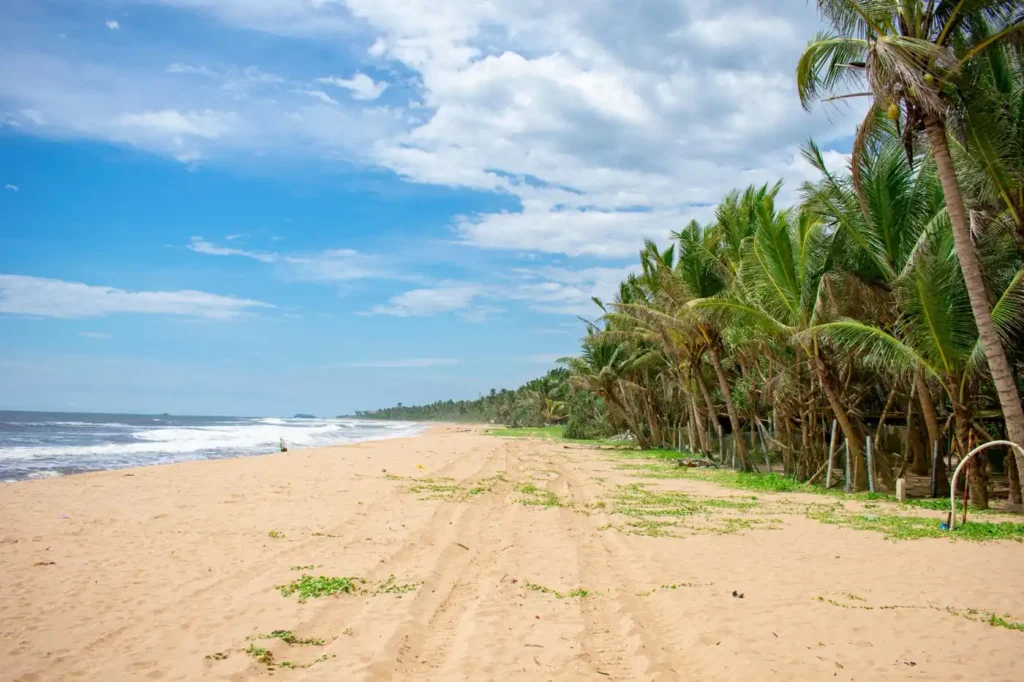
| Is Medaketiya Beach safe to swim in? Medaketiya Beach has strong surf and rip currents, particularly during the southwest monsoon (May to October). During the dry season (November to April), conditions are calmer, but always check locally. There are no lifeguards. Supervised beach swimming areas are limited to the northern end near the guesthouses. |
Hummanaya Blowhole Beach: Something You Won’t Forget
About 10 km west of Tangalle, near the village of Kudawella, sits the Hummanaya Blowhole, one of the largest in Asia according to Sri Lanka’s Central Cultural Fund documentation. When conditions are right, seawater shoots up to 23 meters into the air through a natural rock fissure. The beach near the blowhole is small and rocky, but the spectacle is absolutely worth it. Locals say the best spray happens in the late morning during high tide.
| Beach | Distance from Tangalle | Best For | Facilities |
| Medaketiya | 2 km east | Long walks, quiet sunbathing | Minimal, a few guesthouses |
| Rekawa | 12 km east | Turtle nesting, night walks | Conservation project hut |
| Hummanaya | 10 km west | Blowhole, dramatic scenery | Tea stalls, no beach services |
| Godellawela | 18 km east | Complete solitude | None |
Off-the-Radar Beaches on the East Coast Worth the Journey
The East Coast is where this Sri Lanka secret beaches guide gets serious. It’s further, harder to access, and genuinely less visited. Which means the beaches are in a different league altogether.
Pigeon Island: National Park Waters Most Skip
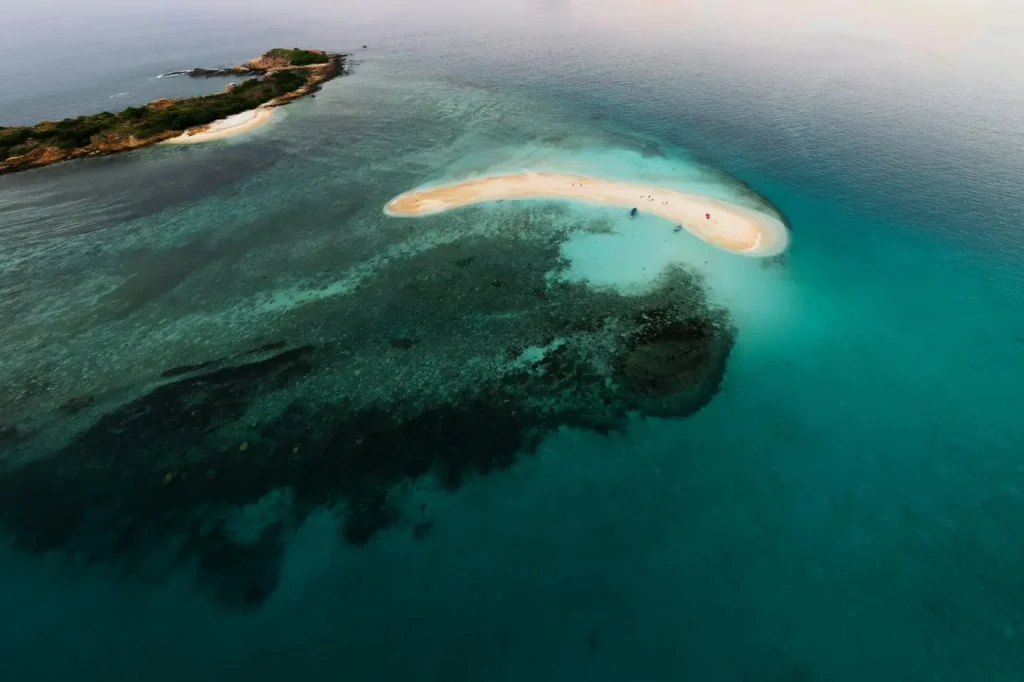
Pigeon Island National Park, located near Nilaveli, is a protected marine reserve managed by the Department of Wildlife Conservation of Sri Lanka. The snorkeling here is among the best in the Indian Ocean, with blacktip reef sharks, hawksbill turtles, and hard coral coverage that rivals anything in the Maldives at a fraction of the cost. Day permits cost around LKR 4,500 (approximately USD 14) per person. Get there before 9 AM, and you’ll feel like you have it to yourself.
| How do I get to Pigeon Island National Park? Pigeon Island is accessible by boat from Nilaveli Beach, about 14 km north of Trincomalee. Boat rides take 10 to 15 minutes. Entry permits (approximately LKR 4,500 per person as of 2024) are obtained at the park office near the jetty. The island is open daily from 7 AM to 5 PM during the May to September season. |
Pasikuda: The Shallow Lagoon Beach With Almost No Waves
Pasikuda has a shallow reef shelf that extends almost 200 meters offshore, meaning the water is calm, clear, and about waist-deep for a remarkable distance. It’s located about 35 km north of Batticaloa and is one of the rare beaches in Sri Lanka where even non-swimmers can wade in safely. The Sri Lanka Tourism Development Authority (SLTDA) has been promoting it modestly, but visitor numbers remain low compared to its actual quality. Infrastructure is basic but improving.
Arugam Bay’s Hidden Northern Stretch
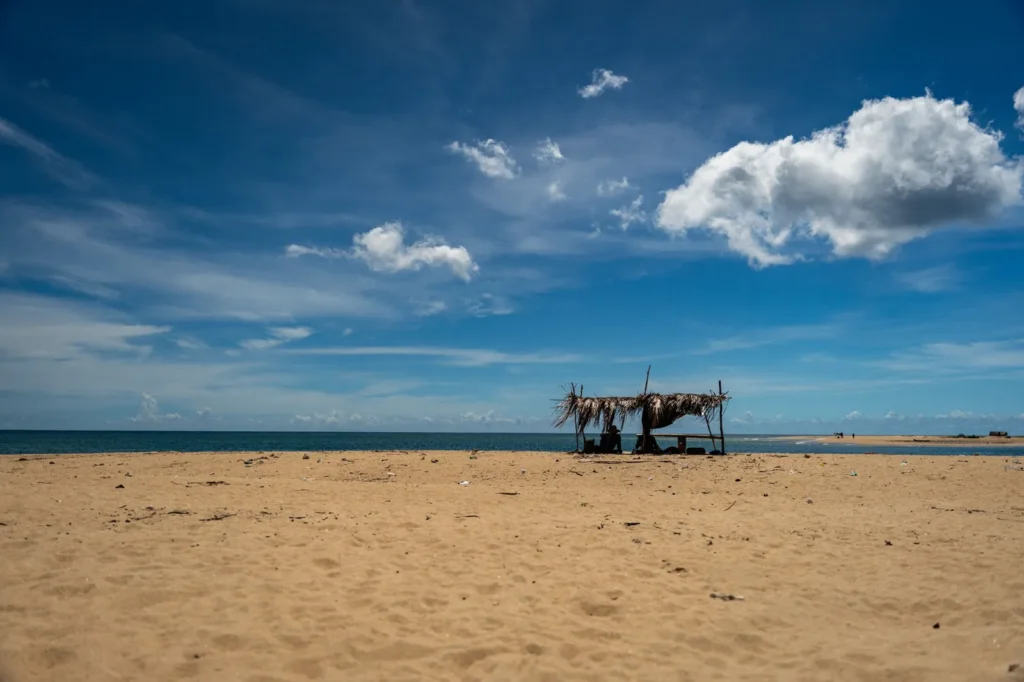
Everyone knows Arugam Bay’s main point. Fewer people walk 2 km north to the quieter stretch past the lagoon mouth, where local fishermen store their boats, and the sand is deeper and softer. The World Surfing League has recognized A-Bay as a premier Asian surf destination, but even during peak surf season (June to September), this northern section stays nearly empty.
How to Reach These Hidden Beaches Without Getting Lost
| What’s the best way to reach hidden beaches in Sri Lanka? Renting a tuk-tuk with a local driver is the most flexible and practical way to reach hidden beaches in Sri Lanka. For a full day, including waiting time, expect to pay LKR 3,000–6,000 (USD 9–18). Motorbike rental (LKR 1,500–2,500/day) works well for independent travelers with some riding experience. Google Maps coverage is patchy; download offline maps and always confirm with locals. |
| Transport Type | Daily Cost (approx) | Best For | Coverage |
| Tuk-tuk with driver | LKR 3,000–6,000 | South coast day trips | Everywhere paved |
| Motorbike rental | LKR 1,500–2,500 | Independent exploration | Most roads |
| Private car with driver | LKR 8,000–15,000 | Full-day long distances | All roads |
| Public bus + walk | LKR 50–150 | Budget travel, set routes | Main towns only |
What should I know before visiting a remote beach in Sri Lanka?
Always tell someone where you’re going before heading to a remote beach in Sri Lanka. Carry at least two liters of water per person, bring cash (no ATMs near isolated beaches), and check tide and sea conditions before swimming. There are no lifeguards at most hidden beaches. The nearest hospitals in the south are in Matara (government) and in Galle (Karapitiya Teaching Hospital).
Not sure how to find these hidden beaches? Read more in 10 Best Beaches in Tangalle, Sri Lanka You’ll Wish You Found Sooner.
Safety Tips Before You Go Exploring Remote Beaches
- Rip currents: The National Aquatic Resources Research and Development Agency (NARA) warns that rip currents are the leading cause of beach drownings in Sri Lanka. Learn to identify them before entering the water.
- Sun exposure: Sri Lanka sits between 6 and 10 degrees north of the equator. UV levels are consistently high year-round. Dermatologists recommend SPF 50 minimum and reapplication every 90 minutes.
- Wildlife: In coastal areas near lagoons and rivers, crocodile presence is documented. Keep your distance, especially at dawn and dusk.
- Connectivity: Mobile coverage drops sharply outside towns. Download offline maps via Maps.me or Google Maps before leaving.
- Tidal awareness: Many small beaches become impassable at high tide. Always check tide times for your specific location.
What to Pack for a Secret Beach Adventure in Sri Lanka
Packing for a remote beach day is different from packing for a resort beach. These places don’t have shops around the corner.
- Water: minimum 2 liters per person: No exceptions. Heat and humidity will drain you faster than you expect.
- Cash in LKR: Parking fees, tuk-tuk drivers, and tea stalls are cash-only. ATMs near hidden beaches are essentially nonexistent.
- Snorkeling gear: Rental is rare at hidden beaches. Bringing your own mask and snorkel unlocks places like Polhena and Pigeon Island fully.
- Reef-safe sunscreen: The MEPA formally recommends using reef-safe products near Sri Lanka’s protected marine areas. Conventional chemical sunscreens cause documented coral bleaching.
- A sarong or mat: Shade is limited. A lightweight layer for lying on sand is essential.
- Packed lunch: Most hidden beaches have no food options. A nasi goreng from a local warung near your accommodation travels well.
- First aid kit: Rock cuts, coral scrapes, and jellyfish stings happen. A basic kit with antiseptic, antihistamine cream, and bandages handles most situations.
Local Vibes: Small Villages Near These Hidden Shores
One of the genuinely underrated parts of chasing secret beaches is the villages you pass through. Rekawa’s women-led turtle conservation initiative has been protecting sea turtles for more than two decades, with support from the World Wildlife Fund. Meanwhile, Hiriketiya has become known for its small, chef-driven restaurants where Italian and Sri Lankan flavors are served side by side. On the east coast, Nilaveli offers a glimpse into local fishing life, where respectful visitors are often welcome to quietly observe the morning fish market.
Locals around these beaches are used to being slightly off the tourist radar. That means they tend to be warmer, more curious, and more genuinely helpful than the staff at tourist-facing businesses. The advice you get from a tuk-tuk driver in Tangalle about which beach is clean and which one has been affected by recent rubbish washing in is worth more than any travel blog, including this one.
| Are locals welcoming near hidden beaches in Sri Lanka? Generally, yes. Sri Lankans are widely regarded as among the most hospitable people in South Asia. In fishing villages near remote beaches, visitors who show basic respect, dressing modestly when passing through villages, and asking permission before photographing people, are almost always warmly received. Learning a few words of Sinhala or Tamil goes a long way. |
Final Thoughts: Why These Secret Beaches Hit Different
The difference between a famous beach and a hidden one isn’t just the number of people. It’s the feeling. Nobody is performing for an audience at Rekawa. Nobody is trying to sell you something at Medaketiya. The birds are louder than the music at Polhena, because there is no music. This Sri Lanka secret beaches guide exists because these places deserve to be found by the right kind of traveler, slowly, carefully, with some effort and a lot of respect.
Sri Lanka is genuinely one of the most biodiverse coastal nations in the Indian Ocean region. The IUCN lists 26 species of coral reef fish in Sri Lanka’s coastal waters as vulnerable or threatened. Visiting quietly, snorkeling without touching, leaving nothing behind, these choices matter more here than at places built to absorb crowds.
Go early. Go slow. Tell your driver where you’re going. Bring your own water. And maybe don’t post the exact location of the best ones. Some things are better shared in person, over tea, with someone who’s already been.
Frequently Asked Questions
Q1: When is the best time to visit the hidden beaches on Sri Lanka’s south coast?
November through April is the ideal window for the South Coast beaches. This period falls within the dry season for the south and west, bringing clear skies, calm seas, and reliable beach days. The peak months of December to February bring slightly more visitors, but still far fewer than at the main beach resorts.
Q2: Are hidden beaches in Sri Lanka safe for swimming?
It depends entirely on the beach and the season. Many remote beaches have no lifeguards and strong rip currents. The National Aquatic Resources Research and Development Agency (NARA) advises swimmers to always observe sea conditions for at least 10 minutes before entering and to swim parallel to shore if caught in a rip current. Protected bays like Polhena and Pasikuda are safer options for less confident swimmers.
Q3: Do I need a guide to reach secret beaches in Sri Lanka?
Not a formal guide, but a reliable local tuk-tuk driver is genuinely invaluable. They know road conditions, whether certain beaches are accessible on a given day, and which spots are currently clean and which have been hit by debris. Expect to pay LKR 3,000 to 6,000 for a full day, including waiting time.
Q4: What are the least visited beaches on Sri Lanka’s east coast?
The northern stretch of Arugam Bay, Pasikuda’s outer reef area, and the beaches north of Nilaveli toward Marble Bay consistently receive very few visitors compared to their quality. Getting to them requires some independent effort, but the reward is real seclusion.
Q5: Is it safe to visit remote Sri Lankan beaches alone?
Solo travel to remote beaches is generally safe, but always inform someone of your plans. Carry a charged phone, know the nearest town with medical facilities, and be particularly cautious about swimming alone. The Department of Tourism in Sri Lanka advises all visitors to register with their hotel or guesthouse before heading to isolated areas.
Q6: Do any of the hidden beaches in Sri Lanka have accommodation nearby?
Yes. Hiriketiya has several small guesthouses within walking distance. Nilaveli (for Pigeon Island access) has a range of accommodation from budget to mid-range. Near Rekawa and Medaketiya, simple guesthouses exist, though booking ahead is essential outside of high season as options are limited.