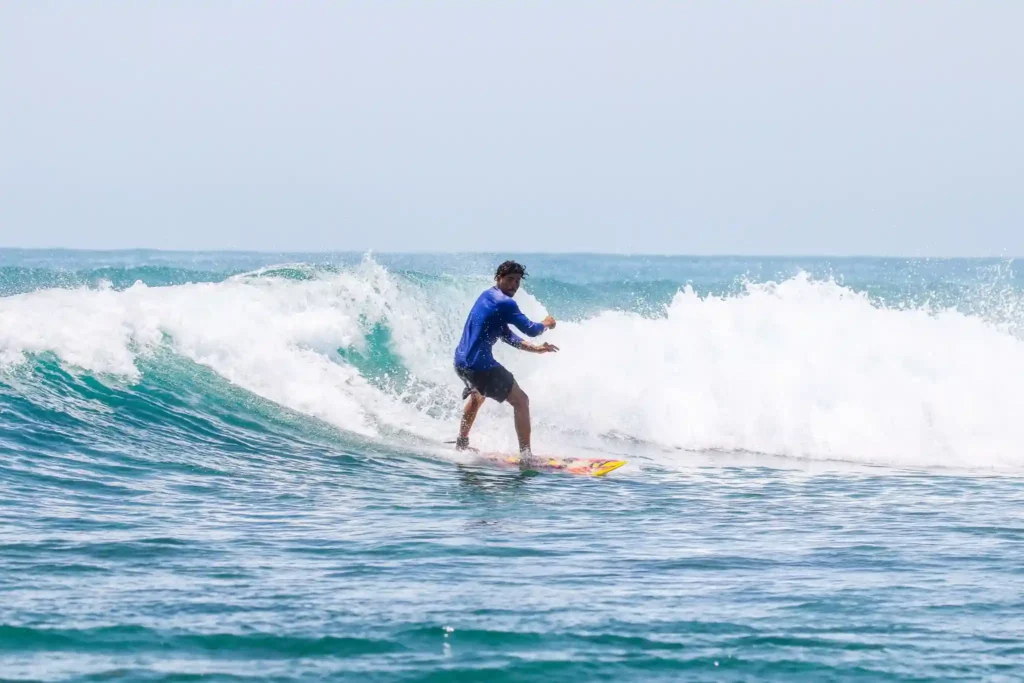

Crystal Bay swimming conditions can catch you off guard if you’re not prepared. The water looks inviting almost year-round. Clear, blue, warm. And that’s exactly what trips people up.
The thing is, the crystal bay swimming conditions change with the tide, the season, and the swell direction. What feels calm at 8 AM can turn choppy and current-heavy by midday. Whether you’re a confident swimmer or just want a relaxing dip, you need to know what’s actually going on below the surface before you go in.
This guide covers everything. Currents, tides, visibility, water temperature, safety zones, and the truth about who this beach is really for.
Is Crystal Bay Safe for Swimming?
Short answer: yes, but with conditions. Crystal Bay can be safe for swimming, especially during high tide and the dry season between May and October. But the currents here are not minor. They’re real, and they move fast.
The bay sits in a channel between two landmasses, and that geography funnels water in a way that creates strong lateral and downcurrent movement. During certain tidal phases, even experienced swimmers should think twice about going past chest depth.
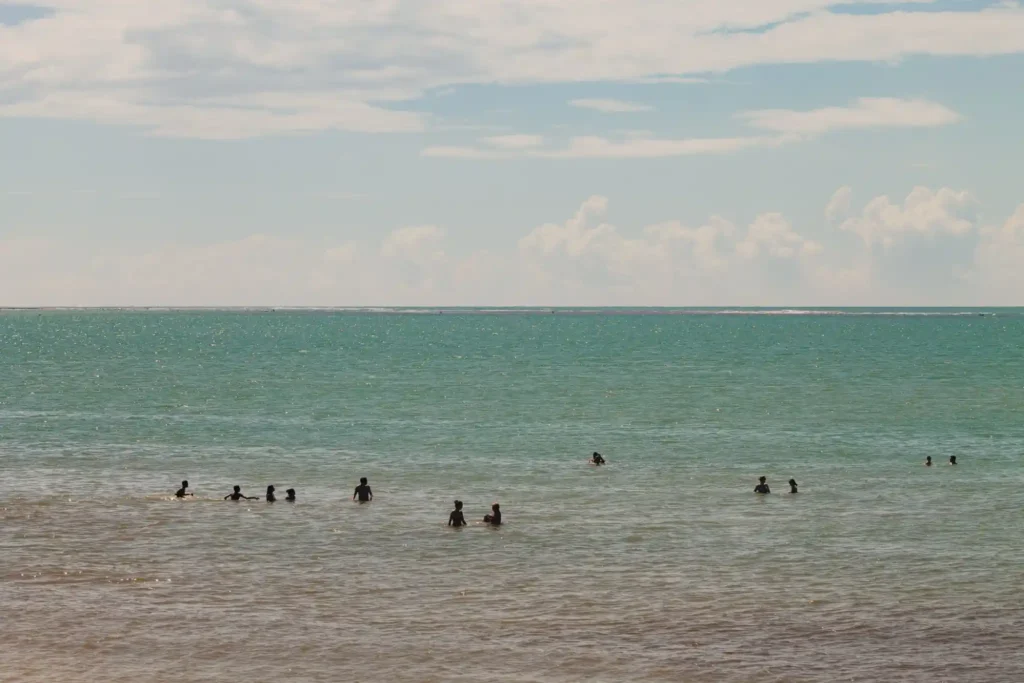
That said, most visitors swim here without issue. The key is choosing the right time, the right spot, and checking conditions before you wade in.
Is Crystal Bay Good for Swimming?
Crystal Bay is suitable for swimming during high tide in the dry season, particularly in the calmer northern section of the bay. Strong channel currents during low tide and the wet season (November–April) make conditions unsuitable for most recreational swimmers.
Learn what to know before entering the water: Read more in the Crystal Bay Nusa Penida Guide: Before You Go, Read These Local Tips First.
Here’s a quick look at how tide level affects swimming safety. Check this before you enter.
| Condition | Tide Level | Suitable For |
| Calm, clear water | High tide (above 1.2m) | Most swimmers, beginners in the north zone |
| Moderate current | Mid-tide | Confident swimmers only |
| Strong channel pull | Low tide | Not recommended for swimming |
| Rough/surging water | Wet season swells | Watch from shore |
Quick Look: Water Conditions at Crystal Bay
Water temperature sits comfortably between 26°C and 29°C for most of the year, which makes it pleasant to stay in for extended periods. Visibility averages around 15–20 metres during the dry season, dropping to 3–8 metres when the wet season stirs up sediment. The seafloor is rocky and coral-covered in most areas, so soft-sand entry points are limited.
Currents average 1–2 knots in calm conditions but can spike to 3–4 knots during tidal changes, particularly around the channel mouth. If that doesn’t sound dramatic, consider that a 2-knot current pulls a strong swimmer sideways faster than they might expect.
Best Time of Day to Swim at Crystal Bay
Early morning is consistently the safest and most enjoyable window. Between 7:00 AM and 9:30 AM, the currents are usually at their weakest, the water is calmer, and the visibility is at its best before boat traffic stirs up sediment. It’s also significantly cooler at that hour, which matters when you’re in the sun.
There’s also just something about swimming at Crystal Bay early. The light is softer. The water is quieter. You might share the bay with a few sea turtles instead of fifty snorkelers. If you can get there before 9 AM, do it.
Late afternoon, around 4:00–5:30 PM, can also be reasonable, but check the tide first. If low tide falls in that window, skip the swim and watch the sunset instead; it’s gorgeous from the beach either way.
Best Time to Swim at Crystal Bay
The best time to swim at Crystal Bay is between 7:00 AM and 9:30 AM during high tide in the dry season (May–October). Currents are weakest in the early morning, and visibility averages 15–20 metres. Avoid swimming during low tide or after 2:00 PM when current strength increases.
Best Season for Calm Swimming Conditions
The dry season runs from roughly May through October, and these are the months when Crystal Bay is most reliably swimmable. The ocean is warmer, visibility is higher, and the swells that build during the wet season flatten out significantly.
July and August are peak visitor months and get crowded, especially during snorkeling tour hours. If you want similar conditions with fewer people, aim for May, June, or September. Those months hit a sweet spot of good water conditions without the peak-season crowd pressure.
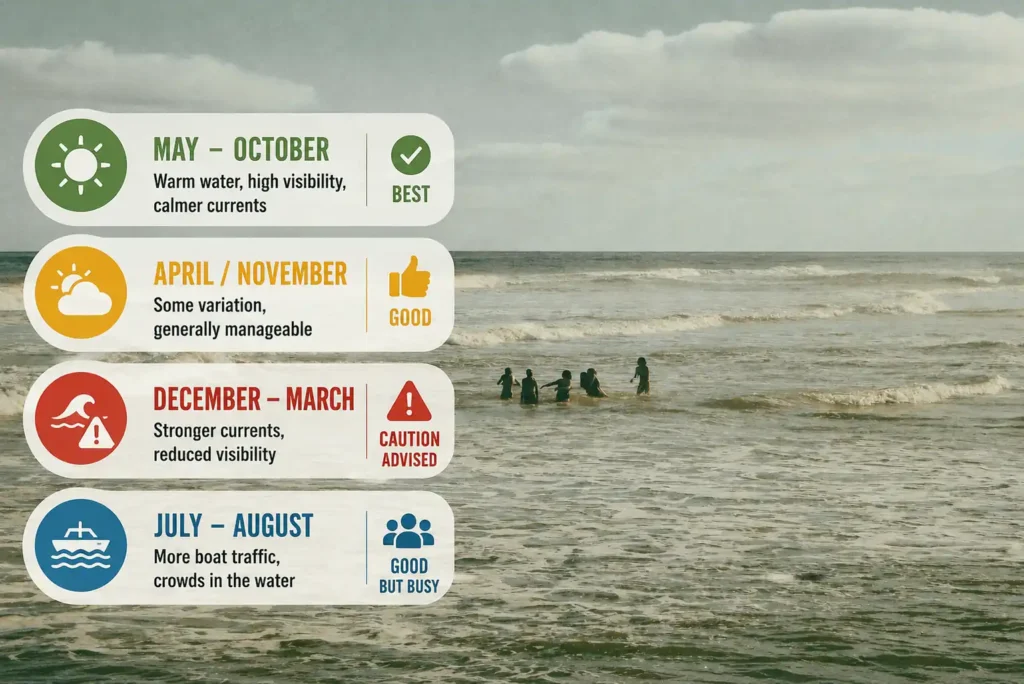
This seasonal overview helps you plan your visit around the best swimming conditions at Crystal Bay. Save it before you book.
| Season | Months | Swimming Conditions | Notes |
| Dry Season | May – October | Best | Warm water, high visibility, calmer currents |
| Shoulder Season | April / November | Good | Some variation, generally manageable |
| Wet Season | December – March | Caution advised | Stronger currents, reduced visibility |
| Peak Dry Season | July – August | Good but busy | More boat traffic, crowds in the water |
Understanding Crystal Bay Waves and Currents
Crystal Bay doesn’t have big breaking waves in the way a surf beach does. What it has instead is a persistent channel current, and that’s something people don’t expect. The waves are relatively small, but the water beneath the surface is often moving purposefully in one direction.
This current runs strongest during tidal changes. When the tide shifts from high to low, water exits the bay through the channel with noticeable force. That’s when even strong swimmers can feel themselves being pulled. It’s not dangerous if you know it’s coming. It absolutely is dangerous if you don’t.
How Strong Are the Currents at Crystal Bay?
Currents at Crystal Bay typically range from 1–2 knots during calm conditions to 3–4 knots during tidal changes. The channel between the bay and the open sea creates a funnel effect that intensifies current speed. According to NOAA’s recreational water safety guidelines, currents above 1.5 knots are considered challenging for average swimmers.
Water Depth: What Changes as You Move Out
The bay starts shallow near the shoreline, around 0.5–1 metres at high tide in the safer northern section. As you move out, depth increases fairly quickly. By 20–30 metres from shore, you’re often in 5–8 metres of water over a coral reef.
The coral reef itself is part of what makes this place so beautiful for snorkeling. But it also means the seabed isn’t soft or forgiving. If you’re not confident in open water, staying close to shore and in shallower sections is genuinely the right call here.
What the Tide Means for Swimmers
Tides here follow a semi-diurnal pattern, roughly two highs and two lows per 24 hours. That means the window for safe swimming can shift by a couple of hours each day. What was a comfortable swim yesterday at 10 AM might be a current-ridden stretch of water today at the same time.
This is not an exaggeration for effect. It’s how tidal beaches work, and Crystal Bay is particularly sensitive to tidal phase because of its channel geography. Check the tide chart before every visit, not just once when you arrive.
High Tide vs Low Tide: Which Is Better for Swimming?
High tide is significantly better for swimming at Crystal Bay. During high tide, currents are weaker, more of the reef is covered, making the seabed less hazardous, and the water depth gives you more comfortable movement. Low tide exposes coral, strengthens channel currents, and reduces safe swimming zones considerably.
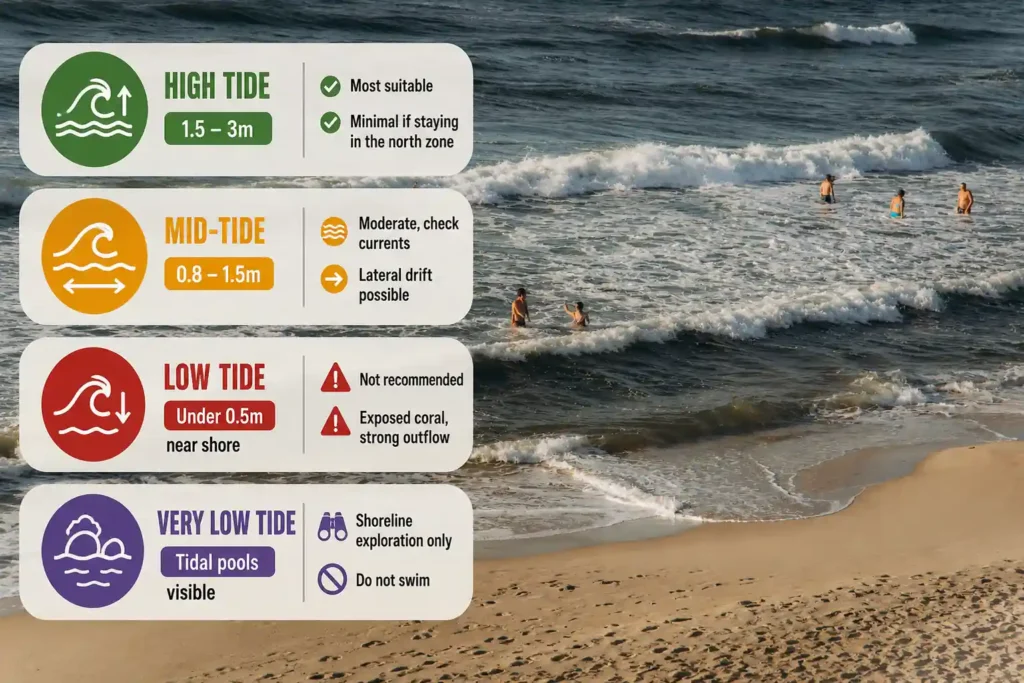
Use this tide guide to decide whether the water is safe before you enter. Crystal Bay swimming conditions vary significantly by tide level.
| Tide Level | Water Depth (North Zone) | Swimming Suitability | Key Risk |
| High (above 1.2m) | 1.5–3m | Most suitable | Minimal if staying in the north zone |
| Mid-tide | 0.8–1.5m | Moderate, check currents | Lateral drift possible |
| Low tide | Under 0.5m near shore | Not recommended | Exposed coral, strong outflow |
| Very low tide | Tidal pools visible | Shoreline exploration only | Do not swim |
How Clear Is the Water Throughout the Year?
Water clarity at Crystal Bay is one of the genuine highlights here. During the dry season, visibility commonly reaches 15–25 metres. On a good morning in June or September, you can see the coral and fish below you with stunning detail even before you put your face underwater.
The wet season drops visibility to 3–8 metres as rain runoff and churned sediment cloud the water. It’s not murky in the way some beaches get, but the experience is noticeably different. Snorkeling in reduced visibility isn’t dangerous by itself, but you do lose much of what makes Crystal Bay special.
Water Temperature: Is It Comfortable to Swim?
Water temperature is comfortably warm for most of the year. Expect 27°C–29°C in the dry season and around 25°C–27°C during the cooler wet season months. You don’t need a wetsuit for recreational swimming. A rash guard is useful for reef protection and sun exposure, but not for warmth.
One thing worth noting: thermoclines can occur in deeper sections of the bay. If you dive down even 3–4 metres near the channel, the temperature can drop suddenly by several degrees. It catches people off guard, but it is totally normal for this type of bay.
Can Beginners Swim at Crystal Bay?
Beginners can swim at Crystal Bay, but only during specific conditions. High tide, early morning, in the northern shallower section, during the dry season. Outside those parameters, the currents and depth increase the risk significantly.
If you’re a beginner, be honest with yourself about your comfort level in open water. Crystal Bay is not a gentle swimming pool. It’s a marine bay with real currents. The northern section gives you more protection and shallower footing, but you should still stay within your depth and watch how the water is moving before you commit.
Is Crystal Bay Suitable for Kids and Families?
Crystal Bay has limited facilities and stronger-than-average currents, making it less ideal for young children compared to calmer beaches nearby. Families with older kids who are confident swimmers can enjoy the northern section during high tide in the dry season. For families with toddlers or non-swimmers, the beach itself is beautiful, but the water is better observed than entered.
Areas of the Beach That Feel Safer for Swimming
The northern section of Crystal Bay is consistently the calmest and most protected area for swimming. It sits slightly further from the main channel, which reduces current exposure. The seabed here has some sandy patches mixed with coral, and the water depth builds gradually rather than dropping sharply.
Stay away from the channel mouth area, especially during mid-to-low tide. The current funnels through there with surprising force. Even locals who know this bay well give that area respect when the tide is on its way out.
Parts of Crystal Bay You Should Avoid
Avoid swimming near the channel mouth at Crystal Bay, particularly during mid-to-low tide. This is where current speeds peak and water movement becomes unpredictable. Also, avoid areas where snorkeling boats anchor during tour hours; the propeller zones and boat traffic create additional hazards beyond the natural current risk.
Swimming During Snorkeling Hours: What to Know
Snorkeling tours arrive at Crystal Bay throughout the morning, peaking between 9:00 AM and 12:00 PM. During these hours, the water fills with guided groups, inflatable fins, and boat traffic. It’s not dangerous per se, but it does change the experience.
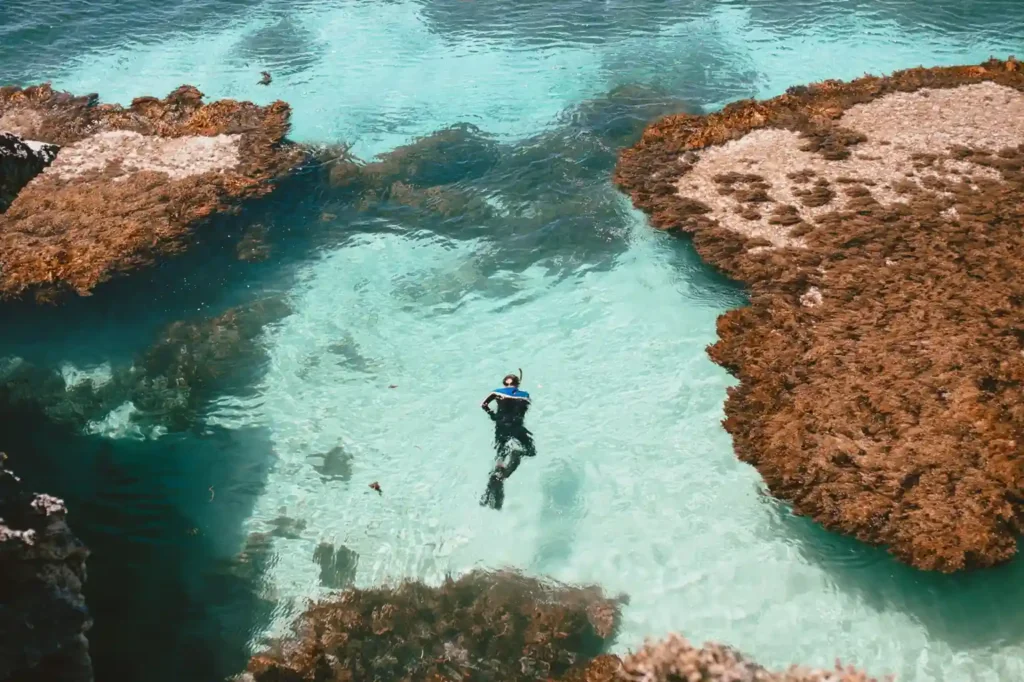
If you’re swimming rather than snorkeling, be extra aware of where boats are moving and anchoring. Stay visible by wearing a bright rash guard if possible. The snorkelers are focused on what’s beneath them, not on other swimmers at the surface.
Why Swimming During Snorkeling Hours Isn’t Always a Good Idea. Read more in Crystal Bay Snorkeling Guide: The One Thing Most First-Timers Get Wrong.
How Wind Conditions Affect the Water
Wind direction has a real effect on surface conditions at Crystal Bay. The dry season brings predominantly southeast trade winds, which generally help keep the bay surface calm. The wet season shifts wind direction, and westerly or northwesterly winds can push swells into the bay that wouldn’t normally reach it.
On windy days, even during the dry season, the water surface can become choppy and less comfortable for casual swimming. Wind also affects how quickly you get cold and sunburnt, so it’s worth factoring in even when the water is technically swimmable.
Sea Conditions After Rain
After significant rain, give it at least 24–48 hours before swimming. Runoff from the surrounding hills carries sediment, potential agricultural chemicals, and organic matter into the bay. Visibility drops, and water quality can be temporarily affected.
This is especially relevant in the wet season when rain events can be heavy. If you arrive the day after a big downpour and the water looks murky or yellowish-brown near the shore, that’s your sign to wait or head somewhere else.
Common Swimming Mistakes Visitors Make
The most common mistake is underestimating how quickly conditions can change. Visitors see calm water at 7 AM and assume it’ll stay that way. By 11 AM, after the tide has turned and the boat traffic has picked up, conditions can be substantially different.
Other frequent errors:
- Swimming alone without anyone watching from shore
- Ignoring the tide chart and entering during outgoing low tide
- Going in barefoot over coral without reef shoes
- Staying in the water too long in full sun without protection
- Swimming toward the channel mouth out of curiosity
Safety Tips Before Entering the Water
Being prepared makes a real difference here. These aren’t generic beach tips; they’re specific to what Crystal Bay actually throws at swimmers:
- Check tides using a reliable app. Tide Alert or WillyWeather both have solid data.
- Look at the water for 5 minutes before entering. Watch where the surface is moving.
- Never swim alone. Have someone watching from shore.
- If you feel a current pulling you sideways, swim parallel to shore, not against it.
- Tell someone where you’re going and when you expect to be back.
- Carry a small whistle or bright float if swimming beyond snorkeling depth.
What to Bring for a Comfortable Swim
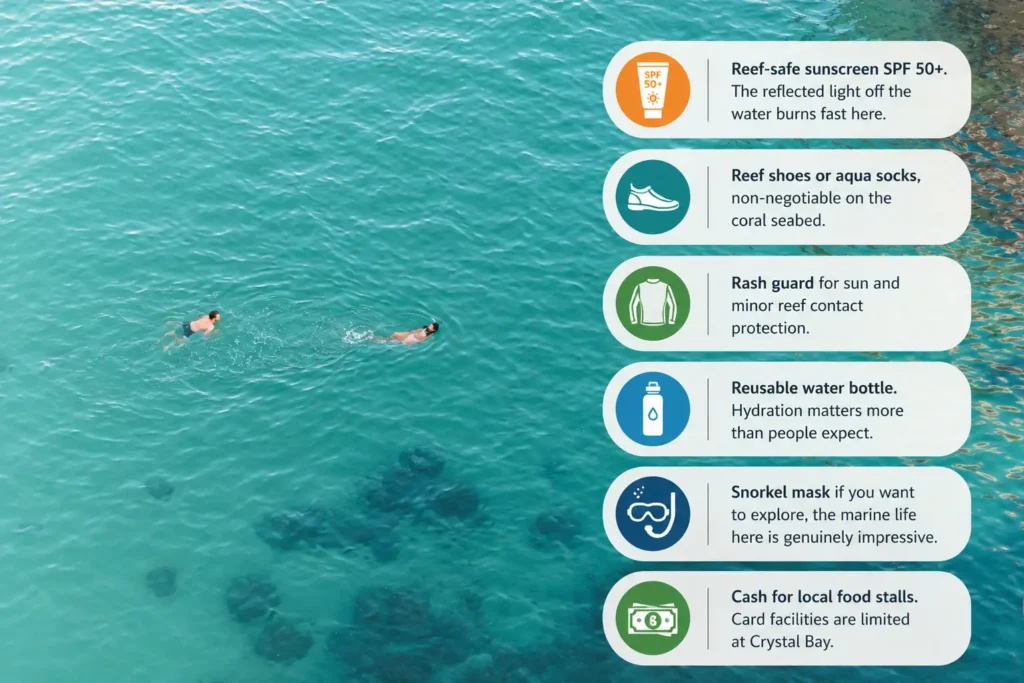
Pack light, but pack smart. The access path to Crystal Bay involves some uneven terrain, so you won’t want a heavy bag:
- Reef-safe sunscreen SPF 50+. The reflected light off the water burns fast here.
- Reef shoes or aqua socks, non-negotiable on the coral seabed.
- Rash guard for sun and minor reef contact protection.
- Reusable water bottle. Hydration matters more than people expect.
- Snorkel mask if you want to explore, the marine life here is genuinely impressive.
- Cash for local food stalls. Card facilities are limited at Crystal Bay.
Lifeguards, Facilities, and Beach Support
Crystal Bay has limited formal facilities. There are no designated lifeguards stationed at the beach in the way you’d find at commercial resort beaches. Some tour operators bring safety guides with their snorkeling groups, but independent swimmers are largely on their own.
Basic food stalls operate on the beach, and some local guides are available informally. According to Indonesia’s Ministry of Tourism’s beach safety framework, remote marine sites like Crystal Bay fall under visitor self-responsibility. That’s a polite way of saying: be responsible for yourself here.
Signs You Should Get Out of the Water
Get out of the water immediately if you notice any of the following:
- You feel a sustained pull in one direction that you can’t easily counter
- Visibility drops suddenly, which can indicate a current bringing deeper water up
- You feel tired, and the shore looks further than expected
- Other swimmers are exiting quickly without an obvious reason
- Boat engines are audible nearby, but you can’t see where the boat is
- Your swimming companion has moved significantly from where you started
Alternative Beaches if Conditions Aren’t Ideal
If Crystal Bay isn’t cooperating on the day you visit, there are solid alternatives within easy reach:
- Toyapakeh Beach, a calm, shallow bay nearby, is good for beginners and families
- Bias Tugel, sheltered bay with minimal current and clear water
- Mushroom Bay (Tanjung Sanghyang, very protected, calm waters, popular with families
These options give you a true swimming experience without the current considerations that Crystal Bay requires. It’s not settling; on some days, they’re genuinely the better choice.
Final Verdict: Is Crystal Bay Good for Swimming?
Crystal Bay swimming conditions are genuinely impressive when they’re right. Good visibility, warm water, incredible marine life just below the surface, it’s one of the best natural swimming environments in the region.
But it asks something of you. It asks you to check the tide before you go in. To read the water before you commit. To know your limits as a swimmer. Do those things, and Crystal Bay rewards you with a swim that most coastal spots simply can’t match.
Come during the dry season, early in the morning, at or near high tide, and stay in the northern section. That’s the formula. Get that right, and you’ll understand exactly why people keep coming back here.
Frequently Asked Questions
What is the best time to swim at Crystal Bay?
The best time is early morning between 7:00 and 9:30 AM during high tide in the dry season (May–October). Currents are at their weakest and visibility is highest during this window.
Are there strong currents at Crystal Bay?
Yes. Currents regularly reach 1–2 knots in normal conditions and can exceed 3–4 knots during tidal changes. The channel geography of the bay creates these conditions, and they should not be underestimated.
Is Crystal Bay safe for non-swimmers or young children?
Crystal Bay is not recommended for non-swimmers or very young children due to currents and coral seabed. Families are better served by calmer nearby alternatives like Mushroom Bay or Toyapakeh Beach.
Do I need reef shoes at Crystal Bay?
Yes. The seabed is primarily coral and rock. Reef shoes or aqua socks protect your feet from cuts and provide grip. They are strongly recommended for anyone entering the water.
What is the water temperature at Crystal Bay?
Water temperature ranges from 27°C to 29°C in the dry season and 25°C to 27°C in the wet season. No wetsuit is needed for recreational swimming, though a rash guard is useful for sun and reef protection.
Can you snorkel and swim at Crystal Bay at the same time?
Both activities happen simultaneously in the bay, especially during morning tour hours. Be aware of boat traffic and stay visible if swimming among snorkeling groups. Wearing a brightly coloured rash guard helps.
Is Crystal Bay crowded during snorkeling season?
Yes, between 9:00 AM and noon, the bay receives significant guided snorkeling groups. Arriving before 9:00 AM gives you calmer water and more space. The crowd typically disperses after 1:00 PM.