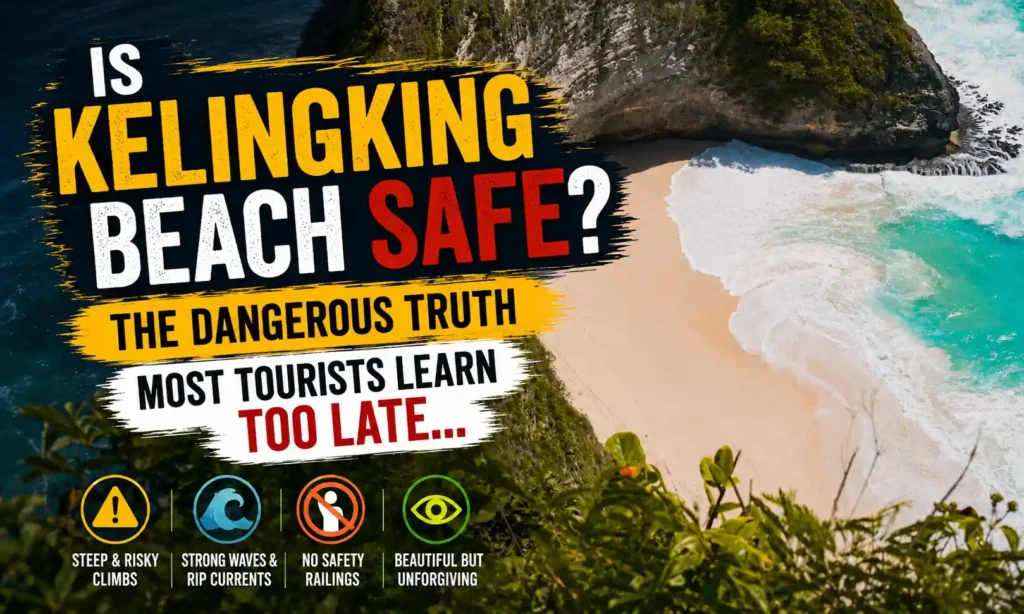
Let’s be upfront: Is Kelingking Beach safe? Short answer: It depends entirely on what you do there. The viewpoint? Absolutely worth it. The cliff hike down to the beach? That’s where things get risky. And swimming? That one’s a harder no than most travel blogs will tell you. I’ve seen tourists casually strolling toward the water in flip-flops, zero clue what those waves are capable of.
So if you’re planning a trip to Nusa Penida and want to know whether Kelingking Beach is safe for your specific situation, this guide covers it all, honestly.
Understanding the Main Safety Risks at Kelingking Beach
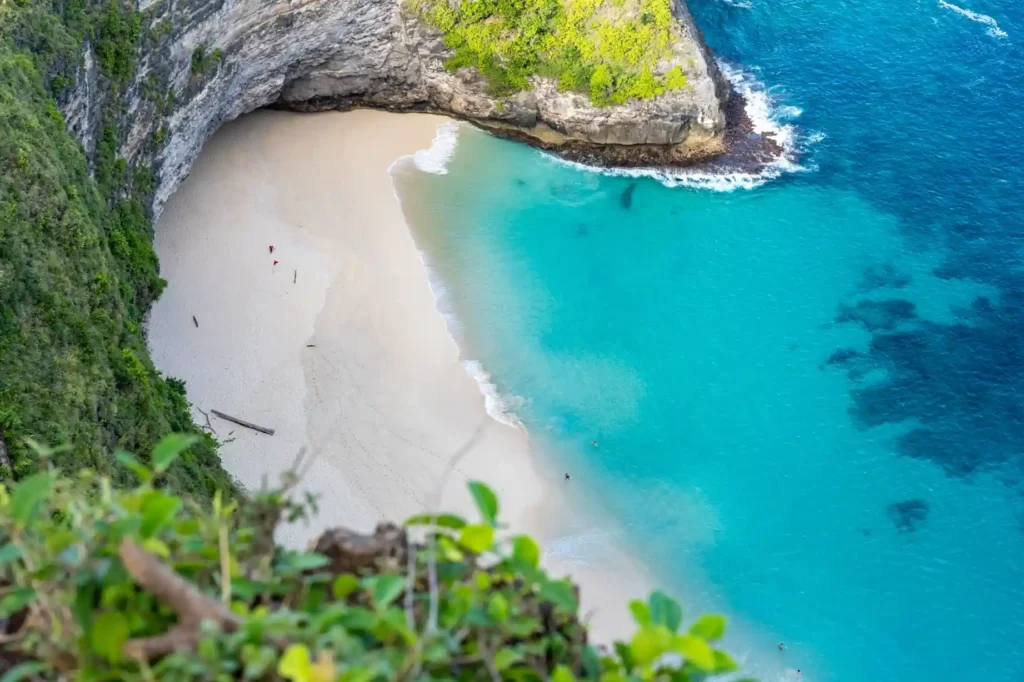
Kelingking isn’t your average beach. It’s a dramatic limestone cliff peninsula on the southwest coast of Nusa Penida, and that beauty comes with real, documented dangers. The main risks aren’t random. They’re predictable if you know what to look for.
The Bali Tourism Board has flagged Kelingking multiple times in its coastal hazard advisories, particularly for the beach section below. Most incidents involve the descent trail, dehydration, and rogue wave injuries. These aren’t rare edge cases; local guides report at least a few close calls every month during peak season.
Here’s a quick breakdown of the primary risk categories:
| Risk Type | Level | Main Cause |
| Cliff Hike | High | Steep, loose terrain with no guardrails |
| Swimming | Very High | Strong rip currents + unpredictable waves |
| Viewpoint Only | Low | Minor, if you stay behind the barriers |
| Heat & Dehydration | Moderate | Tropical sun, long walk, no shade below |
Is the Kelingking Beach Cliff Walk Dangerous?
Yes, genuinely. The trail drops roughly 200 meters in elevation over about 500 meters of path. That might not sound extreme on paper, but the combination of loose gravel, steep root-covered sections, and near-vertical rope sections makes it physically demanding and occasionally scary even for fit hikers.
Here’s my honest take: I watched a couple in their 60s attempt the descent in sandals on a slightly wet day. They made it down fine, but the way back up? Took them over 90 minutes, and one of them had to be helped by a local guide who happened to be passing. It’s not impossible, but it’s not casual either.
- No safety barriers on most sections of the trail
- Rope sections with no alternative route
- Trail becomes slippery after rain or morning dew
- Return climb is significantly harder than the descent
- No rescue service available at the beach level
Is Kelingking Beach Safe to Attempt Solo?
If you’re a reasonably fit adult and it’s a dry, sunny day, the descent is doable solo. But going with a local guide adds real value. They know the trail, know the conditions, and can spot the parts that aren’t immediately obvious from above. You can arrange one through any guesthouse in Toyapakeh for around IDR 150,000–200,000 (roughly $10–13 USD).
Can You Swim Safely at Kelingking Beach?
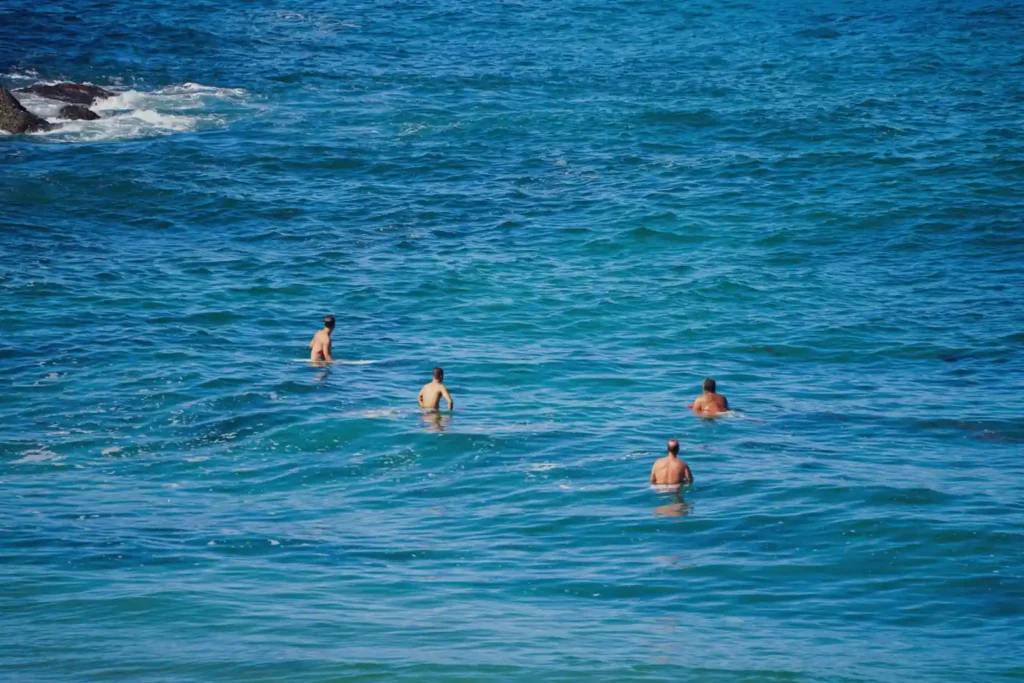
This one deserves a very clear answer: Swimming at Kelingking Beach is not recommended for most visitors. The beach is stunning, with white sand, turquoise water, and that impossible T. rex cliff shape above you. But the ocean here is brutal. Even on calm-looking days.
Surf Life Saving Australia’s rip current research estimates that rip currents cause over 80% of surf-related drownings globally. Kelingking’s beach faces the open ocean with consistent swell and rocky underwater terrain. There are no lifeguards, no warning flags, and no rescue equipment visible on the beach.
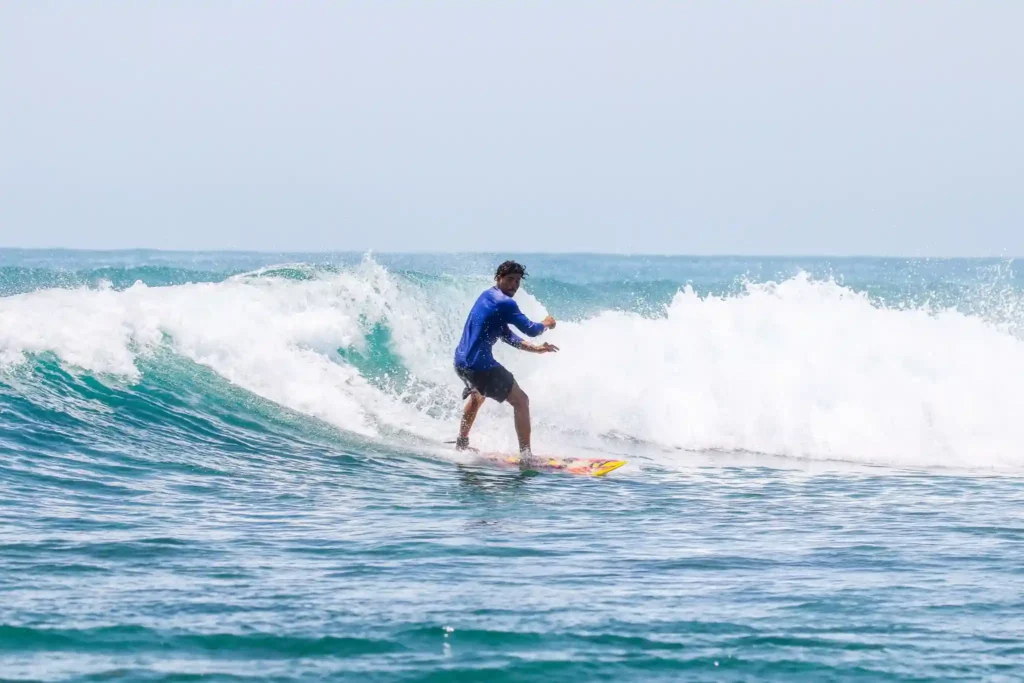
Some experienced surfers do paddle out here, but they know what they’re doing, and they’ve assessed conditions. For the average tourist, the ocean at Kelingking looks inviting and acts unpredictably. Wading in shallow water is sometimes okay when the surf is minimal, but always stay aware, stay close to shore, and never turn your back on the waves.
How Dangerous Is the Kelingking Beach Hike?
The Kelingking Beach hike descends approximately 200 meters over a rocky, partially roped trail with no safety barriers. It is rated as moderately to highly difficult, especially on the return ascent. Wet conditions significantly increase the risk. Proper footwear, water, and an early start are essential for a safe experience.
Kelingking Beach Waves and Ocean Conditions
Monthly ocean conditions at Kelingking Beach, plan your visit accordingly:
| Month | Wave Size | Swimming Risk | Hike Conditions |
| April – June | Moderate | High | Best (dry, stable) |
| July – September | Large | Very High | Good but windy |
| October – November | Moderate | High | Transitional |
| December – March | Very Large | Extreme | Wet, slippery trail |
The dry season between April and October is the best window overall. July and August bring the most visitors, but also the biggest Indian Ocean swells. Ironically, some of the safest beach-level conditions happen in May and early June before the main swell kicks in.
Is the Kelingking Beach Hike Safe for Beginners?
Marginally, with the right preparation. The keyword there is preparation. Beginners have made it down and back without incident. But beginners have also turned back halfway, twisted ankles, or needed help on the return. The trail is not technical in a mountaineering sense, but it demands more than a casual walk.
- Wear proper footwear, trail shoes, or grippy sneakers, minimum
- Bring at least 1.5 liters of water per person
- Start the hike before 9:00 AM to avoid peak heat
- Assess your fitness honestly; the climb back is relentless
- Don’t rush, especially on loose gravel sections
How Challenging Is the Kelingking Beach Hike for Beginners? Read More in Our Kelingking Beach Hike Guide: What Nobody Tells You Before You Climb Down.
Best Time to Visit Kelingking Beach for Safer Conditions
May to early July is the sweet spot. The weather is dry, trails are stable, and wave conditions, while never tame, are somewhat more manageable than the December-to-March wet season. Early morning visits (7–9 AM) are consistently recommended by local guides for cooler temperatures, better photo light, and smaller crowds on the trail.
Choose the Safest Time to Explore Kelingking Beach: Read more in Best Time to Visit Kelingking Beach (2026): The Months Most Tourists Get Wrong.
Safety Tips Before Going Down to the Beach
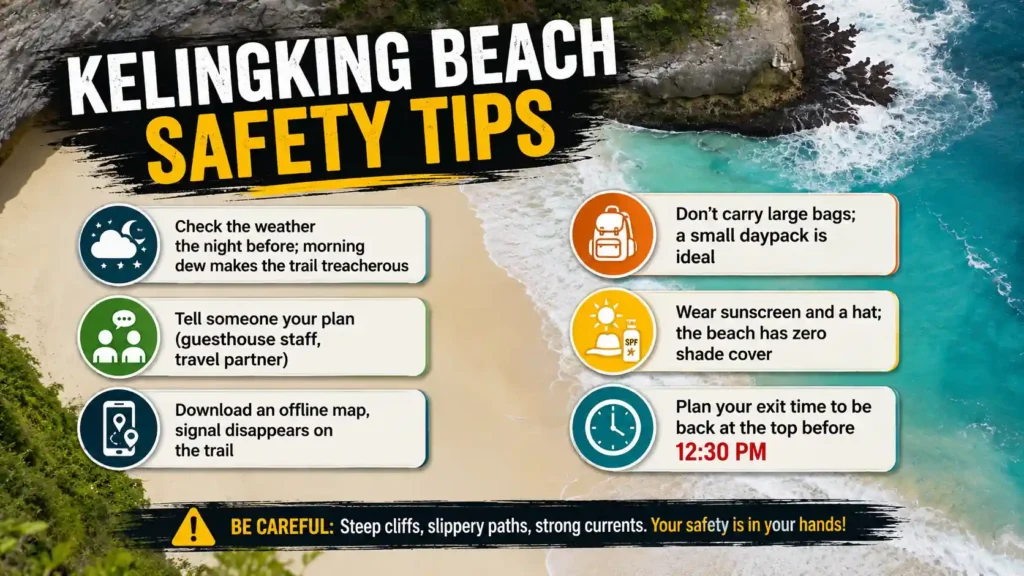
These aren’t just generic advice points. These come from what experienced guides at Nusa Penida Eco-Tourism actually tell visitors before the descent:
- Check the weather the night before; morning dew makes the trail treacherous
- Tell someone your plan (guesthouse staff, travel partner)
- Download an offline map, signal disappears on the trail
- Don’t carry large bags; a small daypack is ideal
- Wear sunscreen and a hat; the beach has zero shade cover
- Plan your exit time to be back at the top before 12:30 PM
What to Wear for a Safe Visit to Kelingking Beach
Footwear is everything. Trail runners or light hiking shoes with decent grip are ideal. Sandals and flip-flops are genuinely risky on the descent. For clothing, light moisture-wicking fabrics work best. A hat, sunglasses, and sunscreen are non-negotiable; the beach section below the cliff has absolutely no shade from about 10 AM onward.
Common Mistakes Visitors Make at Kelingking Beach
Most avoidable incidents come from the same predictable errors. Here’s what to skip:
| Mistake | Why It’s a Problem | What to Do Instead |
| Arriving at noon | Peak heat + crowded trail | Go at 7–8 AM |
| Wearing flip-flops | Zero grip on loose rock | Trail shoes only |
| No water carried | Dehydration risk on a climb | Bring 1.5L minimum |
| Swimming without checking | Rip currents and swells | Observe waves for 10 min first |
| Rushing the descent | Slipping on gravel | Slow and steady pace |
Is Kelingking Beach Safe to Visit?
Kelingking Beach is safe to visit for the viewpoint experience. The cliff hike down is moderately dangerous due to steep, unguarded terrain, and swimming is strongly discouraged due to powerful rip currents and no lifeguard service. Most visitors can enjoy the location safely by staying at the viewpoint and preparing properly for any hike.
Is Kelingking Beach Safe for Families and Kids?
The viewpoint area is perfectly fine for families and young children; it’s flat, fenced in some parts, and the view is absolutely worth the trip. However, the trail descent is not appropriate for children under 10–12, and even older kids should only attempt it with parents who are confident on the terrain themselves.
There’s no shame in doing the viewpoint only. Honestly, the view from the top is one of the most stunning in all of Southeast Asia. Many travelers who’ve done the descent say the view from above is just as impressive, and you save 90 minutes of physically demanding hiking each way.
Emergency and Basic Facilities at Kelingking Beach
This is where things get very real. There is no medical facility at Kelingking Beach. No lifeguards. No emergency rescue infrastructure at the beach level. The nearest clinic is back in Toyapakeh, about 20 minutes by scooter from the viewpoint parking area. Serious injuries require evacuation to Sanur in Bali, which adds significant time.
Basic facilities at the viewpoint include: a few warungs (small food stalls) selling water and snacks, basic toilets, and a small parking area. That’s it. Pack what you need before arriving.
Final Verdict: Is Kelingking Beach Worth Visiting?
100% yes, with clear eyes about what you’re getting into. The viewpoint alone is worth the trip to Nusa Penida. The hike down is a genuine adventure that rewards those who prepare properly. Swimming is a risk most visitors shouldn’t take. But none of this should stop you from going.
Kelingking is one of those places that earns its reputation. Just respect the terrain, read the conditions, and make smart choices when you’re there. It’s not a forgiving place for carelessness, but for prepared, curious travelers, it’s completely incredible.
Why Kelingking Beach Should Be on Your Travel List: Read more in Kelingking Beach Guide: I Almost Turned Back on Bali’s Famous T-Rex Hike.
FAQs About Kelingking Beach Safety
How long does the Kelingking Beach hike take?
The descent takes approximately 30–45 minutes for a fit adult. The return climb takes 45–90 minutes, depending on fitness level and heat. Budget at least 2.5–3 hours total, including beach time.
Is there a risk of falling at Kelingking Beach?
Yes, the trail has loose gravel sections, steep rope segments, and no safety barriers. Falls do occur, particularly on the return climb. Proper footwear and a slow, careful pace significantly reduce the risk.
Do I need a guide at Kelingking Beach?
A guide isn’t mandatory but is recommended for first-timers or those less confident on uneven terrain. Local guides charge around IDR 150,000–200,000 ($10–13 USD) and can be arranged through most Nusa Penida guesthouses.
What time should I arrive at Kelingking Beach?
Aim to arrive by 7:00–8:00 AM. Early morning offers cooler temperatures, smaller crowds on the trail, and better lighting for photos. Avoid arriving after 11:00 AM as the heat and crowds make the experience significantly harder.
Are there toilets at Kelingking Beach?
Yes, basic toilets are available at the viewpoint parking area. There are no facilities at the beach level below the cliff. Plan accordingly before making the descent.