The best mirissa travel tips start with this: visit between November and April for calm seas, whale watching, and dry weather. Mirissa is a small beach town on the south coast of Sri Lanka. It has a curved bay, good waves for surfing, and some of the best whale watching in Asia.
But there are also problems you should know before you go, like unlicensed boats, jellyfish season, and guesthouses that look better in photos than in real life. These Mirissa travel tips also cover how to get there, where to stay on a budget, what to eat, and how to avoid common scams.
What Are the Top Mirissa Travel Tips for First-Time Visitors?
The most important Mirissa travel tips for first-timers: visit between November and April for whale watching, book tours with licensed DWC-registered operators only, always carry cash in LKR (most small guesthouses do not accept cards), stay close to the main beach for easy access to everything, and check sea conditions before swimming. These five steps alone will save you real time and money.
Get Ready for an Unforgettable Mirissa Escape: Read more in Stop! Don’t Book Mirissa Beach Before Reading This.
Best Time to Visit Mirissa and How to Get There
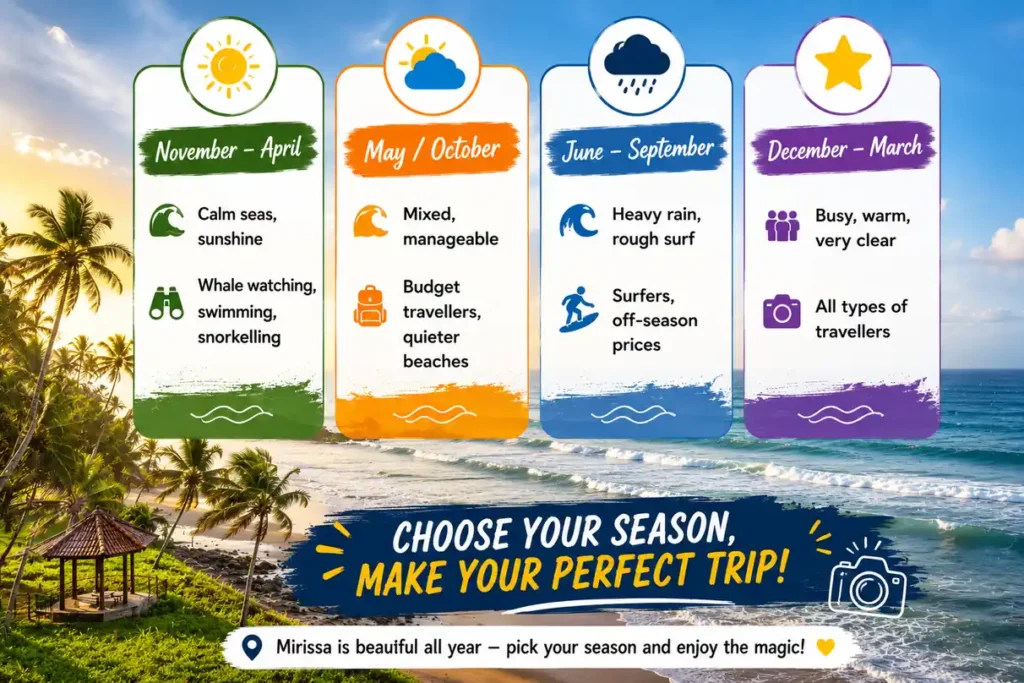
Timing your Mirissa visit matters more than at many other beach destinations. The southern coast operates on two distinct seasons, and they change nearly everything: wave height, water clarity, crowd levels, and whether whale watching boats will even head out.
Find the Best Time for Great Weather and Fewer Crowds: Read more in Best Time to Visit Mirissa So You Don’t Miss the Whales.
This seasonal guide will help you choose the right month for your budget and travel style.
| Season | Months | Conditions | Best For |
| Dry Season | November – April | Calm seas, sunshine | Whale watching, swimming, snorkelling |
| Shoulder | May / October | Mixed, manageable | Budget travellers, quieter beaches |
| Wet Season | June – September | Heavy rain, rough surf | Surfers, off-season prices |
| Peak Dry | December – March | Busy, warm, very clear | All types of travellers |
Getting to Mirissa from Colombo is straightforward. The intercity express train to Matara takes around 3.5 hours and costs approximately LKR 200–400 (roughly $0.60–$1.30 USD in 2026). From Matara, a tuk-tuk to Mirissa costs around LKR 400–700. Buses are cheaper but slower. Travelling from Bandaranaike International Airport, budget around 4–5 hours by road depending on traffic.
Once in Mirissa, the town is compact and walkable. Renting a scooter for around LKR 1,500–2,500 per day gives you the freedom to reach Galle, Weligama, or Tangalle without depending on tuk-tuks for every trip.
Getting Around Mirissa Made Safe and Easy: Read more in How to Get to Mirissa Beach Without Overpaying.
Mirissa Travel Tips: Beaches, Surfing, and Ocean Conditions
Mirissa Beach, the main crescent bay, is the centre of everything. The western end is calmer and better for swimming. The eastern point near Parrot Rock draws surfers. Water clarity is best from November through April, when dry season conditions keep the ocean a warm, clean blue.
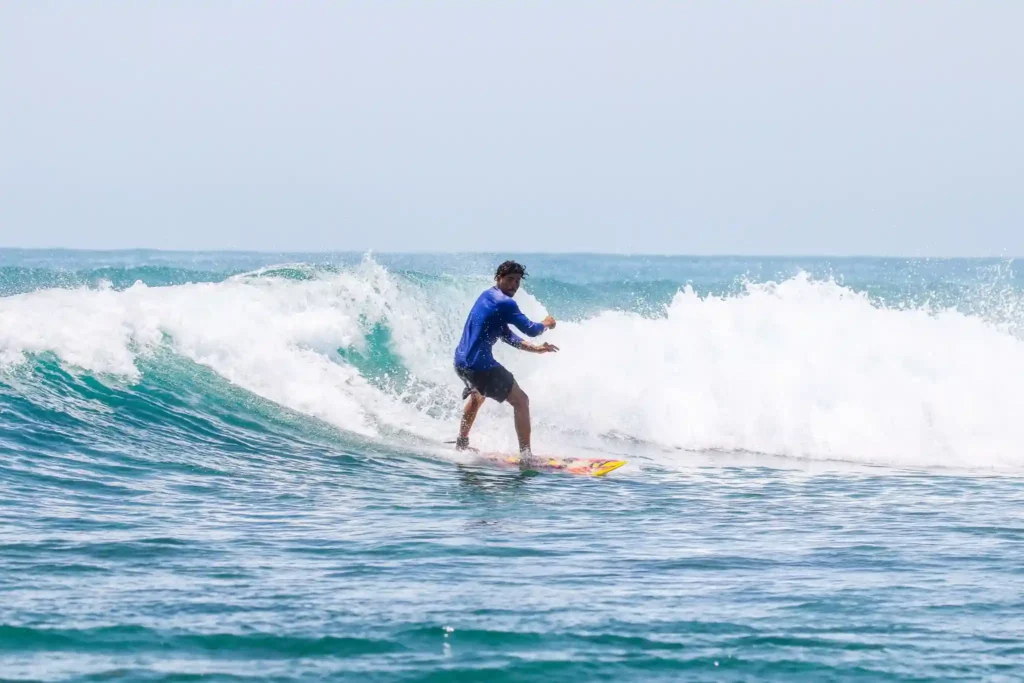
For surfers, Mirissa delivers consistent beginner-to-intermediate waves near the eastern point break. According to Surfline’s global wave database, the most reliable swells at Mirissa typically arrive between November and March, with average wave heights in the 0.8–1.5 metre range. Surf lessons along the main beach cost around $20–$35 USD for two hours, board rental included.
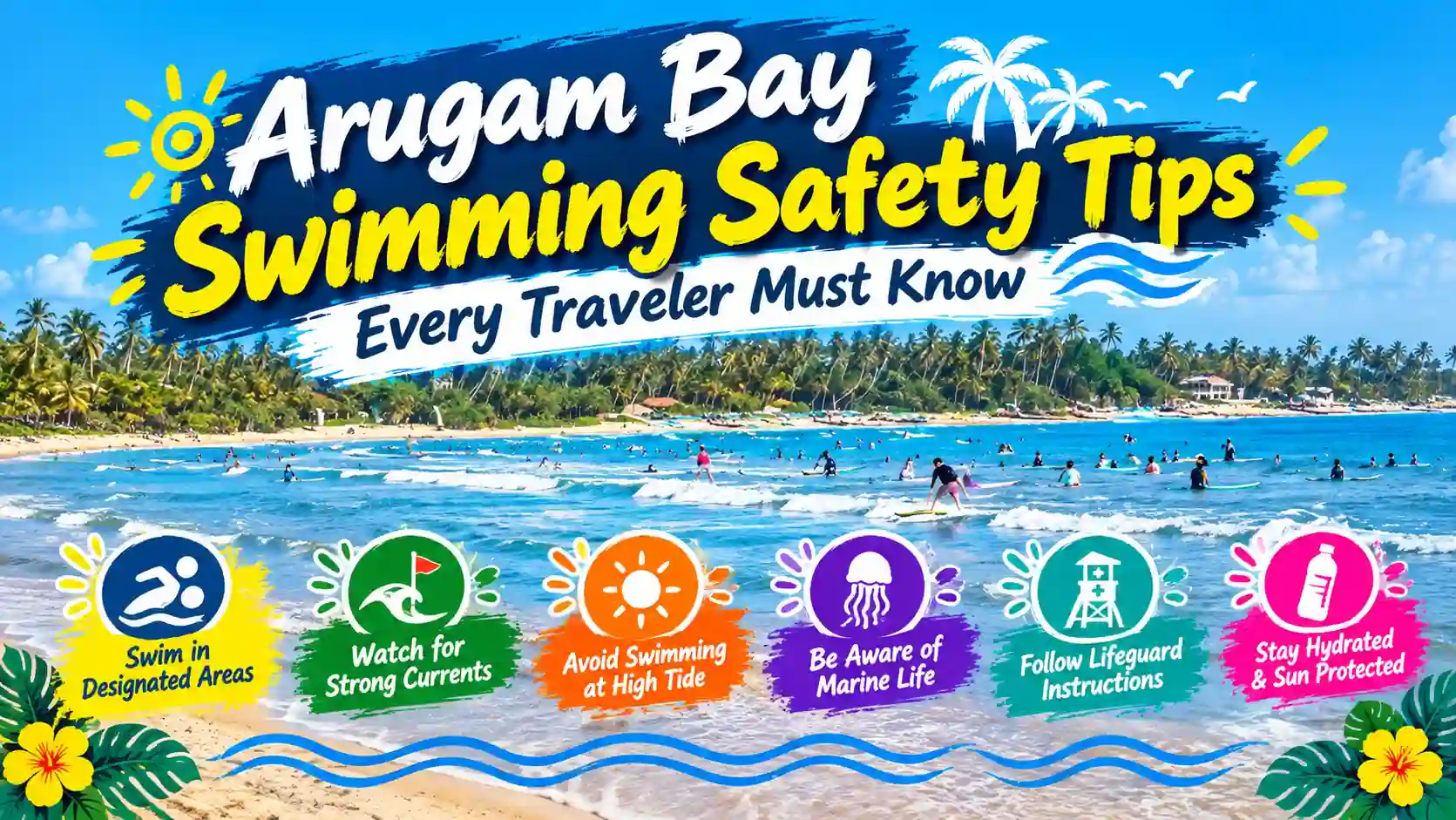
Swimmers should stay in the central section of the bay. The surf zone near Parrot Rock gets choppy as the day builds, and rocks at the base of the point become slippery at lower tides. Lifeguards are not always stationed on the beach, so assess wave conditions carefully before entering the water.
Whale Watching in Mirissa: The Tip That Changes Everything
Blue whales pass through the waters off Mirissa between November and April, with the peak from December through March. Sperm whales and spinner dolphins can be seen year-round. Mirissa is consistently ranked among the best places on earth to observe blue whales from a boat, and on a calm morning with good swell, it is genuinely one of the more extraordinary things you can do in Asia.
Use this comparison before booking, operator quality varies significantly and directly affects your safety and sighting chances.
| Operator Type | Avg. Cost (2026) | Sighting Rate | Key Check |
| Licensed, reputable | $35–$55 USD | High (75–90%) | DWC registration, eco policy |
| Mid-range, unverified | $25–$40 USD | Moderate | Recent reviews, last 3 months |
| Unlicensed budget | $15–$25 USD | Low, safety risk | Often overcrowded — avoid |
Sri Lanka’s Department of Wildlife Conservation requires whale watching boats to maintain a minimum safe distance from whales and to cut engines when near pods. When booking, ask whether the operator is DWC-registered. Boats that chase whales closely are not just unethical; stressed whales dive, which means worse sightings anyway.
How to Plan the Perfect Whale Watching Trip: Read more in Mirissa Whale Watching Brings You Face to Face With Blue Whales for $45.
What Is the Best Time for Whale Watching in Mirissa?
The best time for whale watching in Mirissa is December through March, when seas are calmest and blue whale sightings are most frequent. November and April are also reliable windows. Tours depart between 6:30 AM and 7:30 AM for the best conditions, and most trips last four to six hours.
Where to Stay in Mirissa and What It Will Cost
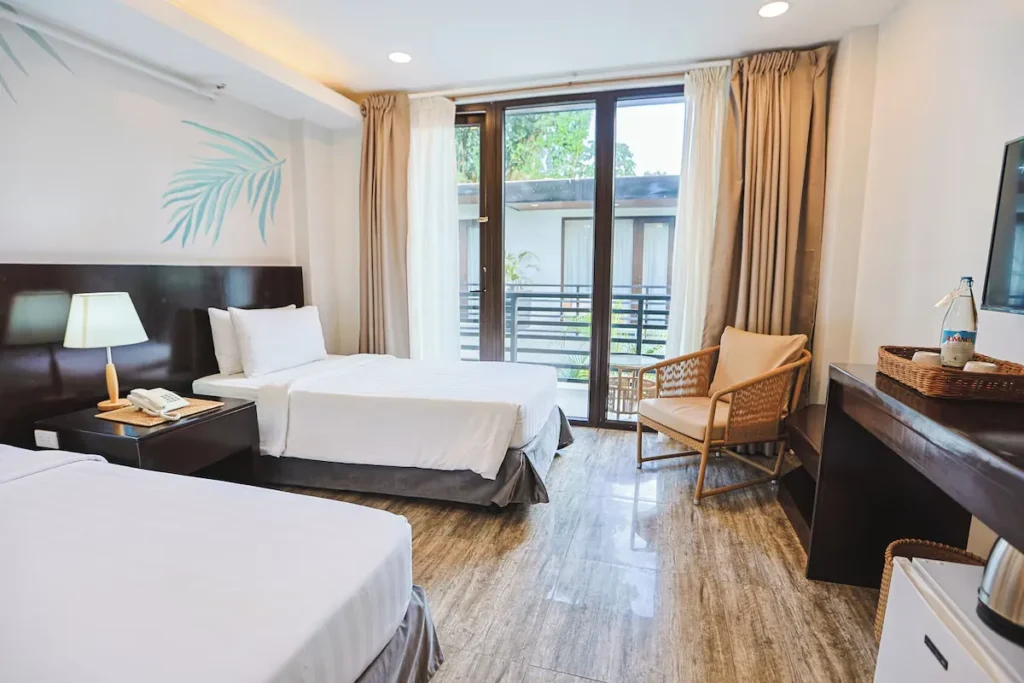
Mirissa suits most budgets. The most affordable guesthouses near the beach start from around $12–$18 USD per night. Mid-range options with air conditioning, pools, and partial ocean views run $40–$80. Boutique eco-stays sit in the $85–$130 range, and the handful of full-service luxury properties start around $150. Prices rise sharply in peak season (December–March) and drop noticeably in the wet months.
This accommodation guide gives you an honest picture of what to expect for your money in Mirissa right now.
| Type | Price Range (2026) | What You Get | Best For |
| Budget guesthouses | $12–$25/night | Fan room, basic breakfast | Solo travellers, backpackers |
| Mid-range stays | $35–$75/night | A/C, pool, sea views | Couples, comfort seekers |
| Boutique eco-stays | $85–$130/night | Sustainable design, character | Design-conscious travellers |
| Luxury hotels | $150+/night | Full service, rooftop pools | Honeymoons, special trips |
Book accommodation well in advance for December through March. During peak whale watching season, even decent budget options fill up weeks ahead of arrival. Last-minute rooms exist, but prices climb steeply.
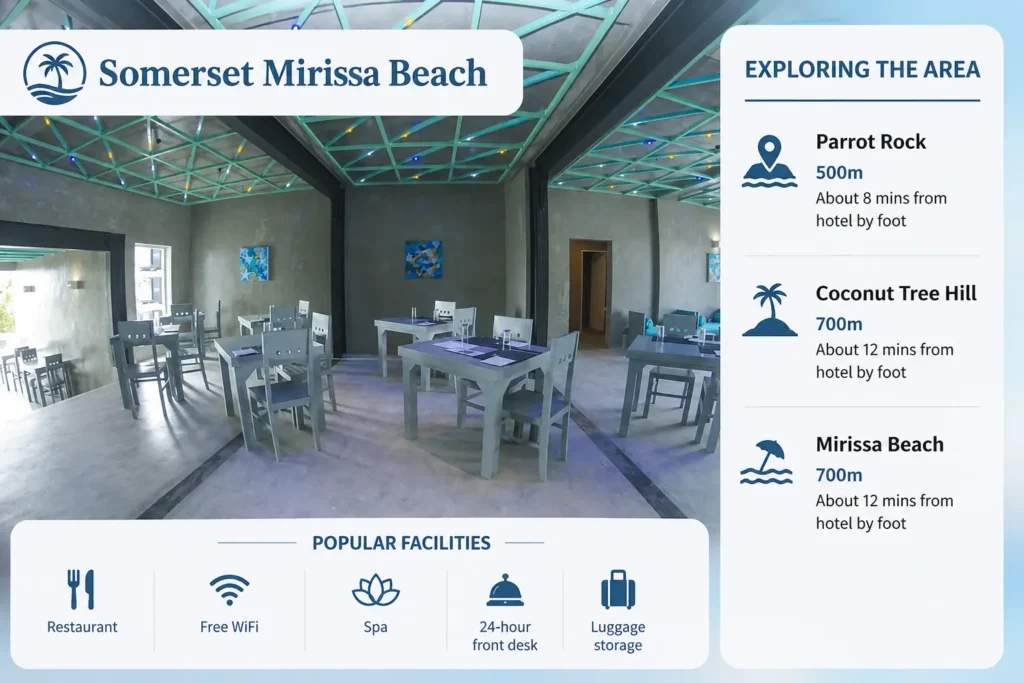
Choose Somerset Mirissa Beach if being within walking distance of Mirissa’s top attractions is your priority.
Food, Money, ATMs, and Common Scams to Avoid
A rice and curry plate at a local restaurant costs around LKR 300–600 ($1–$2 USD). Beach restaurants charge more, but Mirissa’s grilled tuna and fresh seafood are genuinely worth the extra spend, particularly at smaller family-run spots rather than tourist-facing operations.
ATMs are available in Mirissa town centre and near the main beach road. Most small guesthouses, surf schools, and street food stalls operate cash-only. Foreign cards work at most ATMs in 2026, but withdrawal limits and international fees vary by bank. Withdrawing larger amounts reduces repeated charges.
Watch out for these common tourist scams:
- Unlicensed whale watching: Touts near the beach offering tours at $15 or under. These boats are often overcrowded, poorly maintained, and skip basic safety checks.
- Tuk-tuk detours: Always agree on the fare before getting in. Routes that “happen” to pass a gem store or coconut oil shop are deliberate.
- Guaranteed sightings: No legitimate whale watching operator promises 100% sightings. If someone does, walk away.
- Photo-misleading guesthouses: Always verify with recent Google or Booking.com reviews before committing. A few listings use photos from other properties entirely.
Is Mirissa Safe for Tourists?
Yes, Mirissa is generally safe for tourists. Sri Lanka is rated a low-crime destination for visitors according to the UK Foreign, Commonwealth & Development Office (FCDO)o travel advisory for Sri Lanka.
The main risks in Mirissa are opportunistic petty theft on crowded beaches, rough ocean conditions during the wet season (June–September), and unlicensed tour operators. Standard precautions, securing valuables, checking surf conditions, and booking registered tours cover the majority of situations visitors encounter.
How to Enjoy Mirissa Beach Without Worries: Read more in Is Mirissa Safe? The Answer Might Surprise You.
Culture, Eco Travel, Health Tips, and Day Trips from Mirissa
Mirissa sits near several Buddhist temples, and the surrounding area follows cultural customs that visitors should respect. Dress modestly away from the beach; covering shoulders and knees is expected. Shoes come off before entering any temple. Keep noise down near religious sites, especially in the early morning.
For eco-conscious travel: use reef-safe sunscreen (several local shops stock it), avoid single-use plastic where possible, and skip coral or shell souvenirs; many are sourced illegally. A growing number of Mirissa guesthouses now operate with sustainability commitments, and these are easy to identify through eco-certification listings.
Day trips worth making:
- Galle Fort, 40 minutes by bus; a UNESCO World Heritage Site with Dutch colonial architecture and excellent cafés.
- Weligama Bay, 15 minutes east; shallower water and ideal conditions for beginner surfers.
- Udawalawe National Park, about 2 hours inland; excellent year-round elephant sightings.
- Tangalle, 45 minutes west; a quieter beach town with calmer water and fewer tourists.
On health basics: drink bottled water only, carry oral rehydration salts for heat exhaustion, and bring standard stomach medication. Mosquito repellent is useful for evenings, particularly between May and October.

If unforgettable wildlife moments are what you’re after, this Udawalawe safari won’t disappoint.
Quick Tips for a Smooth Trip
- Book whale watching early. Boats fill up fast in peak season (December to April), so reserve a day or two ahead if you’re staying in Mirissa.
- Start surf lessons in the morning. Weligama Bay is calmer before 10 am, which makes it easier for beginners.
- Stay in one town, visit the other. Mirissa and Weligama are only 10 kilometres apart, so a tuk-tuk or short taxi ride lets you enjoy both without moving hotels.
- Carry cash for small vendors. Beach bars, tuk-tuks, and local food stalls often don’t accept cards.
- Check the season before you pick. Mirissa suits whale watching and nightlife best from December to April. Weligama’s surf works well most of the year, but conditions are calmest November to April.
Frequently Asked Questions
Q: When is the best time to visit Mirissa?
November to April is the best time to visit Mirissa. Seas are calm, the weather is consistently dry and sunny, and blue whale sightings peak during this window. December and January are the busiest months but offer the most reliable conditions overall.
Q: How much does a day in Mirissa cost?
Budget travellers can manage on $25–$40 USD per day covering a guesthouse, local meals, and tuk-tuks. Mid-range travellers spending $60–$100 per day will have comfortable accommodation, restaurant meals, and a whale watching tour factored in. Costs are higher in peak season from December through March.
Q: Is Mirissa good for beginner surfers?
Yes. Mirissa has accessible waves that suit beginners, especially near the eastern point break. Lessons are widely available for around $20–$35 USD including a board. The dry season from November to March gives the most consistent conditions for learning.
Q: Do I need a visa to visit Sri Lanka in 2026?
Most nationalities require an Electronic Travel Authorisation (ETA) to enter Sri Lanka. As of 2026, the ETA costs around $20–$50 USD depending on nationality and is applied for online before travel. Always check current requirements on the official Sri Lanka ETA portal before booking.
Q: Is Mirissa Beach safe for swimming?
The central section of Mirissa Beach is generally safe for swimming during the dry season at high tide. The eastern surf zone near Parrot Rock is rougher and better suited to surfers. Always check sea conditions before entering the water, and avoid swimming alone during the wet season months.
Q: What should I pack for a trip to Mirissa?
Pack reef-safe SPF 50+ sunscreen, a hat, reef shoes for rocky areas, light cotton clothing, a Type D/G power adapter, a reusable water bottle, cash in LKR, and mosquito repellent. A dry bag is useful on whale watching tours.