Anda Beach generally charges ₱20 per person at the LGU-managed public section. Understanding the anda beach entrance fee and rules before your visit helps you avoid unexpected costs and common mistakes at the gate.
Nobody talks about Anda Beach the way they talk about Panglao. That’s exactly why it’s worth planning your visit carefully. The Anda Beach entrance fee and rules are simpler than most tourists expect, but the handful of people who show up unprepared tend to find out the hard way, usually at the gate, under the midday sun, with zero change in their wallets.
Anda is a quiet municipality in the southeastern tip of Bohol, about 2.5 to 3 hours from Tagbilaran. It’s the kind of beach that rewards slow travelers: calm turquoise water, almost no vendors, coral just below the surface, and a crowd that stays manageable even on weekends. But before you go, understanding the Anda Beach entrance fee and rules will save you genuine frustration, a possible fine, and maybe even a few hundred pesos in unnecessary charges.
This guide covers everything: fees, schedules, swimming regulations, visitor guidelines, what you can and can’t bring, and a few things even repeat visitors tend to get wrong. Whether you’re visiting for a few hours or spending the entire day by the water, knowing the Anda Beach entrance fee and rules beforehand helps you avoid surprises and enjoy a smoother beach experience.
| Item | Typical cost or rule |
| Public entrance fee | ₱20 per person |
| Motorcycle parking | ₱20 |
| Car parking | ₱50 |
| Public access hours | 6:00 AM–6:00 PM |
| Snorkel rental | ₱100–₱200 |
| Main restrictions | No littering, coral collecting or campfires |
Quick Answer: What Is the Anda Beach Entrance Fee and Rules ?
The standard entrance fee at Anda Beach in Bohol is ₱20 per person for day visitors. Foreign tourists pay the same rate. Some resort-managed sections may charge separately, and parking costs between ₱20 and ₱50, depending on vehicle type.
Is There an Entrance Fee at Anda Beach? Current Ticket Prices
Many budget travelers wonder about this because different parts of Anda’s coastline are managed under different rules. Part of the beach falls under the local government unit (LGU), while resorts like Anda White Beach Resort and several smaller operations manage their own stretch. The LGU-managed portion is where most day visitors go, and that’s the one with the ₱20 gate fee.
Here’s a breakdown of current Anda Beach ticket prices for different visitor types:
| Visitor Type | Entrance Fee | Notes |
| Filipino Adults | ₱20 | LGU-managed section |
| Foreign Tourists | ₱20 | Same rate as locals |
| Children (below 3 ft) | Free | No charge at most sections |
| Senior Citizens (60+) | Free or discounted | Present a valid OSCA ID |
| PWD Visitors | Free or discounted | Present PWD ID at the gate |
If you’re entering through a resort, expect a separate environmental or amenity fee ranging from ₱50 to ₱150, which typically covers use of their facilities like restrooms, cottages, or shower areas. Some resorts waive this fee if you order from their restaurant, which, from personal observation, is genuinely worth doing because the local seafood is cheap and fresh.
Extra Charges You Might Encounter
The ₱20 base fee is just the start if you’re not careful about which section you’re entering. Cottage rentals can run anywhere from ₱200 to ₱800, depending on size and location. Some beach cottages are LGU-owned and significantly cheaper, around ₱150 to ₱300 for a full day. Privately-owned cottages near the water are pricier but usually cleaner and come with tables.
Environmental fees pop up occasionally, especially during peak season (December to May). These are usually ₱10 to ₱30 and go toward coastal cleanup programs run by the barangay. You probably won’t get a receipt, but paying it is the right thing to do. The reef remains in good condition compared to many other beaches in Bohol, thanks in part to years of conservation efforts by local organizations.
- Cottage rental: ₱150–₱800 depending on size and proximity to the water
- Snorkeling equipment rental: ₱100–₱200 per set
- Environmental fee (seasonal): ₱10–₱30 per person
- Locker or storage: ₱50 flat rate at some resorts
- Shower use without accommodation: ₱20–₱50

Parking Fees and Vehicle Access
Getting to Anda from Tagbilaran means either renting a motorbike, hiring a habal-habal, or chartering a van or car.Visitors traveling by private vehicle will find parking available near the main beach area, with fees that are generally lower than those at many other tourist beaches in the Philippines.
Parking Fees vary by vehicle type. Here’s what to expect at Anda Beach:
| Vehicle Type | Parking Fee | Availability |
| Motorcycle / Habal-habal | ₱20 | Available near the main gate |
| Tricycle | ₱30 | Designated tricycle area |
| Car / SUV | ₱50 | Limited spaces, arrive early |
| Van / Bus | ₱100 | Advance coordination recommended |
One thing that catches people off guard: the road into Anda is long and narrow in places. If you’re coming from Carmen or Ubay on the eastern route, it’s a winding drive with some sections that feel a bit rough after rain. Two-wheelers handle it more easily than big vehicles, and the fuel situation in Anda town itself is limited, so top up before you leave the main highway.
What Are the Beach Access Hours at Anda?
Anda Beach is generally open to visitors from 6:00 AM to 6:00 PM daily. Some resort sections allow guests access until 8:00 PM. Overnight stays require accommodation booking through a registered resort or homestay.
The 6 AM to 6 PM window is the standard for the LGU section. Sunrise is a highlight for many travelers, and arriving before regular staffing hours may occasionally provide easier access to the beach area. That said, don’t count on it as a guaranteed workaround.
Rules Every Visitor Should Follow at Anda Beach
Anda doesn’t have a long list of intimidating signs posted at the gate, but the rules are real and enforced with more consistency than you might expect for a quiet provincial beach. The local government and the barangay coastal management team take the environmental rules especially seriously, partly because the reef here is a documented marine sanctuary and partly because the community genuinely depends on it.
What Are the Main Rules at Anda Beach, Bohol?
No littering, no spearfishing, no collecting of coral or live shells, no alcohol in public beach areas after 10 PM, no campfires without special permission, and no motorcycle riding on the sand. These are the core Anda Beach entrance fee and rules every visitor must follow.
The littering rule is strict. Anda is not Boracay, and there’s no massive cleanup crew sweeping the beach every morning. The sand stays clean because the community keeps it that way, and visitors are expected to carry out what they bring in. There are waste bins near the entrance and along the main stretch, so there’s no excuse for leaving anything behind.
- No littering, fines of ₱500 to ₱1,000 can be imposed by barangay officials
- No collecting of corals, sea shells, starfish, or any marine life
- No spearfishing or use of destructive fishing methods near the sanctuary
- No motorcycle riding or vehicular access on the beach sand
- No loud music after 9 PM in public areas
- No alcohol in open containers outside designated resort areas after 10 PM
Know the beach rules before you visit: read more in the Anda Beach Bohol Travel Guide: Where the Crowds End and Real Bohol Begins.
Swimming Safety Guidelines at Anda Beach
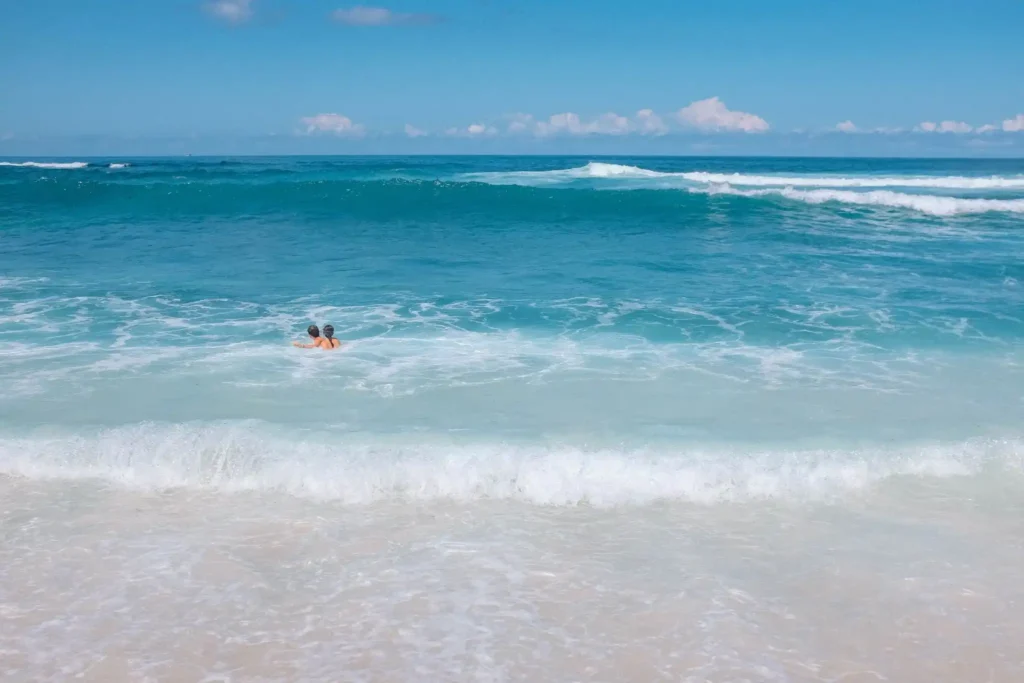
Anda’s water is calmer than most Bohol beaches during the dry season, but that can create a false sense of security. The area around the reef edge has currents that shift with the tide, and during the wet season between July and October, waves can build up with little warning. There are no permanent lifeguard posts at the main LGU beach section as of recent visits; that’s a gap worth knowing about.
Swimming is generally safe from November to June. Monsoon season sometimes brings warning flags at the beach entrance, and these should not be ignored, as even experienced swimmers can encounter strong undertow near reef edges.
- Swim within flagged zones when markers are present
- Don’t swim alone, especially near the reef edge or during low visibility
- Avoid the water during jellyfish season (usually August–October) without a rashguard
- Snorkeling near the marine sanctuary is allowed, but touching coral is prohibited
- Children should be supervised at all times. The seabed drops off faster than it looks
What Are the Swimming Safety Guidelines at Anda Beach?
Standard swimwear is acceptable at Anda Beach. Bikinis and board shorts are common. However, when walking through Anda town or entering restaurants and public areas, wearing a cover-up or sarong is respectful and expected by local community standards.
The beach itself is relaxed about swimwear; nobody’s going to stop you at the gate for wearing a two-piece. But Anda is a predominantly Catholic fishing community, and the town proper sits right next to the beach. Walking through the market or stopping at a local eatery in just a swimsuit will get you some long stares, and not the friendly kind. Keep a sarong or light shirt handy, especially if you’re heading out for food.
Can You Bring Pets to Anda Beach?
Pets are usually not permitted on the main LGU-managed beach area in Anda. However, some private resorts may allow dogs if they are on a leash, but it’s always best to confirm directly with the resort before visiting. Keep pets away from the marine sanctuary area entirely.
Bringing Food, Drinks, and Picnic Gear
You can bring your own food and drinks to the LGU beach section without any issue.You’re free to bring your own food and drinks to the LGU-managed beach area without any problems. In fact, it’s one of the advantages of visiting Anda, especially for budget travelers, since unlike more commercial beaches, there are no corkage fees for enjoying your own meals on the sand. You can easily pack rice meals, sandwiches, or snacks just make sure to clean up after yourself and take all your waste with you when you leave.
Bohol enforces provincial environmental rules that discourage the use of single-use plastic bags. For this reason, visitors should pack their food in reusable containers. Doing so not only makes transportation easier but also supports local eco-friendly practices that the community appreciates. Some vendors along the roadside sell fresh buko (coconut water) for around ₱20 per piece, and that’s honestly the best drink you’ll find on a hot day there.
Resort sections may have their own corkage rules if you bring outside food or drinks onto their premises. It varies; some charge ₱50 to ₱100, some don’t bother if you buy at least one item from their kitchen. Worth asking before you set up camp.
On drones: there’s no official no-fly zone designation for Anda Beach as of the most recent LGU notices, but the Civil Aviation Authority of the Philippines (CAAP) rules still apply. Class 1A drones under 7kg can be flown without a permit in most open areas, but you need to maintain a visual line of sight and stay below 60 meters. Don’t fly over people on the beach without their knowledge. Some barangay officials have started asking for drone permits informally, so having your registration papers handy avoids any friction.
Camping, Bonfires, and Overnight Stay Policies
Travelers sometimes pitch tents on the beach at Anda without incident, but local government (LGU) rules do not officially allow beach camping unless campers coordinate with the barangay beforehand. If you camp without prior approval, local authorities may ask you to leave. The better option is booking one of the several affordable beachfront guesthouses in Anda, many of which cost ₱500 to ₱1,500 per night and sit close enough to the water that you can hear the waves from bed.
Bonfires are prohibited on the beach. This is both a fire safety rule and an environmental one; the dry vegetation near the shoreline and proximity to coral reef areas make open fires genuinely risky. Resorts with designated fire pits are a different story, but ask first.
Is Snorkeling Allowed at Anda Beach?
Visitors can snorkel at Anda Beach and the nearby reef sections. Local vendors rent snorkeling equipment for ₱100–₱200. However, authorities strictly prohibit touching, stepping on, or collecting coral and marine life, and violators may face fines.
Can you snorkel at Anda Beach? Find out: read more in Anda Snorkeling Guide: Reefs So Good You’ll Forget Panglao.
Environmental Rules and Protected Areas
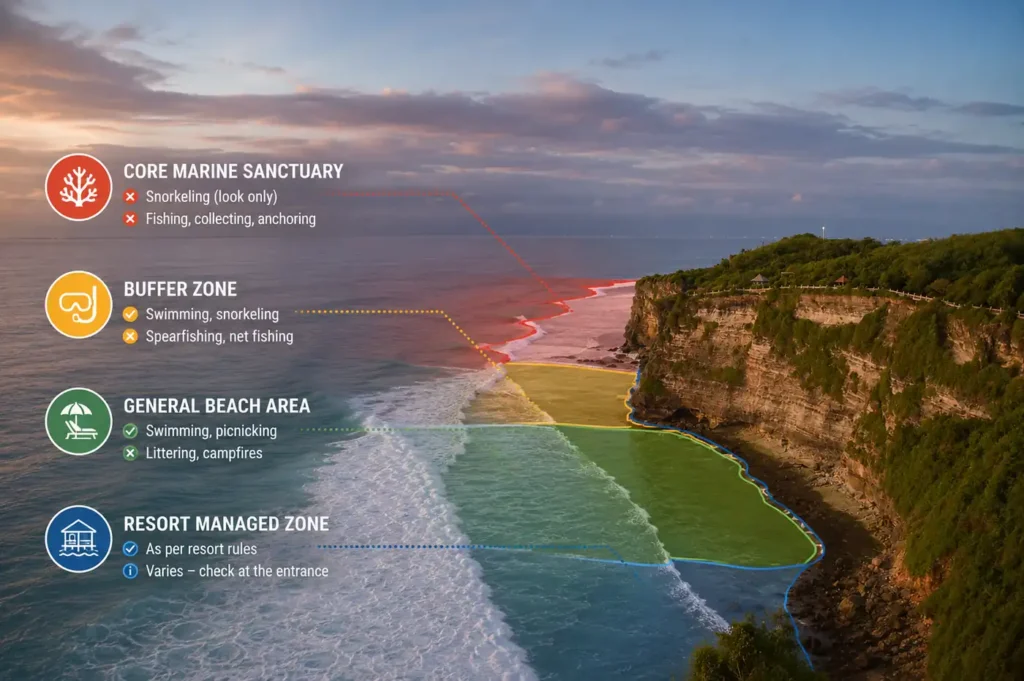
Anda’s marine sanctuary zones have specific restrictions; knowing these keeps you on the right side of both the law and the locals:
| Zone Type | Activity Allowed | Activity Prohibited |
| Core Marine Sanctuary | Snorkeling (look only) | Fishing, collecting, anchoring |
| Buffer Zone | Swimming, snorkeling | Spearfishing, net fishing |
| General Beach Area | Swimming, picnicking | Littering, campfires |
| Resort Managed Zone | As per resort rules | Varies — check at the entrance |
Local communities have managed the marine sanctuary at Anda since the early 2000s, and they have achieved genuinely impressive coral recovery in some sections compared to other reef systems across the Visayas. Locals take violations seriously.
The reef near Anda’s shoreline is one of the main draws for visitors who’ve heard about it on Bohol travel forums. Visibility on a calm morning can reach 10 to 15 meters, and the fish diversity is notably better here than the more trafficked reefs near Panglao. Fin carefully. The coral heads in the shallows are easy to accidentally kick if you’re not paying attention, especially when waves push you around.
Enforcement is inconsistent, as it tends to be with most rural Philippine beaches, but that’s not really the point. The barangay tanods patrol the area, particularly on weekends. Littering fines are the most common enforcement action. Authorities treat violations inside the marine sanctuary more seriously and may coordinate with the Bureau of Fisheries and Aquatic Resources (BFAR) in severe cases.
What Happens If You Break the Rules?
Violations of Anda Beach rules, including littering, collecting marine life, or ignoring restricted zones, can result in fines ranging from ₱500 to ₱5,000 under local ordinances and Republic Act 10654 (protecting Philippine fisheries). Repeat offenders can be barred from re-entry.
Family-Friendly Facilities and Accessibility at Anda Beach
Anda is a genuinely good choice for families. The water near the shore is shallow for a good stretch, the sand is clean, and the general atmosphere is calm without the vendor hawking and noise of busier beach destinations. Basic restroom facilities exist near the main LGU section, though they’re simple; don’t expect resort-level washrooms.
For senior citizens and PWD visitors, the beach access path from the main gate is mostly flat but unpaved in sections, which can be tricky with mobility aids after rain. The best approach is to arrive early when the sand is firmer and drier. Senior citizens who present a valid OSCA ID and persons with disabilities (PWDs) who show a valid PWD card typically receive entrance fee discounts or exemptions, in accordance with national law.
Common Mistakes First-Time Visitors Make
The most frequent one is arriving without small bills. The gate attendant is not going to have change for a ₱500 note at 7 AM. Bring exact change or at least ₱100 bills. Second most common: not bringing enough water. Anda has limited vendors, and the heat between 10 AM and 2 PM is serious. A liter per person isn’t enough for a full day.
- Arriving at peak noon heat without shade gear or sun protection
- Not confirming cottage availability in advance during Holy Week or summer weekends
- Assuming ATMs are easily accessible, the nearest reliable ATM is in Anda town, and it runs out of cash on busy weekends
- Entering the marine sanctuary zone without knowing its boundaries
- Leaving food packaging under cottages or buried in sand, it still counts as littering
Money-Saving Tips for Visiting Anda Beach on a Budget
Here’s a realistic budget breakdown for a day trip to Anda Beach from Tagbilaran:
| Expense | Budget Option | Mid-Range Option |
| Entrance Fee | ₱20 per person | ₱20 (same for all) |
| Transport (per person) | ₱150–₱200 (shared van) | ₱500–₱800 (private hire) |
| Cottage Rental | ₱150–₱200 (LGU cottage) | ₱400–₱800 (resort) |
| Food & Drinks | ₱150–₱250 (packed or local) | ₱400–₱700 (resort restaurant) |
| Snorkel Rental | ₱100 (basic set) | ₱200 (full set with mask) |
| Total Estimate | ₱570–₱770 / person | ₱1,320–₱2,320 / person |
The real budget move is combining the Anda trip with a stay in Anda town itself rather than commuting from Tagbilaran. Guesthouses in the area run ₱500 to ₱1,200 per night for a basic but clean room, and you eliminate the 3-hour round-trip transport cost. As part of any solid Bohol travel guide budget plan, Anda works best as a 2-day stop rather than a rushed day trip.
Save more on your Anda Beach trip: read more in Bohol Travel Guide Budget: How to See More and Spend Less.
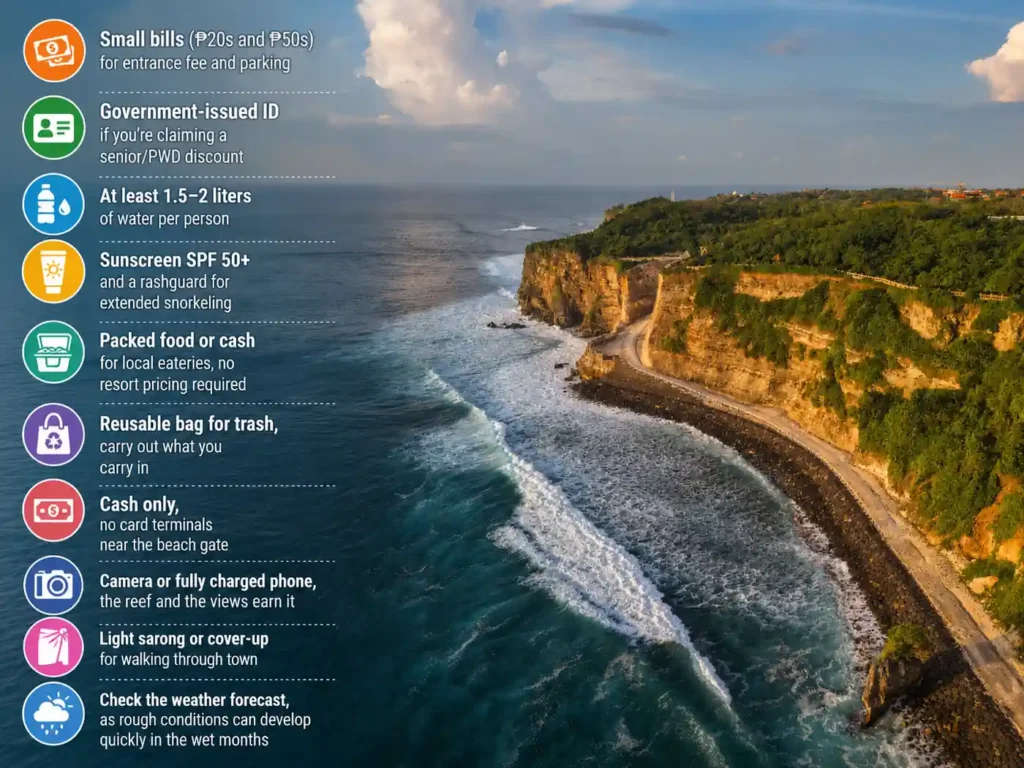
Final Visitor Checklist Before You Go to Anda Beach
- Small bills (₱20s and ₱50s) for entrance fee and parking
- Government-issued ID if you’re claiming a senior/PWD discount
- At least 1.5–2 liters of water per person
- Sunscreen SPF 50+ and a rashguard for extended snorkeling
- Packed food or cash for local eateries, no resort pricing required
- Reusable bag for trash, carry out what you carry in
- Cash only, no card terminals near the beach gate
- Camera or fully charged phone, the reef and the views earn it
- Light sarong or cover-up for walking through town
- Check the weather forecast, as rough conditions can develop quickly in the wet months
Is Anda Beach Worth Visiting?
Anda Beach is absolutely worth the journey, especially if you want clear water, peaceful surroundings, and an affordable alternative to Bohol’s busier beaches. Visitors pay only a minimal entrance fee, can easily follow the rules, and can avoid most additional costs with a little preparation. Bring small bills, enough drinking water, reef-safe sunscreen, and respect the protected marine areas. When visitors follow the local guidelines and leave the beach as clean as they found it, Anda remains the quiet and beautiful coastal escape that makes the long trip worthwhile.
Frequently Asked Questions About Anda Beach Entrance Fee and Rules
Q1: How much is the entrance fee at Anda Beach?
The standard entrance fee is ₱20 per person for the LGU-managed beach section. Children below a certain height (roughly 3 feet) typically enter for free. Resort-managed beach sections may charge separate amenity fees ranging from ₱50 to ₱150.
Q2: Are foreigners charged a different entrance fee at Anda Beach?
No. As of recent visits, foreign tourists pay the same ₱20 entrance fee as Filipino visitors at the public beach section. This is different from some other tourist sites in Bohol and the Philippines, where tiered pricing applies.
Q3: What time does Anda Beach open and close?
The LGU beach section is generally open from 6:00 AM to 6:00 PM daily. Overnight access requires accommodation at one of the registered resorts or guesthouses in the area, which have their own check-in and check-out policies.
Q4: Is snorkeling allowed at Anda Beach?
Yes. Visitors can snorkel near the reef and in the buffer zones around the marine sanctuary. Local vendors rent snorkeling equipment for ₱100 to ₱200 per set. Authorities strictly prohibit visitors from touching, standing on, or collecting coral and marine life.
Q5: Can I bring my own food and drinks to Anda Beach?
Yes, at the LGU-managed section. There’s no corkage fee for outside food. Resort sections may charge a nominal corkage fee if you use their facilities while bringing your own food. Bringing reusable containers is strongly encouraged.
Q6: Is there parking at Anda Beach?
Yes. Parking is available near the main entrance. Fees range from ₱20 for motorcycles to ₱50 for cars and ₱100 for vans. Spaces are limited, especially on weekends, so arriving before 9 AM is advisable.
Q7: Are drones allowed at Anda Beach?
There’s no specific LGU drone ban at Anda Beach, but CAAP national regulations apply. Registered drones under 7kg can be flown with visual line-of-sight and below 60 meters. Avoid flying directly over other beachgoers and keep registration documents with you.
Q8: What should I do if I see someone violating rules at Anda Beach?
Report it to the nearest barangay tanod or gate attendant. Violations inside the marine sanctuary can also be reported to BFAR (Bureau of Fisheries and Aquatic Resources). Most local authorities appreciate the heads-up, especially on environmental violations.