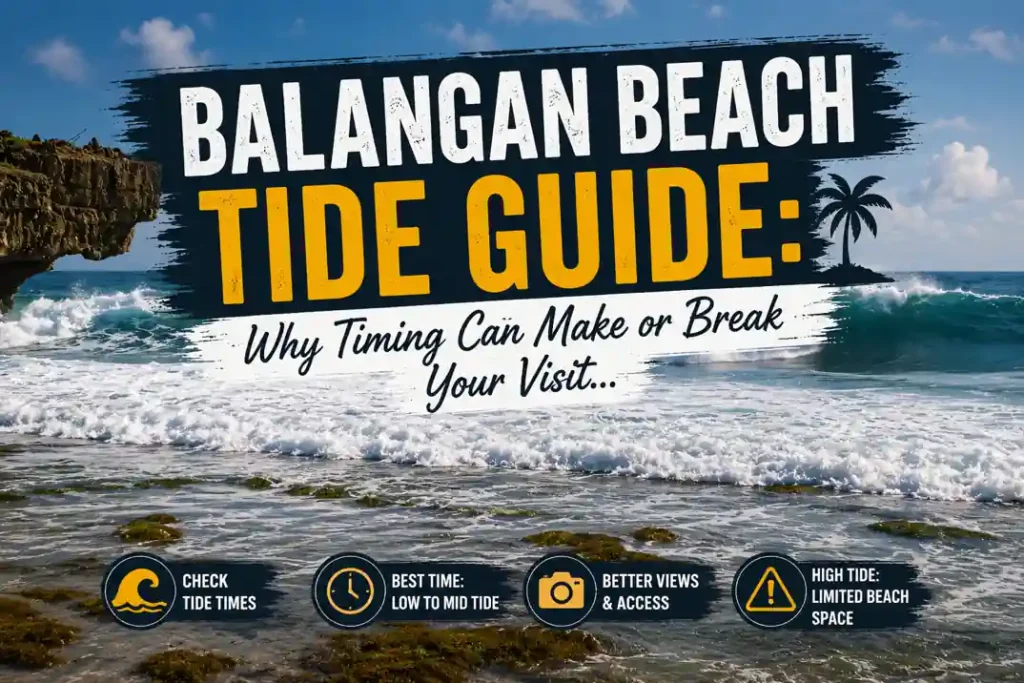
If you’ve ever shown up to a beach and thought, “This isn’t what I pictured,” chances are the tide had something to do with it. At Balangan, that’s especially true.
The Balangan Beach tide isn’t just a background detail; it literally reshapes the beach. At low tide, you get wide stretches of exposed reef, shallow pools, and that dramatic rocky foreground that makes the photos look unreal. At high tide, the water climbs right up to the cliff base, the sand almost disappears, and swimming becomes a completely different experience. So yeah. Timing matters a lot here.
I visited Balangan twice, once by accident at high tide (not ideal) and once planned properly at low tide on a calm morning. The difference was night and day. The second time felt like a completely different beach. And understanding the Balangan Beach tide cycle was honestly the one thing that made the second trip so much better./;p//
High Tide vs. Low Tide at Balangan Beach: What Actually Changes
Bali’s southern coast follows a semi-diurnal tide pattern, which basically means two high tides and two low tides every 24 hours. The difference between the two extremes at Balangan can be anywhere from 1.2 to 2.5 meters, depending on the season, which is a meaningful shift for a beach this size.
Here’s a quick breakdown of what changes:
Here’s how the beach experience shifts between tidal extremes at a glance.
| Condition | Beach Width | Reef Visibility | Swimming Safety | Photography |
| Low Tide (0–0.5m) | Wide, 20–30m | Full reef exposed | Calm & shallow | Best golden light shots |
| Mid Tide (0.5–1.2m) | Moderate | Partially exposed | Generally fine | Good overall |
| High Tide (1.5m+) | Narrow to none | Submerged | Moderate currents | Limited sand shots |
| King Tide (2m+) | Minimal | Fully submerged | Not recommended | Focus on cliffs |
The sand at Balangan is coarse and mixes with crushed coral; it doesn’t disappear completely at high tide, but it gets significantly compressed. If you were planning to lay a towel down and spend three hours sunbathing, high tide will feel cramped fast.
Best Tide Time for Swimming at Balangan Beach
The sweet spot for swimming here is during the incoming mid-tide, roughly when the water is rising from low toward mid-level. The reef hazards are still partially visible, currents are gentle, and the water is clear enough to see the bottom.
Avoid swimming:
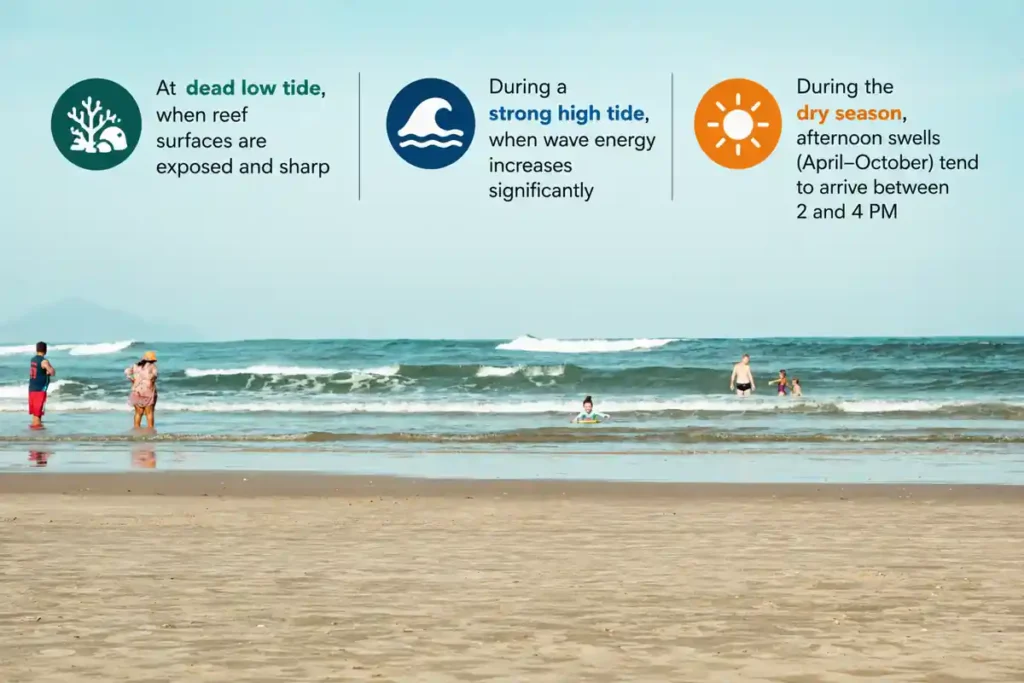
- At dead low tide, when reef surfaces are exposed and sharp
- During a strong high tide, when wave energy increases significantly
- During the dry season, afternoon swells (April–October) tend to arrive between 2 and 4 PM regardless of tide
The water temperature at Balangan sits around 27–29°C year-round, which is comfortable for extended swims. But local lifeguards (yes, there are a few based near the warungs on the cliff side) consistently recommend the 7:30–10:00 AM window as the safest swim time, when the tide is typically rising, and swell is lowest.
What Is the Safest Tide Level for Swimming at Balangan Beach?
The safest tide level for swimming at Balangan Beach is between 0.6 and 1.2 meters, mid-tide range. At this level, the sharp reef is covered, currents are manageable, and wave breaks are consistent without becoming dangerous. Avoid swimming below 0.4 meters (exposed reef hazard) or above 1.8 meters during swell season (strong rip potential near the cliff base).
When Balangan Beach Looks Its Most Beautiful
Honestly? Early morning at low tide during the dry season. Full stop.
There’s something about that combination, the golden hour light bouncing off wet reef, the cliffs still purple-grey in the shadow, the warungs not yet open, a couple of surfers paddling out, it’s the version of Balangan that lives rent-free in your memory for years.
The beach faces southwest, which means:
- Morning light (6:30–9:00 AM): soft, warm, long shadows across the reef
- Midday (11 AM–2 PM): harsh overhead light, washed-out colors, but great for underwater clarity
- Sunset (5:30–6:30 PM): dramatic cliff silhouettes, orange water, classic Bali shot, though the beach is crowded
Low tide in the morning during May–August gives you the most visually striking conditions. The exposed reef forms natural rock pools that reflect the sky when there’s no wind. It’s genuinely one of the more beautiful beach scenes in southern Bali.
Discover when Balangan Beach looks its most stunning, from golden light to perfect wave conditions. Read more in Balangan Beach Bali Guide: What Nobody Tells You.
Surfing at Balangan Beach and How Tides Affect the Waves
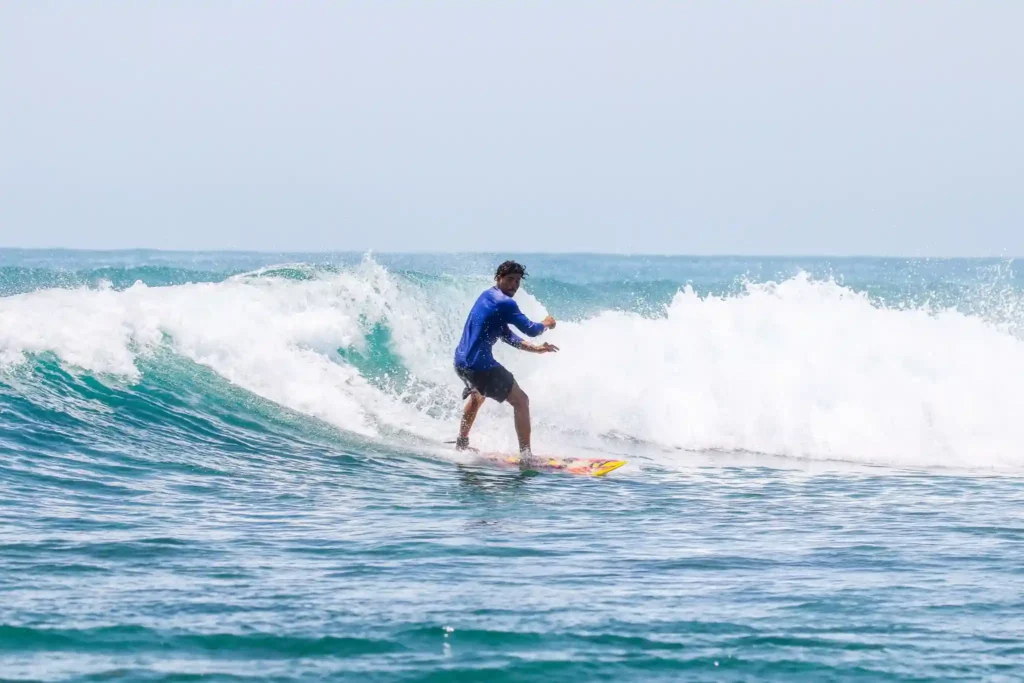
Balangan is a legitimate surf spot. It’s not as famous as Uluwatu (which is about 4 km north), but local surfers rate it highly for its consistency and less aggressive crowd. The break here is a left-hander that works best on a mid-to-high incoming tide.
Here’s how the tide affects the surf conditions specifically:
Here’s what surfers should know about wave quality at each tide stage.
| Tide Stage | Wave Quality | Ideal For | Risk Level |
| Low Tide | Shallow, closeout sections | Not recommended | High (reef) |
| Mid Tide (rising) | Clean, peeling lefts | Intermediate surfers | Moderate |
| High Tide | Fuller, softer waves | Beginners, longboarders | Lower |
| Dropping High Tide | Best shape of the day | Advanced surfers | Moderate |
The reef at Balangan is sharp. Low tide surfing means you’re riding very close to exposed coral, and falls hurt. Most of the surf hire shops near the parking area, 7 places like Made’s Board Rental and a few unnamed family-run stalls, will actually tell you to wait if the tide is too low. That’s not them being overcautious. The reef genuinely bites.
Swell direction matters too. The best surf comes from the southwest (225–240°), which peaks during April through September. A 1.5–2.5m swell with a 12–14 second period on a mid-incoming tide is basically the ideal Balangan session.
Does the Tide Make Balangan Beach Safe or Dangerous for Surfers?
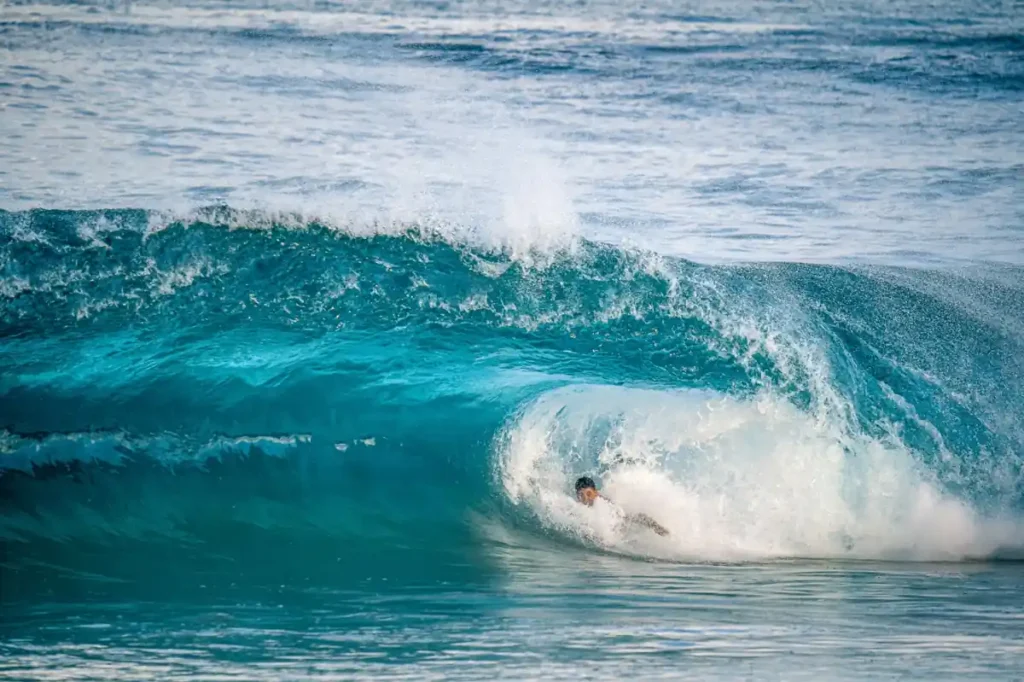
Tide directly controls reef exposure and wave shape at Balangan. Low tide creates dangerous shallow sections over sharp coral; most experienced surfers avoid entering the water below 0.5 meters. Mid-to-high incoming tide softens the break, covers the reef adequately, and produces the cleanest left-hand waves. Intermediate and beginner surfers should only surf at mid-to-high tide here.
Can You Walk on the Reef During Low Tide?
Yes, and it’s genuinely fascinating. But with caveats.
At low tide, the reef shelf to the left of the main beach (facing the sea) becomes walkable. You’ll find small rock pools with sea urchins, tiny fish, and occasionally a stranded starfish or two. Some local kids wade out there every morning like it’s their living room. It kind of is.
If you want to explore the reef:
- Wear water shoes or reef sandals. This is non-negotiable; the surface is uneven and sharp
- Go at the lowest tide window (usually around 30–60 minutes after the official low tide reading)
- Don’t touch or step on living coral, it damages the ecosystem, and it’s also just sharp
- Keep an eye on the tide turning; the reef fills faster than it empties
The reef walk is one of those underrated Balangan experiences that most visitors skip because they don’t plan around the tide. Worth it if you’re into marine life or just like exploring.
Tide Conditions for Taking Photos at Balangan Beach
Photography-wise, Balangan rewards planning. The visual texture of the beach changes so dramatically with the tide that you’re almost shooting two different locations.
Here’s what tide does to your shots specifically:
Here’s a photography cheat sheet for different tide levels at Balangan Beach.
| Tide Level | Best Shot Type | Foreground | Background |
| Very Low (0–0.3m) | Reef texture, reflections | Exposed coral, tide pools | Open water, cliffs |
| Low–Mid (0.3–0.8m) | Wide beach landscapes | Wet sand, small waves | Cliffs, horizon |
| Mid–High (0.8–1.5m) | Surfers, swimmers | Moving water | Full cliff frame |
| High (1.5m+) | Cliff drama, wave energy | White water | Cliff face, skyline |
Golden hour at low tide with a wide-angle lens gives you the most dramatic reef-foreground-cliff composition. If you’re shooting with a phone, the wet sand at incoming tide acts as a natural reflector and essentially doubles your sky color; that blue-to-orange gradient looks stunning even on a basic camera setup.
One thing I noticed: the cliffs on the right side of Balangan cast a shadow on the beach until about 8 AM. So “golden hour” for beach photography here is actually closer to 8:15–9:30 AM, not the typical 6:30 AM you’d assume. Learned that the hard way on my first visit.
Choose the right tides for better photos at Balangan Beach. Read more in Why Balangan Beach Photography Creates Some of Bali’s Best Photos.
What Is the Best Tide for Sunrise Photography at Balangan Beach?
For sunrise photography at Balangan, aim for a low or mid-low tide (0.3–0.7m) that coincides with 7:30–9:00 AM. The southwest-facing beach doesn’t catch direct early sunrise light until around 8 AM when the cliff shadow moves. Low tide exposes the reef for dramatic foreground interest, while wet sand creates mirror-like reflections of the morning sky. Check tide tables 2–3 days ahead to find this overlap.
Is Balangan Beach Safe During High Tide?
Generally, yes, but it depends on what you’re planning to do.
During a standard high tide on a calm day, the beach is perfectly fine to visit. You just have less sand, and the water comes up closer to the cliff base and the warung area. Some of the smaller local restaurants right at the beach edge have actually dealt with flooding during king tides in the wet season, November through January, when the combination of high tide and large swell can push water surprisingly far inland.
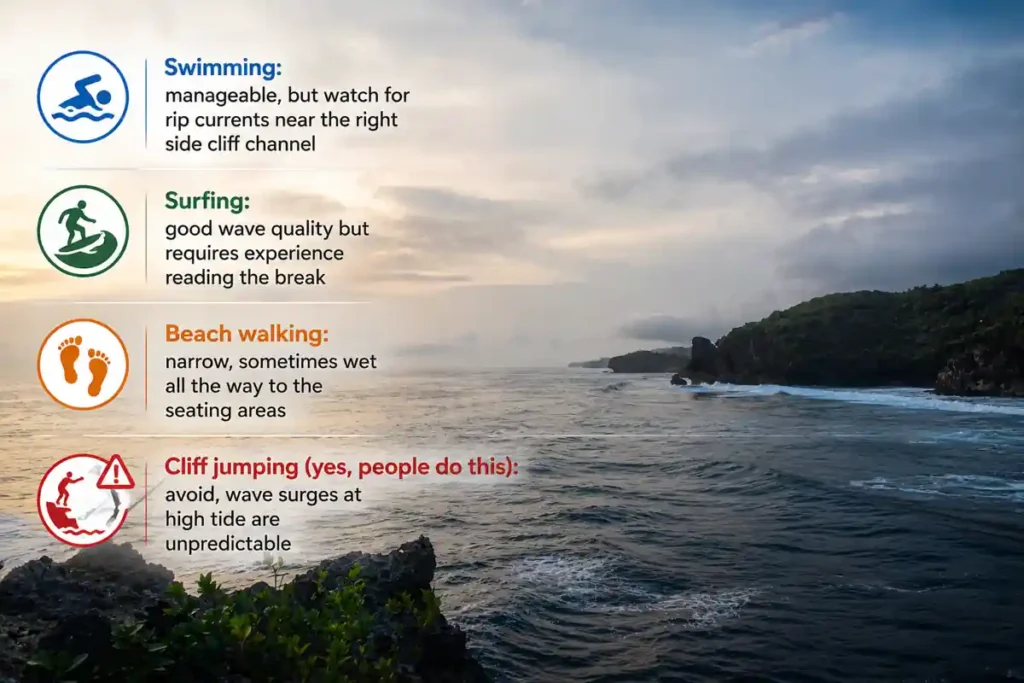
High tide safety notes:
- Swimming: manageable, but watch for rip currents near the right side cliff channel
- Surfing: good wave quality but requires experience reading the break
- Beach walking: narrow, sometimes wet all the way to the seating areas
- Cliff jumping (yes, people do this): avoid, wave surges at high tide are unpredictable
The cliff on the south end of Balangan has an informal jumping spot that local teenagers use. At high tide with any kind of swell, this is legitimately dangerous. The water surge is powerful, and the cliff base isn’t smooth. Worth mentioning because it looks tempting.
The Best Time of Day to Visit Based on Tide Levels
This is where a tide chart and a time-of-day preference actually need to overlap. Here’s a practical planning table:
Plan your visit by combining your preferred activity with the best tide-time window below.
| Preferred Activity | Best Tide | Best Time of Day | Season |
| Swimming | Mid-incoming (0.6–1.2m) | 7:30–10:30 AM | Year-round |
| Photography | Low to mid-low (0.3–0.7m) | 8:00–9:30 AM | May–August |
| Surfing | Mid to high incoming | 6:00–9:00 AM | April–September |
| Reef walking | Very low (0–0.4m) | 7:00–9:00 AM | Year-round |
| Relaxing/sunbathing | Mid tide | 10 AM–1 PM | May–October |
| Sunset viewing | Any tide | 5:30–6:30 PM | April–October |
Tides at Balangan shift by roughly 50 minutes each day (standard lunar offset), so a low tide at 7 AM today will be around 7:50 AM tomorrow. This means your perfect morning tide window drifts across the week. Check a site like Tides.net or Tide-Forecast.com filtering for “Balangan, Bali” or the nearby Jimbaran reference station, which is accurate to within about 15–20 minutes for this part of the Bukit Peninsula.
How Much Does the Tide Shift from Day to Day at Balangan Beach?
At Balangan Beach, tide times shift approximately 45–55 minutes later each day due to the lunar cycle. A low tide at 7:00 AM on Monday will occur around 7:50 AM Tuesday and 8:40 AM Wednesday. This means planning more than 2–3 days requires checking updated tide predictions, as the optimal morning window can shift from early morning to mid-morning within a week.
What to Bring Depending on Tide Conditions
Most visitors pack the same bag regardless of the tide. Here’s a smarter approach:
For low tide visits:
- Reef shoes (essential, coral is sharp and urchins hide well)
- Waterproof camera or phone case for rock pool exploration
- Snorkel gear if you want to explore tidal channels
- Rash guard (reef is close to the surface in spots)
For high tide visits:
- Standard swimwear is fine; the reef is mostly covered
- Beach towel and umbrella, find your spot early, beach space shrinks
- Sun protection, less shade from the cliff at high tide angle
General Balangan packing regardless of tide:
- Cash (Rp 5,000–10,000 parking fee, warungs are cash-only mostly)
- Water, the cliff-side warungs charge Rp 15,000–25,000 per bottle, which is fine, but bring your own if you’re budget-conscious
- Sunscreen (reef-safe if possible, there’s a coral ecosystem here worth protecting)
How to Check Balangan Beach Tide Forecast Before Going
The two most reliable free tools for Balangan tide predictions:
- Tide-Forecast.com, search “Jimbaran” as the nearest reference station (roughly 6 km from Balangan, good accuracy)
- Tides.net has a specific Nusa Dua/Bukit listing that covers Balangan’s zone
- Windy.com also shows tide graphs alongside swell and wind data, useful for surfers
- Magic Seaweed covers Balangan directly as a surf spot with tide, swell, and wind overlaid
For a quick day-trip plan: check the tide the night before, note when the lowest point falls, and aim to arrive 1–2 hours before that window if you want reef access, or 1–2 hours after if you want calmer swimming conditions.
What Tide App Works Best for Balangan Beach in Bali?
For Balangan Beach specifically, Tide-Forecast.com using the Benoa or Jimbaran reference station gives the most consistent results. Magic Seaweed is better for surfers as it overlays swell data with tide timings. Both are free. For offline use, the “Tides Near Me” app (iOS/Android) allows saved locations and works without internet once downloaded, useful if your mobile data is unreliable at the beach.
Common Mistakes Visitors Make During Tide Changes
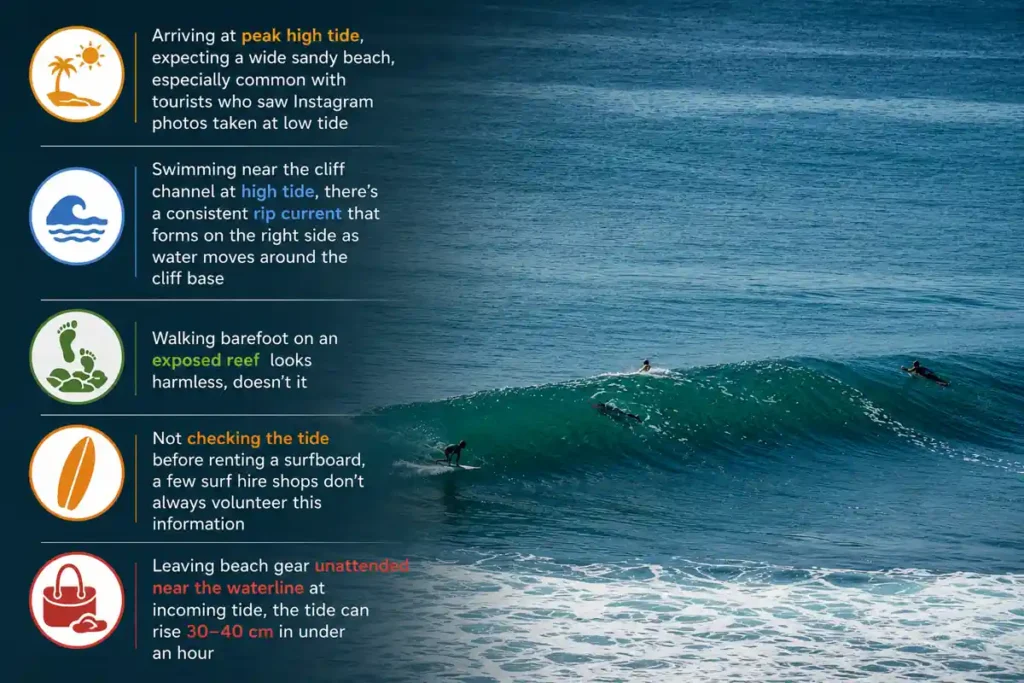
A few things that come up again and again:
- Arriving at peak high tide, expecting a wide sandy beach, especially common with tourists who saw Instagram photos taken at low tide
- Swimming near the cliff channel at high tide, there’s a consistent rip current that forms on the right side as water moves around the cliff base
- Walking barefoot on an exposed reef looks harmless, doesn’t it
- Not checking the tide before renting a surfboard, a few surf hire shops don’t always volunteer this information
- Leaving beach gear unattended near the waterline at incoming tide, the tide can rise 30–40 cm in under an hour
One thing that surprised me: the parking lot at the base of the cliff access stairs sometimes floods during king tides combined with heavy rain in the wet season. Not common, but worth knowing if you’re visiting November–January.
Dry Season vs. Rainy Season: Does the Tide Feel Different?
Kind of, yes, but not because the tides themselves change much. The tide ranges are fairly consistent year-round. What changes is everything around them.
During the dry season (April–October), lower tides in the morning tend to coincide with lighter winds and calmer conditions. You get those glassy, mirror-like sea surfaces in the early hours. The swell is also more consistent and cleaner from the southwest.
During the wet season (November–March), tidal changes are accompanied by variable winds and bigger mixed swells. High tides during this period are more likely to push water further up the beach, and the visual drama of the beach is amplified, rougher, more powerful, and less predictable. Fewer tourists. Honestly, wet season Balangan has its own moody beauty, but it’s not the calm, photogenic version most people are after.
Where to Sit and Relax During Different Tide Conditions
At low tide: Stake out a spot on the main beach area below the cliff. The dry sand extends well out, and you’ll have room to breathe. The left side (facing the sea) near the reef shelf is quieter.
At mid tide: The warung deck seating along the cliff becomes more attractive, you get shade, a cold Bintang, and a great elevated view of the surf break.
At high tide, the beach gets narrow fast. Head to the cliff-top seating at one of the elevated warungs like Warung Sunset Balangan or the handful of unnamed family places. The view from up there at high tide with active surf is actually spectacular.
Final Thoughts: Choosing the Right Tide for Your Balangan Trip
Balangan is one of those beaches that genuinely rewards a little bit of planning. It’s not like a big resort beach where the experience is roughly the same at any time. The tide here is the difference between a wide, dramatic, reef-edged paradise and a narrow strip of sand pressed against a cliff.
Understanding the Balangan Beach tide cycle, even just in a basic way, puts you in control of that experience. Check the tide the night before. Plan your arrival around the window that matches what you want (photos, surf, swim, reef walk). Get there early. Bring reef shoes.
It sounds like more effort than just showing up. But honestly, once you’ve stood on that exposed reef at 8 AM with perfect golden light and almost no one else around, you’ll understand why it’s worth it.
FAQs About Balangan Beach Tide
Q: What is the best time to visit Balangan Beach for low tide?
A: Low tide at Balangan typically occurs twice daily. The most useful window is a morning low tide between 6:30 and 9:30 AM, which gives you ideal light, cooler temperatures, and an exposed reef. Check Tide-Forecast.com for Jimbaran a day in advance to find when this aligns.
Q: Is Balangan Beach good for snorkeling at low tide?
A: Snorkeling directly off Balangan’s main beach is limited; the reef is shallow, and visibility drops with wave action. The tidal channels at very low tide are interesting for exploring, but for serious snorkeling, the area around the reef shelf on the left side of the beach at incoming mid-tide is better.
Q: How dangerous is Balangan Beach at high tide?
A: For experienced swimmers, it’s generally safe. The main risks at high tide are the rip current near the right cliff channel and reduced sand space. During the wet season, when king tides with swell above 2m, the beach can become genuinely hazardous for casual visitors.
Q: Can beginners surf at Balangan Beach?
A: Yes, but only at mid-to-high incoming tide when the reef is adequately covered. At low tide, the shallow reef makes wipeouts painful. Most local surf instructors prefer the 9 AM–12 PM window at Balangan for beginner lessons when tide and swell conditions are most predictable.
Q: Does Balangan Beach have a lifeguard?
A: There are informal lifeguard-like positions staffed by local warung owners who watch the water, but Balangan does not have a formally staffed lifeguard service like Kuta Beach. Swim with awareness and don’t go out alone in unfamiliar conditions.
Q: What is the water temperature at Balangan Beach?
A: The Indian Ocean water temperature at Balangan ranges from 26°C in the wet season to 29°C in the dry season peak. No wetsuit needed at any time of year.