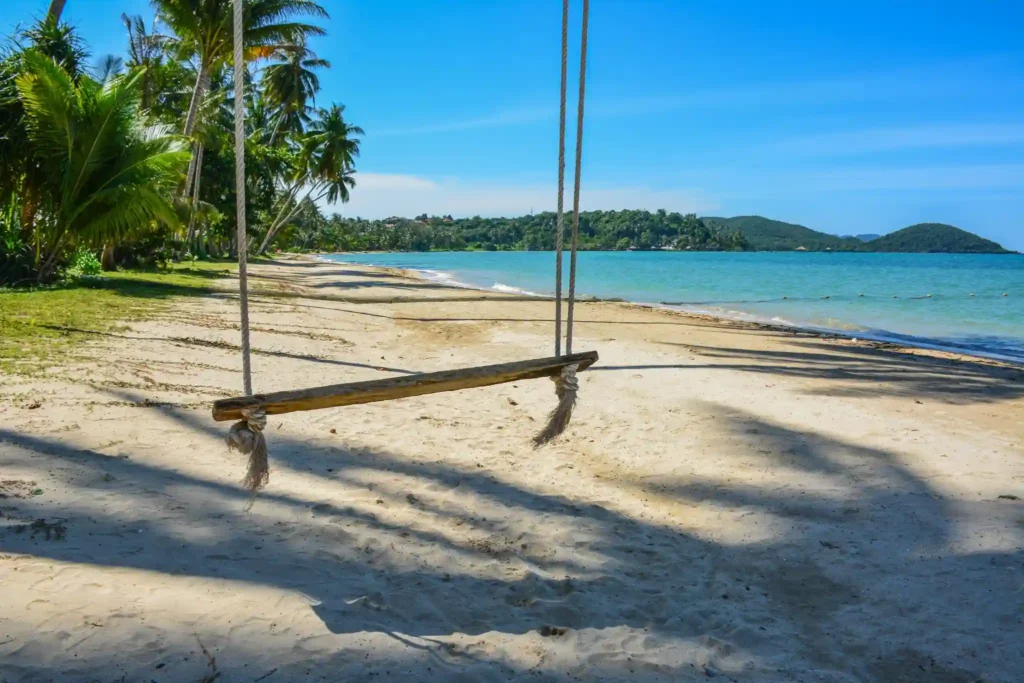
The best time to visit Hiriketiya Beach is between December and March, when the weather is dry, sunny, and calm. During this period, the sea is calm and clear, which makes it perfect for swimming and surfing. The waves are gentle in the morning and get stronger in the afternoon, so both beginners and experienced surfers enjoy this season. Temperatures usually stay between 27°C and 32°C, and there is very little rain, so you can plan your beach days without worry.
This is also the peak tourist season, so the beach cafes, yoga studios, and beach bars are lively and full of energy. If you prefer a quieter experience with fewer crowds, you can visit in the shoulder months of April or November, when the weather is still good but prices are lower. Overall, choosing the best time to visit Hiriketiya Beach makes a big difference in how much you enjoy your trip, since good weather and calm water are the key to a relaxing and fun beach holiday.
Overview of Hiriketiya Beach Climate & Seasons
Hiriketiya sits on Sri Lanka’s south coast, which means it operates on a climate cycle distinct from the country’s west and north shores. The island experiences two monsoon systems: the Southwest Monsoon (May to September) and the Northeast Monsoon (October to January). Understanding how these systems interact with the south coast is fundamental to planning any visit.
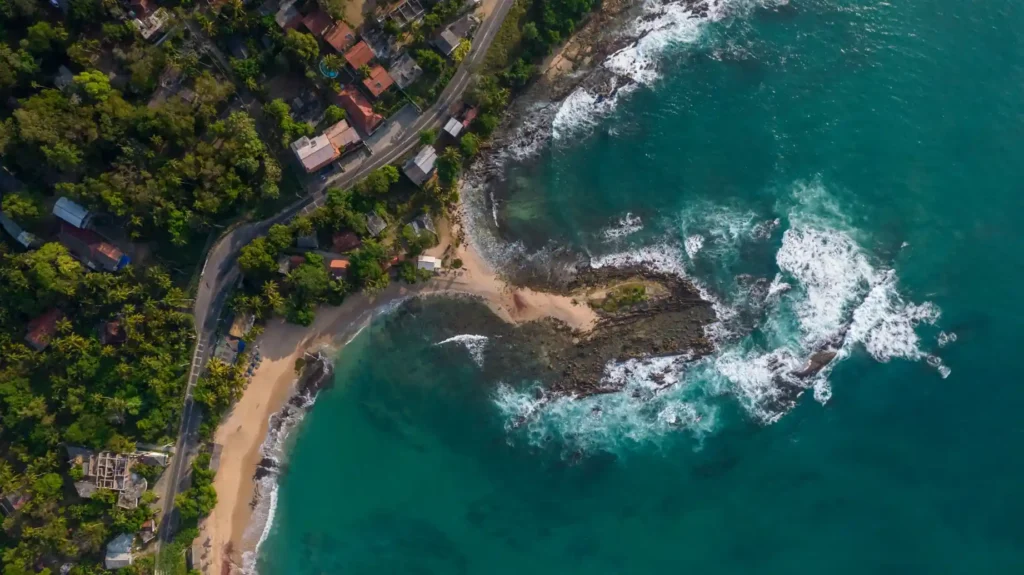
The south coast is predominantly sheltered from the Northeast Monsoon, which means it receives its heaviest rainfall from the Southwest Monsoon between May and October. This creates a clear seasonal division: a dry season running roughly from November through April, and a wetter, windier season from May through October. Hiriketiya’s particular geography, a sheltered bay flanked by rocky headlands, provides some protection from direct swell, making it more accessible than exposed surf beaches even during transitional months.

| Season | Months | Conditions | Best For |
| Dry / Peak Season | November – April | Sunny, calm seas, low humidity | Swimming, sunbathing, beginner surfing, and snorkeling |
| Shoulder Season | October & April | Mixed weather, moderate swell | Budget travelers, light surfing, fewer crowds |
| Wet / Off-Season | May – September | Rain, strong winds, large swells | Experienced surfers, deep budget stays, lush scenery |
Best Time to Visit Hiriketiya Beach for Perfect Weather (November-April)
There’s a reason November through April is considered peak season along Sri Lanka’s south coast. During this window, Hiriketiya is bathed in long hours of sunshine, the sea settles into its most inviting, glassy form, and the beach truly becomes the paradise you see in photographs. Travelers who arrive during this period experience the version of Hiriketiya that first put the bay on the international map.
November marks the transition from the monsoon into the dry season. Rain showers can still linger in the early part of the month, but by mid-November, the skies typically clear for good. December through February are arguably the finest months on the beach, with warm temperatures hovering between 28 and 32 degrees Celsius, minimal cloud cover, and seas calm enough for even the most cautious swimmer. The water visibility for snorkeling reaches its annual peak, and the reefs just beyond the bay reward those who venture in.
March and April bring a slight temperature increase as pre-monsoon warmth builds, but conditions remain largely reliable. April in particular can feel more humid, and occasional showers begin appearing by the second half of the month, signaling the approaching seasonal transition. These months offer tremendous value for travelers who want reliable good weather without peak December-January pricing, a consideration that matters when accommodation costs near the bay have risen sharply in recent years.
Quick Answer: Best Months for Weather at Hiriketiya Beach
December, January, and February deliver the best weather at Hiriketiya Beach, expect sunny skies, calm seas, and temperatures of 28-32 degrees Celsius with minimal rainfall across all three months.
Surfing Seasons Explained – When Waves Are Ideal for Beginners and Pros
Hiriketiya Beach has built a genuine reputation in the global surf community, and that reputation is earned. The bay’s natural horseshoe shape creates a bowl that focuses swells cleanly, producing waves that work across a wide range of skill levels. But the type of wave you’ll encounter depends entirely on the time of year, and choosing the wrong month for your experience level can turn a dream surf trip into a frustrating or even dangerous one.
November to April: Beginner-Friendly Conditions
During the dry season, swells at Hiriketiya are gentle and consistent, typically 1 to 1.5 metres in height with a clean face and manageable power. Several well-regarded surf schools operate directly on the beach during these months, offering lessons for complete beginners through to intermediate-level coaching. The reliable offshore winds in the morning create some of the best surfing conditions Hiriketiya Beach has to offer for technique development, long, clean rides on mellow waves with a forgiving sandy bottom. It’s the reason so many people arrive having never surfed and leave booking return flights to do it again.
May to October: Powerful Swells for Experienced Surfers
When the Southwest Monsoon arrives, Hiriketiya transforms entirely. Swells regularly reach 2 to 3 metres or beyond, the current intensifies significantly, and the beach takes on a raw, powerful energy that attracts experienced surfers from across Europe and Australia. This is the season that draws advanced riders specifically to challenge themselves on the bay’s more powerful breaks. However, these conditions are genuinely hazardous for beginners, and most surf schools suspend operations during the height of the monsoon. If you’re considering a surf trip during these months, an honest self-assessment of your skill level isn’t just recommended, it’s essential for safety.

Quick Answer: Best Time to Surf at Hiriketiya Beach
Beginners should target November-April for consistent 1-1.5m waves in safe conditions. Advanced and experienced surfers seeking powerful, challenging swells will find June-September most rewarding.
Visiting During Off-Season (May-October) – Pros & Cons
The off-season at Hiriketiya gets an unfairly bad reputation. Yes, the monsoon brings rain and rougher conditions, but for the right traveler, visiting between May and October offers real, tangible advantages that the peak-season crowd never gets to experience. Having spoken with backpackers and long-stay travelers who specifically choose the monsoon months, it’s clear this period has a devoted following for very good reasons.
Advantages of visiting in the off-season:
- Accommodation prices can drop by 30-50%, with some guesthouses offering significantly discounted long-stay rates
- The beach is dramatically less crowded; some mornings, you’ll have entire stretches entirely to yourself
- The surrounding landscape is stunningly lush and vividly green from monsoon rainfall
- Big wave surfers find some of the most challenging and rewarding conditions in Sri Lanka
- Local restaurants and cafes operate at a more relaxed pace, and the community feel is more genuine
Disadvantages of visiting off-season:
- Afternoon rain showers and overcast days are frequent, particularly from June through August
- Sea conditions make swimming risky or impossible for most visitors, not a beach holiday in the traditional sense
- Some tourism-facing businesses reduce their hours or close temporarily
- The buzzing social scene of peak season largely disappears; it’s much quieter
Quick Answer: Is Hiriketiya Worth Visiting in the Off-Season?
Yes, for the right traveler. Budget visitors, experienced surfers, and those seeking quiet solitude will find May-October genuinely rewarding at Hiriketiya Beach. Swimming, however, is not recommended due to rough conditions.
Monthly Breakdown – What to Expect Each Month at Hiriketiya Beach
Every month, Hiriketiya tells a different story. Planning around these monthly realities, rather than relying on generic ‘best season’ advice, is what separates well-prepared travelers from disappointed ones. Here’s a practical month-by-month snapshot built on real seasonal patterns:
| Month | Weather | Sea Conditions | Best Activity | Crowd Level |
| November | Mostly sunny, early showers | Calm & improving | Beach, beginner surf | Medium |
| December | Sunny and warm | Calm, glassy | All beach activities | High |
| January | Best of the year | Ideal, 1-1.5m waves | Surfing, swimming | Peak |
| February | Sunny, light breeze | Very calm, clear water | Snorkeling, swimming | High |
| March | Warm, humidity building | Moderate, light swell | Surfing, beach walks | Moderate |
| April | Warmer, sporadic showers | Moderate, manageable | Surfing, budget travel | Low-Medium |
| May | Rain begins, overcast | Rougher, 1.5-2m swells | Pro surfing only | Low |
| June | Monsoon, frequent rain | Large swells (2m+) | Expert surfing only | Very Low |
| July | Heavy rain periods | Strongest annual swells | Storm watching, cafes | Very Low |
| August | Similar to July | Big powerful swells | Photography, nature | Very Low |
| September | Rain is easing late in the month | Swells are beginning to ease | Budget surf travel | Low |
| October | Transition, improving | Moderate and choppy | Shoulder season stay | Low-Medium |
Best Time for Budget Travelers & Fewer Crowds at Hiriketiya Beach
Hiriketiya has grown popular enough that peak-season prices are now genuinely significant. A beachfront guesthouse room that costs $25-35 per night in September can easily command $60-90 or more during December and January. For budget-conscious travelers, the shoulder months of April, May, and October represent the smartest entry point.
April and October sit at the edges of the dry season, offering more manageable conditions than the full monsoon while carrying significantly lower prices than peak months. In April, you’ll still experience reliable morning sunshine with only occasional afternoon showers, enough fair weather to enjoy the beach and the community around it. In October, the monsoon is winding down, and the sea begins to settle, often producing pockets of genuinely beautiful weather interspersed with dramatic cloud formations over the headlands. There’s a particular magic to Hiriketiya in the transition season that photos rarely capture.
Seasoned Sri Lanka backpackers frequently cite late October as one of the best-kept timing secrets on the south coast. Prices are low, the crowds have almost entirely gone, the landscape is at its most vivid green after months of monsoon rain, and you can enjoy Hiriketiya at a fraction of what peak season visitors are paying just weeks later.
Quick Answer: Cheapest Time to Visit Hiriketiya Beach
Late October and early November offer the best value, improving weather, low accommodation prices, and minimal crowds. These months are ideal for budget travelers who want the beach experience without peak-season costs.
Peak Season vs Shoulder Season – Which Should You Choose?
This is the most practical planning question travelers ask, and the honest answer depends entirely on what you’re prioritizing. Here’s a direct, side-by-side comparison to guide your decision:
| Factor | Peak Season (Dec-Feb) | Shoulder Season (Mar-Apr & Oct-Nov) |
| Weather Reliability | Excellent, 90%+ sunny days | Good, 70-80% sunny days, some showers |
| Sea Conditions | Calm, ideal for swimming | Moderate, suitable for most swimmers |
| Crowd Levels | High, book well in advance | Low to Medium, walk-ins often possible |
| Accommodation Prices | $60-120/night (beachfront) | $30-60/night (beachfront) |
| Surf Quality (Beginners) | Consistent 1-1.5m clean waves | A variable can be better or trickier |
| Restaurant Availability | All open, may be busy at peak hours | Most open, quieter, and more personal |
| Social Scene | Lively, international crowd | Quieter, more local and authentic |
| Overall Recommendation | First-time visitors, families | Repeat visitors, surfers, budget travelers |
The honest verdict: if you’re visiting Hiriketiya for the first time and want guaranteed sunshine, calm water, and the full energy of a beach destination at its best, peak season delivers exactly what the bay promises. But if you’re a returning visitor, an experienced surfer seeking less crowded line-ups, or a traveler who values atmosphere and authenticity over pristine skies, the shoulder season provides a richer, more textured, and often more memorable experience of this extraordinary bay.
Travel Tips Based on Season – Weather, Packing & Activities
Knowing when to visit Hiriketiya Beach is only half the equation. Knowing how to prepare for each season is what makes the actual trip run smoothly. Here’s practical advice by season, based on what works and what catches travelers off guard:
Packing for Peak Season (November-April)
- Lightweight, breathable clothing in linen or cotton; synthetic fabrics trap heat in tropical humidity
- High-SPF reef-safe sunscreen, the equatorial sun is intense, and reflections off the sand and water amplify UV exposure
- A rash guard for surfing or extended time in the water, even mild sun exposure adds up over a week-long stay
- Confirmed accommodation bookings, guesthouses, and boutique stays near the beach fill weeks in advance during Christmas and January
- A light sarong that doubles as a beach towel, cover-up, and impromptu picnic mat
Packing for Off-Season and Shoulder Season (May-October)
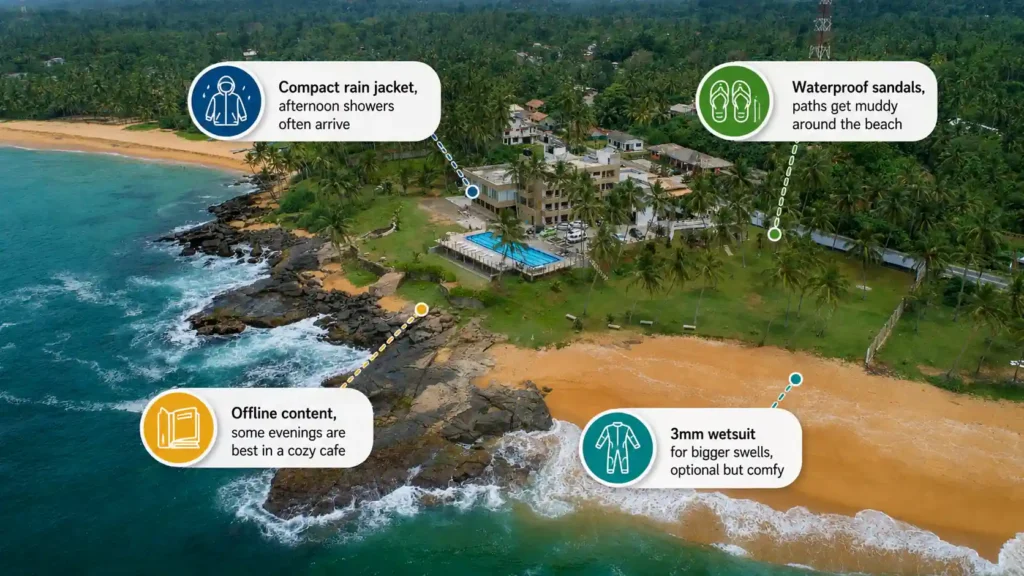
- A quality compact rain jacket, afternoon showers often arrive with no warning
- Waterproof sandals, the paths around the beach and nearby jungle tracks get genuinely muddy
- Offline downloaded content, books, or a travel journal, some evenings are best spent in a cozy cafe rather than on the beach
- A 3mm wetsuit if surfing in bigger monsoon swells, optional but noticeably comfortable
Regardless of the season, always carry local currency in cash. ATM access near Hiriketiya is limited, and many smaller accommodations, warungs (local eateries), and the surf school operators on the beach still work exclusively with cash. The nearest reliably stocked ATM is in Dikwella, approximately 4 kilometres from the bay, something easy to overlook and hard to forget when your card isn’t accepted at check-in.
What to Pack for Hiriketiya Beach?
Peak season: reef-safe sunscreen, light cotton layers, rash guard, pre-booked accommodation. Off-season: compact rain jacket, waterproof footwear, wetsuit for surfing. Always: cash, as ATMs are limited near the beach.
The Absolute Best Time to Visit Hiriketiya Beach
After examining the full picture, seasonal weather data, surf conditions across months, accommodation pricing trends, and direct traveler feedback, the best time to visit Hiriketiya Beach for the majority of visitors is December through February. This three-month window delivers the pinnacle of everything the bay has to offer: consistent sunshine, calm and inviting seas, reliable beginner-friendly surf, and the full vibrant energy of a destination operating at its very best.
That said, the nuanced answer is more interesting than a single blanket recommendation. For budget-conscious travelers who can handle a little weather uncertainty, late October and early November represent arguably the smartest timing of the year, improving conditions, dramatically lower prices, and the quiet intimacy of a beach that hasn’t yet been discovered by the peak-season wave.
Choosing the Right Season for Your Hiriketiya Experience
Experienced surfers who specifically want to test themselves on powerful, challenging swells should target June through August, the monsoon transforms Hiriketiya into one of the most compelling surf destinations on Sri Lanka’s south coast, and the near-empty beach is an extraordinary bonus that money simply cannot buy in January.
The bottom line is clear: there is no universally wrong time to visit Hiriketiya Beach. But knowing the best time to visit Hiriketiya Beach for your specific goals, your budget, your surf experience, your rain tolerance, your need for social energy or solitude, means you’ll arrive genuinely prepared and leave with the kind of memories this extraordinary little horseshoe bay is fully capable of creating. Book early if you’re going in peak season, travel light if you’re heading into the monsoon, and whatever you do, give yourself at least three nights. Hiriketiya has a quiet, persistent way of making you seriously consider cancelling your return flight.
Absolute Best Time to Visit Hiriketiya Beach
December to February for perfect weather, calm seas, and peak beach conditions. Late October to November for budget travelers. June to August for experienced surfers wanting powerful waves and uncrowded beaches.
Frequently Asked Questions
1. What is the best time to visit Hiriketiya Beach?
The best time to visit Hiriketiya Beach is from December to February, when the weather is sunny, the sea is calm, and conditions are perfect for swimming, surfing, and relaxing.
2. Is Hiriketiya Beach good for surfing year-round?
Yes, but conditions vary. November to April is best for beginners with smaller, cleaner waves, while May to September offers larger swells suited for experienced surfers.
3. Can you swim at Hiriketiya Beach during the monsoon season?
Swimming is generally not recommended from May to October due to strong waves, currents, and rough sea conditions.
4. When is the cheapest time to visit Hiriketiya Beach?
Late October and early November are typically the cheapest times, offering lower accommodation prices and fewer crowds while weather conditions begin improving.
5. Is Hiriketiya Beach crowded during peak season?
Yes, especially from December to February. This is the busiest time, so booking accommodation in advance is highly recommended.
6. How many days should you spend in Hiriketiya Beach?
At least 3 to 4 days is ideal to fully enjoy the beach, try surfing, explore nearby areas, and experience the relaxed coastal atmosphere.