
A Boracay Island itinerary typically spans three to five days, with flights landing at either Caticlan (Godofredo P. Ramos Airport, 10 minutes from the jetty port) or Kalibo International Airport (a 1.5 to 2-hour van ride away). From Caticlan, a short banca ride of about 10 to 15 minutes takes you to the island, followed by a PHP 100 environmental fee and a PHP 100 terminal fee paid at the port.
White Beach stretches four kilometers and is divided into three stations: Station 1 has the whitest sand and higher-end resorts, Station 2 is the main hub with D’Mall, restaurants, and nightlife, and Station 3 offers budget stays and a quieter shoreline. Peak season runs from November to May, with December to February bringing the driest, coolest weather, while June to October is typhoon season with more rain and rougher seas. A complete Boracay Island itinerary should also factor in tide schedules, since low tide (usually midday) narrows the beach and affects swimming conditions.
How Many Days Do You Need for a Boracay Island Itinerary?
Flight schedules into Kalibo or Caticlan’s Godofredo P. Ramos Airport shape how many full days actually land on the island, since travel time from Manila or Cebu eats into both the arrival and departure days. Three full days suit travelers on a tight schedule or those combining Boracay with other Philippine stops like Palawan or Cebu. Four days provide a genuine buffer for bad weather or an extra afternoon to browse D’Mall.
Five days let visitors reach every major beach without squeezing two activities into one afternoon. Budget matters too, since every extra day means another night’s accommodation and more meals. Every visitor also pays a mandatory ₱300 (about $5) environmental fee plus a ₱150 (about $2.50) terminal fee each way at the jetty port. The table below shows which length suits which traveler.
| Duration | Ideal Traveler | Beaches Covered | Estimated Budget (USD, excl. flights) |
| 3-Day | First-timers, weekend trips, budget travelers | White Beach, quick island hopping | $150–$250 |
| 4-Day | Couples, first big trip, moderate budget | White Beach, island hopping, Puka & Diniwid | $220–$350 |
| 5-Day | Divers, kiteboarders, full relaxation seekers | All main beaches plus Bulabog water sports | $300–$500 |
Local authorities also cap how many people can be on the island at once. Department of Tourism (DOT) regulations set the island’s carrying capacity at 19,215 persons at any given time, a rule designed to protect the beaches that make the trip worthwhile in the first place. This cap rarely affects individual plans, but it does explain why accommodation can sell out during Holy Week and Christmas. Booking two to three months ahead during those windows is a smart move.
3-Day Boracay Itinerary
Three days in Boracay works best when mornings start early and afternoons stay flexible, since the island rewards visitors who chase good light and calm tides rather than a rigid clock. Day one typically centers on White Beach and settling into a station, day two shifts to island hopping and snorkeling, and day three wraps up with a trip north to Puka Beach before an evening stop at Diniwid.
Packing all three properly means booking island-hopping tours a day in advance, since boats fill quickly during peak season. Sunscreen, small peso bills, and a downloaded copy of ferry schedules make the three days run smoother. Meals average $8 to $20 per person, depending on the choice between a beachfront stall and a sit-down restaurant. This first Boracay Island itinerary hits every major highlight without the rush.
Day 1: White Beach and Sunset
Morning arrival at Caticlan Jetty Port leads to a short boat ride and tricycle transfer to the hotel, with check-in usually possible by early afternoon. The rest of the day stays simple: settle in, walk White Beach, and get familiar with Station 1, 2, and 3. Late afternoon is for claiming a spot near Station 1, where the sunset views are widely considered the island’s best. Dinner along the beachfront, followed by the fire dancers who perform most evenings, rounds out day one.
Day 2: Island Hopping and Snorkeling
A full-day boat tour usually departs by 9:00 AM, stopping at Crystal Cove, Crocodile Island, and Magic Island for snorkeling and cliff jumping. Lunch is typically served on the boat or at a beach stop along the route. Afternoon options include parasailing or simply floating in the calmer waters near Station 1, and a full day on the water tends to leave most travelers ready for an early dinner.
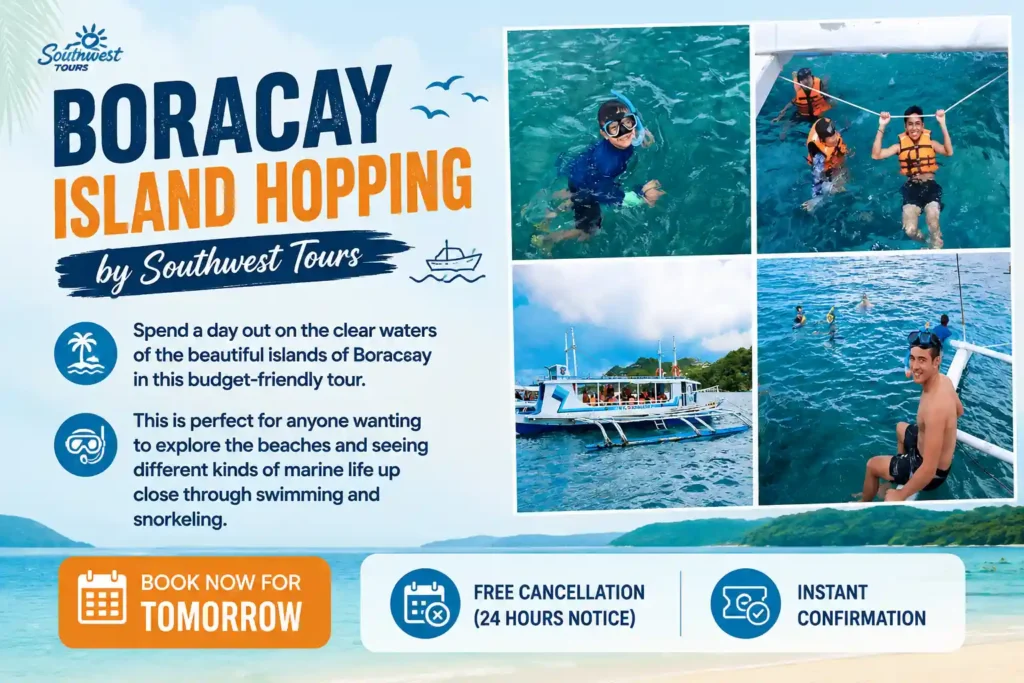
Looking for an easy way to explore more of Boracay? This island-hopping tour takes you to several beautiful spots, with snorkeling, Crystal Cove, and lunch all packed into one day.
Day 3: Puka Beach and Diniwid Beach
The morning starts with a tricycle or habal-habal ride north to Puka Beach, known for its shell-strewn sand and noticeably thinner crowds compared to White Beach. A couple of hours there is usually enough to swim, collect shells, and grab a fresh coconut from a nearby stall. The route back stops at Diniwid Beach, a small, quiet cove just north of Station 1, ideal for a final sunset before dinner. Travelers leaving the next morning should confirm ferry times the night before, since schedules shift with the tides.
4-Day Boracay Itinerary
A fourth day changes the pace of a Boracay trip more than it changes the destination list, since it removes the pressure to pack sightseeing and relaxation into one afternoon. Day one becomes a genuine arrival day rather than a rushed sunset scramble; day two still covers island hopping, and day three still reaches Puka and Diniwid, but without the same time crunch.
The extra day opens up water sports, spa time, or a slower shopping afternoon that the three-day version can’t fit. Costs run slightly higher than the three-day trip, generally landing between $220 and $350 per person excluding flights. Travelers who want a vacation feel, rather than a checklist trip, tend to prefer this version.
Day 1: Arrival and White Beach
Arrival and check-in take priority on day one, with no pressure to squeeze in a full sightseeing schedule. A relaxed walk along White Beach, an early dinner, and an easy first night set a calmer tone than the three-day version. Later flights or ferry delays matter less here, since nothing else is scheduled.
Day 2: Island Hopping
Island hopping follows the same route as the three-day itinerary, covering Crystal Cove, Crocodile Island, and Magic Island. With an extra day banked, there’s less pressure to rush back for a specific evening plan, and some travelers add a second stop such as Ariel’s Point for cliff diving.
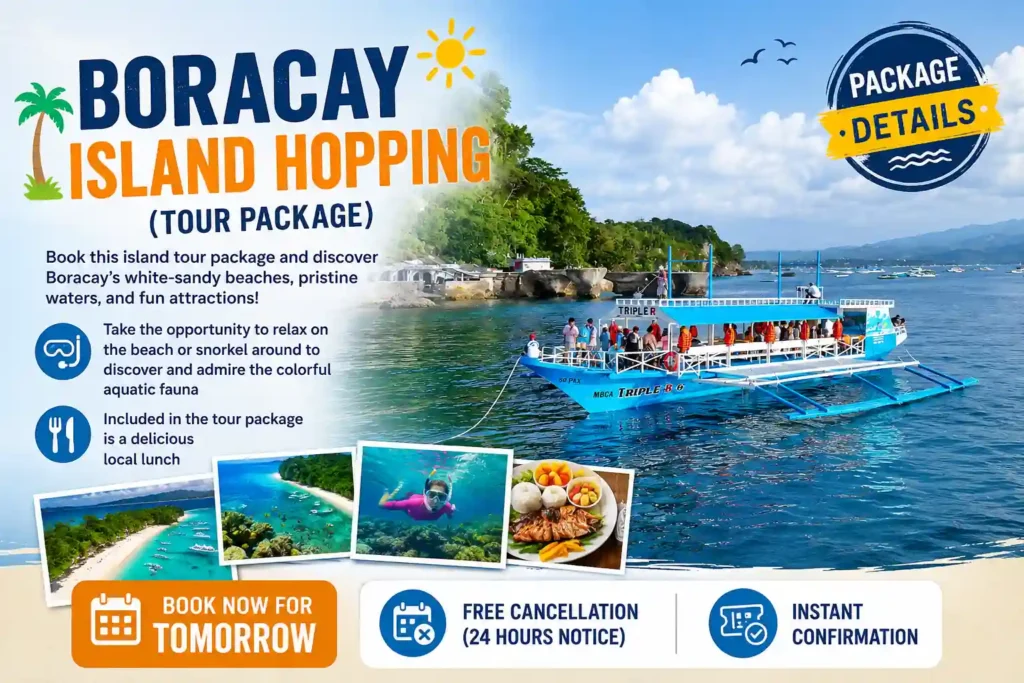
Spend the day out on the water and explore some of Boracay’s prettiest spots. The island hopping package makes it simple to enjoy the beaches, snorkeling, and a good lunch with your group.
Day 3: Puka Beach and Diniwid Beach
Puka Beach and Diniwid Beach still anchor day three, but the extra buffer means this trip north happens at a leisurely pace rather than a tight morning window. A longer stop at Puka Beach allows time for photos, shell collecting, and lunch before heading back toward Station 1 for sunset.
Day 4: Water Activities and Free Time
The final full day is for whatever didn’t fit earlier: parasailing, an ATV ride, a spa massage, or simply more time in the water. Shopping at D’Mall for souvenirs fills any remaining afternoon hours, and a final beachfront dinner closes out the trip.
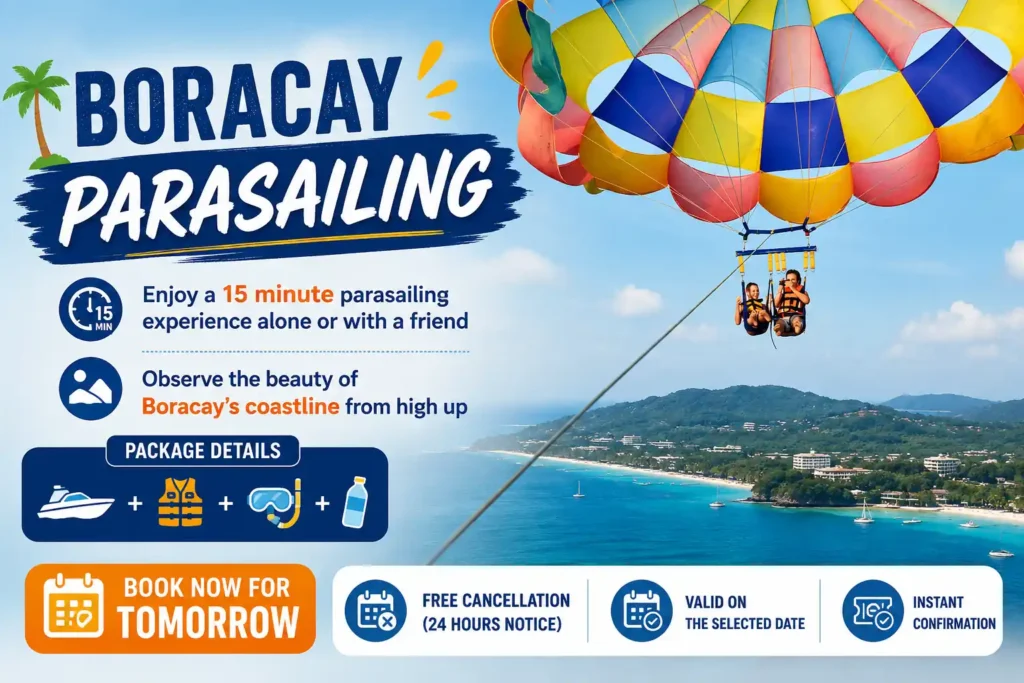
Looking for something fun beyond the beach? Head up on a parasail and enjoy a bird’s-eye view of Boracay’s gorgeous blue waters and coastlin
5-Day Boracay Itinerary
Five days is the version built for travelers who want Boracay without compromise, whether that means diving, kiteboarding, or simply not rushing a single sunset. The extra two days over the three-day trip go toward Bulabog Beach’s water sports scene and a genuinely unstructured final day.
Costs typically run from $300 to $500 per person, excluding flights, though divers and kiteboarders should budget more for lessons and gear rental. This longer plan suits repeat visitors and anyone treating the trip as a proper vacation rather than a weekend detour. A five-day buffer also gives more room to work around a rainy afternoon during shoulder-season travel.
Day 1: Arrival and White Beach
The arrival day mirrors the four-day version: check-in, a walk along White Beach, and an early dinner without a packed schedule. Travelers on longer trips often use this first evening to book activities for the rest of the stay, since popular diving and kiteboarding lesson slots fill up fast in peak months.
Day 2: Island Hopping and Snorkeling
The classic island-hopping route, covering Crystal Cove, Crocodile Island, and Magic Island, still anchors day two. With three more days ahead, there’s room for a quieter snorkeling stop or simply staying out on the water longer.
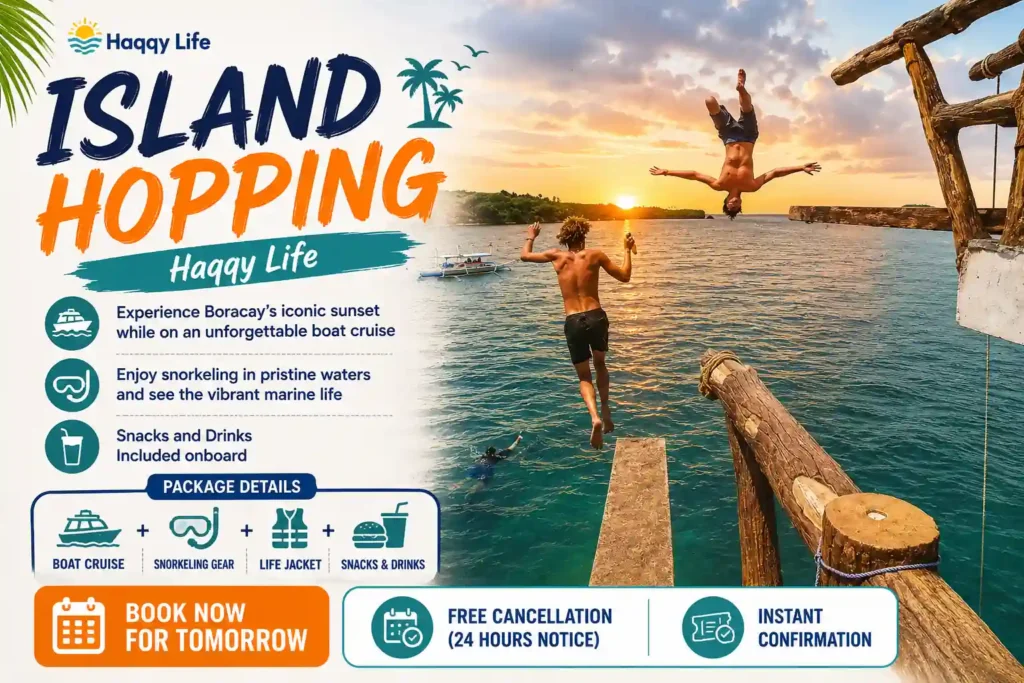
This one looks like a really fun way to spend an afternoon in Boracay. You get snorkeling, beach stops, cliff jumping, and a sunset boat experience all in one trip.
Day 3: Puka Beach and Diniwid Beach
Puka Beach and Diniwid Beach get a full, unhurried day here rather than a half-day stop. Morning hours at Puka Beach, a relaxed lunch nearby, and an afternoon at Diniwid’s quieter cove leave room for a proper sunset before dinner back near Station 1 or 2.
Day 4: Bulabog Beach and Water Activities
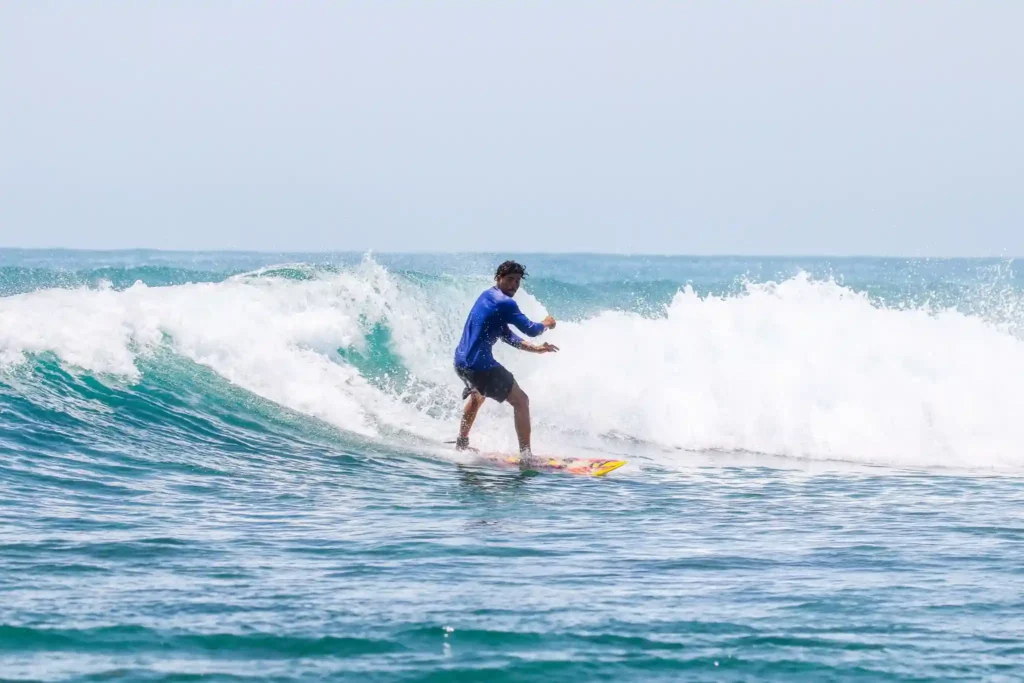
Bulabog Beach, on the island’s eastern side, is the region’s main hub for kiteboarding and windsurfing, particularly during the Amihan season from November through April when steady winds create ideal conditions. Beginners can book half-day or full-day lessons through certified schools, while experienced riders can simply rent gear by the hour. Travelers less interested in water sports can spend the day at a spa or exploring Mount Luho for an island-wide viewpoint.
Day 5: Relaxing, Shopping, and Departure
A slower final morning suits most travelers well after four active days, whether that means one last swim or a lazy breakfast near the hotel. D’Mall offers souvenir shopping and last-minute pasalubong before the trip back to the airport. Checking ferry and flight schedules the night before helps avoid a rushed departure, since port lines build up during peak hours.
What Is the Best Boracay Island Itinerary for First-Time Visitors?
A four-day Boracay Island itinerary tends to work best for first-time visitors, since it covers White Beach, island hopping, and Puka and Diniwid Beaches without the rushed pace of a three-day trip. Divers, kiteboarders, and slower travelers generally get more value from the full five-day version instead.
Best Time to Visit Boracay
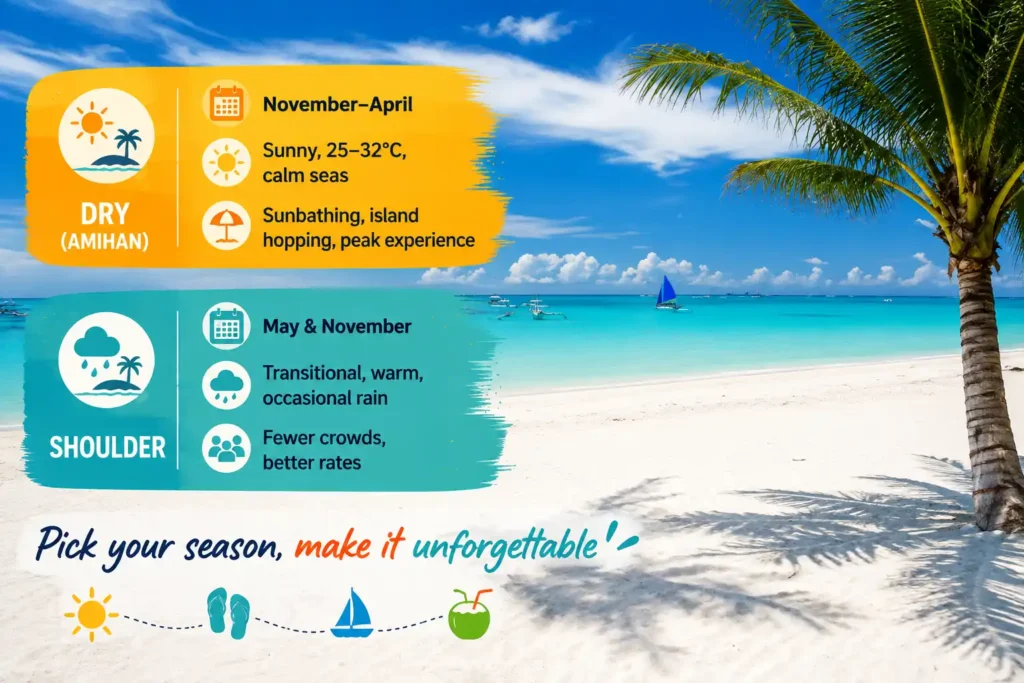
November through April is the best time to visit Boracay, offering sunny skies, calmer water, and the lowest rainfall of the year. May and November work well as shoulder-season alternatives, trading a slightly higher chance of rain for smaller crowds and lower accommodation prices.
Understanding what each season looks like on the ground helps with picking dates. The table below lays out the seasonal breakdown at a glance.
| Season | Months | Weather | Best For |
| Dry (Amihan) | November–April | Sunny, 25–32°C, calm seas | Sunbathing, island hopping, peak experience |
| Shoulder | May & November | Transitional, warm, occasional rain | Fewer crowds, better rates |
| Wet (Habagat) | June–October | Frequent rain, higher swells, typhoon risk Jul–Sep | Budget trips, kiteboarding at Bulabog, quieter beaches |
Rehabilitation rules introduced after Boracay’s 2018 closure still shape the island today, and they’re part of why the water and sand have stayed noticeably cleaner since reopening. DENR guidelines from that closure continue to govern construction limits and beach maintenance standards, and travelers will notice stricter rules around single-use plastics, with fines applying to violators. These rules rarely inconvenience tourists directly, but they explain why Boracay’s water quality has held up better than many comparable islands.
Where to Stay in Boracay
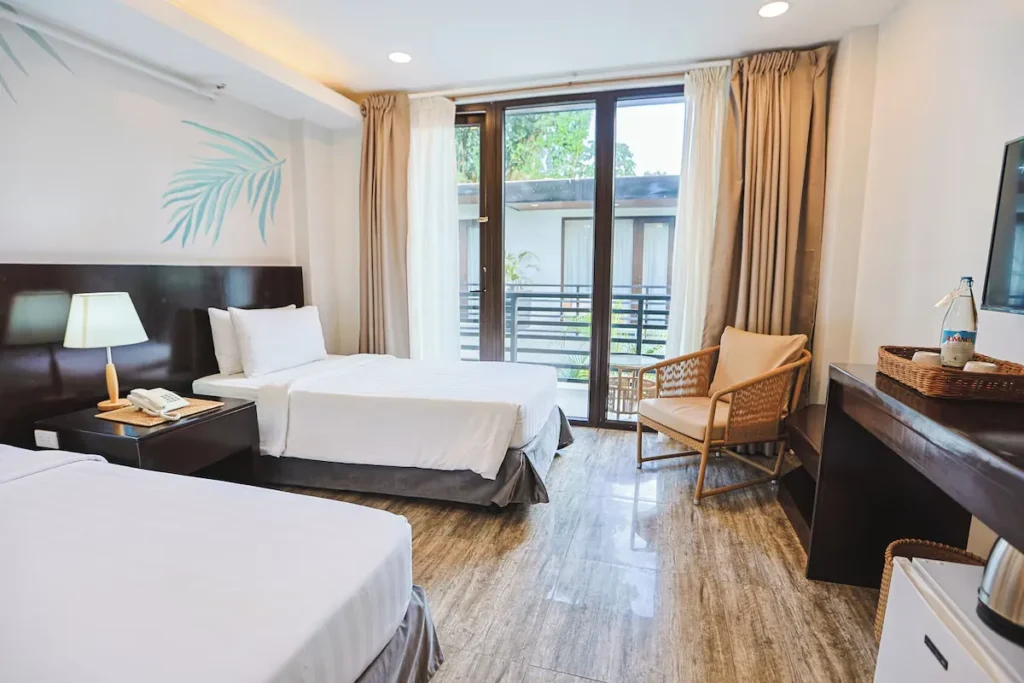
Accommodation in Boracay comes down to picking a Station along White Beach. Station 1 has the softest sand, upscale resorts, and a quiet nightlife. The second Station sits closest to D’Mall with the most restaurants, bars, and budget-to-midrange hotels. Station 3 is the most affordable, with a laid-back feel and cheaper eateries. Diniwid Beach and Punta Bunga, north of Station 1, suit travelers wanting a quieter, boutique stay. Many properties carry DOT accreditation, a useful safety signal, though no longer mandatory. Pick a station first, then a price range.
| Budget Tier | Price Range (USD/night) | Best Area | Typical Style |
| Budget | $15–$35 | Station 3, Angol | Hostels, guesthouses, budget inns |
| Mid-range | $45–$90 | Station 2, near D’Mall | 3-star hotels, beachfront resorts |
| Luxury | $150–$400+ | Station 1, Punta Bunga, Diniwid | Beachfront resorts, private villas |
Booking early matters more in Boracay than in many beach destinations, since the DOT’s visitor cap and limited beachfront land mean popular properties sell out weeks ahead during peak months. Travelers with flexible dates can often save 20 to 30 percent by shifting a trip into the shoulder season instead of fighting for a Station 1 room during Holy Week.
Boracay Island Itinerary, Simplified
A Boracay Island itinerary works best when the length matches the traveler: three days for a quick escape, four days for a balanced first trip, and five days for divers, kiteboarders, and anyone wanting a slower pace. Timing the visit between November and April brings the calmest seas and sunniest days, while choosing the right Station, whether Station 1’s upscale quiet, Station 2’s central buzz, or Station 3’s budget-friendly ease, shapes the whole stay just as much as the number of days booked. With ferry times, fees, and station picks sorted ahead of time, any version of this itinerary delivers a smooth, well-paced trip to White Beach and beyond.
Boracay Island Itinerary FAQs
How many days do you need for Boracay?
Three days covers the essentials, while four to five days allow a slower pace and access to Puka Beach, Diniwid Beach, and Bulabog Beach without rushing. The right length depends on budget, activities, and how much downtime feels necessary.
What is the best month to visit Boracay?
January through early April generally offers the most consistent combination of sunshine, calm seas, and manageable crowds, since these months fall within the dry Amihan season before the hottest weather arrives in late April and May.
Do I need a visa to visit Boracay?
Most nationalities, including travelers from the United States, the EU, and ASEAN member states, can enter the Philippines visa-free for up to 30 days. A passport valid for at least six months beyond departure is required, and longer stays need an extension through the Bureau of Immigration.
How much does a Boracay trip cost per day?
Daily costs typically range from $50 to $150 per person, depending on accommodation tier, meals, and paid activities. Budget travelers staying in Station 3 hostels and eating at local stalls can spend closer to $35 to $50 per day.
Is Boracay safe for families and solo travelers?
Boracay is generally considered safe for both families and solo travelers, with well-developed tourism infrastructure and low rates of violent crime. Standard precautions, like avoiding unlicensed tour operators, apply here as at any major beach destination.
What should I pack for a Boracay Island itinerary?
Reef-safe sunscreen, lightweight clothing, a dry bag for boat trips, and sturdy sandals for tricycle rides all earn their space in a packing list. A light rain jacket is worth adding for shoulder- and wet-season trips, along with printed copies of hotel and ferry confirmations.