
Hidden Islands Philippines destinations like Siargao’s Sugba Lagoon, Palawan’s Malcapuya Island, and the coral reefs off Balabac stay off most tour operator lists because local fishermen still control access by boat rental rather than ticket booths. To reach these spots, you usually need to hire a local boatman from a nearby town, since GPS pins are often missing or wrong. Expect to pay a small eco fee, often less than $7, at island entry points where barangay officials collect funds for reef and beach upkeep.
Trips run best between March and May, when seas are calm, and visibility hits 20 meters or more, letting you see coral gardens without a mask fogging up. Filipino citizens and 157 countries, including the US, UK, and most of Europe, get 30 days of visa-free entry, so a spontaneous island detour doesn’t require paperwork in advance. Because these Hidden Islands Philippines locations lack piers, hotels, or signal towers, you’ll want a dry bag, cash in small bills, and a downloaded offline map before you leave the mainland.
Hidden Islands Philippines: Why They’re Worth Visiting
Crowded islands wear out fast, especially when every sunset comes with fifty strangers and a drone buzzing overhead. Hidden islands offer something different: quiet coves, healthier reefs, and communities that still run on fishing rather than mass tourism. Because fewer boats visit these shores, coral cover tends to stay in better condition, and marine life is noticeably easier to spot while snorkeling.
Many of these islands also sit inside protected marine reserves, which limits development and keeps prices lower than resort towns. For budget travelers, that usually means cheaper boat transfers, simpler guesthouses, and food priced for locals rather than tourists. Meanwhile, chasing a lesser-known island rewards you with photos and memories that don’t look like everyone else’s feed. In short, these places hold onto the version of the Philippines that made the country famous in the first place.
See Why Siquijor’s Beaches Are Worth the Journey. Read more in Best Beaches in Siquijor That Prove This Island Isn’t Just About Magic.
What Makes an Island ‘Hidden’ in the Philippines?
A hidden island in the Philippines usually means low visitor numbers, little or no commercial infrastructure, and access only by local boat rather than a scheduled ferry. Most require a multi-leg trip: a flight, then a van, then a hired outrigger boat known locally as a bangka. That extra travel time is precisely what keeps the crowds away.
Best Hidden Islands Philippines to Explore
Choosing where to start can feel overwhelming once you realize how many hidden islands the Philippines has scattered across its three main island groups. Luzon, Visayas, and Mindanao each hide their own version of a secret beach, and the right pick really depends on what you want from the trip. Snorkelers usually head toward reef-heavy provinces like Palawan and Romblon, while surfers lean toward the Siargao area instead. Families often prefer calmer, shallow lagoons, whereas adventure travelers chase deeper dive sites and cave systems.
Budget also plays a role, since northern Palawan runs pricier than quieter provinces like Masbate or Mindoro. Below is a breakdown of the categories most travelers search for, followed by specific islands worth the detour.
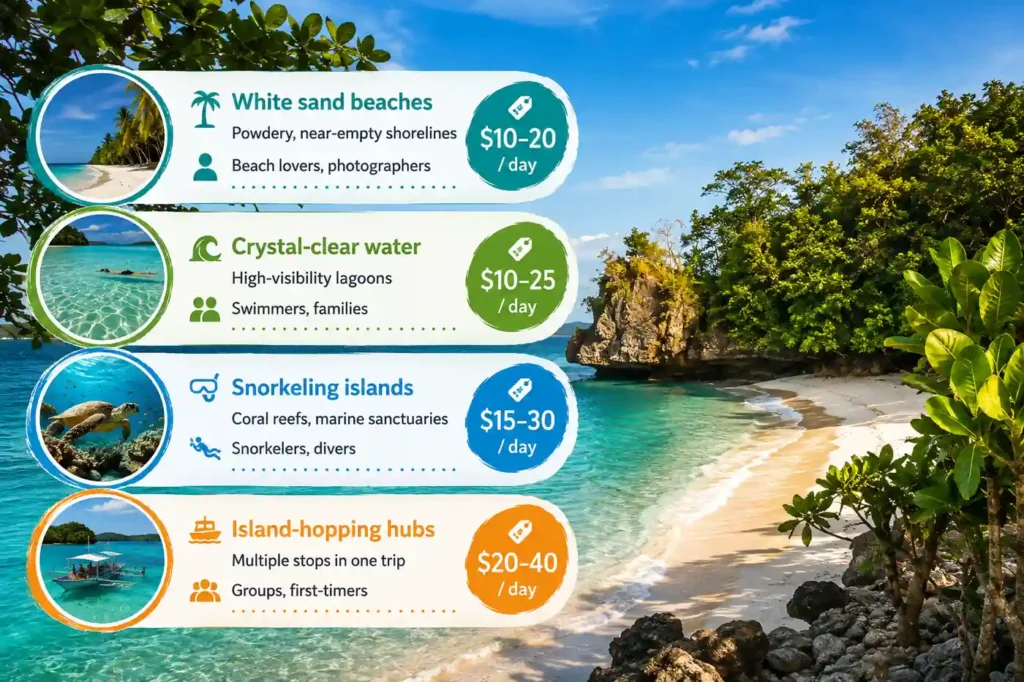
The table below compares the main categories of hidden islands in the Philippines travelers look for, along with what each type is best known for.
| Island Type | Known For | Best For | Typical Cost (USD) |
| White sand beaches | Powdery, near-empty shorelines | Beach lovers, photographers | $10–20 / day |
| Crystal-clear water | High-visibility lagoons | Swimmers, families | $10–25 / day |
| Snorkeling islands | Coral reefs, marine sanctuaries | Snorkelers, divers | $15–30 / day |
| Island-hopping hubs | Multiple stops in one trip | Groups, first-timers | $20–40 / day |
Hidden Islands Philippines with White Sand Beaches
Several Hidden Islands Philippines beaches stand out for sand that’s almost powder-fine, closer to flour than the usual grainy shoreline. Naked Island near Siargao is a classic example: a bare sandbar with no vegetation, no buildings, and no shade, just sand and sea in every direction. Similar sandbars appear around Bantayan and Malapascua in Cebu, usually reachable only during low tide or a short boat ride. Because these spots have no permanent structures, they also shift slightly with the seasons, so timing your visit around calm weather matters.
Hidden Islands Philippines with Crystal-Clear Water
Water clarity depends heavily on boat traffic and coastal development, which is exactly why lesser-known spots often look more turquoise than famous ones. Islands around Romblon and the Cuyo archipelago in Palawan regularly report visibility beyond 15 meters on calm days. That clarity comes from minimal runoff, since these areas have fewer hotels, roads, and farms draining into the sea. Visiting right after the rainy season usually means murkier water, so aim for the dry months if clarity is your priority.
Hidden Islands Philippines for Snorkeling
The best hidden islands Philippines snorkeling spots include Apo Island near Negros, Twin Lagoon in Coron, and the reefs around Romblon’s smaller cays. Apo Island in particular is a protected marine sanctuary with regular sea turtle sightings close to shore. Snorkeling gear rental usually costs $3 to $5 a day, and most boat operators include mask and fins in group tour packages.
Hidden Islands Philippines for Island Hopping
Island hopping works best in archipelago clusters where several small islands sit close together, such as the Bacuit Archipelago near El Nido or the islets around Caramoan in Camarines Sur. A typical day tour visits four to six islands, includes lunch, and runs roughly $20 to $35 per person depending on the region. Book with a licensed local operator, since informal boats often skip basic safety equipment.
Most Beautiful Hidden Islands Philippines
Beauty is subjective, but a few hidden islands in the Philippines regions consistently top traveler shortlists once people look beyond the obvious names. Palawan alone hides dozens of islets outside the famous El Nido and Coron circuits. Cebu’s northern coastline holds quieter alternatives to its busy southern resorts.
Siargao offers more than surfing, with lagoons and rock pools scattered along its coastline. Romblon, Masbate, and Mindoro rarely appear on international itineraries at all, which keeps them refreshingly uncrowded. Each region below comes with a quick note on what makes it distinct, so you can match the destination to your travel style.
Lesser-Known Hidden Islands in Palawan
Beyond El Nido’s Tour A through D routes, Palawan hides islands like Linapacan and the Cuyo group, both reachable mainly by cargo boat or chartered outrigger. Linapacan is often described by longtime Palawan travelers as what El Nido looked like decades ago, with only a handful of guesthouses on its main island.
Boat access and marine activities here fall under the Palawan Council for Sustainable Development, which oversees conservation permits across the province. Getting there takes planning, since ferry schedules are limited and weather can cancel crossings with little notice.
Hidden Islands in Cebu
North of Cebu City, islands like Gato Island and the outer sandbars near Malapascua offer diving and snorkeling without Boracay-level crowds. Gato Island is a marine sanctuary known for sea snakes and small cave systems, and access is strictly limited to protect the reef. Bantayan’s outer sandbars are another quiet option, especially on weekdays.
Hidden Islands Around Siargao
Siargao’s main draw is surfing, but islands like Guyam, Daku, and Naked Island sit just offshore and rarely appear in surf-focused itineraries. These three are often combined into a single half-day boat trip from General Luna. Guyam is small enough to walk around in ten minutes, which makes it an easy add-on rather than a full-day trip.
Hidden Islands in Romblon
Romblon province, made up of Tablas, Sibuyan, and Romblon Island itself, is still largely bypassed by international tourists. Sibuyan is nicknamed the Galapagos of Asia for its biodiversity and holds Cantingas River, one of the cleanest rivers in the country. Diving around Romblon Island offers healthy reefs without the boat congestion common in parts of Palawan.
Hidden Islands Near Masbate
Masbate sits between Luzon and the Visayas and rarely makes it onto typical Philippine itineraries, despite decent beaches and diving near Ticao Island. Ticao is known for whale shark encounters during a shorter, calmer season than the more famous Donsol site. Infrastructure here is basic, so this destination suits travelers comfortable with fewer amenities.
Hidden Islands in Mindoro
Mindoro splits into Oriental and Occidental provinces, and Apo Reef off Occidental Mindoro ranks among the largest contiguous reef systems in the country. Puerto Galera in Oriental Mindoro is better known, but smaller islets nearby still offer quieter alternatives for day trips. Liveaboard dive trips remain the most common way to reach Apo Reef’s remote sections.
Best Time to Visit Hidden Islands Philippines
Timing matters more for hidden islands than for major resort towns, since smaller destinations often have limited or seasonal boat service. The Philippines runs on two main seasons: Amihan, the cooler dry season from November to May, and Habagat, the wetter season from June to October. Most boat operators to remote islands suspend trips during typhoon warnings, which cluster between July and November.
Dry season months bring calmer seas, better underwater visibility, and more reliable transport schedules. That said, dry season also brings higher accommodation prices and busier ferries on popular routes. Shoulder months like March and November often strike a good balance between good weather and lighter crowds. Below is a quick month-by-month breakdown to help with planning.
Plan the Perfect Siquijor Escape with This Seasonal Guide. Read more in Best Time to Visit Siquijor Without the Rain Ruining Your Trip.
This table summarizes sea conditions by season, which helps in deciding the best time to visit hidden islands in the Philippines.
| Months | Season | Sea Conditions | Recommended For |
| Nov – Feb | Amihan (cool, dry) | Calm | Best overall visit |
| Mar – May | Amihan (hot, dry) | Calm, warm | Beaches & snorkeling |
| Jun – Sep | Habagat (rainy) | Rough, unpredictable | Budget travel, fewer crowds |
| Oct – Nov | Transition | Variable | Shoulder-season deals |

How to Reach Hidden Islands Philippines
Reaching a hidden island almost always takes more than one leg of travel, and that’s part of what keeps these places quiet. Most trips start with a domestic flight into a regional hub like Puerto Princesa, Caticlan, Tacloban, or Dumaguete, depending on the destination. From there, expect a van or bus ride to a coastal town, followed by a boat crossing on a local outrigger.
Ferry schedules to smaller islands are often limited to once or twice a day, so confirm times locally rather than relying on outdated listings online. Foreign visitors should also check entry requirements before booking, since immigration rules can change with little notice.
According to the Bureau of Immigration, most nationalities currently receive 30 days visa-free on arrival in 2026, extendable at local immigration offices for a further stay. Chartering a private boat costs more but gives useful flexibility when public ferries run infrequently.
Travel Tips for Visiting Hidden Islands Philippines
A little preparation goes a long way once you’re outside the reach of ATMs and pharmacies. Cash is essential, since most small islands have no card machines and the nearest bank might be hours away. Weather can change quickly, so always keep a buffer day in your itinerary before international flights home.
Respect local environmental fees, which typically fund conservation work coordinated with the Department of Tourism and provincial governments. Book boats through registered operators rather than informal offers on the beach, since safety standards vary widely. A handful of simple habits make the difference between a smooth trip and a stressful one.
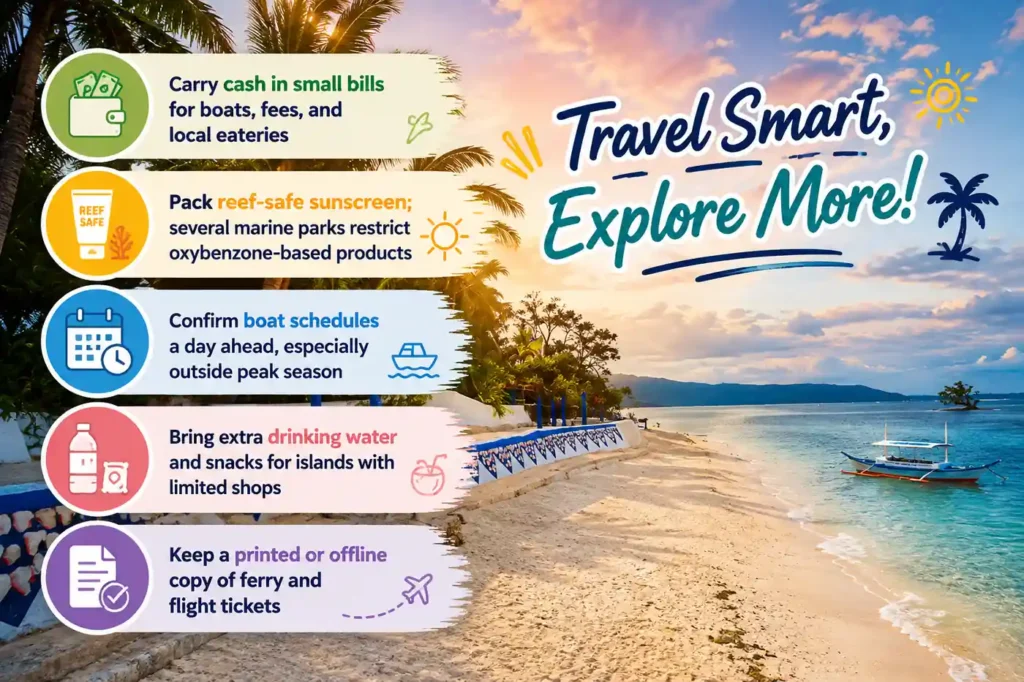
- Carry cash in small bills for boats, fees, and local eateries
- Pack reef-safe sunscreen; several marine parks restrict oxybenzone-based products
- Confirm boat schedules a day ahead, especially outside peak season
- Bring extra drinking water and snacks for islands with limited shops
- Keep a printed or offline copy of ferry and flight tickets
The table below breaks down typical costs travelers should budget for when visiting hidden islands in the Philippines, based on 2026 pricing.
| Expense | Typical Cost (USD) |
| Environmental / eco fee | $3 – $7 |
| Island-hopping tour (per person) | $15 – $35 |
| Local guesthouse (per night) | $10 – $25 |
| Snorkel gear rental | $3 – $5 |
| Private boat charter (per day) | $40 – $80 |
Final Thoughts on Hidden Islands Philippines
Hidden Islands Philippines destinations reward travelers willing to trade a little convenience for a lot more quiet. None of these places require luxury planning, just flexible timing and a willingness to hop on a local boat instead of a scheduled ferry. Start with one region, whether that’s Palawan, Romblon, or the waters around Siargao, rather than trying to cover too much ground in one trip.
Discover the Magic That Makes Siquijor Unforgettable. Read more in Siquijor Beach That Locals Call Magical for a Reason.
Prices stay reasonable across most of these destinations, especially compared to established resort towns. Above all, these islands still function as real fishing communities, so a respectful, low-impact visit helps keep them that way for the next traveler. With good timing and a bit of patience, the Philippines’ quieter islands are still very much within reach.
Frequently Asked Questions About Hidden Islands Philippines
What are the best hidden islands in the Philippines for beginners?
Guyam and Naked Island near Siargao are easy day trips with calm water, making them a good starting point for travelers new to island hopping.
Do I need a visa to visit hidden islands in the Philippines?
Most nationalities can enter visa-free for 30 days under current rules, though requirements vary by passport, so it’s worth checking before booking flights.
How much does island hopping cost in the Philippines?
Group tours typically cost $15 to $35 per person for a full day, not including environmental fees of roughly $3 to $7.
Is it safe to visit lesser-known Philippine islands?
Generally yes, though medical facilities are limited on smaller islands, so travel insurance and basic first-aid supplies are worth carrying.
What is the best month to visit hidden islands in the Philippines?
December through May, during the Amihan dry season, offers the calmest seas and the most reliable boat schedules.