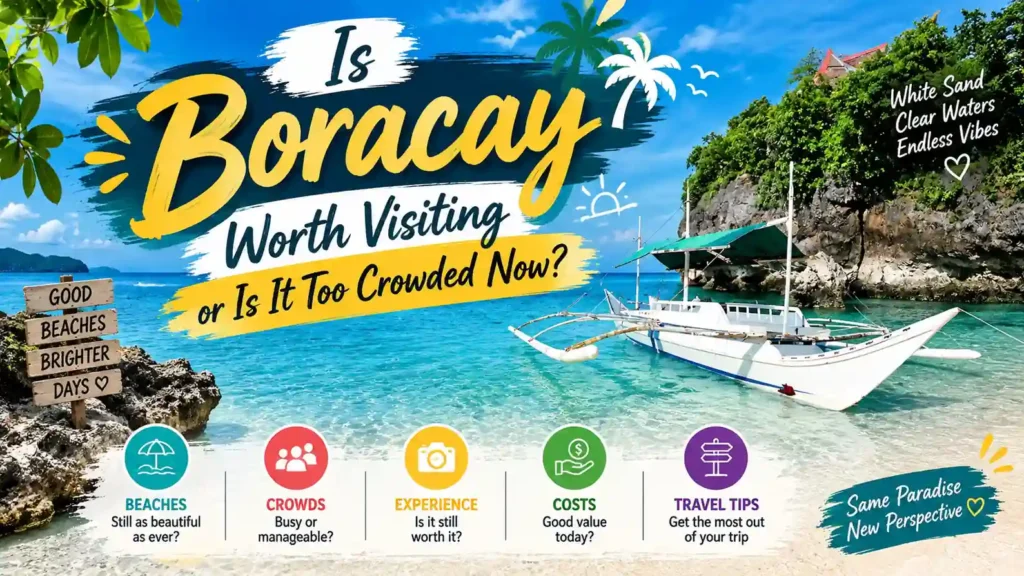
Is Boracay worth visiting in 2026? Yes, for most travelers the answer is still yes, but with clear conditions attached. The island now caps daily visitors at around 19,215 people, so the beaches feel far less packed than before the 2018 closure. You will pay a $5 environmental fee on arrival, plus a small terminal fee and possibly a joiners’ fee if you plan to island hop. White Beach still delivers on its reputation: four kilometers of fine white sand and calm, warm water that stays shallow for a long way out.
The crowds do return during peak months like December to May, especially around Station 2, so if you want quieter sand, aim for the shoulder seasons instead. Weighing the fees and rules against the actual beach experience, Boracay earns its reputation, but going in with the right timing and expectations makes the difference between a great trip and a disappointing one.
Why Is Boracay Worth Visiting?
Four kilometers of White Beach sand rank among the finest in Southeast Asia, with a texture so fine it squeaks underfoot. Warm, clear water sits at a comfortable 27-29°C (80-84°F) year-round, ideal for swimming without a wetsuit. Sunset views from the shoreline draw a steady crowd of photographers every evening. Beyond the sand, the island packs in watersports, diving, nightlife, and a walkable layout that many bigger island destinations can’t match.
Regulation since the 2018 rehabilitation closure has also cleaned up the water and cut back on unchecked construction. Consequently, the island now balances lively tourism with real environmental limits, rather than growth with no ceiling.
Best Things to Do in Boracay
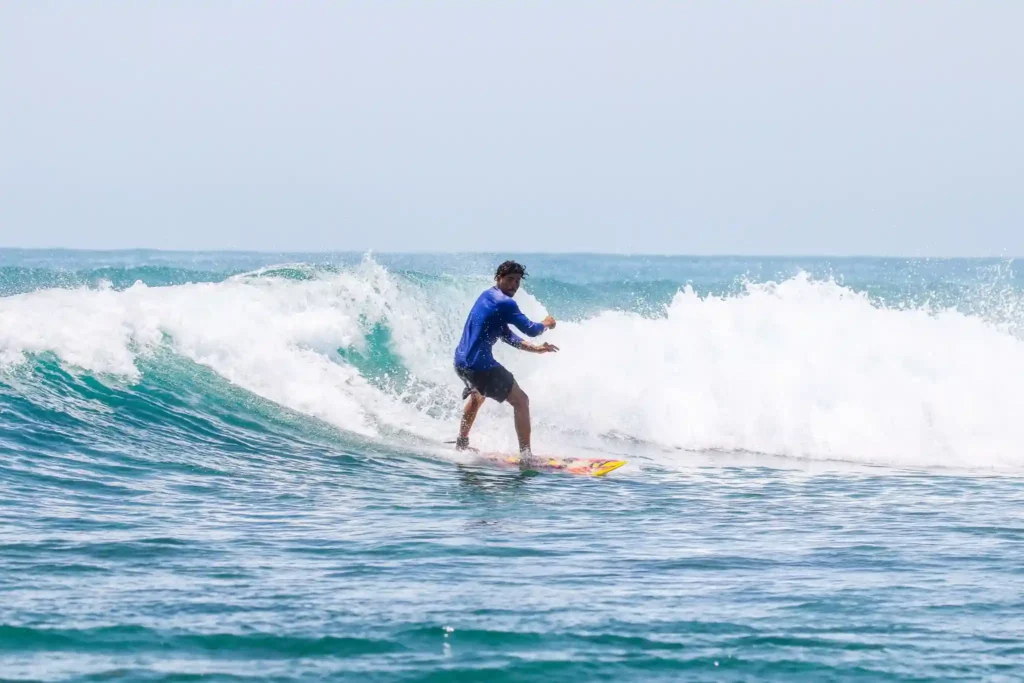
Beyond simply lying on the sand, Boracay packs in enough activities to fill a full week without repeating a single day. Watersports operators line the beach at every station, renting gear by the hour or the half-day. The list below covers the activities most visitors rank highest:
- Paraw sunset sailing along White Beach, roughly $15-25 per person
- Parasailing and jet skiing near Station 1, typically $30-50 per ride
- Cliff jumping at Ariel’s Point, a half-day trip with lunch included
- Helmet diving near Crystal Cove, no swimming skills required
- Zip-lining and ATV rides at Mount Luho, the island’s highest point
- Scuba diving at Yapak or Crocodile Island, suited to all levels
Most of these can be booked directly on the beach the same day, though peak-season slots sell out by early afternoon.
Best Places to Visit in Boracay
Mount Luho stands as the island’s highest point at 100 meters, offering a panoramic view across the coastline. Puka Shell Beach sits on the quieter northern tip, named for the shells that used to wash up along its shore. D’Mall functions as the island’s main commercial hub, packed with restaurants, shops, and late-night food stalls. Bulabog Beach, on the eastern coast, houses the kitesurfing scene away from White Beach’s calmer water. Crystal Cove Island, a short boat ride away, combines caves, cliffs, and a small private beach. Ariel’s Point rounds out the list with cliff-diving platforms ranging from 5 to 15 meters high.
Boracay Beaches
White Beach dominates most itineraries, but several additional beaches give the island real variety. First place offers the widest, whitest sand and sits closest to the high-end resorts. Station 2, home to D’Mall, carries the busiest foot traffic and the widest choice of restaurants. Station 3 stays quieter and more budget-friendly, popular with backpackers.
The table below breaks down each major beach by vibe and who it suits best, useful for narrowing down where to base a trip.
| Beach | Best For | Vibe |
| White Beach – Station 1 | Couples, luxury travelers | Wide, calm, upscale resorts |
| White Beach – Station 2 | First-time visitors | Busiest, most restaurants & nightlife |
| White Beach – Station 3 | Budget travelers | Quiet, affordable, fewer crowds |
| Puka Shell Beach | Day-trippers | Quiet, undeveloped, shell-strewn sand |
| Diniwid Beach | Couples, photographers | Secluded cove, boutique hotels |
| Bulabog Beach | Kitesurfers, windsurfers | Wind-driven waves, sports-focused |
What Is Boracay’s White Beach Known For?
White Beach is known for four kilometers of powder-fine, coral-derived sand, calm turquoise water shielded from big waves, and a row of beachfront bars, restaurants, and resorts. Divided into Stations 1 through 3, it remains the most photographed coastline in the Philippines and the main reason most visitors choose Boracay.
Boracay Island Hopping
Island hopping ranks among the most booked activities on Boracay, since several of the best snorkeling spots sit reachable only by boat. Standard group tours run around ₱1,700 to ₱1,900 per person (roughly $29-$33), including a shared boat, snorkeling gear, and lunch. Typical stops include Puka Beach or Ilig-Iligan Beach, Crystal Cove, and snorkeling sites like Coral Garden.
Crystal Cove and Magic Island both charge separate entrance fees, usually ₱200 to ₱300 (about $3.50-$5) per person. Private charters cost more, starting around ₱6,900 (roughly $119) for a smaller, customizable route. Tours typically depart around 9:00 AM and run four to five hours, returning by early afternoon.
Boracay Nightlife
Station 2 anchors most of Boracay’s nightlife, with beach bars, fire dancers, and live music starting as the sun goes down. D’Mall sits at the center of it, packed with restaurants that turn into bars once dinner service winds down. Since the 2018 rehabilitation, stricter rules enforced by the Boracay Inter-Agency Task Force (BIATF) limit alcohol and loud music directly on the beach after certain hours, pushing the late-night scene into designated bar strips.
Clubs along the beachfront walking path stay open well past midnight during peak season. Station 1 and Station 3, by comparison, stay noticeably calmer. Overall, the scene feels more organized than it did a decade ago, without losing its energy entirely.
Is Boracay Good for a Vacation?
Couples, groups of friends, solo travelers, and families with older kids all tend to have a good experience on Boracay. The island’s compact size means almost everything sits within a short tricycle ride, cutting down on wasted vacation time. Infrastructure has improved noticeably since the rehabilitation period, with better roads and stricter building codes now in place.
Families with toddlers may find the waves and crowds at White Beach less relaxing than a calmer beach elsewhere in the Philippines. Solo travelers benefit from a strong hostel scene and an easy way to meet other tourists through group tours. Matching the right station and season to a traveler’s priorities makes the difference between a good trip and a great one.
Is Boracay Expensive?
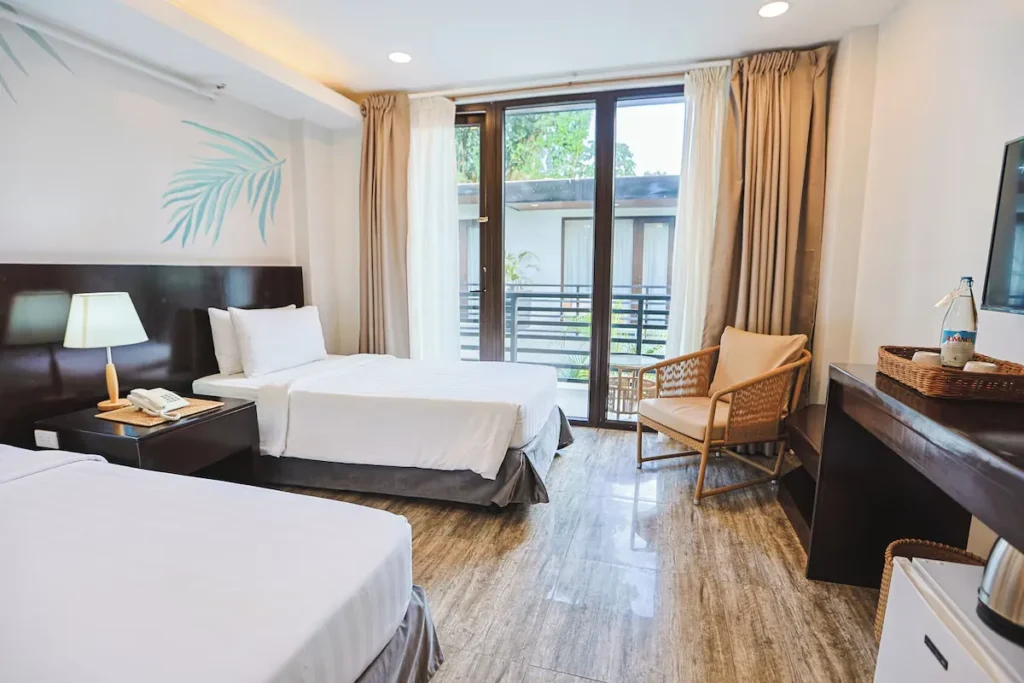
Boracay costs more than most other Philippine destinations, though it remains affordable next to beach resorts in pricier Southeast Asian markets like Bali. Mandatory entry fees apply to every visitor, and these add up faster than most first-timers expect. Accommodation spans a huge range, from ₱499 (about $8.50) hostel dorm beds to five-star resorts charging upward of ₱17,000 ($290) per night. Food costs vary just as widely: a local eatery meal runs $3 to $6, while a beachfront seafood dinner can reach $20 to $40 per person.
The table below lists the mandatory fees every visitor pays on arrival, useful for building an accurate travel budget.
| Fee Type | Amount (PHP) | Amount (USD) | When Paid |
| Environmental Fee | ₱300 | ~$5 | Once, on arrival |
| Terminal Fee (arrival) | ₱150 | ~$2.50 | On arrival |
| Terminal Fee (departure) | ₱150 | ~$2.50 | On departure |
| Boat / Pump Boat Fare | ₱50 | ~$0.85 | On arrival |
How Much Does a Boracay Vacation Cost per Day?
A backpacker on Boracay can expect to spend roughly $35 to $50 per day, covering a hostel bed, local food, and basic transport. Mid-range travelers typically spend $80 to $150 per day, and luxury travelers booking beachfront resorts should budget $250 or more per day.
Best Time to Visit Boracay
Dry season runs roughly from November through May, driven by the Amihan, a cooler wind pattern tracked by PAGASA, the Philippines’ national weather bureau. December through February brings the most comfortable temperatures, calmer seas, and the least rainfall of the year. Wet season stretches from June through October, bringing heavier rain and occasional typhoons that can disrupt boat transfers.
Late April into early May sees a spike in domestic tourism around the Love Boracay festival, tied to the Labor Day weekend. Peak pricing hits during December, alongside the highest hotel rates and the largest crowds of the year.
The table below breaks the year into four practical travel windows.
| Season | Months | Weather | Crowds & Prices |
| Peak Dry Season | December–February | Sunny, cool, minimal rain | Highest crowds & prices |
| Dry Season | March–May | Warm, sunny, occasional rain | High, especially around Labor Day |
| Shoulder Months | June, October | Mixed rain, warm | Moderate crowds, lower prices |
| Wet Season | July–September | Frequent rain, possible typhoons | Lowest crowds, lowest prices |
Pros and Cons of Visiting Boracay
Boracay’s reputation rests on real strengths, but it carries genuine trade-offs too, especially for travelers used to quieter, less developed islands.
Pros:
- World-class white sand and warm, swimmable water nearly year-round
- Compact size makes getting around fast and cheap
- Wide range of accommodation, from $9 hostels to five-star resorts
- Reliable infrastructure, including good roads and improved sanitation since 2018
- Genuinely lively nightlife and social scene for solo travelers and groups
Cons:
- Mandatory fees and a visitor cap that can limit arrivals during extreme peak periods
- Higher prices than most other Philippine beach destinations
- Crowded conditions during December-February and around holidays
- Limited calm-water swimming spots for very young children
- Weather-dependent boat transfers that can strand travelers during storms
Is Boracay Worth Visiting for First-Time Visitors?
First-time visitors generally have an easier time on Boracay than on more remote Philippine islands, thanks to established infrastructure and English-speaking staff nearly everywhere. Direct flights land at Godofredo P. Ramos Airport in Caticlan, a short tricycle-and-boat transfer from the main beach. Kalibo International Airport works as a backup, though it adds roughly 1.5 to 2 hours of travel time.
Most tour operators, restaurants, and hotels cater specifically to newcomers, with English menus and standardized tour packages. Station 1 or Station 2 make the most sense for a first visit, keeping restaurants, beach access, and nightlife within walking distance. For someone visiting the Philippines for the first time, Boracay remains one of the most approachable starting points on the map.
Should You Visit Boracay? The Final Answer
Weighing the fees, the crowds, and the rules against the scenery, infrastructure, and range of activities, Boracay earns its reputation more often than it disappoints. The island rewards travelers who plan around the dry season, book accommodation in advance, and accept a regulated, fee-based destination rather than an undiscovered secret. Budget travelers, couples, solo adventurers, and groups of friends all tend to leave satisfied, provided expectations match the season and station chosen.
Families with very young children, or travelers chasing a completely untouched beach, may find better matches elsewhere in the Philippines, such as Palawan or Siargao. On balance, the white sand, the water clarity, and the range of things to do outweigh the added costs for most travelers. For most people planning a Philippine beach trip in 2026, Boracay still delivers exactly what it promises.
FAQs About Visiting Boracay
Is Boracay safe to visit in 2026?
Yes. Standard beach-safety precautions apply, including sun protection and swimming within marked zones, but violent crime targeting tourists is rare and the island is well patrolled.
Do I need a visa to visit Boracay?
Most nationalities, including the US, UK, EU, and ASEAN countries, can enter the Philippines visa-free for up to 30 days. Extensions require a visit to the Bureau of Immigration, costing roughly ₱3,030 (about $52) for 29 more days.
How many days should I spend in Boracay?
Three to four days covers the main beaches, one island-hopping tour, and a couple of relaxed evenings. Travelers combining diving and day trips often extend to five or six days.
What is the best month to visit Boracay?
January and February typically offer the best mix of dry weather, calm seas, and manageable crowds. December brings similar weather but the highest prices of the year.
Is Boracay good for families with kids?
Boracay works well for families with older children, given the range of activities and calm main-beach water. Families with toddlers may prefer a more sheltered destination.
How much does a Boracay trip cost?
Budget travelers can manage on roughly $35 to $50 per day, mid-range travelers typically spend $80 to $150 per day, and luxury travelers should budget $250 or more, not including flights.
What is Boracay most famous for?
Boracay is most famous for White Beach, a four-kilometer stretch of fine, coral-derived white sand rated among the best beaches in Southeast Asia, along with its sunsets and nightlife.