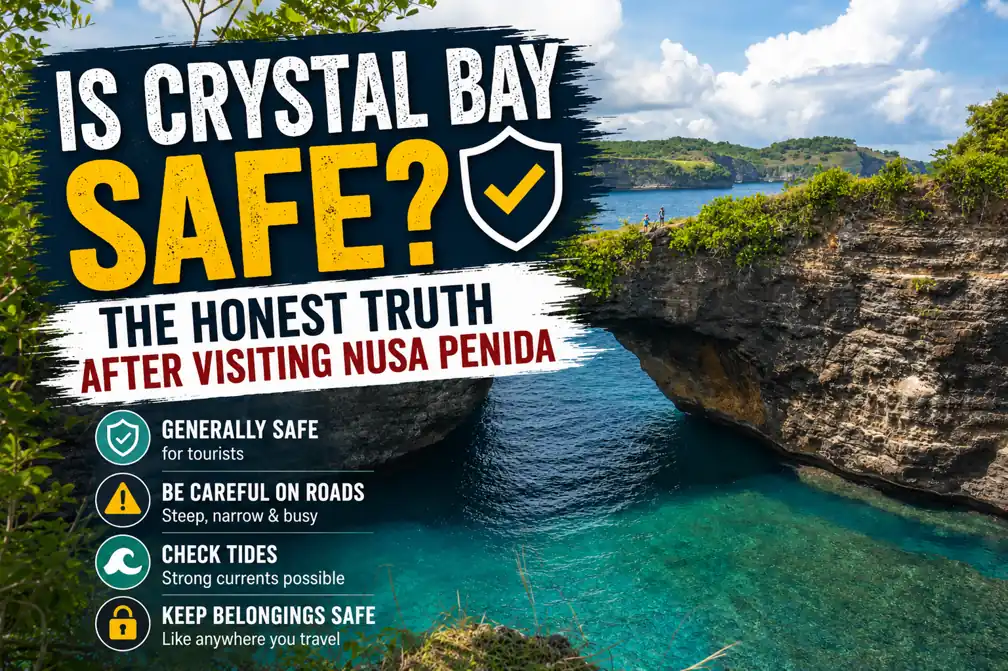
If you’re planning a trip to Nusa Penida and you keep asking yourself, ” Is Crystal Bay safe, you’re smarter than most. A lot of visitors show up having seen the Instagram photos (stunning, yes) and assume the ocean is just as calm as it looks from the cliff above. It’s not always. Whether Crystal Bay is safe really depends on when you go, what you’re doing in the water, and how honestly you assess your own swimming ability. This guide gives you the full picture, not just the postcard version.
The first time I visited Crystal Bay, I nearly stepped on a sea urchin in the shallows. The water looked shallow, clear, practically inviting. Nobody warned me about the rocky patches near the shore. That small moment stuck with me. Beautiful places don’t always broadcast their risks up front.
Is Crystal Bay Safe?
Crystal Bay is safe for well-prepared visitors during the dry season (May–September). It is not suitable for weak swimmers, unsupervised children, or anyone visiting during large swell events. Respect the currents near the channel, wear reef protection, check conditions in advance, and book guided snorkel or dive tours for your first visit. Do those things, and Crystal Bay delivers one of the best marine experiences in Southeast Asia
Where Exactly Is Crystal Bay?
Crystal Bay (locally called Pantai Kristal) sits on the northwest coast of Nusa Penida, a rugged island about 45 minutes by fast boat from Sanur Beach in Bali. The bay itself is sheltered by two headlands, which gives it that gorgeous calm-water look that fills travel feeds. It’s one of the most photographed spots on Nusa Penida, alongside Kelingking Beach and Angel’s Billabong.
The bay is also famous for something specific: it’s one of the best places in the world to spot the rare Mola Mola (ocean sunfish), particularly between July and October. That single fact drives a massive chunk of the diving and snorkeling crowd here.
Find exactly where Crystal Bay is before planning your Nusa Penida trip: Read more in the Crystal Bay Nusa Penida Guide: Before You Go, Read These Local Tips First.
What Crystal Bay Is Known For
Crystal Bay has a reputation built on two things: striking beauty and incredible marine life. The water genuinely earns its name on calm days, visibility can reach 20 to 30 metres, and the coral gardens below are mostly healthy and colourful. You’ll see reef fish and turtles, and, if timing works out, the elusive Mola Mola circling the cleaning stations at depth.
Beyond diving, Crystal Bay also has a small black-sand beach, a modest warung strip, sun loungers, and a Hindu temple on the southern headland. It’s compact but pretty. The vibe is relaxed, even during busy months.
Is Crystal Bay Safe for Tourists Overall?
Generally, yes, Crystal Bay is safe for tourists who plan. The area has no particular crime concern, the infrastructure has improved significantly in recent years, and locals are welcoming. But “safe” means something different depending on what activity you’re asking about.
In terms of personal safety and the general tourist environment, Crystal Bay is low-risk. In terms of water safety, that’s a more layered answer, which is what most of this guide addresses.
Is Crystal Bay Safe for Swimming? Quick Answer
Crystal Bay is safe for swimming during calm conditions, but currents can be strong and unpredictable, especially near the channel between the bay and the open ocean. The central part of the bay is more protected. Strong swimmers with ocean experience generally handle it fine. Weak or non-swimmers should stay in the shallows or avoid the water entirely.
Water Safety, Swimming, Waves, and Ocean Conditions
This is where the honest conversation starts. Crystal Bay isn’t a classic calm lagoon. The channel that runs along the western edge of the bay, between the main beach and the small island just offshore, funnels strong currents, particularly during tidal changes. Those currents have caught swimmers off guard before.
The Indian Ocean around Nusa Penida is known for strong currents. According to the Indonesian Meteorology, Climatology, and Geophysics Agency (BMKG), sea current speeds around the Nusa Penida channel regularly exceed 3 knots during strong tidal flow periods, fast enough to pull even a confident swimmer off course.
On calmer days with minimal swell and slack tide, the main beach area is genuinely relaxed. But conditions can shift within an hour. That’s not dramatic, it’s just reality with open-ocean bays.
Key water safety facts for Crystal Bay:
- Current speed near the channel: up to 3–4 knots during tidal changes
- Average wave height in dry season (May–September): 0.5–1.2m
- Wet season swell (November–March): can reach 2m+ near open water
- Water temperature year-round: 26–29°C, occasionally dropping to 22°C when Mola Mola thermoclines rise
- Visibility on clear days: 15–30m
Check this table before entering the water; it could save you from a stressful situation.
| Condition | Risk Level | Who It Affects | Advice |
| Strong tidal current (channel area) | High | All swimmers | Stay away from the channel, swim parallel to shore if caught |
| Calm bay (slack tide, dry season) | Low–Medium | Moderate swimmers | Safe for swimming in the central zone |
| Large swell (wet season) | High | Everyone | Observe from shore, no swimming |
| Underwater surge near the reef | Medium | Snorkelers near coral | Keep a distance from the reef edges |
Are There Any Dangerous Areas or Times to Avoid?
Yes, and knowing these makes a real difference.
The western channel, the stretch of open water between the beach and the small island called Pulau Crystal Bay, has the strongest current. Boats and dive groups pass through this area regularly. It’s not a safe swimming zone for casual visitors.
The reef sections on both sides of the bay become hazardous when a surge is present, even on days that look calm from shore. Coral is sharp, and even a small surge can push a snorkeler into it.
Times to be particularly cautious:
- During low tide periods, the reef becomes more exposed and shallower
- During tidal transitions (roughly 2–3 hours after high or low tide peak)
- November through February, the wet season brings larger, less predictable swell
- After heavy rain, visibility drops, and surface conditions can change
When Is Crystal Bay Most Dangerous?
Crystal Bay is most dangerous during wet season months (November–March) when swells peak, and during strong tidal transitions when the channel current accelerates. The area near the western island channel is the riskiest zone year-round.
Safety Tips for Families Visiting Crystal Bay
Families visit Crystal Bay regularly, and many have a great time, but it does require a bit more planning when children are involved. The beach itself is fine for a relaxed time on shore. The ocean is a different story for young kids.
There are no lifeguards stationed at Crystal Bay. That fact alone changes how cautious parents need to be. The shallows near the shore are manageable during calm conditions, but depth and current can shift faster than kids can react.
Family safety tips at Crystal Bay:
- Keep children in ankle-to-knee-deep water and actively supervise at all times
- Rent life vests from local warungs (usually available for around 30,000–50,000 IDR per day)
- Avoid the water entirely during wet season months if children are young
- Schedule the visit for early morning when conditions are typically calmer
- Check the swell forecast the night before, use Windy.com or Magic Seaweed for Nusa Penida
- If children want to snorkel, book a guided tour with safety equipment provided
Use this comparison to decide whether Crystal Bay or another nearby beach suits your family better.
| Beach | Family Swimming Safety | Facilities | Best For |
| Crystal Bay | Moderate (calm days only) | Warungs, sun loungers, temple | Snorkeling, marine life watching |
| Atuh Beach | Low–Moderate | Basic warungs | Scenery, photography |
| Toyapakeh Beach | Moderate–High | Good, more infrastructure | Snorkeling, calmer currents |
| Sanur Beach (Bali) | High | Full facilities | Young children, beginner swimmers |
Is Crystal Bay Safe for Solo Travelers?
For solo travelers, Crystal Bay is safe in terms of personal security. Theft and scams are not common here compared to busier Bali tourist areas. The crowd at Crystal Bay tends to be divers, snorkelers, and travelers specifically seeking marine experiences, a fairly mellow demographic.
The main note for solo travelers: if you’re planning to swim or snorkel, don’t do it alone. Even experienced swimmers should have someone watching from shore. It’s one of those non-negotiable rules at open-ocean spots with current activity. Book a snorkeling group tour, or at least visit with another person who stays on the beach while you’re in the water.
Is Crystal Bay Safe for Solo Female Travelers?
Yes. Crystal Bay has no notable safety concerns for solo female travelers. The area is quiet, not overly touristy, and locals are generally respectful. Standard travel awareness applies; keep valuables secured and don’t swim alone. Most solo female travelers visit without any issues.
What to Know Before Snorkeling or Water Activities
Snorkeling at Crystal Bay is genuinely rewarding when conditions cooperate. The marine life diversity here is one of the best in Indonesia. You’re looking at sea turtles, reef sharks, Moorish idols, triggerfish, and, between July and October, the possibility of a Mola Mola encounter.
But snorkeling here requires more preparation than at calmer snorkeling spots like the Gili Islands or Amed.
What you need to know before snorkeling Crystal Bay:
- Currents near the channel are not suitable for surface snorkeling; stick to the protected bay area
- Wear a life jacket or snorkel vest if you’re not a confident swimmer
- Bring your own snorkel gear for better hygiene and fit, or rent from reputable dive shops in Toyapakeh
- Boat-based snorkel tours are safer than shore entries for accessing the outer reef
- According to Dive Magazine’s 2023 Nusa Penida feature, Crystal Bay ranks among the top 10 snorkeling and diving sites in Southeast Asia, but explicitly notes that strong currents make it unsuitable for inexperienced snorkelers without a guide
- Budget around $15–$25 USD for a guided half-day snorkeling tour that covers Crystal Bay plus 2 other sites
Wildlife, Marine Life, and Natural Risks
Crystal Bay’s marine life is extraordinary, and also occasionally capable of causing harm if you’re not paying attention. This isn’t meant to scare anyone, just practical awareness.
Sea urchins are common on the rocky reef areas, especially near the shore entry. Step on one and you’ll spend the next hour of your trip removing spines from your foot. Reef shoes are strongly recommended, not optional here.
Marine hazards to watch for:
- Sea urchins near rocky entry points and reef edges
- Fire coral causes painful skin burns on contact and looks similar to regular coral
- Stingrays occasionally present in sandy shallows (shuffle your feet when wading)
- Jellyfish during certain months, particularly February–April (check locally on arrival)
- Mola Mola encounters happen at depth during dive sessions, not a risk for snorkelers on the surface
One thing worth saying: sea turtles at Crystal Bay are wild animals. They’re not aggressive, but please don’t touch or chase them. It stresses them out, and it’s actually illegal under Indonesian marine conservation law.
Marine life you’re likely to see at Crystal Bay, know what’s safe to approach and what to leave alone.
| Marine Life | Common Sighting Zone | Safe to Approach? | Season |
| Green Sea Turtle | Reef shallows, surface | Observe only, no touching | Year-round |
| Mola Mola (Ocean Sunfish) | Deep water (15–40m) | Dive only, keep a 3m distance | July–October |
| Reef Shark (Whitetip) | Channel, outer reef | Don’t panic, give space | Year-round |
| Sea Urchin | Rocky reef, shore entry | Do not touch or step on | Year-round |
| Fire Coral | Reef edges | Never touch | Year-round |
Weather Conditions That Can Affect Safety
Weather plays a bigger role in Crystal Bay safety than most travel guides acknowledge. Nusa Penida is located in the open ocean, and its weather patterns are slightly different from Bali’s, even though the two are close. Storms can develop quickly in the wet season, and winds that seem calm in the morning can pick up to 20+ knots by afternoon.
The dry season (May through September) gives the most predictable conditions. Clear skies, calmer seas, and lower swell mean you can plan your Crystal Bay visit with more confidence. Nusa Penida’s annual visitor data from the Bali Tourism Board (2023) shows that roughly 68% of all annual tourist visits to Nusa Penida occur between June and September, largely because conditions are simply more reliable.
Best Weather Window for Crystal Bay Safety
May through September offer the safest and most predictable weather at Crystal Bay. July and August see peak visitor numbers, but also consistently calm mornings. Arrive before 10 AM to beat both the heat and the afternoon wind pickup. Avoid December through February for water activities if possible.
Transport and Getting Around Safely
Getting to Crystal Bay from Nusa Penida’s main port (Toyapakeh or Banjar Nyuh) involves a scooter ride or a hired car along roads that are notoriously steep and sometimes poorly maintained. If you’re not experienced on a scooter, especially on hilly, narrow roads, hire a driver. The roads to Crystal Bay include some sharp descents that have caught first-timers off guard.
Transport safety tips:
- Hire a local driver for 150,000–250,000 IDR/day, worth every rupiah on Nusa Penida roads
- If renting a scooter, ensure you have a valid international driving license and wear a helmet
- The fast boat from Sanur to Nusa Penida takes 45–60 minutes, book with reputable operators like Scoot Fast Cruises or Maruti Express
- Sea crossings can be rough during the wet season; seasickness medication is a practical addition to your bag
- Boats stop running in very rough weather. Plan for possible overnight stays if conditions deteriorate
Health, Hygiene, and Emergency Access
This is the section that sounds dry but actually matters. Nusa Penida’s healthcare infrastructure is limited. There are small clinics on the island, but serious medical situations require evacuation to Bali, and that takes time.
For dive-related injuries (specifically decompression sickness), the nearest hyperbaric chamber is in Denpasar, roughly 1.5–2 hours from Nusa Penida, including the boat crossing. That’s a long time when DCS is involved. Always dive within recreational limits, follow proper ascent procedures, and do not push no-decompression limits at Crystal Bay.
Health and emergency essentials:
- Carry basic first aid: antiseptic, bandages, sea urchin spine removal tweezers
- Travel insurance with emergency evacuation cover is strongly recommended, not optional
- Nearest clinic: Puskesmas Nusa Penida (basic care only), located near Sampalan
- For emergencies: contact your accommodation immediately, local guesthouses have evacuation networks
- Reef cuts should be cleaned immediately with clean water and antiseptic; tropical reef bacteria are not friendly
- Drinking water: buy sealed bottled water only; the island’s tap water is not safe to drink
What to Do If You Get Caught in a Current at Crystal Bay
If caught in a current, do NOT swim directly against it; you’ll exhaust yourself. Swim at a 45-degree angle toward shore or across the current until you exit the flow. Signal for help immediately by waving one arm. Stay calm and float if needed. Alert a boat or someone on shore as soon as possible.
Common Tourist Mistakes to Avoid at Crystal Bay
These come up again and again when talking to guides and dive operators who work at Crystal Bay regularly.
- Underestimating the current near the channel, it looks swimmable from shore, but isn’t always
- Going in the water without checking the swell or tide forecast
- Skipping reef shoes and regretting it immediately
- Snorkeling alone or far from the group during boat tours
- Not bringing cash, there are no ATMs at Crystal Bay, and card payments are uncommon
- Arriving after 11 AM on peak season days and finding limited parking, crowded boats, and no sun loungers
- Assuming the small island across the channel is a quick swim away, it is not safe to attempt
- Touching or standing on coral while snorkeling it damages the reef and can cut badly
Local Advice That Makes the Visit Easier
Locals at Crystal Bay are genuinely knowledgeable and generally happy to share practical information. The warung owners have watched this bay every day for years. If you ask them, ‘Is the water okay today?’ they will give you a straight answer. That question costs nothing and can save you a rough experience.
A few things locals tend to recommend that don’t make it into the standard travel guides:
- Visit on weekdays, weekends bring more domestic tourists, and it gets crowded fast
- The freshest coconuts arrive early morning at the warungs, worth timing your breakfast around
- The temple on the southern headland (Pura Dalem Ped) is worth a brief, respectful visit; bring a sarong
- Local boat operators can arrange private snorkeling transfers for smaller groups at reasonable rates
- The best turtle sightings often happen near the reef at the northern end of the bay. Ask a warung owner which day’s conditions favour this
Best Time to Visit for a Safer Experience
The short answer: May through early July is the sweet spot. The dry season has settled in, the Mola Mola season is approaching, crowds haven’t yet peaked, and conditions at Crystal Bay are about as predictable as they get.
July and August are peak months, good conditions, but significantly more visitors. Snorkel tours fill up, boat transfers get crowded, and the overall vibe is busier. Still worth it, just book everything in advance.
October is an interesting shoulder month. The Mola Mola season is tapering off, crowds are thinning, and conditions are still largely manageable. If you’re flexible on timing, it’s underrated.
Plan your visit using this seasonal safety guide for Crystal Bay; the right month makes a real difference.
| Month | Season | Swimming Safety | Marine Life Highlight | Crowd Level |
| January–February | Wet | Low | Reef fish, turtles | Low |
| March–April | Transition | Moderate | Turtles, manta rays nearby | Low–Medium |
| May–June | Dry | High | Great visibility, turtles | Medium |
| July–August | Peak Dry | High | Mola Mola season | High |
| September–October | Late Dry | High–Moderate | Mola Mola tapering | Medium |
| November–December | Wet | Low–Moderate | Unpredictable | Low |
Discover the safest time to visit Crystal Bay for calmer waters and better conditions: Read more in Best Time to Visit Crystal Bay: Why September Beats Summer Every Time.
Crystal Bay Safety Checklist Before You Go
Before leaving for Crystal Bay, confirm: Swell and wind forecast checked (Windy.com or Magic Seaweed) Tide times checked for your planned swimming window Travel insurance with emergency evacuation confirmed Reef shoes packed Cash in IDR for entry fees, warungs, sun loungers, and transport Reef-safe sunscreen SPF 50+ packed Snorkel buddy or shore observer arranged (no solo ocean swimming) Accommodation with emergency contact network confirmed.
Final Verdict: Is Crystal Bay Worth Visiting and How Safe Is It?
Absolutely worth visiting. Crystal Bay is one of those places that justifies the trip to Nusa Penida on its own. The marine life is extraordinary, the scenery is dramatic, and there’s a genuinely local atmosphere that a lot of the more commercial Bali beaches have lost.
But is Crystal Bay safe? The answer is: conditionally yes. Prepare properly, respect the ocean, check your conditions, and you’ll have an experience that sits in your memory for years. Show up without preparation, and you’re relying on luck.
The ocean here doesn’t play pretend. It’s beautiful, and it can be demanding. Treat it seriously, and it rewards you generously. That’s true of most of the world’s best dive and snorkel destinations; Crystal Bay is no different.
FAQs: Is Crystal Bay Safe?
Is Crystal Bay safe for non-swimmers?
Non-swimmers should avoid entering the water beyond ankle depth. The bay can look calm, but currents near the channel are strong. Enjoy the beach, warungs, and marine life from boat-based snorkel tours instead.
Is there a lifeguard at Crystal Bay?
No. There are no lifeguards stationed at Crystal Bay. Supervision is entirely your responsibility. Never swim alone, and always inform someone on shore before entering the water.
Can beginners snorkel at Crystal Bay?
Yes, but with a guided tour and a life vest. Shore-entry snorkeling is not recommended for beginners due to the surf and rocky reef. A boat-based guided snorkel tour is much safer and also gives you access to better sites.
Is Crystal Bay safe for diving?
Crystal Bay is a world-class dive site, but not for beginners. Strong currents, depth, and the open-ocean environment make it best suited to divers with Open Water certification at minimum, and Advanced Open Water for the Mola Mola sites. Always dive with a certified local guide.
What time is best to visit Crystal Bay for safety?
Early morning, between 7:00 AM and 10:00 AM, offers the calmest conditions. Wind and swell typically increase through the day. Combine an early arrival with a slack tide window for the safest swimming experience.
Is Crystal Bay safe during the wet season?
Swimming and snorkeling are not recommended during the peak wet season (December–February). Swell increases significantly, visibility drops, and boat crossings from Bali can be uncomfortable or cancelled. Visiting for sightseeing or photography is still fine, just don’t count on water activities.
How do I get to Crystal Bay safely from Bali?
Take a fast boat from Sanur, reputable operators include Scoot Fast Cruises and Maruti Express, with tickets around $25–$35 USD return. Then hire a local driver on Nusa Penida for around 200,000 IDR/day. Do not attempt the island roads on a scooter if you’re unfamiliar with steep, narrow, rural Indonesian roads.