
La Union is a coastal province in the Ilocos Region, on the northwest coast of Luzon, about four to five hours from Manila by car or bus. It is best known for its beach town called San Juan, which locals simply call “Elyu,” where cheap surf lessons, relaxed cafes, and long sandy breaks make it a favorite weekend escape.
So, is La Union worth visiting? For most travelers, yes, because you get real surf culture, budget-friendly prices, and a slower pace without the crowds of bigger island destinations. Still, is La Union worth visiting for everyone? That depends on what you want from a trip, since it does not have the same nightlife or luxury resorts as places like Boracay.
Where Is La Union?
La Union is a province in the Ilocos Region, roughly 230 to 270 kilometers north of Manila depending on your route. Most travelers reach it by bus, van, or private car along the North Luzon Expressway, and the trip usually takes between four and six hours, longer if you hit weekend traffic leaving the capital.
The province stretches along the coastline, but nearly all the tourist action clusters around San Juan and the provincial capital, San Fernando. Bauang and Bacnotan sit nearby too, offering quieter alternatives once San Juan starts feeling crowded during peak weekends.
Planning a Trip? Start with La Union’s Location. Read more in San Juan La Union Travel Where All of Manila Goes to Catch a Wave.
What Makes La Union Worth Visiting?
If you’re weighing whether La Union is worth visiting, three things set it apart from bigger Philippine beach destinations: consistent, beginner-friendly surf, a genuinely low cost of living, and a slower pace that hasn’t been completely overrun by mass tourism yet.
San Juan has grown into something of a hub for remote workers and long-term travelers, so you’ll find decent coffee shops, reliable Wi-Fi in most hostels, and a community that skews younger and more laid-back than you’d expect from a beach town this close to Manila.
Best Beaches in La Union
The following overview compares La Union’s main beaches by what each one is actually good for, since not every stretch of coastline here suits every traveler.
| Beach | Location | Best For | Notes |
| Urbiztondo Beach | San Juan | Surfing, nightlife | Main surf break, busiest area |
| Taboc Beach | San Juan | Swimming, families | Calmer water, fewer rip currents |
| Luna Pebble Beach | Luna | Photography | Stones instead of sand, no swimming |
| Acapulco Beach | San Fernando | Easy city access | Convenient if staying in the capital |
| Bacnotan Beach | Bacnotan | Quiet escape | Fewer crowds, basic amenities |
What Is the Best Beach in La Union?
Urbiztondo Beach in San Juan is generally considered the best beach in La Union for most visitors, thanks to its consistent surf breaks, dense cluster of surf schools, and easy access to bars, cafes, and hostels. If you want calmer water for swimming instead of surfing, Taboc Beach nearby is the better pick.
Explore the Best Beaches La Union Has to Offer. Read more in Is It La Union vs Siargao That Will Steal Your Heart.
Is La Union Good for Surfing?
Yes, La Union is widely marketed as the Surfing Capital of the North, and the label holds up. Urbiztondo Beach offers a sandy-bottom beach break that’s forgiving enough for first-timers, while more experienced surfers can paddle out to reef sections for bigger, faster waves.
Surf lessons typically run around 500 to 600 PHP per hour, which converts to roughly $9 to $11 USD, board rental usually included. Surf schools line the beach, so comparing a few before booking is easy and normal here; nobody expects you to commit to the first one you see.
- North swell (Amihan season, October to March): the most reliable and popular surf window.
- South swell (Habagat season, May to August): choppier, less consistent, better suited to intermediate surfers.
- Rip currents are common at Urbiztondo; always surf with an instructor or local guide if you’re new.
Discover Why La Union Is a Surfer’s Paradise. Read more in San Juan Beach Surfing Will Ruin You for Every Other Wave.

If you’re dreaming of riding your very first wave, this beginner-friendly surfing lesson in La Union is where I’d start.
Things to Do Beyond the Beach
Surfing gets most of the attention, but La Union has enough outside the water to fill a few extra days. Tangadan Falls near Bagulin offers a scenic hike and a swim in cooler mountain water. The Ma-Cho Buddhist Temple in San Fernando is worth a stop for its coastal views and quiet courtyard.
- Kayaking or tubing along the Baroro River in Bacnotan.
- Browsing San Juan’s night market for local snacks and handmade goods.
- Visiting Poro Point for sunset views and old lighthouse ruins.
- Day-tripping to Baguio, roughly two to three hours away by car.
Best Time to Visit La Union
The dry season, from November through April, is generally the most comfortable time to visit, with December through March also delivering the strongest, most consistent surf conditions. May through October brings the rainy season, and typhoon risk climbs noticeably between July and October, so outdoor plans need more flexibility during those months.
Is La Union Worth Visiting in Rainy Season?
La Union is still worth visiting in the rainy season if you’re flexible with your schedule, since prices drop and crowds thin out considerably. That said, surf conditions get messier, some beachfront businesses reduce their hours, and sudden storms can disrupt day trips, so it works best for travelers who don’t mind adjusting plans on short notice.
Know the Best Months to Explore La Union. Read more in Best Time to Visit La Union for Bigger Waves and Smaller Bills.
How Many Days Do You Need?
Three to four days is the sweet spot for most visitors, enough time for a couple of surf lessons, a day exploring beyond the coast, and some downtime to actually relax. A quick two-day trip is doable if you’re just passing through on a Manila-to-Baguio route, though it won’t leave much room for surfing to actually improve.
The Ultimate 3-Day La Union Travel Plan. Read more in The Only La Union Itinerary You’ll Ever Need, Steal This 1-4 Day Plan.
Is La Union Expensive?
Compared to Boracay or El Nido, La Union is noticeably cheaper across the board, from accommodation to food to surf lessons. Budget travelers can comfortably manage a full day here without stretching their wallet.
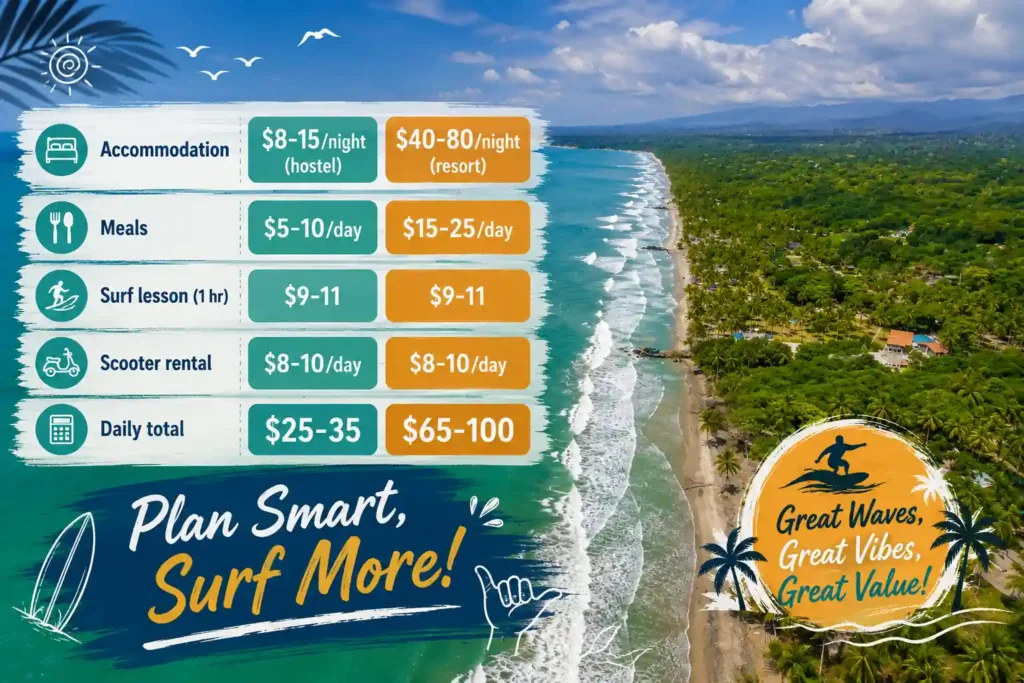
Here’s a rough daily cost breakdown to help with planning before you arrive.
| Expense | Budget Traveler | Mid-Range Traveler |
| Accommodation | $8-15/night (hostel) | $40-80/night (resort) |
| Meals | $5-10/day | $15-25/day |
| Surf lesson (1 hr) | $9-11 | $9-11 |
| Scooter rental | $8-10/day | $8-10/day |
| Daily total | $25-35 | $65-100 |
How Much Does a Trip to La Union Cost?
A three-day trip to La Union costs roughly $75 to $110 USD for a budget traveler and around $200 to $300 USD for someone traveling mid-range, covering accommodation, meals, transport, and at least one surf lesson. Transport from Manila by bus or van adds another $10 to $15 USD each way.
Where to Stay in La Union
San Juan has the widest range of accommodation, from surf hostels with dorm beds to boutique beachfront resorts. Staying directly in San Juan makes sense if surfing is the priority, since you can walk to the beach and skip transport costs entirely.
- Hostels and surf camps: budget-friendly, social atmosphere, often include board storage.
- Mid-range resorts: private rooms, pools, closer to Taboc or Acapulco Beach for a quieter stay.
- Higher-end resorts: larger properties near San Fernando with full amenities and spa services.
What to Eat While You’re There
Ilocano cuisine is a highlight of any La Union trip. Bagnet, crispy deep-fried pork belly, is a regional specialty worth seeking out, along with pinakbet, a mixed-vegetable dish, and fresh grilled seafood sold along the coast. San Juan’s cafe scene has also grown quickly, with plenty of spots serving decent coffee and smoothie bowls for the digital nomad crowd.
Getting Around La Union
Tricycles handle short trips within town, while habal-habal motorbike taxis cover longer distances more quickly. Renting a scooter, usually around $8 to $10 USD per day, gives the most freedom for exploring beaches and waterfalls at your own pace. Buses and vans connect La Union to Manila and Baguio, and booking a seat in advance is smart during peak weekends and holidays.
Is La Union Safe for Tourists?
La Union is generally regarded as one of the safer beach destinations in the Philippines, though standard travel precautions still apply. The Philippine National Police advises tourists nationwide to secure valuables, avoid unlicensed transport late at night, and stay alert in crowded areas, and that guidance applies here too.
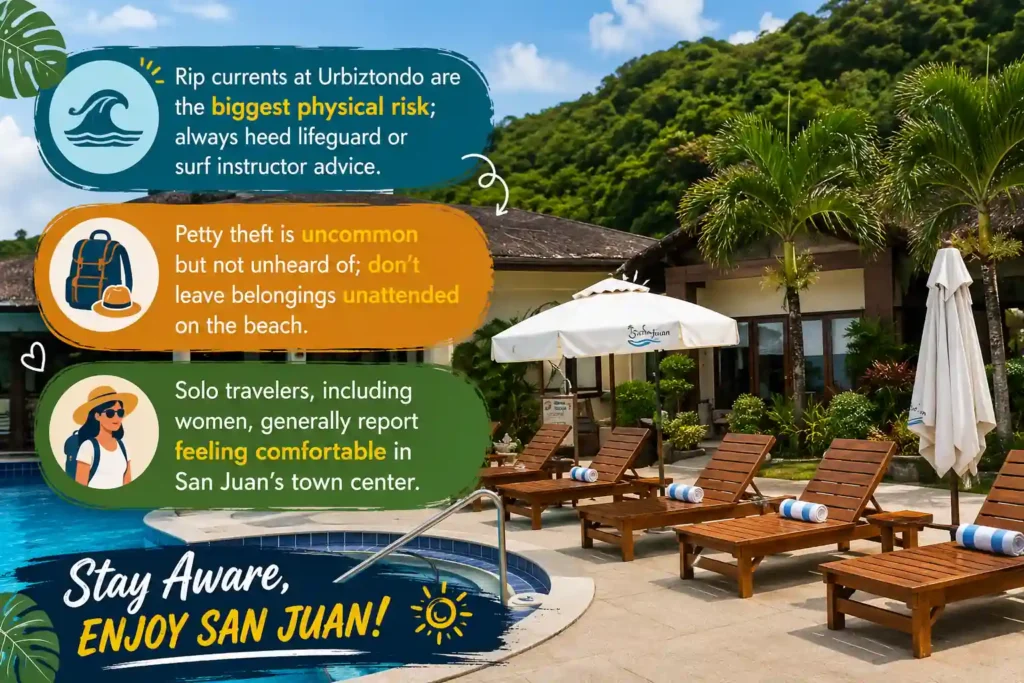
- Rip currents at Urbiztondo are the biggest physical risk; always heed lifeguard or surf instructor advice.
- Petty theft is uncommon but not unheard of; don’t leave belongings unattended on the beach.
- Solo travelers, including women, generally report feeling comfortable in San Juan’s town center.
Is La Union Safe for Solo Travelers?
Yes, La Union is considered safe for solo travelers, and San Juan in particular has a large enough community of backpackers and remote workers that meeting people is easy. Basic precautions, like avoiding unlit beach paths late at night and agreeing on tricycle fares in advance, are still worth following.
Why Everyone Is Visiting San Juan, La Union. Read more in San Juan La Union Travel Where All of Manila Goes to Catch a Wave.
Who Will Enjoy La Union the Most?
Beginner and intermediate surfers get the most out of La Union, along with budget-conscious travelers and remote workers looking for a slower pace than Manila offers. It’s less suited to travelers chasing the postcard turquoise water and white sand of Palawan or Boracay, since La Union’s beaches lean darker and more volcanic in color.
Pros and Cons of Visiting La Union
- Pro: affordable surf lessons and a strong beginner-friendly surf scene.
- Pro: lower prices overall than Boracay, Siargao, or El Nido.
- Pro: close enough to Manila for a short trip, far enough to feel like an escape.
- Con: the sand is darker and coarser than the white-sand beaches elsewhere in the country.
- Con: rainy season, especially July through October, brings real typhoon risk.
- Con: nightlife and dining options are limited outside San Juan’s main strip.
Is La Union Worth It? Here’s the Bottom Line
So, is La Union worth visiting? For surfers, budget travelers, and anyone wanting a mellow beach town within driving distance of Manila, yes, without much hesitation. It won’t win a beauty contest against Palawan’s islands, but that’s not really what it’s selling. What La Union offers instead is easy, affordable access to the water, a community that’s welcoming to first-timers, and a pace of life that makes it easy to stay longer than planned.
If your priority is white sand and turquoise water, look elsewhere. If your priority is learning to surf without draining your savings, La Union delivers.
Frequently Asked Questions About La Union
Is La Union worth visiting for non-surfers?
Yes. Waterfalls, temples, night markets, and day trips to Baguio give non-surfers plenty to do, even if the beach itself is the main draw for most visitors.
Do I need a visa to visit La Union?
Most nationalities can enter the Philippines visa-free for up to 30 days, according to current Philippine Bureau of Immigration policy, though passports must be valid for at least six months beyond your arrival date and travelers need an onward or return ticket.
Is La Union better than Boracay?
It depends on what you want. Boracay wins on scenery and white sand; La Union wins on price, surf access, and a more relaxed, less commercial atmosphere.
How do I get from Manila to La Union?
Buses and vans run regularly from Manila to San Juan and San Fernando, taking around four to six hours depending on traffic. Private transfers and car rentals are also available for more flexibility.
What is the weather like in La Union?
Dry season runs November through April, while the wet season, June through October, brings heavier rain and higher typhoon risk, based on seasonal patterns tracked by the Philippine Atmospheric, Geophysical and Astronomical Services Administration.