
Nacpan Beach Island Hopping does not start at Nacpan Beach itself. Every boat tour to Bacuit Bay departs from the pier in El Nido town, so anyone staying near Nacpan must first travel about seventeen kilometers along the coastal road before reaching the port. This transfer usually takes forty-five minutes to an hour by tricycle or van, depending on traffic and road conditions.
Guests who plan their morning around this detail avoid missing the early boat schedules, since most tours leave the pier between 8:30 and 9:00 in the morning. If you book Nacpan Beach Island Hopping through a hotel or a local operator, ask early whether transport to the El Nido pier is included in the price, because this small detail decides how relaxed your morning will actually feel.
Island Hopping From Nacpan Beach
Nacpan Beach itself does not function as a boat-hopping hub, and that surprises plenty of travelers browsing photos beforehand. Local outriggers sometimes launch from shore for short snorkeling runs near the reef off Calitang, Nacpan’s twin beach. Genuine multi-island hopping, the kind with lagoons and hidden coves, departs almost exclusively from El Nido town. Consequently, most guests treat Nacpan as a relaxing base rather than a launch point for boats.
A short transfer connects the two, covered further down. Staying at Nacpan does not rule out a full day of island hopping; it just adds one extra step. Planning that transfer the night before keeps the morning simple.
Discover the Best Way to Combine Nacpan With Island Hopping. Read more in Nacpan Beach in El Nido That Looks Remote but Feels Worth the Ride.
Best Islands to Visit Near Nacpan Beach
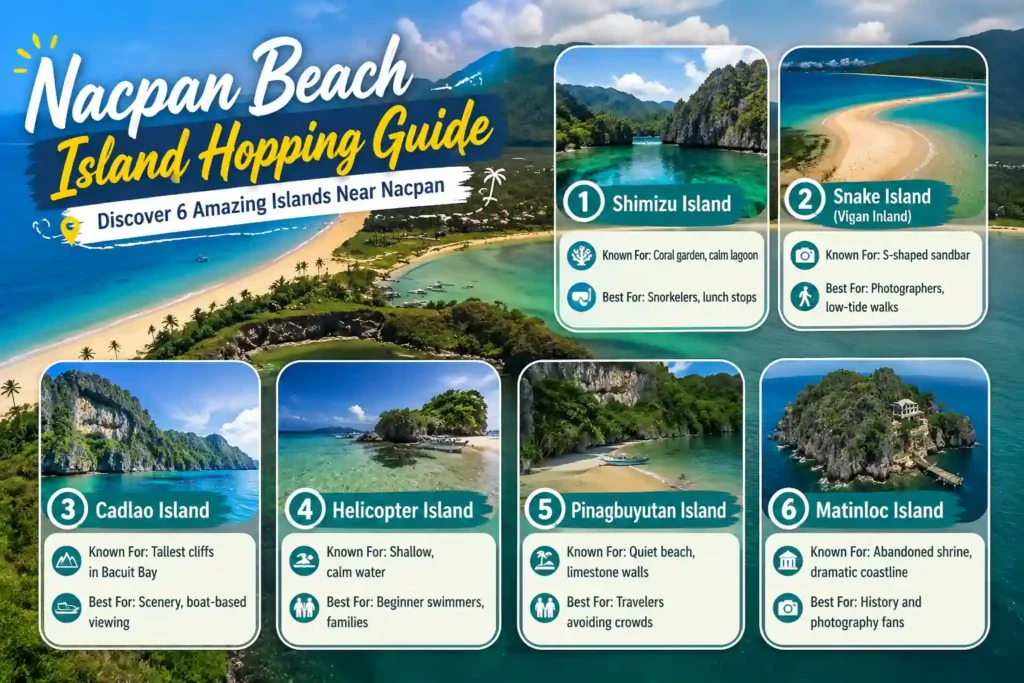
Bacuit Bay holds 45 limestone islands south of Nacpan, and a handful stand out as must-see stops. Shimizu Island offers a coral garden close enough for confident swimmers to reach. Snake Island, locally called Vigan Island, reveals a curving sandbar at low tide.
Cadlao Island rises as the bay’s largest formation, its cliffs sometimes visible from Nacpan. Helicopter Island offers calm, shallow water suited to beginners. Pinagbuyutan Island feels quieter, a favorite among photographers. The table below shows which island matches which travel style.
| Island | Known For | Best For |
| Shimizu Island | Coral garden, calm lagoon | Snorkelers, lunch stops |
| Snake Island (Vigan Island) | S-shaped sandbar | Photographers, low-tide walks |
| Cadlao Island | Tallest cliffs in Bacuit Bay | Scenery, boat-based viewing |
| Helicopter Island | Shallow, calm water | Beginner swimmers, families |
| Pinagbuyutan Island | Quiet beach, limestone walls | Travelers avoiding crowds |
| Matinloc Island | Abandoned shrine, dramatic coastline | History and photography fans |
El Nido Island Hopping Tours From Nacpan Beach
The El Nido Tourism Office standardized island hopping into four routes years ago. Tours A, B, C, and D still structure nearly every visitor’s week. Tour A covers Big Lagoon, Secret Lagoon, Shimizu Island, and Seven Commandos Beach, the most photographed route of the four. B trades lagoons for caves, stopping at Snake Island, Cathedral Cave, and Pinagbuyutan Island. Tour C, ranked alongside Tour A in popularity, visits Helicopter Island, Secret Beach, and Matinloc Shrine. Tour D covers Cadlao Lagoon, Small Lagoon, and quieter beaches, drawing fewer crowds. Some operators now offer private pickup directly from Nacpan-area resorts for an added fee.
What Is Included in an El Nido Island Hopping Tour?
A standard joiner tour includes the boat, a licensed guide, snorkel gear, water, and a beach-cooked lunch. The Eco-Tourism Development Fee and lagoon entrance charges are billed separately. Life jackets are mandatory and provided at every stop.
Private vs Shared Island Hopping
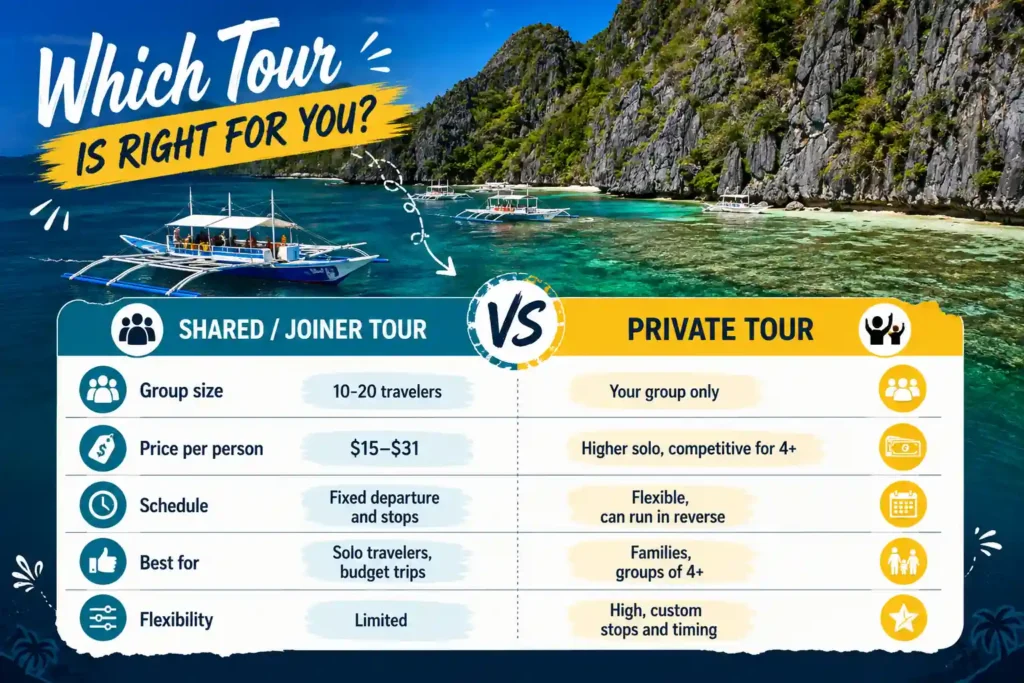
Shared tours, or joiner tours, put ten to twenty travelers on one bangka on a fixed route. Private charters flip that, handing the whole boat and itinerary to one group. Budget usually decides, since a joiner seat costs far less per person.
Groups of four or more, though, often find private pricing close to joiner rates once split. Privacy matters too, since a private boat can run in reverse to dodge crowds. Shared tours suit solo travelers who don’t mind a fixed timetable. The table below lines up the trade-offs.
| Factor | Shared / Joiner Tour | Private Tour |
| Group size | 10-20 travelers | Your group only |
| Price per person | $15-$31 | Higher solo, competitive for 4+ |
| Schedule | Fixed departure and stops | Flexible, can run in reverse |
| Best for | Solo travelers, budget trips | Families, groups of 4+ |
| Flexibility | Limited | High, custom stops and timing |
How to Book an Island Hopping Tour
Booking happens in three main ways near El Nido or Nacpan. Walk-in booths line Calle Hama in El Nido town, confirming same-day availability directly. Guesthouses near Nacpan arrange tours through local partners, though commission sometimes bumps the price. Klook and GetYourGuide let travelers lock in a date before arriving, useful during peak months.
A modest deposit usually secures a spot, with the balance due on tour day. Anyone staying at Nacpan should book at least a day ahead, since the transfer takes time too. Confirming pickup logistics matters, since Nacpan sits outside most standard pickup zones.
Island Hopping Tour Cost
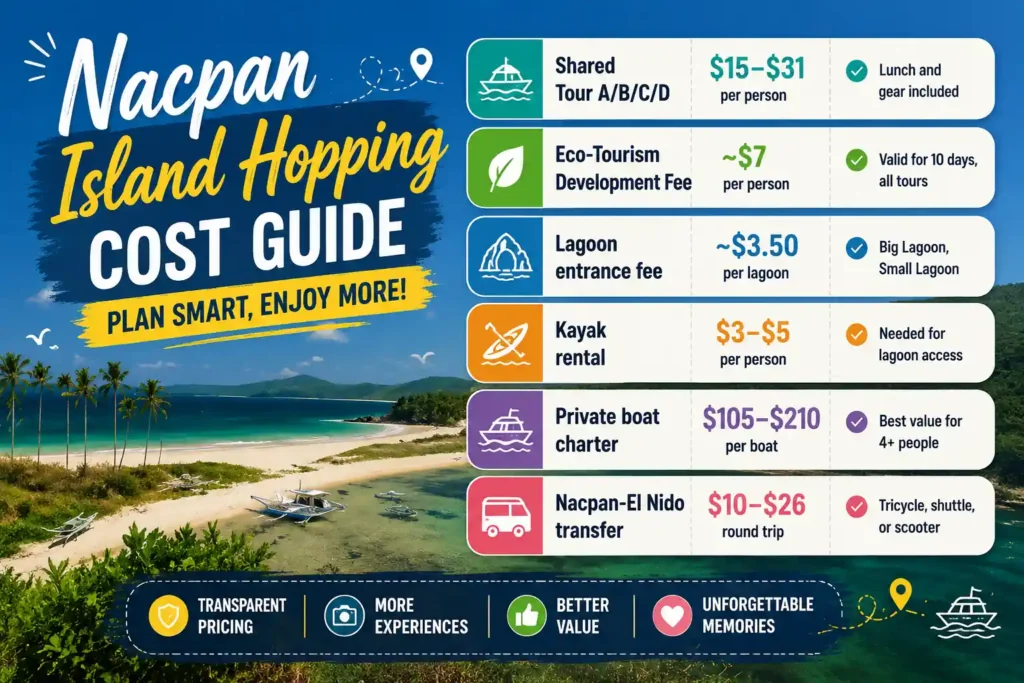
Pricing for El Nido’s lettered tours stayed fairly consistent through 2026. A joiner seat on Tour A, B, C, or D costs roughly $15 to $31 per person, lunch included. Every visitor also pays a one-time Eco-Tourism Development Fee of about $7, collected by the El Nido Municipal Tourism Office, valid for ten days.
Lagoon fees add roughly $3.50 per lagoon, while kayak rentals cost $3 to $5. Nacpan hopping costs also include private boats, starting at around $105 to $210 per bangka, which can be split among four travellers. Add the Nacpan-El Nido transfer, roughly $10 to $26, and estimating your total day’s budget becomes easy.
| Item | Estimated Cost (USD) | Notes |
| Shared Tour A/B/C/D | $15-$31 per person | Lunch and gear included |
| Eco-Tourism Development Fee | ~$7 per person | Valid for 10 days, all tours |
| Lagoon entrance fee | ~$3.50 per lagoon | Big Lagoon, Small Lagoon |
| Kayak rental | $3-$5 per person | Needed for lagoon access |
| Private boat charter | $105-$210 per boat | Best value for 4+ people |
| Nacpan-El Nido transfer | $10-$26 round trip | Tricycle, shuttle, or scooter |
How Much Does Nacpan Beach Island Hopping Cost?
Budget roughly $25 to $45 per person for a full day, once the tour, eco fee, and lagoon charges are added. A private charter with three friends lands near the same per-person total, with more flexibility. Transport between Nacpan and El Nido adds another $10 to $26.
Island Hopping Tour Duration
Every standard tour runs as a full-day outing, typically seven to eight hours door to door. Boats gather near El Nido’s main beach around 9:00 am, though departure often slides toward 9:30 or 10:00. Each island stop lasts roughly 40 to 90 minutes, enough time to swim or wander the sand.
Lunch happens mid-tour, usually around 12:30 pm, served buffet-style on a beach. Return times land between 4:00 and 5:00 pm, leaving daylight for a sunset drink. Travelers based at Nacpan should factor in a 30- to 60-minute transfer on both ends. Realistically, a Nacpan-based tour day runs closer to nine or ten hours total.
Getting From Nacpan Beach to El Nido
Nacpan Beach is roughly 17 to 22 kilometres north of El Nido town. From El Nido to Nacpan, the route follows a paved highway before reaching a rougher final stretch. Tricycles are the most common option, costing around $17 to $26 for a round trip for up to four passengers. Shared shuttle vans also run several times daily, with round-trip fares of about $10 to $14.
Motorbike rental offers the most flexibility for confident riders, at roughly $9 to $10 per day. The journey takes 30 to 60 minutes depending on traffic and road conditions. Booking transport the evening before helps during peak season. Arriving at the pier by 8:30 am gives enough buffer for a 9:00 am departure.
Best Time for Island Hopping
Palawan’s dry season, running roughly November through May, brings calmer seas and better odds that every tour runs as scheduled. December through February delivers clearer skies, though it draws bigger crowds and higher prices. March through May stays dry too, with fewer crowds than peak December. The wet season, June through October, still allows island hopping most days, but squalls cancel tours more often.
Morning departures generally beat afternoon ones for visibility and calmer water. Booking a tour earlier in your trip leaves room to reschedule around weather. Checking a short-term forecast the night before saves a wasted early alarm.
What to Bring for Island Hopping
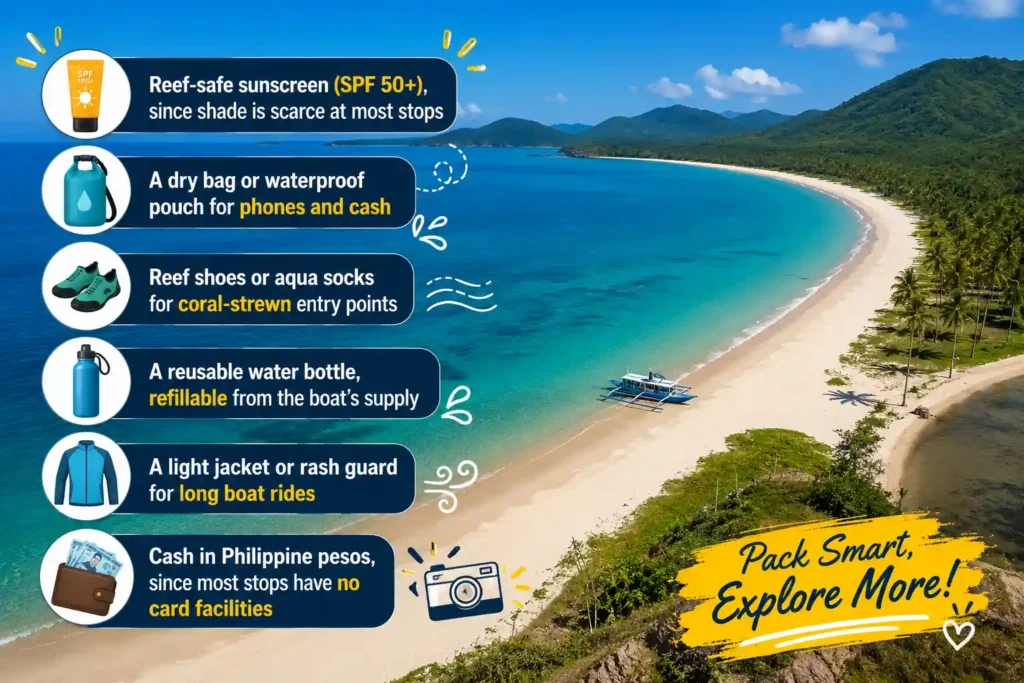
Packing light but smart makes a full day on the water more comfortable. A few essentials cover most situations a tour throws at you:
- Reef-safe sunscreen (SPF 50+), since shade is scarce at most stops
- A dry bag or waterproof pouch for phones and cash
- Reef shoes or aqua socks for coral-strewn entry points
- A reusable water bottle, refillable from the boat’s supply
- A light jacket or rash guard for long boat rides
- Cash in Philippine pesos, since most stops have no card facilities
Pack the night before if you’re transferring from Nacpan, since mornings move fast.
Weather and Sea Conditions
Nacpan weather stays warm and pleasant for swimming throughout much of the year. Bacuit Bay’s water usually ranges from 27°C to 29°C, making it comfortable for long swims. Seasonal winds can change conditions, but the Amihan monsoon from November to May generally brings calmer seas. Waves inside the bay are usually gentle because nearby islands shield the water from strong ocean swells.
Rain showers can appear suddenly even in the dry season, though they usually pass within thirty minutes. Tour operators cancel or reroute trips when storm warnings are issued, with refunds standard practice. Visibility underwater tends to peak from March through May, when rain runoff drops. Checking PAGASA’s local forecast the morning of your tour gives the most reliable read.
Nacpan Beach Island Hopping Tips
Book your El Nido tour before settling into Nacpan, since a same-day transfer plus booking can eat a whole morning. Arrange transport both ways when hiring a tricycle, since return rides get scarce later. Traveling in a small group helps if a private boat is on the table, since costs split close to shared rates. Bringing your own snorkel mask beats renting one for anyone particular about fit.
Staying overnight in El Nido town before an early tour removes the transfer from your morning. Packing motion-sickness tablets is worth it for the bangka ride outside calm months. Confirming pickup points prevents the classic mix-up between Nacpan guesthouses and standard hotel zones.
Is Island Hopping From Nacpan Beach Worth It?
Yes, for most travelers, the extra transfer is worth the payoff once Bacuit Bay comes into view. Nacpan offers a genuinely quiet beach base, while El Nido town delivers the archipelago’s headline lagoons nearby. Combining both means calm mornings on the sand and afternoons among limestone cliffs. The added 30- to 60-minute transfer feels minor next to a full day on the water.
Travelers pressed for time sometimes skip the trip and stick to Nacpan’s own swimming and sunsets. Most people who make the effort call it the highlight of their Palawan trip. Weigh your schedule and budget before deciding either way.
FAQs About Nacpan Beach Island Hopping
Do island hopping boats leave from Nacpan Beach?
No. Standard tours depart from El Nido town’s pier, roughly 17 to 22 kilometers south of Nacpan, reached by tricycle, shuttle, or scooter.
How much does an El Nido island hopping tour cost in 2026?
Shared tours cost roughly $15 to $31 per person, plus a one-time $7 Eco-Tourism Development Fee and about $3.50 per lagoon.
How do I get from Nacpan Beach to El Nido town?
Tricycle, shuttle van, and motorbike rental are the main options, taking 30 to 60 minutes and costing $9 to $26.
Which island hopping tour should I choose, A, B, C, or D?
Tour A suits first-timers wanting lagoons, Tour B suits cave fans, Tour C covers hidden beaches, and Tour D stays quieter.
Is Nacpan Beach worth visiting if I’m not doing island hopping?
Yes. Nacpan’s four-kilometer stretch of sand and coconut palms is worth a visit alone, especially around sunrise or sunset.
What is the Eco-Tourism Development Fee?
It’s a mandatory PHP 400 (about $7) fee collected once per traveler, valid for ten days across every tour, funding local conservation work.
When is the best time of year to go island hopping?
The dry season, November through May, offers calmer seas and lower cancellation risk, with March to May bringing fewer crowds.