
The best Nacpan Beach photos come from three spots: the northern hill viewpoint, the shoreline at sunrise, and the midpoint where Nacpan meets its twin, Calitang. Early morning light, between 5:30 and 6:30 a.m., gives the water a soft gold color and keeps the sand free of footprints. For wide, sweeping Nacpan Beach photos that show the full four-kilometer curve, climb the small hill on the north end of the beach; it takes about ten minutes and gives you a clean view over the palm trees and coastline.
If you want close-up shots instead, walk along the waterline during low tide, when the wet sand reflects the sky like a mirror. Bring a lens cloth, since sea spray builds up fast, and check the tide schedule the night before so you don’t miss the best light.
Best Spots for Nacpan Beach Photos
Nacpan offers more variety than most beaches. The central area, where tricycles and vans drop people off, has the classic postcard view: long sand, a gentle curve, palms leaning toward the water. Walk further north and the crowds thin out fast, since most visitors never go past the first beach shacks.
For higher shots, take the small hillside path near the north end for a wide view over the bay, great for landscapes. At the shoreline, wet sand acts like a mirror at the right angle, reflecting the sky and palms. This reflection is what makes some Nacpan Beach photos stand out.
Short on time? Shoot people at the central beach and landscapes up north. Locals and regulars, including reviewers from Mad Monkey Nacpan Beach, keep pointing to the same spots, which says a lot about why they’re worth the walk.
- Central beach: classic wide shots with palm trees and open sky
- Northern isthmus: elevated views over both Nacpan and Calitang
- Shoreline at low tide: mirror-like reflections of the sky
- Beach shacks area: candid, lifestyle-style photography
Discover Why Nacpan Beach Is a Must-Visit in El Nido. Read more in Nacpan Beach in El Nido That Looks Remote but Feels Worth the Ride.

A quick look at how each main spot compares can help you plan your route before you even arrive.
| Spot | Best For | Ideal Time |
| Central Beach | Wide landscape, group shots | Early morning |
| Northern Isthmus | Elevated bay views, drone shots | Sunrise or late afternoon |
| Shoreline (low tide) | Reflection photography | 1–2 hours after low tide |
| Calitang side path | Sunset, quieter frames | Late afternoon |
Nacpan Beach Sunrise Photos
Nacpan faces north, so sunrise beats sunset here. Most people miss this. The light is soft and golden on the water, with no harsh glare as you get on west-facing beaches. Come between 5:30 and 6:30 a.m. for calm water and an empty beach, since most tour groups show up around 9 or 10 a.m.
The tricky part is getting there. It’s a 45-minute motorbike ride from El Nido in the dark, so arrange your ride the night before. It’s worth it, though. Calm water, warm light, and no crowds are hard to find later in the day.
For camera settings, use a low ISO and a slightly longer exposure at first light, ideally with a tripod for sharp shots. Once the sun is up, switch to a faster shutter speed so the water doesn’t blow out. Sunrise is still your best shot at that soft, dreamy look Palawan is known for.
- Arrive between 5:30–6:30 a.m. for the softest light
- Book transport the evening before, since it’s a dark 45-minute ride
- Use a tripod for slightly longer exposures at first light
Nacpan Beach Sunset Photos
Nacpan faces north, so you won’t get that classic straight-into-the-ocean sunset you’d find at west-facing beaches. Still, the Nacpan sunset can be beautiful, with the late-afternoon sky glowing orange and pink while the palm trees create gorgeous silhouettes. For that classic ocean sunset view, cross the sandbar to Calitang, which faces west.
Get there 30 to 45 minutes before sunset so you have time to set up your shot before the light changes fast. A few clouds can actually help, since they hold the color longer than a clear sky.
Tip: bring a flashlight or use your phone for the walk back. There’s no lighting on the path, and it gets very dark once the sun sets. Don’t stay too long chasing one more shot; your safety comes first.
Photos of the Twin Beach Viewpoint
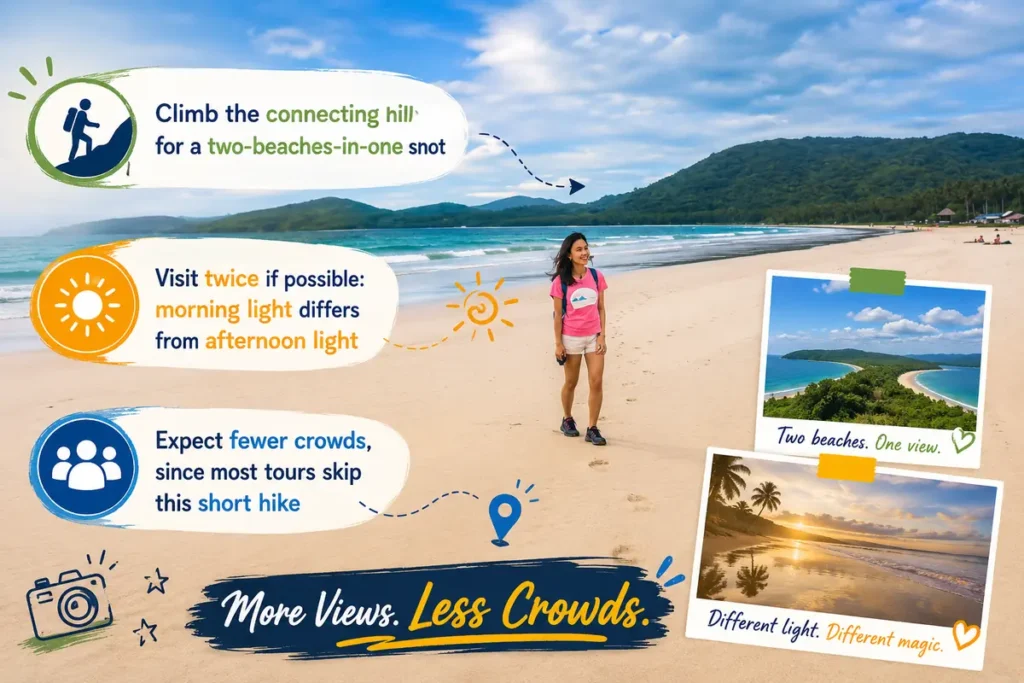
Nacpan’s twin-beach setup makes it one of the most photogenic spots in Palawan. A thin strip of sand connects Nacpan to its quieter neighbor, Calitang Beach. Climb the small hill between them, and you get a rare shot: both beaches, both bays, and the sandy strip in one frame.
This viewpoint sees fewer visitors than the main beach, so it’s easier to shoot without people in your frame. Nacpan faces north, and Calitang faces west, so the light changes on each side through the day. If you can, visit twice, once in the morning and again in late afternoon.
Few day-tour groups make the climb, so the spot stays quiet even in peak season. If you only have time for one extra stop, make it this one.
- Climb the connecting hill for a two-beaches-in-one shot
- Visit twice if possible: morning light differs from afternoon light
- Expect fewer crowds, since most tours skip this short hike
Nacpan Beach Drone Photos
Drone shots are the best way to capture Nacpan. From above, you can see the full four-kilometer curve, the twin-beach layout, and the sharp color change where shallow turquoise water meets the deep blue.
Before you fly, check the rules. Nacpan sits inside a protected area managed by the DENR, so drone use may need registration and some restrictions may apply. Avoid flying over crowds.
Fly in the morning, when the water is clearest and winds are calm. Keep your drone around 30 to 50 meters high for the best mix of detail and that wide, sweeping view Nacpan is known for.
Here’s a quick breakdown of drone-friendly conditions to check before takeoff.
| Condition | Best Case | Why It Matters |
| Time of day | 7:00–9:00 a.m. | Clearer water, calmer wind |
| Wind speed | Under 15 km/h | Stable footage, safer flight |
| Crowd level | Before 10 a.m. | Cleaner frames, fewer people below |
| Altitude | 30–50 meters | Balances detail with coastline scope |
Nacpan Beach Photos With Palm Trees
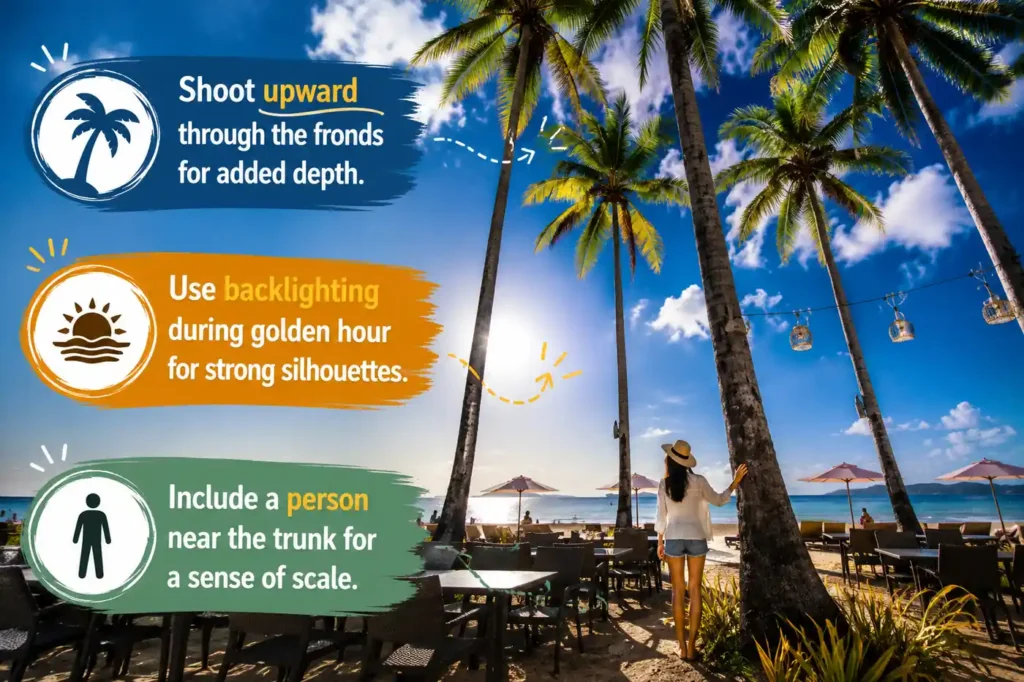
Palm trees are a signature part of Nacpan Beach photos. Many lean naturally toward the water, giving you a built-in frame. Instead of shooting head-on, try a low angle looking up through the fronds for more depth.
Backlighting works best during golden hour, when the sun turns the palms into dark silhouettes against a colorful sky. Adding a person near a leaning trunk also helps show scale, since it’s hard to tell how tall these trees are on their own.
One quick tip: underexpose slightly for silhouette shots. Auto settings often brighten the shadows too much and wash out the sunset colors.
- Shoot upward through the fronds for added depth
- Use backlighting during golden hour for strong silhouettes
- Include a person near the trunk for a sense of scale
Best Beach Photo Spots at Low Tide
Low tide turns Nacpan’s shoreline into a natural mirror. The wet, flat sand reflects the sky, clouds, and palm trees with amazing clarity. The best window is one to two hours after low tide, when the water hasn’t fully dried up yet.
Tide times change often, so check a reliable source like PAGASA before you plan your shoot. Go too early, and the water is still too deep. Go too late, and the reflection is gone.
Low tide also uncovers small tide pools and sandbars near the edges of the beach. These add nice texture to your shots, so it’s worth building extra time into your schedule to explore them.
Nacpan Beach Photos for Instagram
For a strong Instagram grid, mix wide shots of the empty shoreline with closer, candid shots near the beach shacks for a more personal feel. Add a few vertical shots between your landscape photos to keep the feed balanced and easy to scroll.
When editing, boost warmth slightly and lower the highlights to match Nacpan’s natural golden light. Avoid pushing the turquoise water into a neon blue, since it looks fake and less trustworthy.
Tag your location accurately so other travelers can find the same spots, and write captions with real details, like the twin-beach walk or sunrise time. Specific captions get more saves and shares than vague ones.
- Mix horizontal and vertical shots for a balanced feed
- Keep color edits natural rather than oversaturated
- Add specific details in captions, not just generic praise
What Is the Best Time for Nacpan Beach Photos?
The best time for Nacpan Beach photos is generally early morning, between 5:30 and 8:00 a.m., when the light is soft, the tide is often favorable, and the beach is still nearly empty of other visitors.
Tips for Taking Better Nacpan Beach Photos
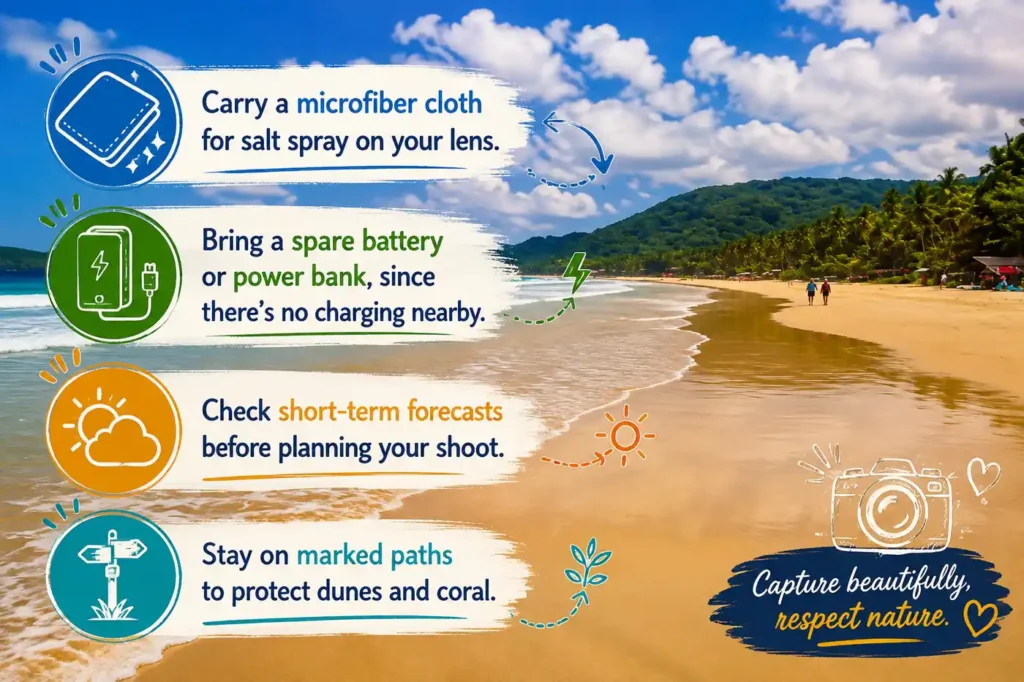
A few small habits make a big difference once you’re on the sand. Clean your lens before you shoot. Salt spray and humidity build up fast near the shore, leaving a hazy film you might not notice until later. A small microfiber cloth fixes this in seconds.
Battery life is another issue. There are no charging stations near the beach, and heat drains batteries faster than normal. Bring a spare battery and a power bank so you don’t lose power right when the light turns perfect.
Weather can change quickly here too. Check a short-term forecast, ideally from PAGASA, before you head out. This helps you avoid sudden rain or cloudy skies. Also, stick to marked paths and avoid stepping on coral or dune plants, so the beach stays beautiful for the next photographer.
- Carry a microfiber cloth for salt spray on your lens
- Bring a spare battery or power bank, since there’s no charging nearby
- Check short-term forecasts before planning your shoot
- Stay on marked paths to protect dunes and coral
A simple gear checklist can save you from forgetting something essential on the day.
| Item | Purpose | Priority |
| Microfiber cloth | Removes salt spray from lens | High |
| Spare battery/power bank | No charging stations nearby | High |
| Tripod | Stability for sunrise long exposures | Medium |
| Dry bag | Protects gear from sand and splashes | Medium |
Do You Need a Permit for Drone Photography at Nacpan Beach?
Recreational drone flights generally follow standard Philippine civil aviation guidelines, but because Nacpan sits within a protected resource area, it’s best to confirm current rules with local authorities or your accommodation before flying, especially over crowded sections of the beach.
How Long Is Nacpan Beach?
Nacpan Beach stretches for approximately four kilometers of white sand, making it one of the longest and least crowded beaches in the El Nido area.
Getting great Nacpan Beach photos really comes down to timing, patience, and a little planning ahead. Arrive early, respect the tide charts, and don’t rush past the northern viewpoint just because it takes an extra ten minutes to reach. Whether you’re shooting for Instagram, a personal travel journal, or just want a few solid prints from the trip, this beach gives you more than enough material to work with, as long as you’re willing to show up before the crowds do.
Frequently Asked Questions
Is there an entrance fee for Nacpan Beach in 2026?
As of 2026, Nacpan Beach itself has no standard entrance fee, though motorbike or vehicle parking may involve a small on-site charge. All visitors to the wider El Nido municipality are required to pay the Eco-Tourism Development Fee of around $6.90 USD, valid for 10 days under Municipal Ordinance No. 01, Series of 2024.
How do I get to Nacpan Beach from El Nido town?
Nacpan sits about 17 kilometers from El Nido town, roughly a 45-minute ride by motorbike, tricycle, or private van, with the last stretch of road including some unpaved sections.
What is the best month to visit for photography?
The dry season, from November through May, offers calmer water and clearer skies, making it the most reliable window for both sunrise and drone photography.
Can beginners get good drone shots at Nacpan?
Yes, since the beach’s open layout and consistent morning wind conditions make it relatively forgiving for beginner drone pilots, as long as basic safety and altitude guidelines are followed.