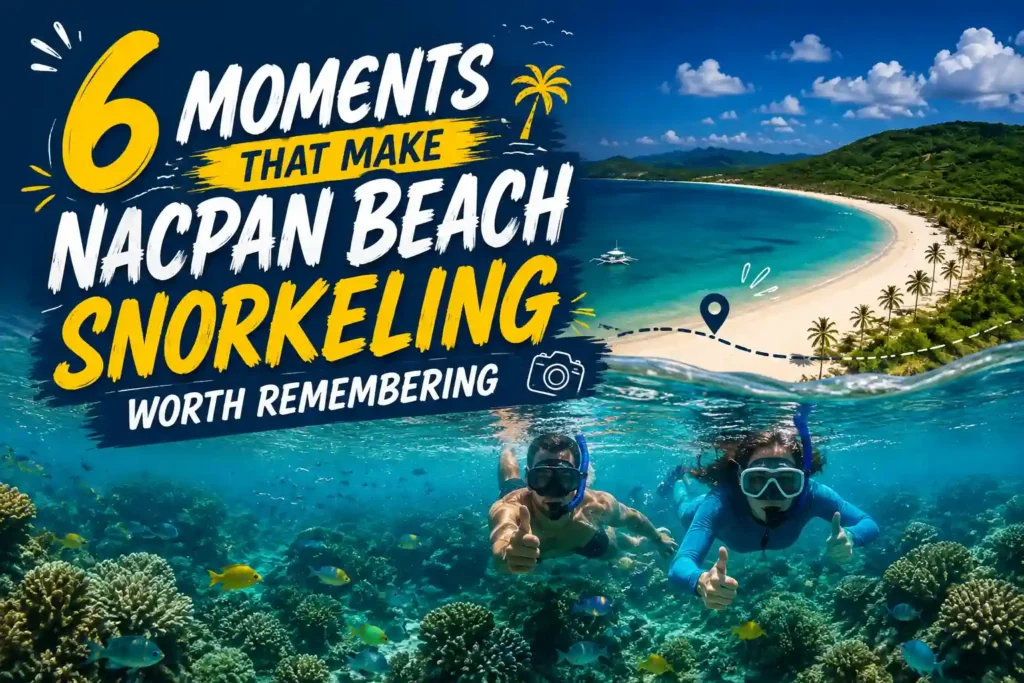
Nacpan Beach snorkeling works best along the rocky edges of the bay, not in the open sandy stretch where most tourists swim. The northern point near the parking area has small coral patches and sea urchins, while the calmer southern end past the sandbar offers clearer water and occasional clownfish near the rocks.
Visibility changes a lot with the tide and season, so Nacpan Beach snorkeling is much better during the dry months from November to May, when the sea stays calm and clear. Bring your own mask and fins, since rental stalls near the entrance are few and often out of stock, and stay close to the rocky points instead of the main swimming zone if you want to see any real marine life.
What Can You See During Nacpan Beach Snorkeling
What you see underwater depends heavily on where you enter. Near the rocky outcrops, small coral formations cling to the boulders, hosting a modest but genuine mix of reef fish. Out in the open sand, there is mostly seagrass and the occasional starfish.
Visibility swings from clear on calm mornings to cloudy once wind or rain stirs up sediment. Compared to Shimizu Island or the Bacuit Archipelago’s lagoons, Nacpan is modest, and that is worth saying plainly. Still, what lies beneath is a pleasant bonus, not the main event.
Is Nacpan Beach Snorkeling Good for Beginners?
Yes, with realistic expectations. Nacpan works well for beginners in the calm, shallow water near the rocky points at both ends of the bay, especially at high tide. The open sandy middle has little to see, so stay close to the rocks and avoid venturing past chest-deep water alone.
Fish and Marine Life at Nacpan Beach
Clownfish shelter in anemone clusters, parrotfish graze the coral edges, and damselfish and wrasse dart in loose schools. Snorkelers occasionally spot a small reef shark off the rocks, generally shy and harmless. Sea urchins and starfish round out a modest slice of Palawan’s marine biodiversity.
Coral and Other Underwater Views
Coral coverage is patchy, concentrated around the boulder fields near Calitang and the rocks close to the lifeguard station. Expect small brain coral heads, soft coral swaying in the current, and staghorn coral in shallower pockets. Palawan’s reefs fall under conservation rules overseen by the Palawan Council for Sustainable Development, which regulates marine resource use province-wide. The sandy seabed dominating most of the beach has little texture, so boat tours toward the Bacuit Archipelago remain the better choice for coral variety.
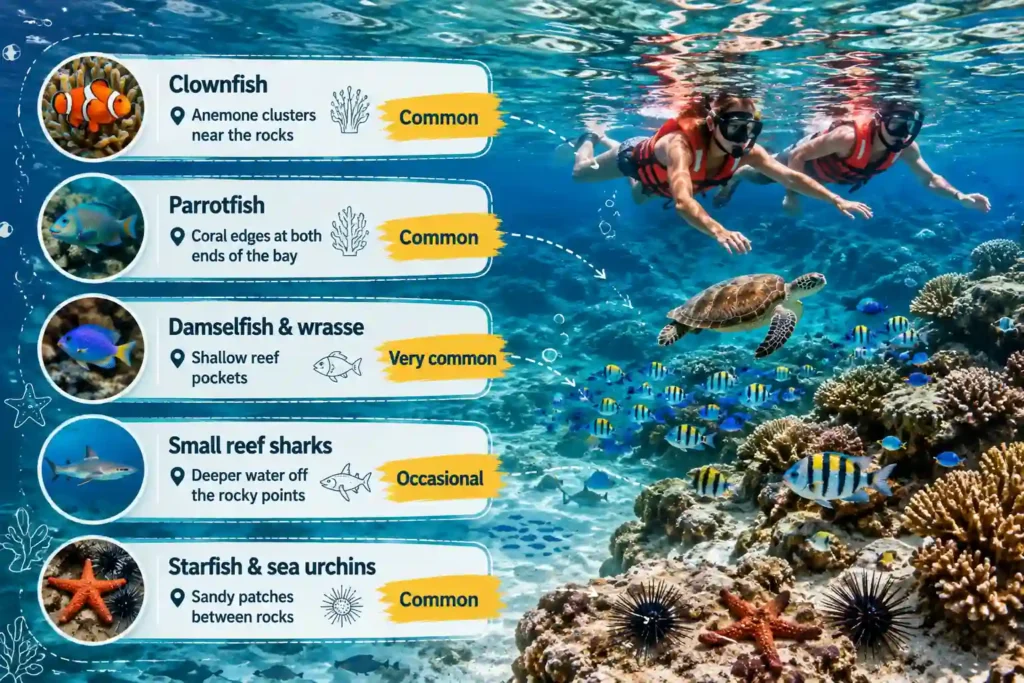
Here is a quick snapshot of what snorkelers commonly report seeing around Nacpan’s rocky points.
| Species | Where to Look | How Common |
| Clownfish | Anemone clusters near the rocks | Common |
| Parrotfish | Coral edges at both ends of the bay | Common |
| Damselfish & wrasse | Shallow reef pockets | Very common |
| Small reef sharks | Deeper water off the rocky points | Occasional |
| Starfish & sea urchins | Sandy patches between rocks | Common |
Where Are the Best Spots to Snorkel at Nacpan Beach?
Two spots stand out along Nacpan’s four-kilometer shoreline. At the northern tip, past the fishing village, the rocks bordering Calitang Beach hold the best coral coverage. At the southern end, near the lifeguard station, a smaller rocky patch offers easier access for casual swimmers. The wide, sandy middle has almost nothing to see underwater, so walking straight out from your towel rarely pays off. Local vendors and lifeguards, when present, can usually point you toward the side with better visibility that day, since conditions shift with tide and season.
- Northern rocks near Calitang: best coral coverage, quieter, about a 20-minute walk from the main parking area
- Southern rocks near the lifeguard station: easier access, good for beginners
- Open sandy middle: mostly bare seabed, skip it if snorkeling is your priority
When Is the Best Time to Go Snorkeling at Nacpan Beach?
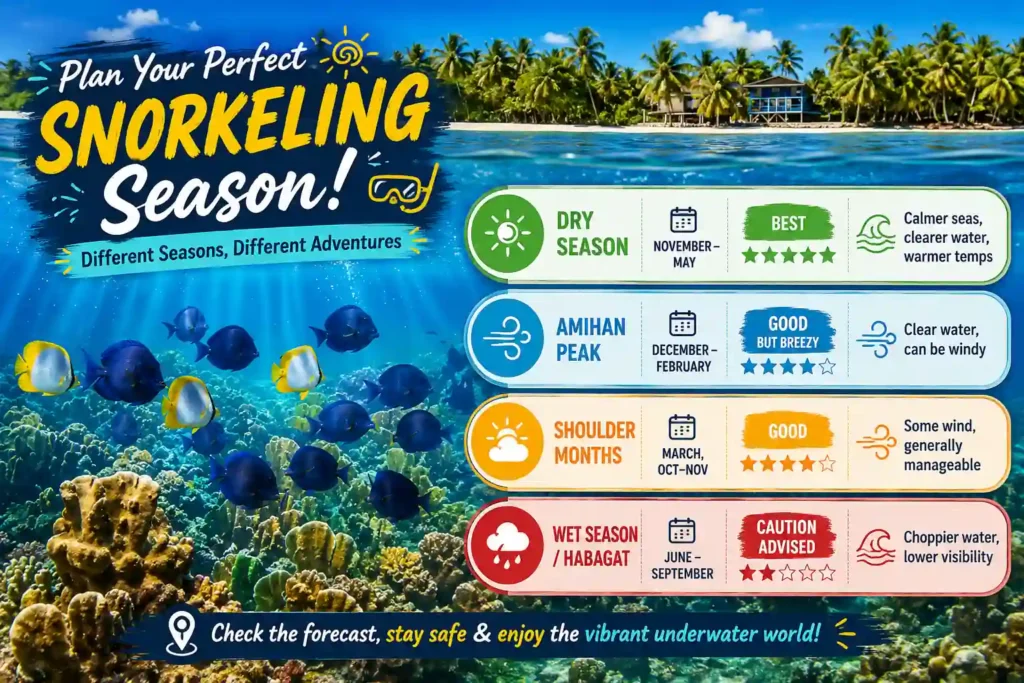
Timing changes the experience more than location alone. Dry season, November through May, brings calmer seas and better visibility, according to seasonal patterns tracked by the Philippine Atmospheric, Geophysical and Astronomical Services Administration (PAGASA).
The best time for snorkeling is during the dry season, when calmer conditions usually provide better visibility. During the wet season, from June through October, stronger winds can reduce water clarity. For the clearest experience, snorkel in the morning before the wind picks up. High tide is also ideal because deeper water covers more of the rocky reef and reduces the risk of scraping against exposed coral.
Best Time of Day
Early morning, roughly 7:00 to 9:30 AM, is the best window. Wind is minimal, the surface is glassy, and the beach is nearly empty before day-tour groups arrive. Midday brings glare and choppier water. Late afternoon, around 4:00 to 5:30 PM, can work too, when wind often eases and light turns soft.
Sea and Weather Conditions
Nacpan weather also plays a role in water clarity and sea conditions. Nacpan faces north, which helps shield it from the biggest swells hitting west-facing beaches during the wet season. However, wind chop can reduce visibility more than large waves. From November to February, Amihan winds from the northeast can create short, choppy waves even during the dry season. Murky nearshore water usually indicates recent rain, which washes sediment from inland streams into the sea.
This table breaks down what to expect month by month before committing to a snorkeling day.
| Season | Months | Snorkeling Conditions | Notes |
| Dry Season | November – May | Best | Calmer seas, clearer water, warmer temps |
| Amihan Peak | December – February | Good but breezy | Clear water, can be windy |
| Shoulder Months | March, Oct-Nov | Good | Some wind, generally manageable |
| Wet Season / Habagat | June – September | Caution advised | Choppier water, lower visibility |
Can You Rent Snorkeling Gear at Nacpan Beach?
Gear rental directly at Nacpan is limited and inconsistent, since this is not a dedicated snorkeling destination with dive shops on the sand. A few vendors occasionally rent basic mask and snorkel sets, but quality varies. The more reliable option is renting gear in El Nido town before the drive north, where shops offer full sets at a fair daily rate. Some accommodations near Nacpan keep a small stock for guests, so ask when you book.
- Rent in El Nido town: most reliable option with the widest selection
- Ask your accommodation: some guesthouses near Nacpan keep gear for guests
- Bring your own if possible: fit and seal matter more than price underwater
Here is roughly what snorkeling gear and transport to Nacpan cost as of 2026.
| Item | Typical Price (PHP) | Approx. USD |
| Mask & snorkel rental (per day) | ₱200 | ~$3.25 |
| Motorbike rental (per day) | ₱500-600 | ~$8-10 |
| Tricycle / habal-habal (one way) | ₱250-350 | ~$4-6 |
| Parking (motorbike) | ₱20 | ~$0.30 |
Can You Snorkel at Nacpan Beach Without a Tour?
Yes. Unlike El Nido’s island-hopping trips, Nacpan is a public, road-accessible beach, so you can walk into the water near the rocky points whenever you like, at no cost beyond gear and transport. A guided tour to Shimizu Island or the Bacuit Archipelago remains the better choice if coral variety is your main goal.
Is Nacpan Beach Safe for Snorkeling?
Generally yes, particularly in the calm, shallow zones near the rocky points at high tide in dry season. Nacpan lacks the strong reef breaks found at surf beaches, but sharp coral, occasional jellyfish, and choppy swell can still catch inexperienced swimmers off guard. Stick to areas where others are already in the water, and skip it on windy or storm-affected days.
Nacpan Beach Currents, Waves, and Safety Precautions
Beyond the general safety question, it helps to understand what shapes a given day. The seabed is a mix of sand and rock, not a fringing reef, so the main hazards are wind-driven chop and scattered coral rather than powerful surf. Currents along the rocky points shift with the tide, occasionally creating a pull that surprises inattentive swimmers. Because Nacpan has no full-time lifeguard coverage, self-awareness matters more here than at a resort beach.
Waves and Currents
Nacpan generally sees smaller waves than surf beaches like nearby Duli, since its north-facing orientation offers some shelter. Lateral currents can still build around the rocky points at mid-tide. If you feel yourself drifting sideways, swim parallel to the beach first, rather than fighting the pull directly.
Safety Tips
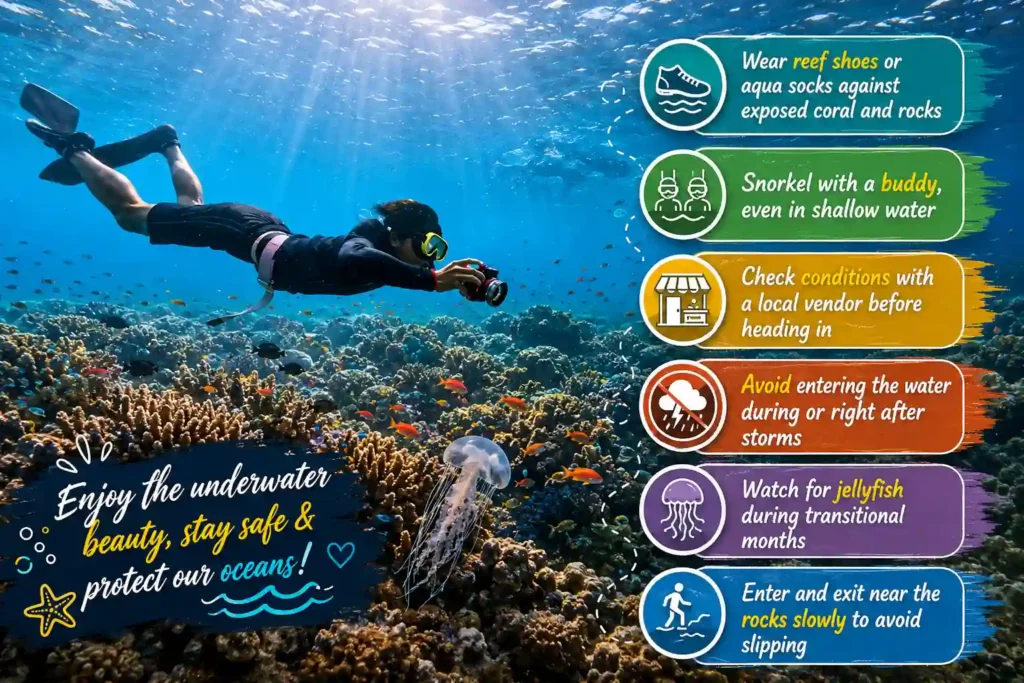
A few precautions go a long way toward a safe day in the water at Nacpan:
- Wear reef shoes or aqua socks against exposed coral and rocks
- Snorkel with a buddy, even in shallow water
- Check conditions with a local vendor before heading in
- Avoid entering the water during or right after storms
- Watch for jellyfish during transitional months
- Enter and exit near the rocks slowly to avoid slipping
What Should You Bring for Snorkeling at Nacpan Beach?
Nacpan is remote enough that forgetting something means doing without it, since there are no dive shops nearby. Pack light but complete, and plan for a beach with no ATM and patchy mobile signal. The walk to the best rocky spots can take 15 to 20 minutes each way, so footwear matters as much as gear. Reef-safe sunscreen is not optional either, since standard sunscreen is discouraged across El Nido’s Marine Protected Area for the damage certain chemical filters cause to coral.
- Reef-safe sunscreen, zinc oxide or titanium dioxide based
- Mask and snorkel, bring your own if you have one
- Reef shoes or aqua socks
- Cash in small bills, no ATMs near Nacpan
- Reusable water bottle
- Dry bag for phone and valuables
Tips for a Better Snorkeling Experience at Nacpan Beach
A few small adjustments change what you see. Arrive early, since morning light and calm water dramatically improve visibility. Move slowly once in the water, since fish scatter fast when they sense splashing overhead. Float rather than stand near coral or rock, since even accidental contact can damage slow-growing coral. Pair your stop with the short hike to the Twin Beach viewpoint between Nacpan and Calitang, one of El Nido’s best panoramas, taking only 15 to 20 minutes.
- Go early, before wind and crowds pick up
- Float instead of stand near coral or rocks
- Combine your visit with the Twin Beach viewpoint hike
Final Thoughts: Is Nacpan Beach Worth It for Snorkeling?
Nacpan Beach snorkeling will not replace a proper boat tour through the Bacuit Archipelago, and it should not be sold as the main reason to visit. But dismissing it entirely misses the point too. The rocky points at either end hold a genuine, if modest, slice of Palawan’s underwater life, worth an hour if you are already there for the sand and sunset. Go early, check conditions, bring reef shoes, and keep expectations realistic.
Frequently Asked Questions
Is Nacpan Beach good for snorkeling?
It’s good in specific spots, not everywhere. The rocky points at the northern and southern ends of the bay offer modest coral and fish life, especially at high tide in dry season. The wide sandy middle has little to see, so location matters more than the beach’s overall reputation.
What marine life can you see at Nacpan Beach?
Expect clownfish in anemone clusters, parrotfish along coral edges, damselfish, wrasse, sea urchins, starfish, and occasionally a small, harmless reef shark in deeper water off the rocks. It’s a modest but genuine mix compared to Palawan’s more famous dive sites.
Can you snorkel at Nacpan Beach without a tour?
Yes. Nacpan is a public, road-accessible beach, so you can walk in near the rocky points anytime, without booking a tour. Bring or rent your own gear beforehand, since equipment rental directly at the beach is limited.
Is Nacpan Beach safe for snorkeling beginners?
It’s reasonably safe for beginners who stick to the calm, shallow zones near the rocky points at high tide. Avoid the open water past chest depth, watch for wind chop, and check conditions locally before entering, especially outside the dry season.