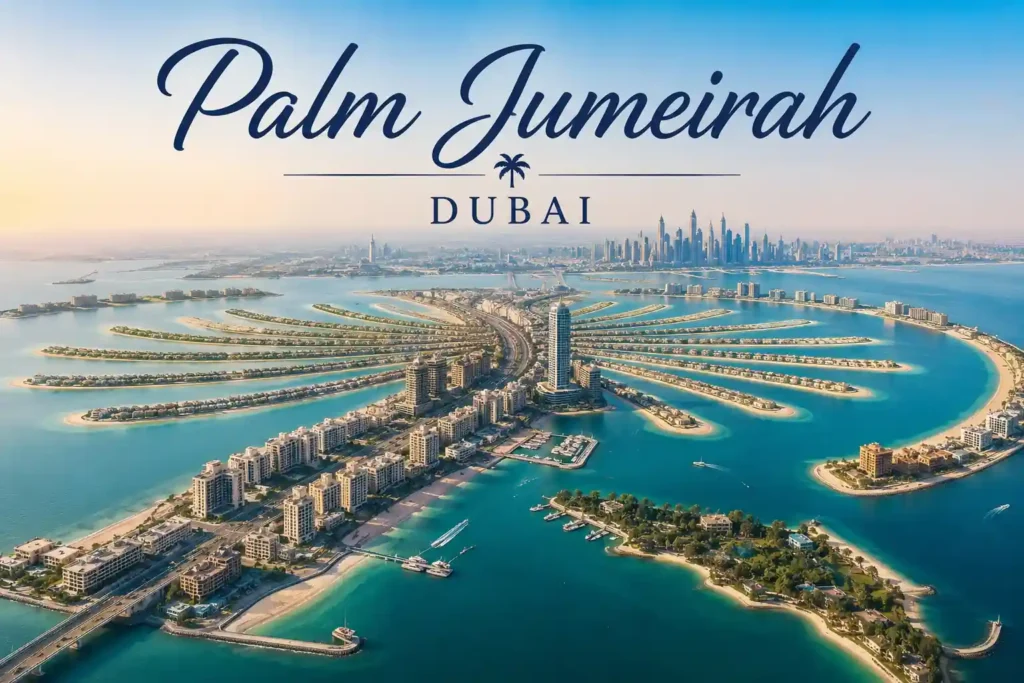
Palm Jumeirah Dubai is a man-made island shaped like a giant palm tree, built out in the sea just off Dubai’s coast. Workers made it by pumping sand and rock from the seabed, starting back in 2001, and people started moving in by 2006.
The island covers about 5.72 square kilometers and extends about 5 kilometers into the water, connected to the mainland by a bridge and to the outer edge by a tunnel beneath the sea. Today, Palm Jumeirah Dubai is packed with fancy hotels, private villas, apartment buildings, and beach clubs, spread across 16 “fronds” that branch out from the middle like real palm leaves.
If you think the Middle East is only desert, these UAE beaches will completely change your mind.
What Is Palm Jumeirah Dubai?
Palm Jumeirah is an artificial archipelago jutting into the Persian Gulf, shaped like a palm tree when seen from above. It’s made up of a trunk, 17 fronds, and an outer crescent that acts as a breakwater, covering roughly 5.72 square kilometres of reclaimed land. It was built by Nakheel, a developer now owned by the Dubai government, and remains one of the most talked-about engineering projects of this century.
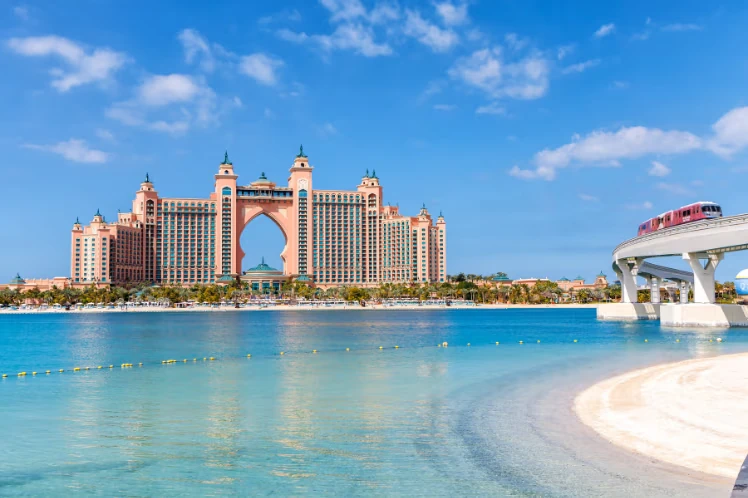
The trunk holds apartment towers, malls, and restaurants. The fronds are lined with private villas. The crescent, facing the open sea, is where most hotels sit, including Atlantis, The Palm. So when people search Palm Jumeirah Dubai, they’re usually after some mix of beaches, luxury hotels, and that unmistakable aerial view.
How Palm Jumeirah Was Built
Land reclamation began in 2001. Engineers dredged sand from the seabed, sprayed it into shape using GPS-guided precision, then compacted it through vibro-compaction to stop it shifting. Quarried rock formed the crescent’s breakwater, an 11-kilometre wall with gaps built in so seawater could still circulate the fronds naturally.
Infrastructure was largely finished by 2004, with the first residents arriving around 2006–2007, a fast timeline that wasn’t without hiccups, including early beach erosion that had to be fixed post-handover. Even so, the island has matured into a genuinely functioning district rather than a one-off novelty, which is more than can be said for a lot of projects this ambitious.
- The Trunk – mixed residential and commercial hub, malls, restaurants, monorail station
- The Fronds – 17 residential branches with private villas and small beaches
- The Crescent – most hotels and resorts, including Atlantis, facing the open Gulf
Interesting Facts About Palm Jumeirah
A few numbers put the island’s scale into perspective, and they answer most of the “how big is Palm Jumeirah” questions people search for.
| Fact | Detail |
| Total land area | About 5.72 square kilometres |
| Shape | Trunk, 17 fronds, outer crescent |
| Breakwater length | Roughly 11 kilometres |
| Construction started | 2001 |
| First residents moved in | 2006–2007 |
| Population (2026 estimate) | Approximately 25,000 |
| Monorail length | 5.45 kilometres, to Atlantis |
| Number of hotels | 30+ across trunk and crescent |
Technically, Palm Jumeirah isn’t even an island in the strict sense, it’s connected to the mainland by a bridge rather than fully surrounded by water. Another fact worth knowing: the original population target was doubled mid-planning once global demand for property became clear.
Why Is Palm Jumeirah Famous?
The fame comes largely from scale; it’s often cited as one of the largest land reclamation projects in the world, and the palm shape was deliberately designed to be recognisable from satellite images, which was as much a marketing decision as an architectural one.
There’s also the symbolism. The island represents Dubai’s transformation from a modest trading port into a global luxury destination, cemented further when Atlantis, The Palm opened in 2008 with one of the most expensive launch parties on record. Add celebrity homeowners, record-setting hotel suites, and nonstop social media coverage, and you get an island more recognisable than most countries.
How to Visit Palm Jumeirah Dubai
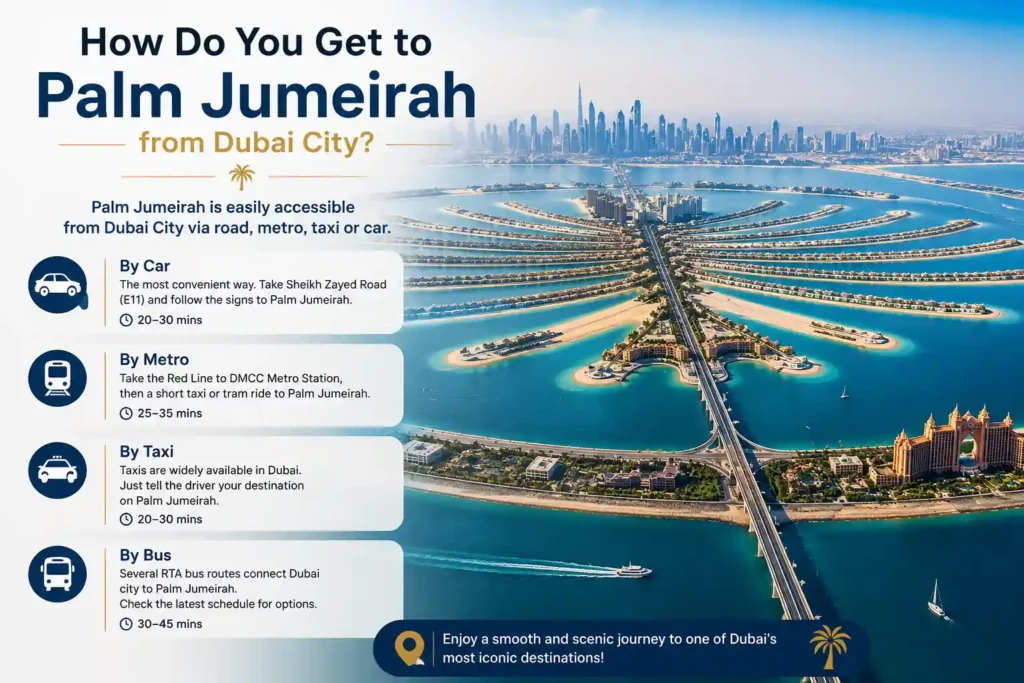
Visiting is easy, and you don’t need to be a hotel guest to spend a day there. Most travellers base themselves elsewhere in Dubai and reach the Palm by taxi or public transport for a few hours or a full day.
- Taxi or rideshare: simplest option, about 25–35 minutes from Downtown Dubai
- Metro: Red Line to Damac Properties Metro Station, then transfer
- Palm Monorail: connects Gateway Towers to Atlantis along the trunk
- Car: the island connects to the mainland by bridge, so self-driving is easy
Is Palm Jumeirah Free to Enter?
Yes. There’s no toll or gate to walk onto the trunk, browse the malls, or use public beaches like Palm West Beach. What costs money are individual attractions — Atlantis, Aquaventure, The View, and beach clubs all charge separate admission.
Best Ways to Explore the Palm
Walking suits the trunk and boardwalk, but most visitors mix methods: monorail for the main stretch, a rented bike for shorter hops, and a taxi to reach the crescent hotels.
Best Things to Do at Palm Jumeirah Dubai
Palm Jumeirah Dubai is the city’s most iconic man-made island, blending beach clubs, adrenaline rides, and skyline views all in one place. Whether you’re visiting for a single day or staying longer, there’s enough here for every budget and pace. From lounging at Atlantis’s Aquaventure Waterpark to sipping coffee on the boardwalk with Dubai’s skyline in the background, the island rewards both slow mornings and packed itineraries.
- Aquaventure Waterpark (Atlantis): One of the largest waterparks in the world, with thrilling slides and a lazy river
- The Lost Chambers Aquarium / Lost World Aquarium: 14 immersive chambers home to 65,000+ marine creatures
- The View at The Palm: A 360-degree observation deck offering sweeping views of the island and Arabian Gulf
- Palm Jumeirah Boardwalk: An 11-km free pedestrian pathway, perfect for jogging, cycling, or an evening stroll
- Palm West Beach: A popular free beach for sunbathing and swimming
- Dolphin Bay (Atlantis): Swim with or interact with dolphins in shallow water
- Beach Clubs (RIVA, Nikki Beach, etc.): Relax by the pool with private beach access
- Skydive Dubai: Tandem skydiving over the Palm, a must for adrenaline lovers
- Helicopter Tour: A bird’s-eye view of the Palm, Burj Al Arab, and Dubai Marina skyline
- Nakheel Mall / Palm Jumeirah Mall: A hub for shopping, dining, and entertainment
- Kayaking: A peaceful, active way to explore the calm waters of the Arabian Gulf
- Monorail Ride: A scenic way to travel across the island
Best Time to Visit Palm Jumeirah Dubai
October through April is generally considered the best window, with daytime temperatures comfortable enough for beach days and outdoor dining. Summer (June–September) brings intense heat and humidity, though hotel prices drop significantly, which suits budget travellers happy to stay close to pools and air conditioning.
December and January mark the peak tourist season, so villas, hotels, and restaurants tend to book up fast and prices climb accordingly. Shoulder months like October, November, March, and April offer a good balance of pleasant weather and slightly lower rates. Evenings stay pleasant year-round, making the Palm’s boardwalks and beach clubs enjoyable for sunset walks even in warmer months.
Best Hotels in Palm Jumeirah Dubai
Palm Jumeirah is Dubai’s hub for luxury hotels; each one offers its own vibe, whether you’re planning a family trip or a romantic getaway. Here are the top picks, considered best in terms of location, service, and overall experience:
- Atlantis The Royal: Ultra-luxury, Michelin-starred dining (Nobu, Heston Blumenthal), 90+ pools, iconic Palm skyline views
- Waldorf Astoria Dubai Palm Jumeirah: Elegant rooms, excellent service, views of both sea and city
- One&Only The Palm: Peaceful, private, ideal for couples
- Atlantis, The Palm: Family-friendly, with Aquaventure waterpark attached, great for kids
- Fairmont The Palm: Well-rounded 5-star, strong on both value and service
- Anantara Dubai The Palm Resort & Spa: Quiet resort feel, immersive luxury experience
- FIVE Palm Jumeirah: Party/nightlife vibe, beach club energy, popular with a younger crowd
- Sofitel Dubai The Palm: French Polynesian style, lagoon pools, private beach

| Hotel Type | Example Properties | Approx. Price (per night) |
| Ultra-luxury | Atlantis The Palm, One&Only The Palm | $450–$3,000+ |
| Beachfront | Waldorf Astoria, Jumeirah Zabeel Saray | $300–$900 |
| Mid-range (trunk) | Rove properties near Nakheel Mall | $110–$220 |
| Serviced apartments | Various, trunk area | $150–$400 |
Palm Jumeirah Dubai Restaurants
If you’re after rooftop views and a lively atmosphere, Above Eleven serves Peruvian-Japanese fusion overlooking the Marina skyline, and Maiden Shanghai is great for a fine dining experience with live entertainment, especially for groups. For a relaxed day out, Ayla Beach Club is ideal, and for evening drinks with a stylish crowd, Jade is a solid choice.
Bars in Palm Jumeirah Dubai
Several beach clubs double as daytime bars, turning into DJ-and-shisha spots as the sun drops. Rooftop and beachfront venues facing west toward the Marina skyline are the go-to for sunset drinks, and a handful extend into proper late-night lounges on weekends. The Penthouse at FIVE Palm Jumeirah is one of the standout rooftop spots, mixing sea views with a lively DJ set as the night goes on, while Jade offers a more intimate Asian-inspired cocktail lounge feel just downstairs.
For those wanting a full night out, BLING nightclub at FIVE keeps the energy going well past midnight, and SoBe Dubai’s rooftop at W Dubai – The Palm delivers panoramic views over the Marina alongside a solid DJ lineup. Bohemia Beach Club and Beach by FIVE are worth checking during the day, since both shift smoothly from relaxed beach lounging into a livelier evening scene.
Palm Jumeirah Dubai Villas, Houses, and Residences
Palm Jumeirah’s villas and residences represent some of the finest luxury living in Dubai, with most homes offering private beach access right at the doorstep. The island’s frond-shaped design means the majority of properties enjoy sea views alongside a strong sense of privacy.
Options here range from signature villas to modern apartments and penthouses, catering to a wide range of budgets. Residents also benefit from easy access to five-star hotel amenities as part of everyday island living.
- Palm Jumeirah Villas and Houses: Villas line the 17 fronds with plot sizes averaging around 1,400 square metres. Prices typically start above $2 million USD, and beachfront frond villas can exceed $10 million depending on size and renovation.
- Palm Jumeirah Dubai Residences: Apartment towers on the trunk range from 150 to 800 square metres, which is where most renters and non-villa buyers end up. Rental demand here has stayed consistently strong.
What Is It Like to Live on Palm Jumeirah?
Life on the island means private beach access and a slower pace than Downtown Dubai, connected by monorail and bridge. The trade-off: groceries, dining, and services generally cost more here than elsewhere in the city.
Palm Jumeirah Dubai Cost
Palm Jumeirah isn’t cheap, but it doesn’t have to be a fortune either; it really comes down to how you play it. Stay off the man-made island itself and eat like a local, and you’re looking at a fairly reasonable day. Splurge on an Atlantis suite and a sunset skydive, though, and the bill climbs fast.
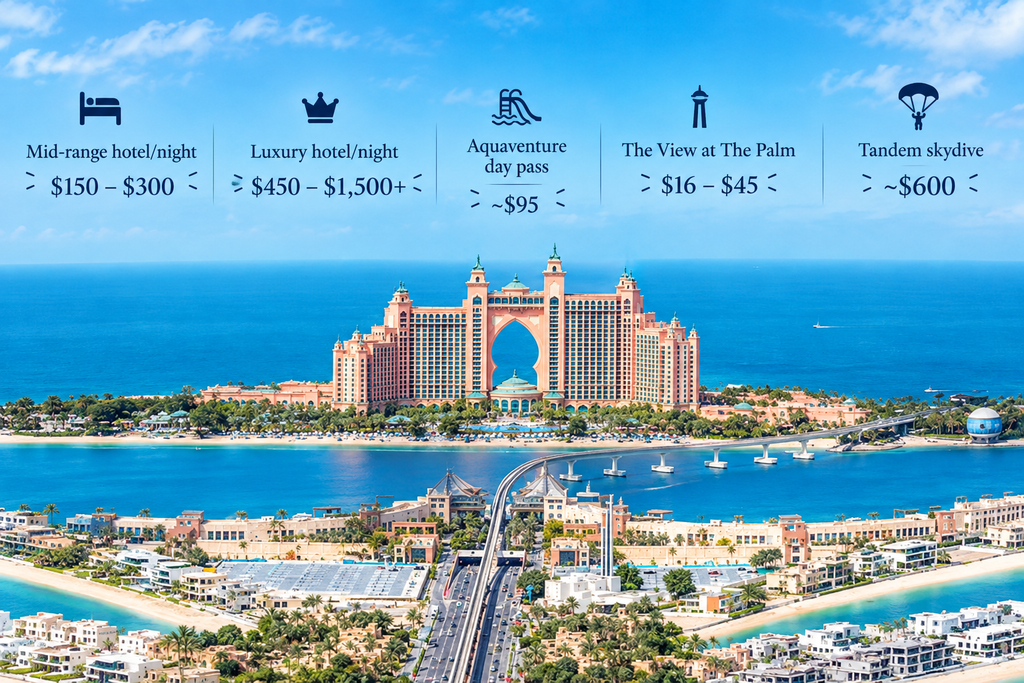
Booking hotels well in advance or during the off-season (summer months) can shave a significant chunk off accommodation costs. Many visitors also choose to stay in nearby Dubai Marina or JBR and simply visit Palm Jumeirah for the day, cutting costs considerably. Here’s a rough sense of where your money actually goes.
| Category | Typical Cost (USD) |
| Mid-range hotel/night | $150–$300 |
| Luxury hotel/night | $450–$1,500+ |
| Aquaventure day pass | ~$95 |
| The View at The Palm | $16–$45 |
| Tandem skydive | ~$600 |
| Casual meal | $10–$25 |
| Fine dining meal | $60–$150+ per person |
| Taxi from Downtown Dubai | $12–$20 |
Best Views of Palm Jumeirah Dubai
The View at The Palm
Still the most reliable way to see the full palm shape without booking a flight, thanks to its 240-metre-high, 360-degree deck.
Skydiving and Aerial Views
Nothing beats a tandem skydive or helicopter tour for seeing the entire fronds-and-crescent layout at once, the classic postcard angle of the island.
Boat and Beach Views
From sea level, a boat tour along the crescent shows the hotel skyline from the water, a completely different perspective than looking down at it.
Palm Jumeirah vs Jumeirah Beach: Which Is Better?
Jumeirah Beach, on the mainland, is free, less tourist-heavy, and close to Burj Al Arab’s public viewpoint. Palm Jumeirah offers a more curated experience, resort beaches, calmer lagoon water, and easy access to Atlantis and Aquaventure. For a relaxed public beach day, Jumeirah Beach wins on cost and convenience. For resort amenities and iconic photos, Palm Jumeirah is the better call.
Palm Jumeirah, In Short
Palm Jumeirah Dubai proves that a place built entirely from sand and ambition can still feel like a real, living neighborhood two decades later. Whether you’re chasing that perfect aerial photo, booking a suite at Atlantis, or just spending a free afternoon on Palm West Beach, the island flexes to fit almost any budget and timeline. Plan around the cooler months, pick your base wisely, and Palm Jumeirah Dubai delivers on nearly everything it promises.
Palm Jumeirah Dubai FAQs
Why is Palm Jumeirah famous?
It’s famous for being one of the largest artificial islands ever built, shaped like a palm tree and visible from space, and for landmark resorts like Atlantis, The Palm.
Is Palm Jumeirah free to enter?
Yes. Entry to the island and public beaches is free; individual attractions like Aquaventure or The View charge separate admission.
How expensive is Palm Jumeirah?
Costs vary widely; a budget day trip can stay under $50, while a luxury stay with skydiving and fine dining can pass $1,000 per person.
Can tourists visit Palm Jumeirah?
Yes, tourists can visit freely by taxi, metro-monorail, or car, and don’t need to be hotel guests to explore the trunk or public beaches.
Can you stay at Atlantis, The Palm?
Yes, Atlantis operates as a full hotel with rooms and suites, including its well-known Underwater Suites, bookable directly or through most travel platforms.
What are the best things to do at Palm Jumeirah?
Top picks include Atlantis, Aquaventure’s slides, the view from The Palm Tower, boat tours, and relaxing at Palm West Beach.
Can you go skydiving over Palm Jumeirah?
Yes, Skydive Dubai runs tandem jumps from its Palm Dropzone, giving freefall views of the whole island from around 13,000 feet.