
The Philippines has some of the best surfing spots in Asia, and you can find waves for every skill level here. This island nation has more than 7,000 islands, and it faces two big oceans: the Pacific Ocean and the South China Sea. Because of this, swells arrive from many directions, so there is almost always a good wave somewhere in the country. Cloud 9 in Siargao is the most famous wave, but it is only one of many great Philippines surfing spots.
Beginners can learn on soft, slow waves in places like La Union, while advanced surfers can chase powerful barrels in Siargao or Baler. The water stays warm all year, so you don’t need a wetsuit. Best of all, surf lessons, board rentals, and beach stays cost much less than in Bali or Hawaii. This makes Philippines surfing spots a smart choice if you want great waves without a big budget.
What Makes the Philippines a Top Surfing Destination?
Geography does most of the heavy lifting here. The eastern seaboard faces the open Pacific Ocean, so it catches consistent groundswells almost year-round, while the western coast gets seasonal swells during the amihan monsoon. Add water temperatures that rarely dip below 26°C, and you’ve got a country where a boardshort is often all you need, no thick wetsuit required.
On top of that, the Department of Tourism Philippines has actively promoted surf tourism in recent years, and local surf associations now certify instructors, which has raised safety standards across popular breaks. That combination of reliable swell, warm water, and improving infrastructure is exactly why the region keeps climbing global surf-travel rankings.
Discover the Gateway to Surfing in the Philippines. Read more in San Juan La Union Travel Where All of Manila Goes to Catch a Wave.
Best Philippines Surfing Spots at a Glance
Before diving into details, here’s a quick snapshot comparing the country’s most talked-about breaks so you can see which one fits your travel plans and skill level.
| Spot | Region | Skill Level | Peak Season |
| Siargao (Cloud 9) | Mindanao, East Coast | Intermediate–Advanced | Aug–Nov |
| La Union | Luzon, West Coast | Beginner-friendly | Sept–Feb |
| Baler | Luzon, East Coast | All levels | Sept–Feb |
| Pagudpud | Luzon, Northwest | Intermediate | Oct–Mar |
| Dahican, Mati | Mindanao, East Coast | Advanced | Sept–Dec |
| Bagasbas, Daet | Luzon, East Coast | All levels | Nov–Feb |
| Calicoan Island | Eastern Samar | Intermediate–Advanced | Aug–Nov |
| Lanuza | Surigao del Sur | Advanced | Sept–Dec |
Siargao: The Home of Cloud 9 Waves
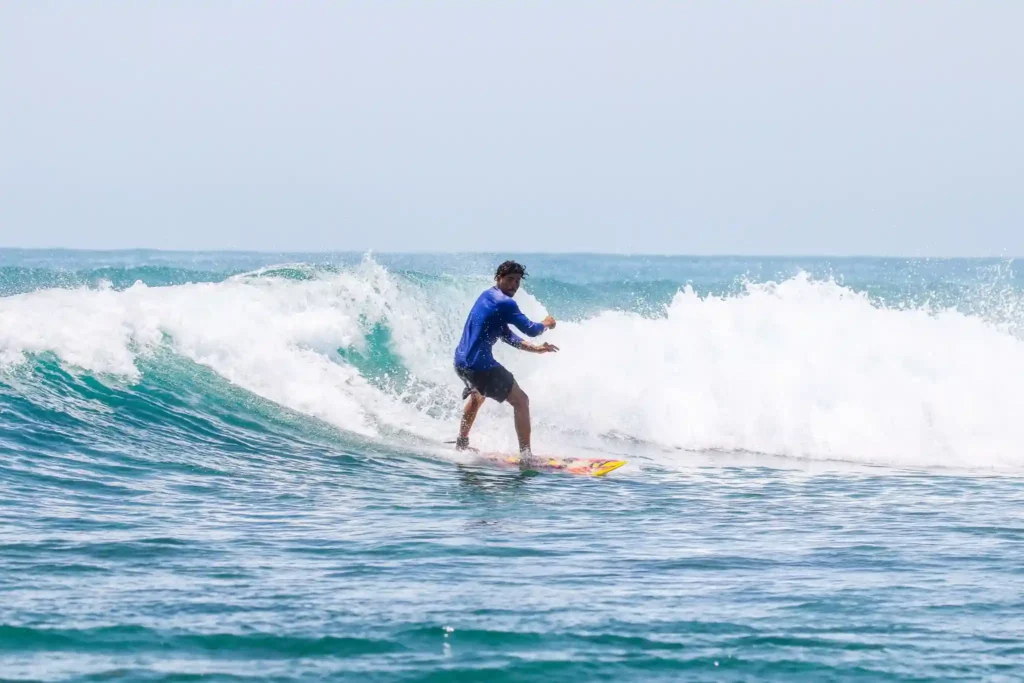
Siargao’s Cloud 9 is the reason the Philippines shows up on every serious surfer’s bucket list. This hollow, reef-bottom right-hander produces barrels that regularly hit 4 to 8 feet, and it’s consistent enough that the island now hosts the Philippine Pro, a WSL Championship Tour event held for the first time in the country in 2026. Beginners aren’t left out, either, nearby sand-bottom breaks like Jacking Horse and Quicksilver are far more forgiving for a first attempt.
La Union: Best Surf Spot for Beginners
Nicknamed the “Surfing Capital of the North,” La Union’s Urbiztondo Beach is soft, sandy, and only a 4 to 5-hour drive from Manila. That accessibility, combined with gentle rolling waves, makes it the go-to pick for first-timers who don’t want to fly to Mindanao just to try standing on a board.
See Why Surfers Love La Union’s Waves. Read more in San Juan Beach Surfing Will Ruin You for Every Other Wave.

If catching your first wave is on your bucket list, this beginner-friendly surfing lesson in La Union is hard to beat.
Baler: Where Philippine Surf Culture Began
Baler holds a special place in local surf history; it’s widely credited as the birthplace of Philippine surfing after American soldiers reportedly rode waves here in the 1970s. Today it draws a mixed crowd, from beginners at Sabang Beach to more experienced surfers chasing bigger swells at Cemento Reef.
Beyond these three, Pagudpud offers a calmer, less commercial alternative on Luzon’s northwest tip. Dahican Beach in Mati is where advanced surfers head for punchy, powerful waves without Siargao-level crowds. Bagasbas in Daet is famous for long, easy rides that suit nearly any skill level, and both Calicoan Island in Eastern Samar and Lanuza in Surigao del Sur reward surfers willing to travel further for open, uncrowded lineups.
Which Philippines Surfing Spots Are Best for Beginners?
La Union is generally considered the top pick among Philippines surfing spots for beginners, thanks to sandy-bottom waves, dozens of certified surf schools around Urbiztondo Beach, and easy road access from Manila. Bagasbas Beach in Daet is a close second for learners who want fewer crowds.
Best Time to Surf in the Philippines
Timing matters more than most first-time visitors expect, since the two coasts run on opposite schedules.
Surf Seasons: Amihan vs. Habagat
The Philippines has two monsoon seasons that shape its surf calendar. The amihan (northeast monsoon) runs roughly from October to March and brings swell to the western and northern coasts, including La Union, Baler, and Pagudpud. The habagat (southwest monsoon) runs from June to September and lights up eastern breaks like Cloud 9 and Dahican. In short, if one coast is flat, the other is usually firing, which is one of the underrated advantages of chasing Philippines surfing spots instead of sticking to a single island.
Here’s a quick comparison of the two main coasts so you can plan around the right season.
| Coast | Best Months | Example Spots | Wave Character |
| East Coast (Pacific-facing) | June–November | Siargao, Baler, Dahican | Powerful, consistent, reef breaks |
| West Coast (South China Sea) | October–March | La Union, Pagudpud | Gentler, beginner-friendly |
Where to Take Surf Lessons and Find Surf Camps
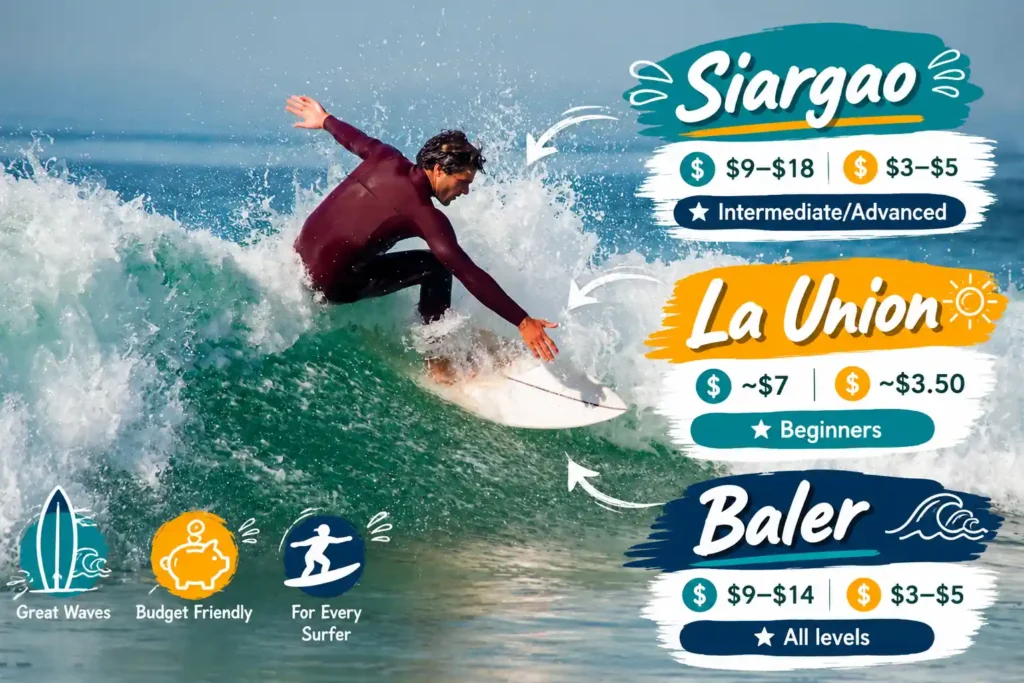
Surf schools sit near every major break, and lesson prices stay reasonable compared to most surf destinations worldwide. In Siargao, expect roughly $9 to $18 for a one-hour beginner lesson with a soft-top board included, though Cloud 9 itself is reserved for competent surfers; beginners are taken to nearby sand breaks instead. In La Union, hourly lessons run closer to $7. Look for schools accredited by the Siargao Island Surfing Association (SISA), which certifies instructors and enforces safety standards at Cloud 9.
Multi-day surf camps in Siargao and La Union typically bundle lessons, board rentals, and accommodation, and they’re worth it if you’re serious about progressing past the wobbly-legs stage.
Here’s a rough cost comparison to help you budget your lessons.
| Location | Lesson (1 hr) | Board Rental (1 hr) | Best For |
| Siargao | $9–$18 | $3–$5 | Intermediate/Advanced |
| La Union | ~$7 | ~$3.50 | Beginners |
| Baler | $9–$14 | $3–$5 | All levels |
How Much Do Surf Lessons Cost in the Philippines?
Beginner surf lessons across the country’s main Philippines surfing spots generally cost between $7 and $18 per hour, depending on the location and whether a board is included. La Union tends to be the most budget-friendly, while Siargao sits at the higher end due to demand.
Philippines Surf Trip Budget and What to Pack
Budget travelers can expect daily costs of roughly $25 to $40 covering a guesthouse, meals, and one lesson, while mid-range trips with a multi-day camp land closer to $50 to $80 a day. Flights booked two to three months ahead tend to run noticeably cheaper than last-minute fares.
Pack a rash guard and reef booties, since several breaks, Cloud 9 included, sit over sharp reef. Sunscreen, a dry bag, and a light wetsuit top round out the essentials. Most travelers skip bringing their own board and rent locally, which is usually cheaper than airline oversize baggage fees.
Surf Safety and Local Etiquette
Respecting the lineup matters as much as catching waves.
- Don’t drop in on someone already riding a wave.
- Wait your turn instead of paddling straight to the peak.
- Check tide charts before paddling out at reef breaks like Cloud 9, since shallow reef at low tide turns a fun session dangerous fast.
It’s also worth checking bulletins from PAGASA, the Philippines’ national weather agency, before heading out during typhoon season, since storm swells can look tempting but turn unsafe fast for anyone inexperienced.
Which Surf Spot Is Less Crowded Than Siargao?
Lanuza in Surigao del Sur and Calicoan Island in Eastern Samar both offer powerful, uncrowded waves for experienced surfers who want to skip Siargao’s growing lineup. Pagudpud is a quieter option for those seeking gentler, beginner-to-intermediate conditions instead.
Final Wave: Where Will You Paddle Out First?
Philippines surfing spots offer something few destinations can match: two coastlines, two swell seasons, and waves for every skill level, all at a fraction of the cost you’d pay in Bali or Hawaii. Whether you’re chasing barrels at Cloud 9, learning to stand up in La Union, or hunting quieter breaks in Lanuza, there’s a wave here with your name on it. Pick your season, pick your coast, and paddle out.
Frequently Asked Questions
What is the best surfing spot in the Philippines?
Siargao’s Cloud 9 is widely considered the best overall, thanks to its consistent barrels and international reputation, though La Union edges it out for beginners.
Is the Philippines good for beginner surfers?
Yes. Spots like La Union and Bagasbas Beach have sandy bottoms, gentle waves, and dozens of surf schools built specifically for first-timers.
When is the best time to surf in Siargao?
August through November is peak season, with September and October generally producing the most consistent 4 to 8-foot waves.
Which surfing spot is less crowded than Siargao?
Lanuza, Calicoan Island, and Pagudpud all offer quieter lineups with fewer tourists than Cloud 9.
Is La Union or Baler better for surfing?
La Union suits beginners better thanks to easier access and softer waves, while Baler appeals more to surfers who want a mix of beginner and intermediate breaks in one town.
How much do surf lessons cost in the Philippines?
Expect $7 to $18 per hour depending on location, with La Union on the cheaper end and Siargao on the higher end.
Do I need to bring my own surfboard?
Not usually. Board rentals are cheap and widely available, so most surfers rent locally rather than pay airline oversize fees.
Which island has the biggest waves in the Philippines?
Siargao generally produces the biggest and most powerful waves, especially at Cloud 9 during peak season from September to November.