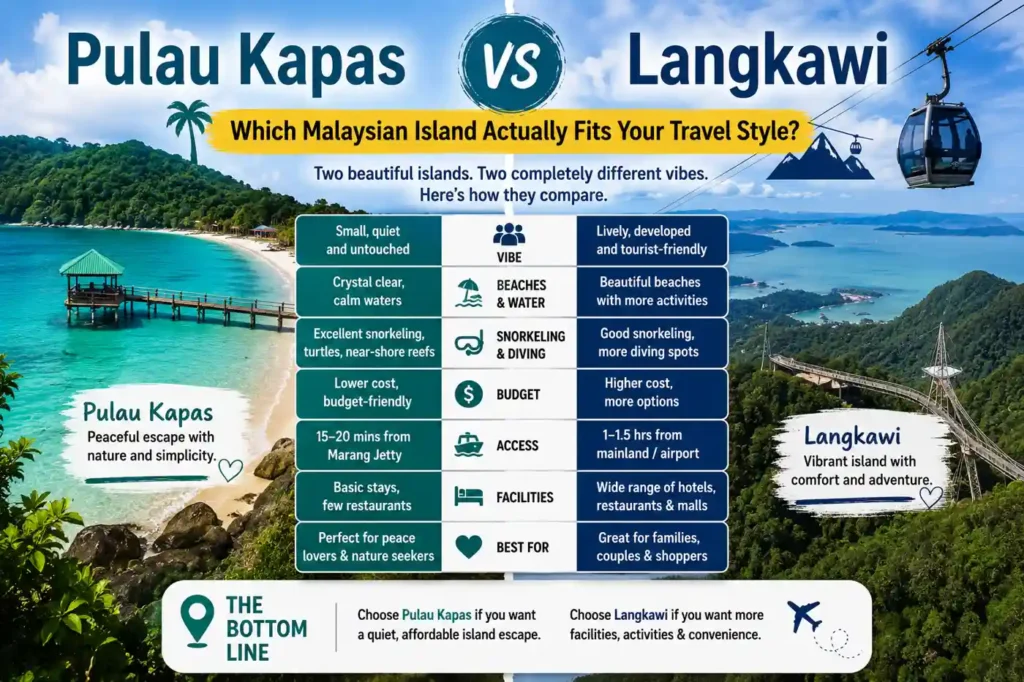
Pulau Kapas vs Langkawi comes down to one simple choice: a quiet, tiny island with no airport, or a big island with full resort facilities. Pulau Kapas is a small island off Terengganu, reached by a short 15 to 20 minute boat ride from Marang jetty, with only a few small guesthouses and no big hotels. Langkawi is much bigger, with its own international airport, direct flights from major cities, and hotels ranging from cheap stays to five-star resorts.
From snorkeling with turtles to empty beaches and sunset views, this Pulau Kapas travel guide explains why the island still feels untouched.
When you compare Pulau Kapas vs Langkawi, the real difference is size and facilities: Kapas gives you calm snorkeling and empty beaches, while Langkawi gives you cable cars, duty-free shopping, night markets, and easy island-hopping tours. Choose Kapas for a simple beach break with little planning, or choose Langkawi for more activities and easier travel.
Quiet Island Escape or Full-On Tourist Hub?
Pulau Kapas sits off the coast of Terengganu, about 15 minutes by boat from the small town of Marang. It’s tiny, roughly 2.5 square kilometres, and there are no roads, no cars, and no noisy nightlife. According to the Terengganu State Tourism Office, Kapas receives a fraction of the visitors that Langkawi does, which is exactly the point. When you step off that boat, the silence hits you first.
Langkawi is something else entirely. It’s an archipelago of 99 islands, a number officially recognized by Langkawi Development Authority (LADA), and the main island, Pulau Langkawi, is about 478 square kilometres. It has an international airport managed by Malaysia Airports Holdings Berhad (MAHB), shopping malls, and a well-developed resort strip. The difference in scale is almost jarring if you switch from one to the other.
Quick Island Comparison at a Glance
| Factor | Pulau Kapas | Langkawi |
| Size | ~2.5 sq km | ~478 sq km |
| Vibe | Peaceful, raw, minimal | Lively, commercial, developed |
| Ferry from the mainland | ~RM 12–15, 15 min from Marang | ~RM 30–60 or fly, 2.5 hrs from KL |
| Accommodation | Budget chalets, guesthouses | Budget to 5-star luxury resorts |
| Best for | Snorkelers, minimalists, couples | Families, honeymooners, groups |
Beaches That Feel Different in Real Life
Kapas has a handful of small beaches that wrap around the island, and they’re genuinely pristine. The main beach, sometimes called Kapas Village Beach, has soft sand and calm, clear water. Because visitor numbers are low, the beaches stay clean and uncrowded even on weekends. Malaysia’s Department of Marine Parks gazetted Kapas as a marine park, and that status keeps development tightly controlled.
This Pulau Kapas vs Perhentian Islands comparison shows the real differences travelers notice after visiting both.
Langkawi’s most popular beach is Pantai Cenang, and it gets busy. There are beach bars, jet ski operators, and rows of sun loungers. It’s enjoyable in its own right, especially for travelers who like options and activity. But if sunrise walks on empty sand are your thing, Pantai Cenang in peak season isn’t that.
Langkawi does have quieter spots, though. Tanjung Rhu in the north is a favourite with couples, and it offers the kind of calm you’d expect on Kapas, but you need a car or a rental to get there.
Is Pulau Kapas or Langkawi better for snorkeling?
Pulau Kapas is the clear winner for snorkeling. Its protected marine park status keeps the coral healthier and fish populations more visible. Langkawi’s waters are decent, but visibility and coral coverage are generally lower. Reef Check Malaysia has logged consistently better coral coverage at Kapas compared to the west-coast Langkawi reefs.
Which Island Has Better Water for Swimming and Snorkeling?

The water around Kapas is genuinely impressive. Visibility can reach 10–15 metres on calm days, and the coral gardens around the island host reef fish, sea turtles, and occasionally reef sharks. The Malaysian Fisheries Department enforces no-fishing rules strictly within the marine park boundaries, which noticeably helps wildlife density.
Langkawi’s water is murkier on average, particularly around Pantai Cenang, due to boat traffic and coastal development. The snorkeling trips from Langkawi typically take you out to nearby smaller islands like Pulau Payar, which is a designated marine park with better conditions. So, for snorkeling, Kapas wins clearly if you go in the right season.
Best snorkeling season: March to October, when the northeast monsoon stays away and visibility peaks. The Malaysia Meteorological Department confirms the northeast monsoon affects both islands similarly, with Terengganu’s coast (where Kapas sits) actually closing ferry services from November through March.
Water Quality & Marine Life Comparison
| Feature | Pulau Kapas | Langkawi |
| Water visibility | 10–15 m (excellent) | 3–8 m (moderate) |
| Coral health | Good (marine park protected) | Fair (Payar park better) |
| Marine life variety | High (turtles, reef fish, sharks) | Moderate |
| Swim-friendly beaches | Most of the island | Cenang, Tanjung Rhu, Kok |
| Best snorkeling season | March – October | November – March (drier side) |
Slow Mornings vs Busy Beach Energy

Kapas moves slowly. There’s no electricity on most of the island during daylight hours; generators run in the evenings. Phone signal is weak or non-existent, depending on your provider. For some travelers, that sounds like a nightmare. For others, it’s exactly what they’ve been looking for. You read and swim. You eat grilled fish and look at the stars. That’s the day.
One afternoon on Kapas, the electricity cut out earlier than expected, and even the café Wi-Fi disappeared for hours. At first, it felt frustrating, especially after trying to upload photos with no signal at all. But weirdly, that ended up becoming the best evening of the trip; everyone just sat outside talking, watching the waves, and nobody looked at a screen once.
Langkawi, on the other hand, has things going on. The Langkawi Cable Car (operated by Panorama Langkawi) takes you up to Mat Cincang, the second-oldest rainforest in the world, according to local geological surveys. There are mangrove tours, night markets, Sky Bridge walks, and waterfalls to visit. UNESCO recognized Langkawi as Malaysia’s first Global Geopark in 2007, and there are geological trails and heritage sites to explore.
Honestly? If you’re someone who gets restless after one beach day, Kapas might frustrate you. If you’ve been running on empty for months and just want to disappear for a few days, it’s incredible. Choose your vibe honestly.
Which island has better sunsets, Kapas or Langkawi?
Langkawi wins for sunsets. Because Langkawi sits on the west coast of Malaysia, it faces the Andaman Sea directly, giving you unobstructed sunset views. Pulau Kapas is on the east coast, so sunsets are blocked by the Malaysian mainland. If sunsets matter to your trip, this is a significant difference.
Where You’ll Find the Better Sunset Experience
This is one area where geography completely decides the answer. Kapas faces east, you get brilliant sunrises and morning light that photographers love. But sunset? You’re watching the sky change colour on the wrong side of the peninsula. Langkawi’s west-facing beaches at Pantai Cenang or Tanjung Rhu deliver full golden-hour sunsets directly over the Andaman Sea. In peak season, it’s genuinely spectacular.
Food Scene: Simple Local Seafood or Endless Café Choices?
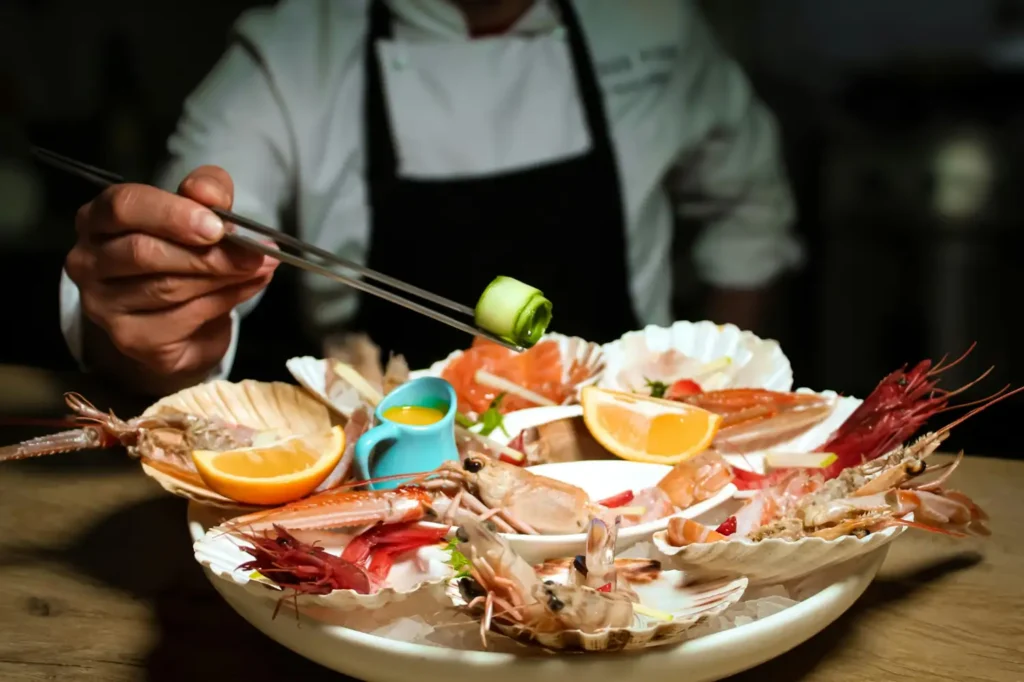
Kapas keeps it very simple. A few chalets run small restaurants serving fresh grilled fish, nasi lemak, rice dishes, and coconut drinks. The food is honest and cheap; a full meal rarely exceeds RM 20, but variety is close to zero. If you have dietary restrictions beyond “I eat everything”, plan and bring snacks.
A lot of travelers underestimate how early things slow down on Kapas, too. By around 9 or 10 PM, most places are already closed, so if you skip dinner thinking you’ll eat later, you might end up surviving on instant noodles from a tiny resort shop.
Langkawi has restaurants for every budget and every craving. From proper Malay seafood restaurants in Kuah Town to Western-style cafés in Cenang, the options are genuinely broad. Duty-free status (granted under the Langkawi Special Status Order, 2000) also makes drinks significantly cheaper here than anywhere else in Malaysia; alcohol prices in Langkawi are among the lowest in Southeast Asia.
- Fresh seafood BBQs are common on Kapas, especially near small beachfront chalets.
- Langkawi offers everything from street food stalls to upscale sunset dining.
- Vegetarian and international food choices are limited on Kapas, but easy to find in Langkawi.
- Late-night food options are rare on Kapas, while Langkawi stays active much later.
How much does accommodation cost on Pulau Kapas vs Langkawi?
Budget chalets on Pulau Kapas typically cost RM 80–150 per night. Langkawi ranges from RM 80 for a budget guesthouse to RM 1,500+ per night at The Datai or Four Seasons. For mid-range comfort, expect RM 200–400 in Langkawi. Value depends entirely on what kind of experience you want.
Hotels, Resorts & Budget Stays, What Feels More Worth It?
Some places stay with you because of how peaceful they felt, not because they were luxurious; they’re the ones that make life feel quiet again. If you care about luxury resorts, beach clubs, smooth roads, and endless hotel options, Langkawi feels easier and more polished. But Pulau Kapas hits differently.
One evening on Kapas, after the last boat left, the beach turned completely silent except for waves and distant laughter from a tiny beachfront café. No traffic, no loud crowds, no packed sunsets, just warm sea breeze and barefoot walks under a sky full of stars. Langkawi gives you comfort and convenience, but Pulau Kapas gives you that rare feeling of disappearing from the world for a little while, and for many travelers, that feeling becomes the best part of the entire trip.
Accommodation Options Compared
| Category | Pulau Kapas | Langkawi |
| Budget (per night) | RM 80–150 | RM 80–180 |
| Mid-range | Limited options | RM 200–400 |
| Luxury | Not available | RM 600–1,500+ (The Datai, Four Seasons) |
| Wi-Fi quality | Weak or none | Reliable in most hotels |
| Book in advance? | Yes, very limited rooms | Advisable in peak season |
Getting There: Which Island Is Easier and Less Stressful?

Reaching Pulau Kapas means getting yourself to Marang first, either by bus from Kuala Terengganu (about 45 minutes) or by private taxi. From Marang jetty, wooden boats run to Kapas for around RM 12–15 one way. The ride takes 15–20 minutes. Simple enough, but the boat schedule depends on tides and weather, and outside of peak hours, you might wait.
Langkawi is much easier to reach on paper. Malaysia Airports Holdings Berhad (MAHB) operates Langkawi International Airport with direct flights from Kuala Lumpur (under an hour on AirAsia or Malaysia Airlines), Singapore, and several regional cities. You can also take a ferry from Kuala Perlis or Penang; Langkawi Ferry Service operates several daily crossings.
How do you get to Pulau Kapas?
Take a bus or taxi to Marang Jetty in Terengganu, then a wooden boat to Kapas. The crossing costs roughly RM 12–15 and takes about 15–20 minutes. Boats run regularly in the dry season (March–October), but check schedules as they depend on weather and tides.
Things To Do Beyond the Beach
Kapas is honest about what it offers: swimming, snorkeling, kayaking, and total relaxation. There’s a hiking trail to a viewpoint at the northern tip that gives you a lovely angle over the island. Some guesthouses rent snorkeling gear for RM 15–20. That’s about the full menu.
Langkawi has a proper activity list:
- Langkawi Cable Car and Sky Bridge (Panorama Langkawi, managed under LADA oversight)
- Mangrove kayak tours through the Kilim Karst Geoforest Park, part of the UNESCO Geopark
- Waterfalls: Telaga Tujuh (Seven Wells) Waterfall is a 15-minute drive from Cenang
- Island hopping by speedboat, TripAdvisor’s Travellers’ Choice repeatedly lists Langkawi island-hopping as a top activity
- Duty-free shopping in Kuah Town
- Night market in Padang Matsirat on Wednesdays and Saturdays
Which Island Feels More Romantic for Couples?

Kapas wins this one for a certain kind of couple. If you’re both the type who’ll enjoy a chalet with no TV, eating fish by candlelight with the sound of waves outside, Kapas is genuinely one of the most romantic places in Malaysia. It’s rare, and completely unhurried. Lonely Planet has described Terengganu’s islands as Malaysia’s best-kept secret for couples who want to disconnect.
Langkawi suits couples who want more variety. Sunset dinners at one of the beachfront restaurants in Cenang, spa days at The Datai (World Travel Awards’ consistent pick as one of Asia’s top eco-resorts), and private island-hopping charters are all available here.
- Pulau Kapas feels more intimate and disconnected from crowds.
- Langkawi is better for luxury honeymoon experiences and private resort stays.
- Couples looking for nightlife and sunset dinners usually prefer Langkawi.
- Kapas is ideal for slow mornings, snorkeling together, and beach evenings.
Better Choice for Solo Travelers and Backpackers
Kapas is easy for solo travelers who are self-sufficient. But the island is small enough that you’ll see the same five people at every meal, which can feel either cosy or slightly awkward depending on your personality. There’s no nightlife, no hostel common room scene, and limited options for spontaneous activity.
Langkawi has hostels, co-working spots, and a good enough backpacker scene around Cenang. Budget travelers can stay well under RM 100 a night, eat at night markets for RM 8–15 a meal, and keep their daily spend reasonable. For social backpacking, Langkawi is the stronger choice.
- Kapas suits backpackers who enjoy quiet stays and nature-focused trips.
- Langkawi has more hostels, scooter rentals, cafés, and social spaces.
- Budget travelers can keep daily costs lower on Kapas due to simpler accommodations.
- Digital nomads may struggle on Kapas because Wi-Fi and mobile signal are unreliable.
Is Pulau Kapas good for families with children?
Pulau Kapas can work for families with older children who enjoy snorkeling and simple beach days. However, Langkawi is much more practical; it has better medical facilities, reliable food options, easy transportation, and a wider range of activities suitable for all ages.
Family Trip? Here’s the More Practical Option
Families with young children will find Langkawi significantly easier. There are proper supermarkets, pharmacies, and a hospital on the island. The calm waters at certain beaches are child-friendly, and attractions like the Langkawi Wildlife Park and cable car keep kids entertained beyond the beach. Kapas’s remote nature and limited amenities can be genuinely stressful with small children in tow.
Weather, Crowds & Best Time To Visit Both Islands
| Month | Pulau Kapas | Langkawi |
| Jan – Feb | CLOSED, monsoon season | Peak season, dry & sunny |
| Mar – May | Opens in March, crowds are low | Excellent, slight rain |
| Jun – Aug | Best visibility, school hols busy | Wetter but manageable |
| Sep – Oct | Good, fewer crowds | Good weather returning |
| Nov – Dec | CLOSED, monsoon season | Peak season starts again |
Note: Kapas ferry services from Marang are officially suspended from November through March due to the northeast monsoon, per Terengganu Maritime notices. Always confirm dates before planning your trip.
Pulau Kapas or Langkawi for a Short Trip?
Which island is better for a 2–3 day trip?
For 2–3 days, Pulau Kapas is surprisingly ideal; you can see the whole island, snorkel all the good spots, and genuinely decompress without feeling like you’re wasting time. Langkawi rewards a longer trip (4–5 days) because there’s more to cover. A short Langkawi trip risks rushing.
So… Which Island Will You Probably Enjoy More?
Here’s the truth: Langkawi is the better all-around destination. It has more to offer, is easier to get to, works for more types of travelers, and has no weather restrictions half the year. It’s also Malaysia’s number-one island destination by tourist arrivals, according to Tourism Malaysia’s annual reports.
But Pulau Kapas is something Langkawi cannot be. Kapas feels quieter, simpler, and far less commercialized. You spend less time planning things and more time just being there, swimming, eating slowly, and forgetting what day it is. If you’re choosing between the two and you want something that feels special rather than convenient, go to Kapas. You’ll remember it differently.
And if you can? Visit both. They’re not actually rivals. They’re just two very different kinds of island trips. One gives you convenience and activity, the other gives you silence and slow mornings. Most people already know which one they need, even before they finish reading.
Frequently Asked Questions
1. Can you visit Pulau Kapas all year round?
No. The island is only open from approximately March to October. During the northeast monsoon (November–March), ferry services from Marang Jetty are suspended, and most guesthouses close completely. Always confirm current availability before booking.
2. Is Langkawi more expensive than Pulau Kapas?
Not necessarily. Budget accommodation exists on both islands. However, Langkawi offers a much wider price range, from cheap guesthouses to ultra-luxury resorts. Duty-free status makes food, drinks, and electronics cheaper in Langkawi than in most of Malaysia. Overall, Kapas is simpler and cheaper by default.
3. Which island has better snorkeling, Kapas or Langkawi?
Pulau Kapas has better snorkeling overall, with clearer water, healthier coral, and more marine life around the island itself. Langkawi’s snorkeling is better accessed through day trips to Pulau Payar Marine Park, about 30 km south of Langkawi.
4. Is Pulau Kapas safe for solo female travelers?
Yes, Kapas is generally considered safe. It’s a small, community-based island with a relaxed atmosphere. As with any travel, standard precautions apply; let someone know your plans and keep copies of your documents.
5. Do I need to book accommodation on Pulau Kapas in advance?
Yes, strongly recommended. Kapas has very limited accommodation options, and places fill up quickly during school holidays and weekends. Booking 2–4 weeks ahead is advisable in peak season (June–August).
6. Which island is better for a honeymoon?
It depends on your style. Kapas offers romantic simplicity, remote, quiet, and beautifully raw. Langkawi offers luxury romance, spa resorts, sunset dinners, and private beach experiences. Budget-conscious honeymooners often prefer Kapas; those wanting pampering lean toward Langkawi.