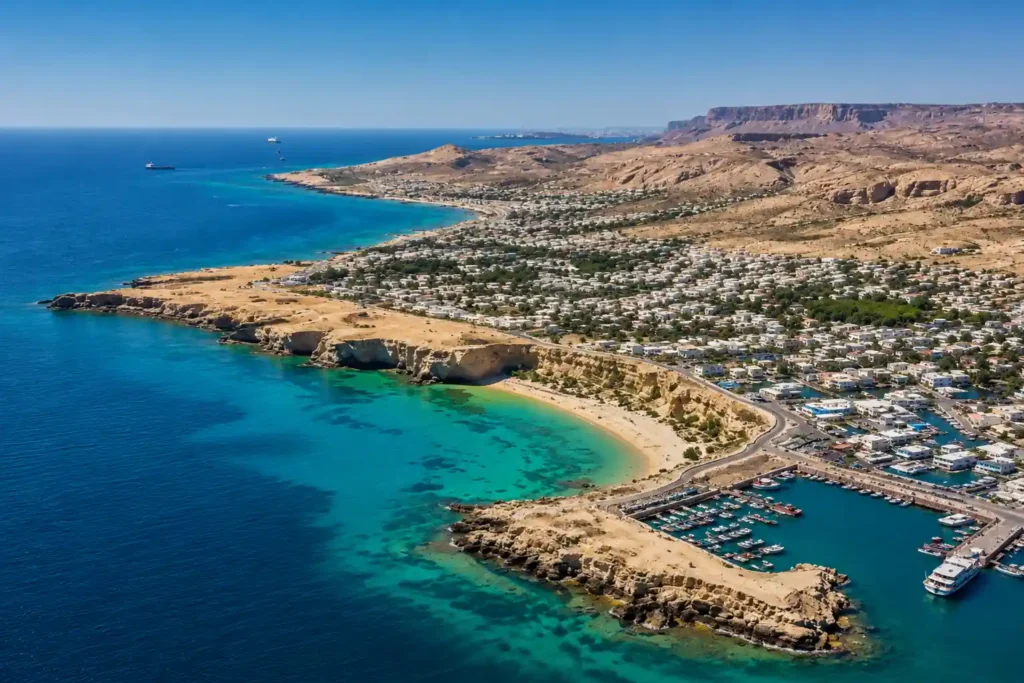
Qeshm Island beaches include well-known spots like Shibderaz Beach, Silver Beach (Sahel-e Noghreh-i), and Naz Islands, each offering calm turquoise water and soft golden or silver-toned sand shaped by natural minerals. The island also has the Stars Valley coastline, where tall rock formations meet the sea, and Hara Forest, a protected mangrove area along the shore where boats take visitors close to dolphins and migratory birds.
From secret Persian Gulf islands to untouched Caspian shores, these hidden beaches in Iran feel worlds away from the usual tourist trail.
Unlike crowded resort areas, Qeshm Island beaches stay quiet and clean, with clear water ideal for swimming, walking, and watching the sunset without large crowds around you. Most of these beaches are easy to reach by local taxi or rented car, making a full day of beach-hopping simple even for first-time visitors.
Why Qeshm Island Beaches Are Different
Many travelers think of Iran as a destination for historic mosques, traditional bazaars, and mountain adventures. While those experiences are definitely worth exploring, Qeshm offers something very different. The island is known for its unique natural landscapes, including dramatic red rock formations, salt caves, tidal plains, and mangrove forests along the coastline that look almost unreal.
According to UNESCO, the Hara Biosphere Reserve on Qeshm is among the largest mangrove forests in the world. This shows how environmentally important and naturally rich the island is. In addition, Qeshm is a free trade zone, so shopping, food, and many services are often cheaper than in other parts of Iran, making it a good option for travelers with a moderate budget.
Many locals describe Qeshm as calmer and more peaceful than busy cities like Tehran or Isfahan. The island is home to Arab-Persian Bandari communities with a long history connected to the sea. This maritime culture can still be seen today in the local cuisine, traditional boats, and the strong connection people have with the ocean.
Quick Answer: When is the best time to visit Qeshm Island beaches?
The best time to visit is between October and April, during the cooler months. Summers are extremely hot and humid. November to February offers the most pleasant beach weather, with temperatures ranging from 18°C to 28°C.
Best Time to Visit Qeshm Island Beaches
Qeshm sits in a subtropical climate zone. Summers, especially July and August, can push temperatures past 40°C with high humidity. In contrast, the winter months from November through February are genuinely pleasant. Daytime temperatures hover around 20°C to 25°C, which is ideal for beach walking, snorkeling, and boat tours.
Spring, particularly March and April, is also beautiful. The light is soft, wildflowers appear in rocky areas, and the sea is calm. Additionally, birdwatchers will love this period because migratory species pass through the mangrove areas in significant numbers.
Seasonal Visit Guide
| Season | Months | Temperature | Best For |
| Winter (Best) | Nov – Feb | 18°C – 28°C | Swimming, hiking, photography |
| Spring | Mar – Apr | 22°C – 32°C | Birdwatching, boat tours |
| Summer (Avoid) | May – Sep | 35°C – 45°C | Not recommended |
| Autumn | Oct | 28°C – 35°C | Early season visits, quieter |
Best Beaches in Qeshm Island
There are more beaches on Qeshm than most travelers realize. Some are well-known among domestic tourists; others are barely visited at all. Here’s a breakdown of the most worthwhile.
Naz Islands Beach
The Naz Islands are probably the most iconic stretch of coastline on Qeshm. At low tide, you can actually walk from the shore out to two small islands connected by a sand causeway. When I visited during a winter morning, the water on either side was a shade of blue-green that honestly looked edited. It wasn’t. The shallow water, combined with the white sand bottom, creates that color naturally.
This beach is particularly good for families because the water is shallow and calm close to shore. Furthermore, the surrounding rock formations make for interesting exploration at low tide.
Silver Beach (Shib Deraz)
Silver Beach gets its name from the way the fine sand catches the afternoon light. It’s longer than Naz Islands, less visited, and has a more open, dramatic feel. Locals often bring picnics here on weekends. The beach faces west, which makes it one of the best spots for sunset on the island.
Laft Beach
Laft is a small fishing village on the northern coast, and the beach here is different in character from the others. It’s less about swimming and more about atmosphere. The ancient Portuguese windmills, some of the few remaining in the world, stand above the shoreline. Fishing boats are pulled up on the sand. The smell of salt and fish is constant. It’s not a resort experience, but it’s unforgettable.
Hengam Island Beach
Technically a separate island, Hengam is reachable by a short boat ride from Qeshm. The beach here is arguably the most beautiful in the area, with clear water, soft sand, and a coral reef just offshore that supports snorkeling. Hengam is also where wild dolphins are frequently spotted close to shore, especially in the morning. According to the Iran Cultural Heritage Organization, Hengam’s marine ecosystem is protected, and fishing is restricted in certain zones.
Suza Beach
Suza is quieter and less polished. It sits on the eastern side of the island and sees fewer visitors. If you want a beach where you genuinely might be alone for hours, this is a strong option. The drive to get there is part of the experience; the road passes through dramatic canyon landscapes unique to Qeshm.
Beach Comparison Overview
| Beach | Best For | Facilities | Crowd Level |
| Naz Islands | Tidal walkway, swimming | Basic | Moderate |
| Silver Beach | Sunset, picnics | Minimal | Low to moderate |
| Laft Beach | Culture, atmosphere | Village amenities | Low |
| Hengam Island | Snorkeling, dolphins | Basic | Low |
| Suza Beach | Solitude, photography | None | Very low |
Quick Answer: What activities are available at Qeshm Island beaches?
Qeshm Island beaches offer swimming, snorkeling, dolphin watching, boat tours, mangrove kayaking, beach camping, and birdwatching. The island also has geological attractions like the Stars Valley and salt caves near the coast.
Things to Do at Qeshm Island Beaches
Swimming
The calmer bays, particularly the Naz Islands and Hengam, are excellent for swimming during the cooler months. Water visibility is generally good, and the absence of industrial development nearby keeps the sea clean.
Snorkeling
Hengam Island is the top snorkeling spot. The reef close to shore hosts a variety of fish species, and the water clarity in winter and spring is exceptional. Bring your own gear if possible, because rental options are limited and inconsistent.
Dolphin Watching
This is genuinely one of the highlights of any visit to Qeshm’s coastline. Indo-Pacific bottlenose dolphins are regularly spotted near Hengam. Local fishermen often double as boat guides, and I’ve heard from multiple travelers that encounters at close range, sometimes within a few meters of the boat, are common in the early morning hours.
Boat Tours
Traditional wooden boats called “lenge” can be hired for half-day or full-day tours. These trips typically cover multiple points: mangrove channels, Hengam Island, and open water dolphin watching zones. Prices are negotiable and usually more reasonable than comparable tours in tourist-heavy destinations.
Camping by the Beach
Several beaches on the eastern side, including near Suza, allow informal camping. There are no official campsite facilities, so this is for self-sufficient travelers. The experience of sleeping under a clear sky with the Persian Gulf in front of you is genuinely hard to match.
Quick Answer: Are there hidden beaches on Qeshm Island?
Yes. The eastern coastline of Qeshm has several small, unnamed beaches accessible only by dirt track or boat. Zeytoon Beach and areas near Suza village are among the least visited and most rewarding for independent travelers.
Hidden Beaches in Qeshm Island
Zeytoon Beach, named after the olive trees that once grew nearby, is rarely mentioned in travel guides. It sits in a small cove with calm water and reddish cliffs behind it. Getting there requires a rough drive plus a short walk, which filters out casual visitors almost entirely.
Additionally, the coastline between Laft and the northern tip of the island has stretches of wild beach accessible only by boat. Local fishermen know these spots well and can take you there if you ask. These are genuinely the kinds of places where you might spend hours without seeing another person.
Where is the best place to watch the sunset on Qeshm Island?
Silver Beach and Laft Beach are the top sunset viewing spots on Qeshm Island. Both face west over open water and offer unobstructed horizon views. The Portuguese windmills at Laft create a uniquely photogenic silhouette at golden hour.
Best Beaches for Sunset Views
Silver Beach is the easier choice for most visitors, accessible by road, with enough open space to find a quiet spot. Laft is more atmospheric. The windmills catch the last light beautifully, and the silhouettes of fishing boats on the water add a layer of visual depth that photographers specifically travel here for.
Interestingly, because Qeshm sits at a lower latitude than most popular beach destinations, the sun drops fairly quickly after touching the horizon. So arrive 30 to 40 minutes before actual sunset to catch the full golden hour.
How to Reach Qeshm Island Beaches

Qeshm is accessible by two main routes:
- By ferry from Bandar Abbas: The most common route. Ferries run regularly and take about 30 minutes. From Bandar Abbas, you can fly in from Tehran, Isfahan, or Mashhad.
- By air: Qeshm has its own airport (QSM) with direct flights from Tehran and several other Iranian cities. This is the faster option and often not significantly more expensive.
- By car ferry: If you want to bring a vehicle, larger ferries accommodate cars and run from Bandar Abbas and Bandar Pol.
Once on the island, renting a car or hiring a local driver is the most practical way to reach the beaches. Many of the better beaches aren’t on public transport routes, so having your own transport is genuinely important here.
Getting to and Around Qeshm
| Method | Route | Duration | Cost (Approx.) |
| Passenger Ferry | Bandar Abbas → Qeshm | ~30 min | Low |
| Domestic Flight | Tehran / Isfahan → QSM Airport | 1–1.5 hrs | Moderate |
| Car Ferry | Bandar Abbas → Qeshm | ~1 hr | Moderate (with vehicle) |
| Local Taxi / Car Hire | On island | Varies | Budget to moderate |
Family-Friendly Beaches in Qeshm Island
The Naz Islands are the clear winner for families. The shallow, calm water close to shore is safe for children, and the tidal causeway walk is genuinely exciting for kids of all ages. Silver Beach is also good, flat, open, and easy to manage with children.
In contrast, the eastern beaches like Suza are better suited to experienced travelers or solo visitors. The lack of facilities means no toilets, no food stalls, and no shade structures. For families, planning to arrive at well-serviced beaches and bringing all supplies is the smarter approach.
What to Pack for a Beach Trip to Qeshm
Packing smart makes a real difference here. Since facilities are minimal at most beaches, what you bring in is largely what you’ll have.
- Sunscreen SPF 50+ (the sun is intense, especially on the water)
- At least 2 liters of water per person per day
- Snorkeling mask and fins if you plan to visit Hengam
- Modest clothing; Iran has dress code requirements; lightweight long sleeves work well for sun protection too
- Cash in Iranian Rials; card payments are largely unavailable for tourists
- Reusable bag for rubbish; pack in, pack out is the right mindset
- Sturdy sandals or water shoes for rocky beaches
- Power bank; limited charging options away from towns
Qeshm Island Beaches vs Kish Island Beaches
This comparison comes up a lot. Both are free trade zones, both are Persian Gulf islands, and both have tourism infrastructure. But the character is quite different.
Kish is more developed, more resort-oriented, and more popular with domestic tourists looking for a shopping and entertainment break. Qeshm, on the other hand, is larger, wilder, and more geologically interesting. The beaches on Qeshm are generally less manicured but more spectacular in their natural form. Furthermore, Qeshm’s proximity to the Iranian mainland means it has a more authentic local culture.
Qeshm Island Beaches vs Kish Island: Quick Comparison
| Factor | Qeshm Island | Kish Island |
| Size | The largest island in Iran | Smaller, more compact |
| Beach type | Wild, geological, diverse | More developed, resort-style |
| Wildlife | Dolphins, mangroves, birds | Limited |
| Shopping / Nightlife | Moderate | High |
| Best for | Nature lovers, photographers | Shopping, relaxation |
| Crowd level | Low to moderate | High (especially in winter) |
Quick Answer: Are Qeshm Island beaches worth the trip?
Absolutely yes. Qeshm Island beaches offer a combination of natural beauty, cultural depth, and genuine remoteness that is almost impossible to find in more-visited destinations. For travelers who value authentic experience over polished infrastructure, Qeshm consistently over-delivers.
Are Qeshm Island Beaches Worth Visiting?
The island doesn’t feel like a packaged destination. Therefore, what you get in return for a bit of logistical effort is something genuinely rare: coastline that hasn’t been reshaped for tourism, food that’s made for locals, and a pace of life that hasn’t caught up with the rest of the world yet.
As someone who has visited beaches across Iran, the Gulf, and beyond, I’d put Hengam Island and Naz Islands among the most memorable beach experiences I’ve had anywhere. Not because they’re polished, but because they’re real.
Travel Tips for Visiting Qeshm Island Beaches
- Respect local dress codes even at the beach; women should cover their hair and wear modest clothing
- Download offline maps before you go; mobile data coverage can be patchy in remote areas
- Try local Bandari food in Qeshm Town, grilled fish with saffron rice is outstanding
- Book boat tours through your accommodation or a local agency; independent negotiation at the pier is also possible
- The Hara Biosphere Reserve has designated boat tour entry rules; follow them to protect the ecosystem
- Always check tide times before visiting the Naz Islands, the causeway walk is only possible at low tide
Final Thoughts
Qeshm Island beaches represent something increasingly rare in travel: a destination that genuinely surprises you. The combination of turquoise water, mangrove forests, ancient fishing culture, and wild geology is unlike anything else in the Persian Gulf region.
Whether you’re drawn by the dolphins at Hengam, the tidal magic of Naz Islands, or simply the idea of a beach in Iran that most people don’t know exists yet, Qeshm Island beaches are absolutely worth your time, your planning, and the journey.
Plan well, pack smart, go in winter, and leave the beach cleaner than you found it.
FAQs About Qeshm Island Beaches

Q1: Can foreign tourists visit Qeshm Island beaches?
Yes. Qeshm is a free trade zone and generally accessible to international tourists. However, most foreign visitors need an Iranian visa, which can sometimes be obtained on arrival at Qeshm’s airport for certain nationalities. Always verify current visa requirements with the Iranian embassy or official government sources before travel.
Q2: Are the beaches at Qeshm Island safe for swimming?
Most beaches are safe to swim at during the cooler months, particularly the Naz Islands and Hengam Island. Strong currents can be present at more exposed shores, so always observe local conditions and avoid swimming alone in unfamiliar water.
Q3: Is there accommodation near the beaches?
Yes. Qeshm Town has a range of hotels and guesthouses at various price points. There are also smaller guesthouses in villages like Laft. Most beaches are within 30 to 60 minutes’ drive from accommodation. Camping is possible on several eastern beaches for self-sufficient travelers.
Q4: What language is spoken on Qeshm Island?
The majority of residents speak Persian (Farsi). Many in Laft and coastal villages also speak Arabic, reflecting the island’s Bandari cultural heritage. Some younger residents and business owners in tourist-facing roles speak basic English.
Q5: Can you see dolphins at Qeshm Island beaches?
Yes. Indo-Pacific bottlenose dolphins are regularly spotted near Hengam Island, which is a short boat ride from Qeshm. Morning boat tours offer the best chance of encounters. Local guides know the areas where dolphins are most frequently seen.
Q6: Is Qeshm Island expensive for tourists?
No. Qeshm’s free trade zone status means many goods are cheaper than on the Iranian mainland. Accommodation, food, and transport are all reasonably priced by regional standards. Budget travelers can manage well with good planning.