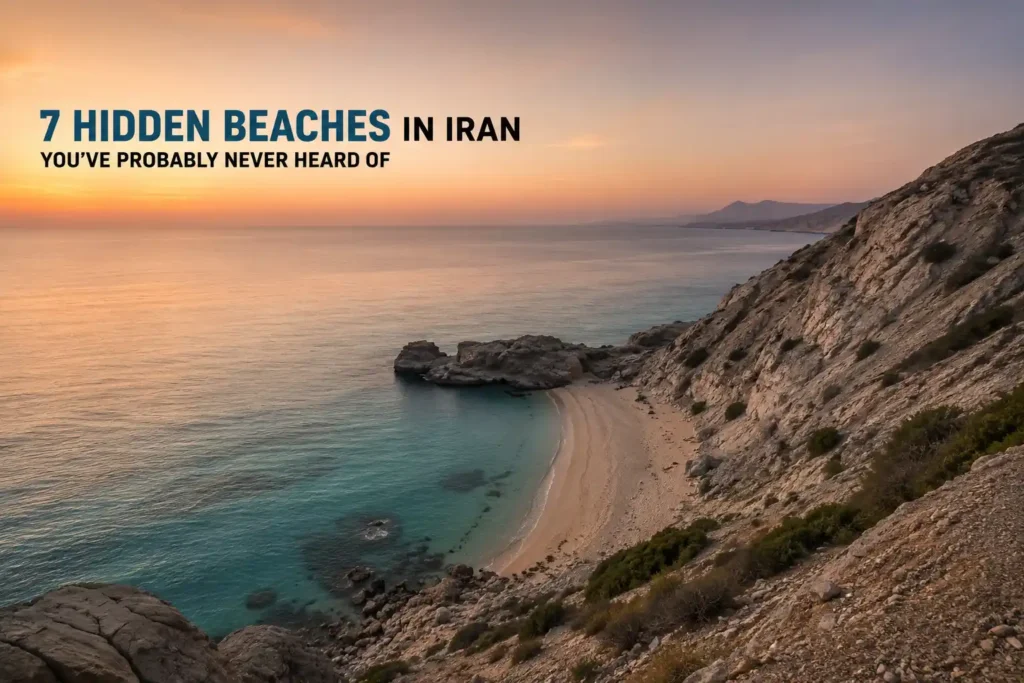
Beaches in Iran include Hormuz Island’s red sand beach, colored by iron oxide soil that turns the shoreline a deep rust color, unlike anywhere else in the region. Qeshm Island, the largest island in the Persian Gulf, has calm turquoise water near the Hara mangrove forests, where you can spot dolphins and migratory birds close to shore. Kish Island offers coral reefs and clear water good for snorkeling, while Chabahar, on the Gulf of Oman, sits near the unusual Martian Mountains, a rocky desert landscape right next to the sea.
In the north, the Caspian Sea coast near Ramsar and Nowshahr has green hills, mild weather, and sandy beaches that feel completely different from the south. These details show why Beaches in Iran attract travelers looking for variety, from volcanic red sand to calm forested coastlines, all within one country.
Why Iran’s Beaches Are Unique
Iran sits between two completely different bodies of water. The southern coast touches the Persian Gulf and the Gulf of Oman, giving you warm, salty water with coral reefs and marine life. The northern coast runs along the Caspian Sea, the world’s largest enclosed body of water, where lush forests meet the shoreline.
That contrast is rare. You won’t find many countries where you can go from a subtropical island beach to a forested coastal strip in a single trip.
The biggest difference: Most of these beaches still feel untouched
Unlike the heavily developed beach resorts of Dubai or Bahrain, Iran’s coastal areas are largely untouched. There are no mega-resorts or artificial islands here. Instead, you get raw natural beauty, local fishing culture, and geological formations that took millions of years to form. According to the Iran Cultural Heritage, Handicrafts and Tourism Organization (ICHHTO), tourism infrastructure along the southern coast has been growing steadily, but the beaches still retain their natural character.
| Feature | Iran’s Beaches | Typical Gulf Beaches |
| Development Level | Low to moderate | Heavily developed |
| Natural Landscape | Volcanic, mangrove, desert | Mostly flat sand |
| Water Temperature | 22°C–32°C year-round | Similar range |
| Tourism Crowds | Minimal to moderate | High |
| Cost of Visit | Very affordable | Moderate to expensive |
Honestly, this shocked me the most. A week-long coastal trip in southern Iran can cost a fraction of what you’d spend in neighboring countries. Locals I’ve spoken to confirm that guesthouse prices on islands like Hormuz start from as low as $10–15 per night.
Hormuz Red Beach: Iran’s Stunning Red Sand Beach
See why Hormuz Red Beach looks like another planet, where crimson shores meet the turquoise Persian Gulf in one of Iran’s wildest coastal landscapes.

This is the one that gets people talking. Hormuz Island sits in the Strait of Hormuz, and its most famous beach is covered in deep red sand, the result of iron oxide-rich soil that has weathered over millions of years.
Why Is the Sand on Hormuz Island Red?
The red color comes from iron oxide minerals in the volcanic rock. As the rock erodes naturally, it produces fine red sediment that covers the beach and even colors the surrounding water during high tide. Geologists from the University of Tehran have studied these formations extensively, and the island’s soil contains over 70 different minerals. Locals actually use this red soil in cooking; it’s an ingredient in a traditional condiment called “Golak.”
Walking on this beach felt surreal based on everything travelers describe. The ground crunches differently. The water near the shore turns a pinkish hue. It’s one of those places that makes you stop and just stare.
Beyond the red beach, Hormuz offers the Rainbow Valley, a geological wonderland of multicolored rock formations. The island is small enough to explore by bicycle in a day, which is how most visitors get around.
Qeshm Island Beaches: The Best Beaches on Qeshm Island
Discover the most beautiful Qeshm Island beaches, from hidden red-sand coves to quiet Persian Gulf shores that feel completely untouched.

Qeshm is Iran’s largest island and was designated a UNESCO Global Geopark in 2006. That status alone tells you the geological significance of this place. The beaches here aren’t just pretty; they’re scientifically important.
Top Beaches and Natural Attractions on Qeshm
- Stars Valley Beach sits near the famous Stars Valley, a canyon formation that locals believe was created by a fallen star. The beach nearby is quiet and offers views of the rock formations at sunset.
- The Hara Mangrove Forest coastline is where the mangrove forests meet the sea. You can take a boat through these forests and spot herons, flamingos, and other migratory birds. The Iranian Department of Environment has designated this area as a protected zone.
- Tabl Beach is less known but loved by locals for its calm waters and privacy.
| Beach | Best For | Crowd Level | Access |
| Stars Valley Beach | Sunset views, photography | Low | Easy, near the main road |
| Hara Forest Coast | Birdwatching, boat tours | Moderate | Boat required |
| Tabl Beach | Swimming, relaxation | Very low | Short drive from town |
| Shibderaz Beach | Turtle nesting (seasonal) | Low | Accessible by road |
Qeshm also has a free trade zone, which means goods are cheaper here. So if you’re visiting, you’ll find affordable accommodation and food alongside genuinely remarkable natural scenery.
Kish Island Beaches: Crystal Waters & Beach Activities
These unreal island beaches in Iran look more like the Maldives than the Middle East.

Kish is probably the most well-known beach destination in Iran. It’s a coral island in the Persian Gulf, about 18 kilometers long, and it operates as a free trade zone, meaning no visa is required for many nationalities for stays up to 14 days.
Activities You Can Do on Kish Island Beaches
The beaches on Kish are clean, well-maintained, and offer a range of water sports. Jet skiing, parasailing, scuba diving, and snorkeling are all available. The coral reefs around Kish support diverse marine life, and diving operators on the island have reported over 150 species of fish in the surrounding waters.
One thing that surprised me during my research was the underwater city near Kish, the remains of an ancient Greek ship, and sunken structures that you can explore with a diving guide. The Kish Free Zone Organization actively promotes marine tourism and has invested in underwater heritage preservation.
There are also women-only beaches on Kish, which are common across Iran’s public coastal areas. These sections provide privacy and comfort for female travelers, something that’s important to know before planning your trip.
Quick Answer: What is Darak Beach known for?
Darak Beach in southeastern Iran is famous for being the rare point where desert dunes meet the ocean. Located in Sistan-Baluchestan Province along the Gulf of Oman, it offers a dramatic landscape where golden dunes slope directly into blue seawater, with freshwater streams cutting through the sand.
Darak Beach: The Unique Desert and Sea Meeting Point

Where Does the Desert Meet the Sea in Iran?
Darak Beach, located in Sistan-Baluchestan Province, is one of the most unusual coastal spots on Earth. Here, dunes from the desert literally roll into the ocean. On one side, you see a golden desert stretching inland. On the other hand, the blue waters of the Gulf of Oman. It’s a collision of two ecosystems that shouldn’t exist in the same frame, but it does.
Getting to Darak requires a bit of effort. The road infrastructure in this part of Iran is less developed, and you’ll likely need a local guide or a 4×4 vehicle for the last stretch. But everyone who has made the journey says the same thing: it’s worth every minute.
There are small freshwater streams that run down from the mountains and cut through the sand before reaching the sea. You can sometimes spot wild camels near the shore. It’s wild, remote, and untouched.
Curious why travelers call Darak Beach one of Iran’s most unique coastal spots? Read the full guide →
Hengam Island Beach: A Peaceful Island Escape

Hengam is a small island just south of Qeshm, and it’s become increasingly popular for one reason: dolphins. The waters around Hengam are home to pods of Indo-Pacific humpback dolphins that frequently swim close to shore.
Dolphin Watching at Hengam Island
It’s remarkably common. Local boat operators offer early morning dolphin-watching trips, and sightings happen on most days, especially between November and April. The Iranian Environment Protection Organization has been monitoring dolphin populations in this area, and the species is considered stable in these waters.
Beyond dolphins, Hengam has a beautifully simple vibe. There are no cars on the island. The beaches are rocky in some parts and sandy in others, and the water clarity is excellent. Locals sell fresh fish right on the beach, grilled over open flames. That kind of experience, sitting on a quiet island, eating fish that was caught an hour ago, is something money can’t really buy elsewhere.
Read about Hengam Island Beach and see why its silver shores, dolphin-filled waters, and quiet island atmosphere feel almost unreal.
Is Chabahar worth visiting?
Absolutely. Chabahar offers a unique combination of oceanic beaches, Martian-like mountain formations, mud volcanoes, and rich Baluchi culture. It’s Iran’s only port on the open ocean, making its coastal landscape distinctly different from Persian Gulf destinations.
Chabahar Beach: Coastal Beauty of Southern Iran
Most people never expect Iran to look like this, that’s why travelers are quietly falling in love with Chabahar Beach.
Located along the Gulf of Oman in Sistan-Baluchestan Province, Iran’s only oceanic port offers a far rougher and more dramatic atmosphere than the polished Persian Gulf islands. Bigger waves. Darker cliffs. Less polished.
Why Should Travelers Visit Chabahar?
A few things make Chabahar stand out. The coastline feels rougher than the Persian Gulf islands, and the Martian Mountains nearby make the whole region look unreal.
| Attraction | Distance from Chabahar | Type |
| Martian Mountains | ~50 km | Geological |
| Tang Port Beach | ~15 km | Beach |
| Lipar Pink Lake | ~30 km | Natural wonder |
| Mud Volcanoes | ~20 km | Geological |
The Iranian government has been investing in Chabahar as a strategic port and tourism zone. The Chabahar Free Trade Zone Authority has launched several initiatives to improve tourist facilities, and direct flights from Tehran now operate regularly.
Gisoom Beach: Iran’s Forest Beach Experience
Planning a trip to northern Iran? Gisoom Beach offers one of the most unique forest-meets-sea landscapes on the Caspian coast.
Now let’s jump to the north. Gisoom Beach sits along the Caspian Sea coast in Gilan Province, and it’s unlike anything you’ll see in southern Iran. Here, dense green forest grows right up to the shoreline. You can literally walk from the shade of towering trees onto the sand and into the water.
Gisoom Beach: A Different Side of Iran’s Coastline
Everything. The climate is humid and mild instead of hot and dry. The water is brackish rather than salty. The sand is darker, and the surrounding landscape is lush and green. It’s more reminiscent of the Black Sea coast than anything in the Persian Gulf.
Gisoom Forest Park, which borders the beach, is a protected area managed by Iran’s Natural Resources Organization. The park has camping facilities, walking trails, and picnic areas. During summer weekends, it gets busy with families from nearby cities like Rasht and Lahijan, but on weekdays, it can feel like you have the entire beach to yourself.
Honestly, if you’re the kind of traveler who likes forest hikes and beach swims in the same day, Gisoom is your spot.
Which is the best beach in Iran to visit? (Quick Answer)
The best beach depends on your travel style. Kish Island is ideal for water sports and convenience. Hormuz Island offers the most unique landscape. Darak Beach suits adventurous travelers. Gisoom Beach is perfect for nature lovers who prefer forests over desert heat.
Which Beach in Iran Is Best for Travelers?
This depends entirely on what you’re looking for. There’s no single “best”, but here’s a breakdown that might help you decide.
| Traveler Type | Best Beach | Why |
| Adventure Seekers | Darak Beach | Desert-meets-sea, remote location |
| Photographers | Hormuz Island | Red sand, Rainbow Valley |
| Families | Kish Island | Facilities, water sports, safety |
| Nature Lovers | Gisoom Beach | Forest-beach combo, Caspian coast |
| Wildlife Fans | Hengam Island | Dolphins, marine life |
| Culture + Coast | Chabahar | Baluchi culture, geological sites |
When is the best time to visit beaches in Iran?
The ideal time for southern Iran beaches (Persian Gulf) is October through April, when temperatures are comfortable at 20°C–30°C. For northern beaches along the Caspian Sea, May through September offers the warmest weather and best swimming conditions.
Best Time to Visit Iran’s Beaches
Timing matters a lot. The southern coast gets extremely hot in summer, we’re talking 45°C and above from June through August. That’s not beach weather; that’s survival weather.
Southern Coast (Persian Gulf & Gulf of Oman)
The sweet spot is November to March. The weather is warm but manageable, the water is still inviting, and tourist numbers are lower. Ramadan timing can affect the availability of food during the day, so plan accordingly.
Northern Coast (Caspian Sea)
June to August is peak season. The water temperature sits around 24°C–28°C, and the surrounding forests are in full bloom. September is also pleasant and less crowded.
Quick Answer: Do you need a visa to visit Iranian beaches?
Most nationalities need a visa for Iran, but Kish Island and Qeshm Island are free trade zones where citizens of many countries can enter without a visa for up to 14 days. Check the latest entry requirements with Iran’s Ministry of Foreign Affairs before traveling.
Did Iran–USA Tensions Affect Tourism on Iran’s Beaches?

In recent years, political tensions between Iran and the United States have created concerns about tourism in the Middle East, including Iran’s southern coastal areas. Popular islands such as Kish Island, Qeshm Island, and Hormuz Island have mostly stayed safe and open for tourists, but the political situation has still affected visitor numbers, flight availability, and traveler confidence. Some international tourists delayed or canceled their trips because of safety worries and updated travel advisories, especially around the Strait of Hormuz, an important global shipping route.
Even with these challenges, many local tourism businesses say that most beach destinations continued operating as usual. In some periods, domestic tourism within Iran even increased. Places like Chabahar and Kish have continued to expand their tourism industry by building new hotels, eco-lodges, and visitor facilities. Travelers planning to visit Iran’s beaches should still check the latest travel advisories, transport updates, and local news before traveling, especially during times of political tension.
Travel Tips for Exploring the Beaches in Iran
Before you pack your bags, there are some practical things you need to know about visiting Iranian beaches.
- Dress code matters. Iran has a public dress code, and this applies to beaches, too. Women are required to wear hijab in public areas, and swimwear rules vary between mixed public beaches, women-only sections, and private resort areas. On islands like Kish, some resorts offer private beach access where rules are more relaxed.
- Currency exchange. Iran’s banking system is largely disconnected from international networks. Bring cash (USD or EUR) and exchange locally. ATMs won’t work with foreign cards in most cases.
- Internal flights save time. Iran is massive. Flying from Tehran to Kish, Qeshm, or Chabahar cuts down multi-day road trips to a couple of hours. Iran Air, Mahan Air, and Kish Air operate regular domestic routes.
- Local guides are worth it. Especially for remote beaches like Darak, having a local guide ensures you don’t get lost and helps you discover spots that aren’t on any tourist map.
- Travel insurance is essential. Make sure your policy covers Iran specifically, as some international insurers exclude it.
Are beaches in Iran safe for tourists?
Yes. Iran is widely regarded as a safe country for tourists, including its coastal areas. Petty crime is rare, and locals are known for their hospitality toward visitors. The main considerations are following local dress codes, carrying cash, and checking travel advisories related to border regions in Sistan-Baluchestan.
Final Thoughts on Iran’s Most Beautiful Beaches
Iran’s coastline doesn’t get the attention it deserves. While the rest of the world flocks to Bali or the Maldives, places like Hormuz Island and Darak Beach remain largely unknown outside of local travelers and a handful of adventurous tourists. That’s part of what makes visiting beaches in Iran feel special; you’re not following the crowd.
The infrastructure is improving year by year. The Iranian tourism board has been actively promoting coastal tourism, and new guesthouses and eco-lodges are popping up on islands like Hormuz and Qeshm. Yet the beaches themselves remain wild, authentic, and deeply connected to the land and culture around them.
If you’re the kind of traveler who values real experiences over polished resorts, the beaches in Iran should absolutely be on your list. Just go before everyone else figures it out.
FAQs About Beaches in Iran
Q: Are there any luxury beach resorts in Iran?
Kish Island has the most developed resort infrastructure, with several four and five-star hotels offering beach access. Elsewhere, accommodation is more basic, such as guesthouses, eco-lodges, and homestays. However, the experience is rich in authenticity.
Q: Can foreigners swim at beaches in Iran?
Yes, foreigners can swim at Iranian beaches. However, public beaches have gender-segregated sections or designated times. Some island resorts and private beaches offer more relaxed settings.
Q: Is it expensive to travel to Iran’s beaches?
Not at all. Iran is one of the most affordable travel destinations in the Middle East. A comfortable daily budget of $30–50 covers accommodation, meals, and local transport on most islands.
Q: How do I get to Iran’s southern islands?
You can fly directly to Kish or Qeshm from Tehran and other major cities. Hormuz and Hengam are reached by speedboat from Bandar Abbas, which also has an airport.
Q: What language is spoken in Iran’s coastal areas?
Persian (Farsi) is the national language and is widely spoken everywhere. In Sistan-Baluchestan, Balochi is common. On the southern islands, local dialects of Arabic and Bandari are also spoken. English is limited but growing in tourist areas.
Q: Are Iran’s beaches clean?
Generally, yes, especially on islands like Kish, which has dedicated beach maintenance. More remote beaches like Darak and Hengam are naturally clean due to low visitor numbers. Some Caspian Sea beaches can experience seasonal algae, but Gisoom is well-maintained as a forest park.