
Siquijor beach photos work so well because the island combines white sand, limestone cliffs, and clear turquoise water in one small area, allowing photographers to capture several different looks in a single day. Paliton Beach gives the softest light for sunset shots, with a wooden swing that hangs right over the shoreline and creates a natural frame for portraits. Salagdoong Beach adds contrast with its cliff diving platforms and split lagoon, one side calm and shallow, the other deep and wave-swept, which makes for strong before-and-after shots.
Further along the coast, small hidden coves near Solangon and Tubod stay empty most mornings, giving clean backgrounds without other tourists in frame. Anyone searching for Siquijor beach photos will notice the same pattern across social media: bright natural light, minimal editing, and locations that photograph well straight out of the camera.
Best Siquijor Beach Photos
Siquijor packs an unusual range of beach scenery into just 343 square kilometers. Some shores are wide and powdery, ideal for sweeping sunset shots. Others are narrow coves boxed in by limestone cliffs, better suited for dramatic close-up angles. The island’s west coast tends to run calmer and clearer from December to May, while the east coast, including Kagusuan and Salagdoong, stays more photogenic during the habagat monsoon season from June to November. That seasonal swing matters more than most first-time visitors realize, since a rough beach on one side of the island is often the best pick on the other during the same week.
According to the Philippine Department of Tourism, leisure arrivals across the Visayas have grown steadily in recent years, with much of that growth driven by social-media discovery of quieter island beaches. For photographers, the window to catch these shores uncrowded is narrowing, but it’s still wide open compared with Boracay or El Nido.
Get Inspired by Siquijor’s Most Beautiful Coastal Views. Read more in Siquijor Beach That Locals Call Magical for a Reason.
What Is the Best Siquijor Beach for Photos?
Paliton Beach is generally considered the best Siquijor beach for photos, thanks to its west-facing sunset, soft golden sand, and the famous rope swing that’s become an unofficial photo prop for the whole island. Salagdoong Beach is the runner-up for anyone chasing action shots of cliff jumping and snorkeling.
Top Siquijor Beaches to Photograph
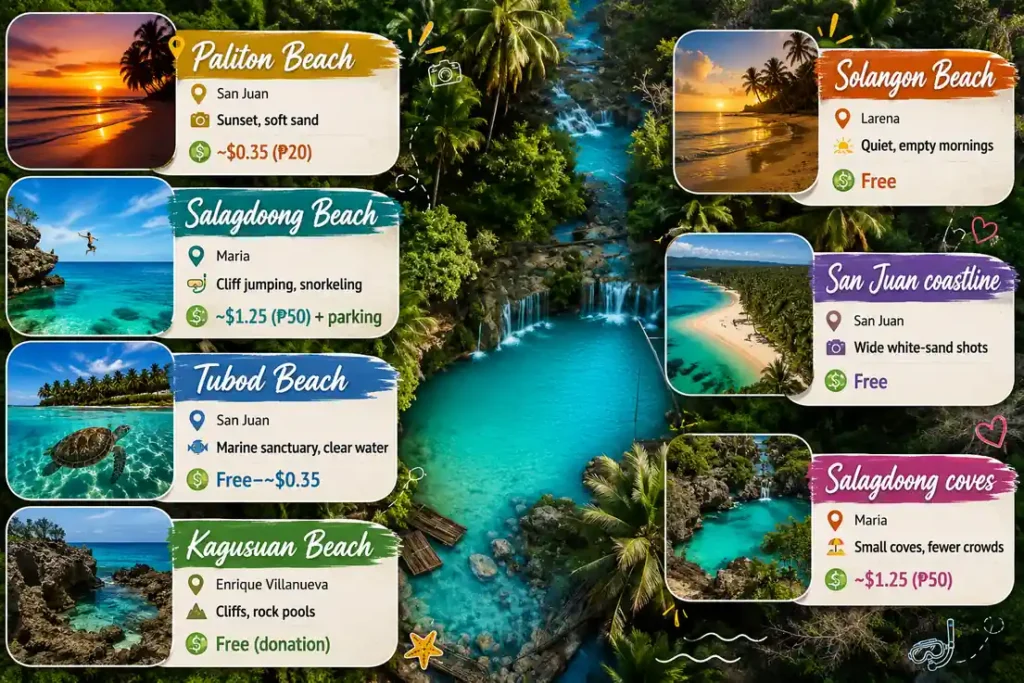
Not every beach on the island deserves a spot on your camera roll, but seven show up again and again in the best Siquijor beach photos online. Each one offers something different, from soft sand to sheer cliffs to glassy shallows. Below is a quick breakdown of each, along with what makes the trip worth it.
Use this table to compare Siquijor’s top beaches before mapping out your day.
| Beach | Municipality | Best For | Entrance Fee |
| Paliton Beach | San Juan | Sunset, soft sand | ~$0.35 (₱20) |
| Salagdoong Beach | Maria | Cliff jumping, snorkeling | ~$1.25 (₱50) + parking |
| Tubod Beach | San Juan | Marine sanctuary, clear water | Free–~$0.35 |
| Kagusuan Beach | Enrique Villanueva | Cliffs, rock pools | Free (donation) |
| Solangon Beach | Larena | Quiet, empty mornings | Free |
| San Juan coastline | San Juan | Wide white-sand shots | Free |
| Salagdoong coves | Maria | Small coves, fewer crowds | ~$1.25 (₱50) |
White Sand Siquijor Beach Photos
San Juan’s coastline holds most of the island’s classic white sand. It photographs best in late afternoon, when the light warms up without blowing out highlights. Low tide exposes a wider stretch of sand for full-body or silhouette shots, and mornings here tend to be calmer, which helps if you’re flying a drone.
Paliton Beach Photos
Paliton is the most photographed beach on the island, largely because of the rope swing set against the sunset. Entry runs about ₱20, plus roughly ₱50 for a turn on the swing. Arrive by 5 PM, since the line for the swing gets long fast as the sky starts to color. The beach faces west, so sunset here easily beats sunrise.
Salagdoong Beach Photos
Salagdoong’s two coves, split by a rocky outcrop, are built for dramatic angles. Entry costs around ₱50 per person plus ₱20 for parking. Cliff divers jumping from the platforms make strong action shots, best captured around midday with a fast shutter speed while the sun lights the water below.
Tubod Beach Photos
Tubod sits inside a marine sanctuary, so water clarity here usually beats anywhere else on the island. It suits underwater and snorkeling shots better than sweeping landscapes, since the beach itself is narrow. A waterproof housing captures more usable images here than a standard camera setup.
Kagusuan Beach Photos
Kagusuan sits on the island’s northeast side and stays calmer during the habagat season from June to November, when the west coast turns choppy. Limestone cliffs and rock pools add more texture than the flatter beaches, making it a favorite for photographers chasing something beyond the usual palm-and-sand frame.
Solangon Beach Photos
Solangon is one of the quieter beaches near Larena, without the crowds you’ll find at Paliton. Mornings here run close to empty, which helps if you want clean, people-free wide shots. The sand is fine and pale, similar in tone to San Juan’s coastline.
Maria Beach Photos
The municipality of Maria, home to Salagdoong Beach, also holds smaller coves worth a stop if you’re already in the area. These spots see far fewer visitors than Salagdoong itself, so they’re a solid backup for uncluttered, people-free backgrounds.
Hidden Beach Photos in Siquijor
A handful of Siquijor’s beaches barely show up in search results, and that’s exactly their appeal. Monkey Beach, reached on foot from Kagusuan, currently has no formal entrance fee and rarely sees more than a few visitors on any given day. The trade-off is isolation, so leaving bags or phones unattended isn’t a good idea; opportunistic theft has been reported along this stretch, even though the island overall is considered one of the safer parts of the Philippines.
Local guides and scooter-rental operators are usually the fastest way to find these coves, since trail access can shift with the seasons and weather. If you want beach photos genuinely free of other tourists in the frame, this is where to look, just budget extra time for the walk in and back out.
Explore the Philippines Beyond the Popular Destinations. Read more in Hidden Islands in Philippines Where Silence Is the Only Sound.
Crystal Clear Water Beach Photos
Water clarity on Siquijor changes with the monsoon, and it’s the single biggest factor separating an average shot from a great one. From December to May, the west coast, including Paliton and San Juan, tends to run calm and clear. From June to November, the habagat shifts conditions, and the east coast, including Kagusuan, Salagdoong, and Tubod, becomes the more reliable pick for turquoise water.
Use this seasonal breakdown to plan which coast to shoot on any given week.
| Season | Best Coast | Beaches to Prioritize | Water Clarity |
| December–May | West | Paliton, San Juan | Calm, clear |
| June–November (Habagat) | East | Kagusuan, Salagdoong, Tubod | Clearer, calmer |
| Year-round | Marine sanctuary | Tubod | Consistently clear |
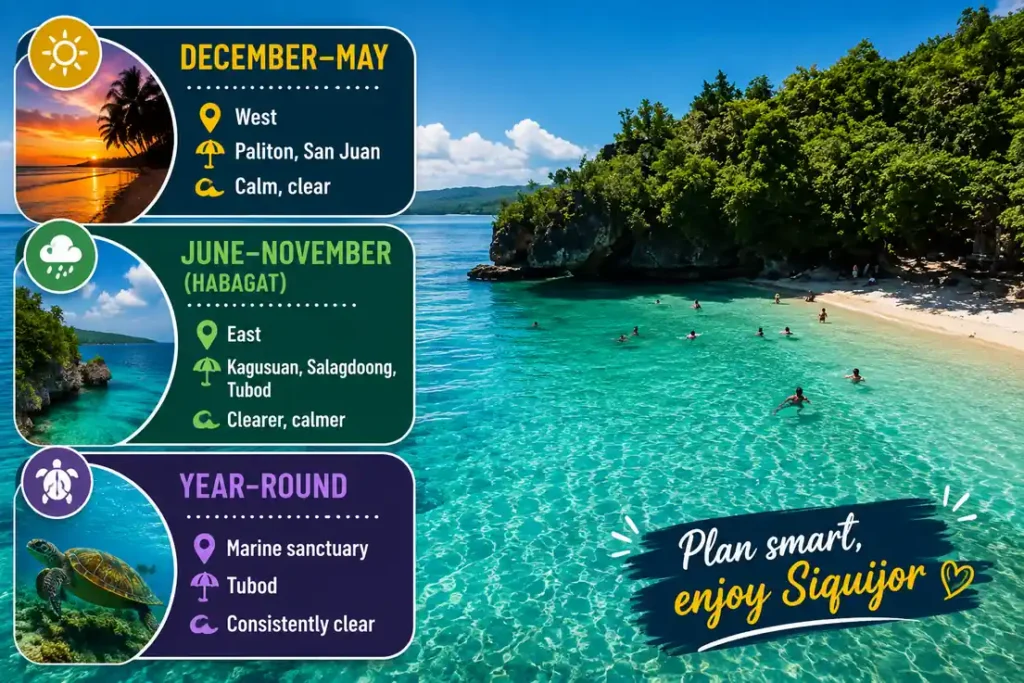
Tubod is the exception to the seasonal rule, since its protected marine sanctuary status keeps the water clear regardless of season. That’s part of why it’s the island’s most reliable snorkeling and underwater-photo spot, whatever month you visit.
Aerial, Sunrise, and Sunset Siquijor Beach Photos
Timing and altitude do more for a beach photo than any camera setting. Siquijor rewards photographers who plan around the sun and, where permitted, fly a drone. Below is what to expect at each time of day and from the air, plus a note on drone rules, since the Civil Aviation Authority of the Philippines regulates recreational drone flight nationwide.
Aerial Siquijor Beach Photos
Drone shots work best over Salagdoong’s split coves and Kagusuan’s cliff-lined shoreline, where the shapes read clearly from above. Fly early morning or late afternoon to avoid glare bouncing off the water. Registration requirements apply to drones over 250 grams under current Philippine civil aviation rules, so check the latest guidance before you fly.
Sunrise Siquijor Beach Photos
Sunrise favors the east coast, since Kagusuan and Salagdoong face that direction and catch the first light directly. Arrive around 5:30–6 AM during most months to catch the sky changing color before the sun clears the horizon.
Sunset Siquijor Beach Photos
Sunset belongs to the west coast. Paliton is the obvious choice, with the sun dropping into the sea around 6–6:30 PM for most of the year. San Juan and Solangon offer similar west-facing views with far fewer people in frame.
Snorkeling Beach Photos in Siquijor
Underwater photography on Siquijor works best around Tubod’s marine sanctuary and Salagdoong’s reef, both shallow enough for snorkelers without diving gear. Visibility on a calm day regularly reaches 10–15 meters, which is enough to capture coral detail and reef fish without heavy editing afterward.
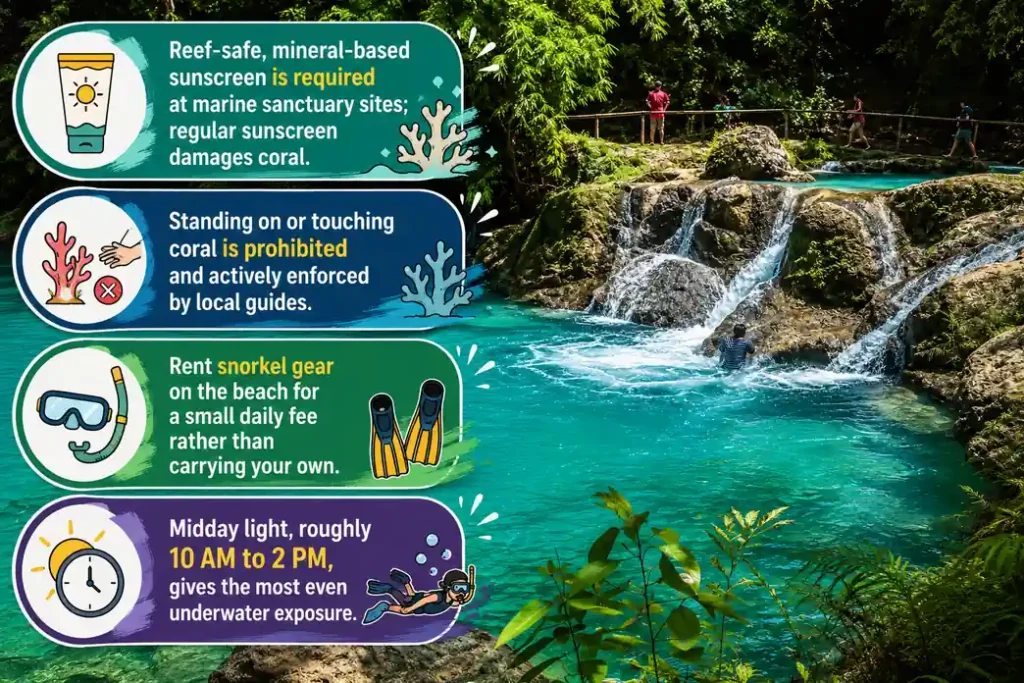
A few practical points before getting in the water:
- Reef-safe, mineral-based sunscreen is required at marine sanctuary sites; regular sunscreen damages coral.
- Standing on or touching coral is prohibited and actively enforced by local guides.
- Rent snorkel gear on the beach for a small daily fee rather than carrying your own.
- Midday light, roughly 10 AM to 2 PM, gives the most even underwater exposure.
How Much Do Siquijor’s Beaches Cost to Enter?
Most Siquijor beaches charge a small entrance fee between free and ₱50 (roughly $0.90). Paliton costs about ₱20, Salagdoong charges ₱50 plus ₱20 for parking, and beaches like Kagusuan and Solangon are typically free or donation-based.
Siquijor Beach Photos Gallery
If you’re building a shot list before you go, Siquijor covers nearly every beach photo category on one island. Wide sunset shots, dramatic cliff silhouettes, clear-water snorkeling frames, and quiet empty-beach portraits all sit within a short scooter ride of each other.
Use this cheat sheet to match the shot you want with the beach and time that delivers it.
| Shot Type | Best Beach | Best Time |
| Sunset silhouette | Paliton | 5:30–6:30 PM |
| Cliff jump action | Salagdoong | 11 AM–1 PM |
| Underwater/reef | Tubod | 10 AM–2 PM |
| Empty wide beach | Solangon | 6–8 AM |
| Aerial coastline | Kagusuan | 6–8 AM or 4–6 PM |
| Hidden cove portrait | Monkey Beach | Any low-tide window |
Pack a polarizing filter if you’re shooting midday, since glare off Siquijor’s water is strong under a clear sky.
Siquijor won’t overwhelm you with beach options the way a bigger island might, and that’s precisely why it works so well for photography. A handful of beaches, each with a distinct look, spread across an island small enough that you can realistically shoot sunrise on one coast and sunset on the other, same day. Start at Tubod in the morning for clear water, swing by Salagdoong for cliff-jump action at midday, and end at Paliton for the sunset swing. That’s a full day of genuinely different Siquijor beach photos, no repeats.
Frequently Asked Questions About Siquijor Beach Photos
What is the best beach in Siquijor for photos?
Paliton Beach is widely considered the best for photos, thanks to its west-facing sunset and famous rope swing. Salagdoong is the top pick for action and underwater shots.
How much does it cost to visit Siquijor’s beaches?
Most beaches charge between free and ₱50 (about $0.90). Salagdoong is the most expensive at ₱50 plus ₱20 parking, while Kagusuan and Solangon are typically free.
When is the best time of year to photograph Siquijor’s beaches?
December to May favors the west coast beaches like Paliton, while June to November favors the east coast beaches like Kagusuan and Salagdoong, due to the habagat monsoon shifting water conditions.
Is it safe to bring camera gear to hidden beaches in Siquijor?
Siquijor is generally considered safe, but isolated spots like Monkey Beach have reported opportunistic theft. Don’t leave gear or bags unattended, and travel with a companion when visiting hidden coves.
Can I fly a drone over Siquijor’s beaches?
Yes, in most areas, though drones over 250 grams require registration under Philippine civil aviation rules. Salagdoong and Kagusuan offer the most dramatic aerial angles.
How do I get to Siquijor to take these photos?
Siquijor is reached by ferry from Dumaguete (45 minutes to 1.5 hours), Cebu (3–4 hours), or Tagbilaran in Bohol (2–3 hours). A rented scooter is the easiest way to reach each beach once you’re on the island.