

Hill Inlet Whitehaven Beach sits at the northern tip of Whitsunday Island, where tidal water swirls through pure silica sand in patterns that change every few hours. Photos of Hill Inlet Whitehaven Beach show up on almost every Australia travel list, and the real view from the lookout genuinely matches the pictures. This guide covers the location, the walk, the tides, and honestly, whether swimming here makes sense at all.
Most people picture one long white beach when they hear the name Whitehaven. Hill Inlet, though, is a separate feature tucked into the northern end, and the two get mixed up constantly in trip planning. Getting the difference right saves confusion once you’re standing on the sand wondering which direction to walk. This guide breaks down the lookout, the timing, the tides, and what to actually pack.
What Is Hill Inlet Whitehaven Beach in One Sentence?
Hill Inlet is a shallow tidal lagoon at the northern end of Whitehaven Beach on Whitsunday Island, famous for swirling white silica sand and turquoise channels best seen from an elevated lookout track.
What Is Hill Inlet at Whitehaven Beach?
Hill Inlet forms where tidal water pushes through narrow channels of silica sand at the top of Whitehaven Beach. Rising and falling tides rearrange the sandbanks constantly, so the swirl pattern seen in one photo rarely repeats exactly the next day.
The sand here is around 98 percent pure silica, among the purest concentrations recorded anywhere. That purity gives the beach its bright white colour, keeps the sand cool underfoot even in tropical heat, and produces a faint squeak when you walk on it.
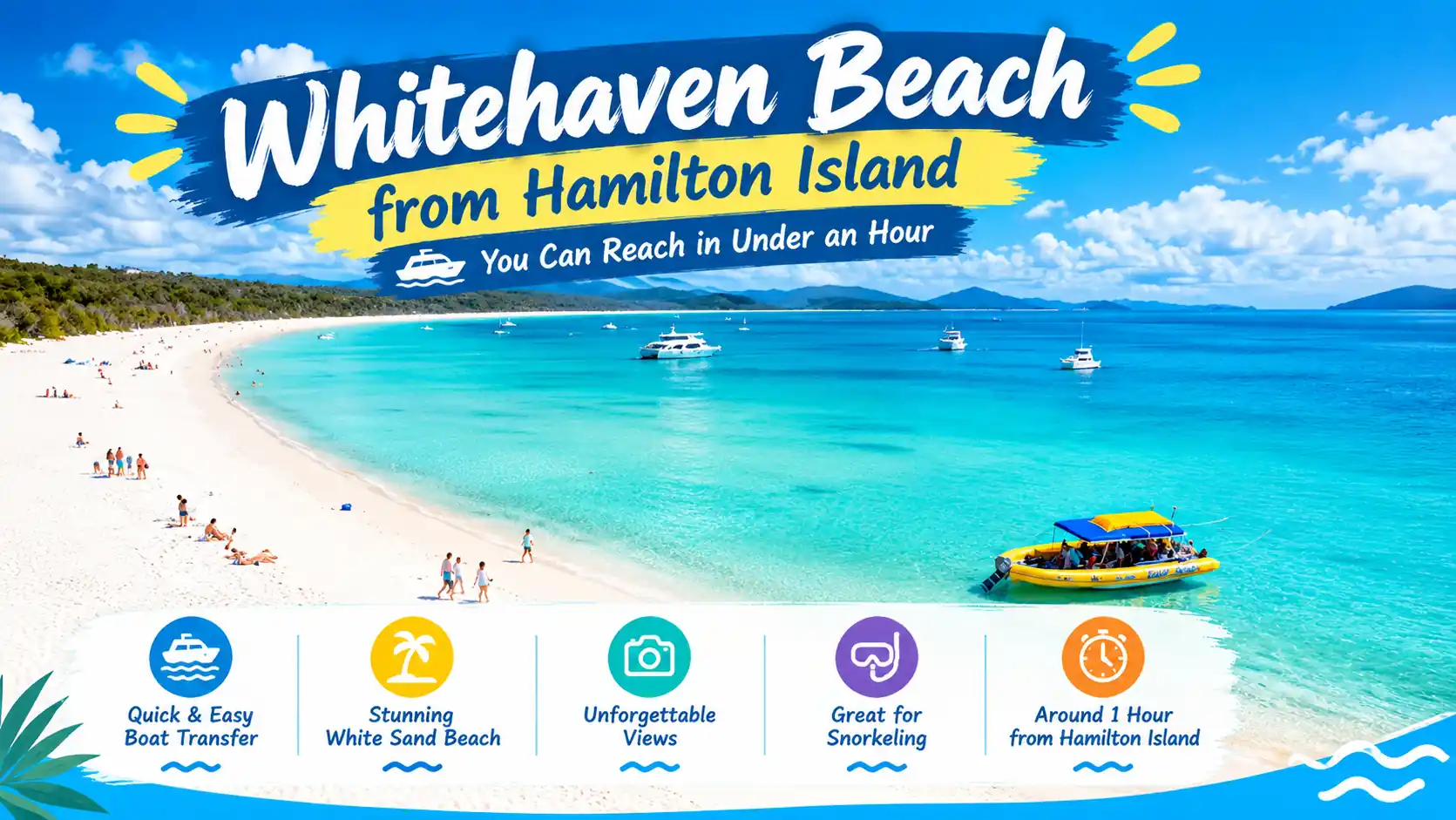
Whitehaven Beach itself stretches close to 7 kilometres along the western side of Whitsunday Island. Hill Inlet sits at the far northern point of that stretch, separated from the main swimming beach by a headland and a short walking track.
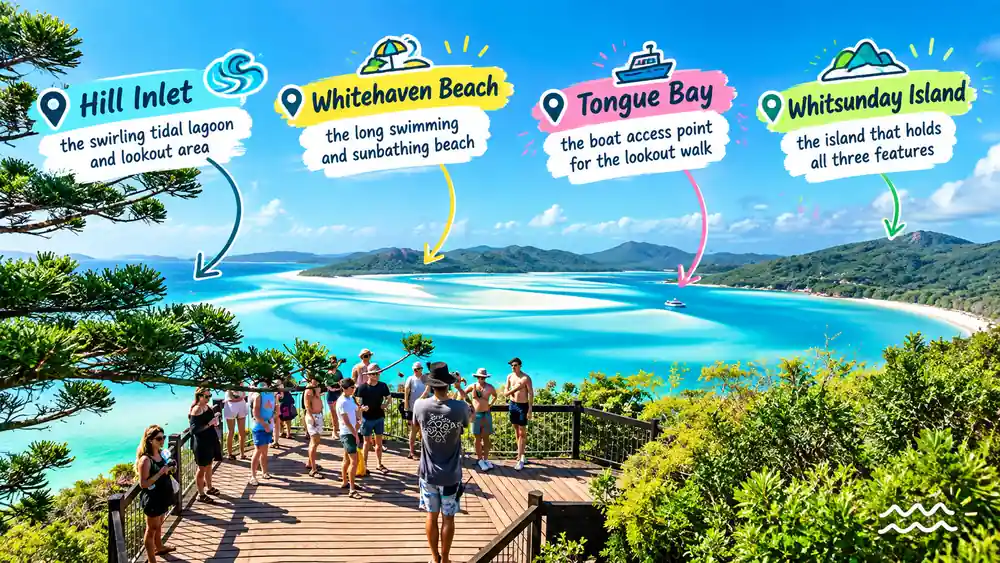
- Hill Inlet: the swirling tidal lagoon and lookout area
- Whitehaven Beach: the long swimming and sunbathing beach
- Tongue Bay: the boat access point for the lookout walk
- Whitsunday Island: the island that holds all three features
Where Is Hill Inlet Whitehaven Beach?
Whitsunday Island sits inside the Whitsunday Islands, a group of 74 islands off the central Queensland coast. Hill Inlet marks the northern tip of the island, roughly opposite Tongue Bay, inside the protected waters of Whitsunday Islands National Park.
Airlie Beach on the mainland acts as the main gateway for almost every visitor. Boats and seaplanes leave from Airlie Beach or nearby Hamilton Island, cross open water for around 30 to 45 minutes depending on vessel speed, then anchor near Tongue Bay or the southern end of Whitehaven Beach.
No roads, bridges, or regular ferries connect Whitsunday Island to the mainland for casual day visitors. Every trip here depends on some form of boat, whether that’s a fast catamaran, a sailing yacht, or a private charter.
The area falls under Queensland Parks and Wildlife Service management, which keeps the island undeveloped and protects the surrounding reef habitat from permanent structures.
How to Get to Hill Inlet
Day trips from Airlie Beach cover most visitor needs, and operators run a wide range of vessel types. A short, informative comparison helps before choosing which option fits your budget and time frame.
| Transport Option | Travel Time | Typical Focus |
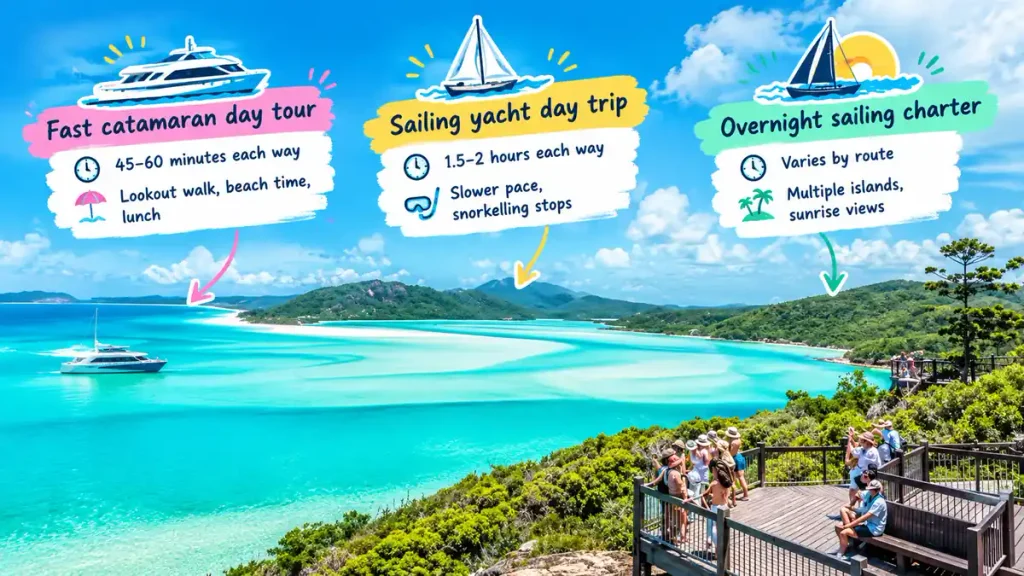
| Fast catamaran day tour | 45–60 minutes each way | Lookout walk, beach time, lunch |
| Sailing yacht day trip | 1.5–2 hours each way | Slower pace, snorkelling stops |
| Overnight sailing charter | Varies by route | Multiple islands, sunrise views |
| Scenic flight or seaplane | 20–30 minutes flight | Aerial views, short beach stop |
| Private charter | Flexible | Custom timing, fewer crowds |
Most catamaran operators depart Airlie Beach early morning and return by mid to late afternoon. Booking through a licensed tour operator remains the simplest option for travellers without their own boat or sailing licence.
Getting from the anchor point to the lookout itself involves a short tender ride to shore, followed by the walking track described below. Crew members on most tours guide the group and set a return time, so watches and phone timers matter on the island.
Consider these points before booking a Hill Inlet tour:
- Confirm the itinerary specifically includes the Hill Inlet lookout walk, not just Whitehaven Beach
- Check whether lunch, snorkel gear, and stinger suits are included in the price
- Ask about group size, since smaller boats often reach the lookout with fewer crowds
- Look at departure times, since early tours usually beat the tour-boat rush
Hill Inlet Lookout
The walking track to Hill Inlet Lookout starts from Tongue Bay on the northern side of the point. Most references list the return distance at around 1.3 kilometres, with a moderate but manageable climb through coastal forest.
Wooden stairs and a raised boardwalk cover much of the route, leading up to several viewing platforms at different heights. The walk typically takes 30 to 45 minutes round trip, including time to stop and take photos along the way.
Here’s what the walk involves before you commit your energy to it.
| Track Detail | Information |
| Distance (return) | Approximately 1.3 km |
| Difficulty | Moderate, grade 3 |
| Surface | Boardwalk, stairs, natural track |
| Time needed | 30–45 minutes |
| Wheelchair access | Not currently available |
Reaching the top platform rewards the climb with a sweeping view over the swirling sandbanks below. Lower platforms exist along the track too, so travellers who can’t manage the full climb still get a decent vantage point partway up.
How Long Does the Hill Inlet Lookout Walk Take?
The Hill Inlet lookout walk covers roughly 1.3 kilometres return from Tongue Bay and takes most visitors between 30 and 45 minutes, including short stops at the viewing platforms along the track.
Crowds build fast once several tour boats land within the same window. Arriving on an early departure, or visiting on a tour that times its landing outside peak hours, gives a noticeably quieter view at the top.
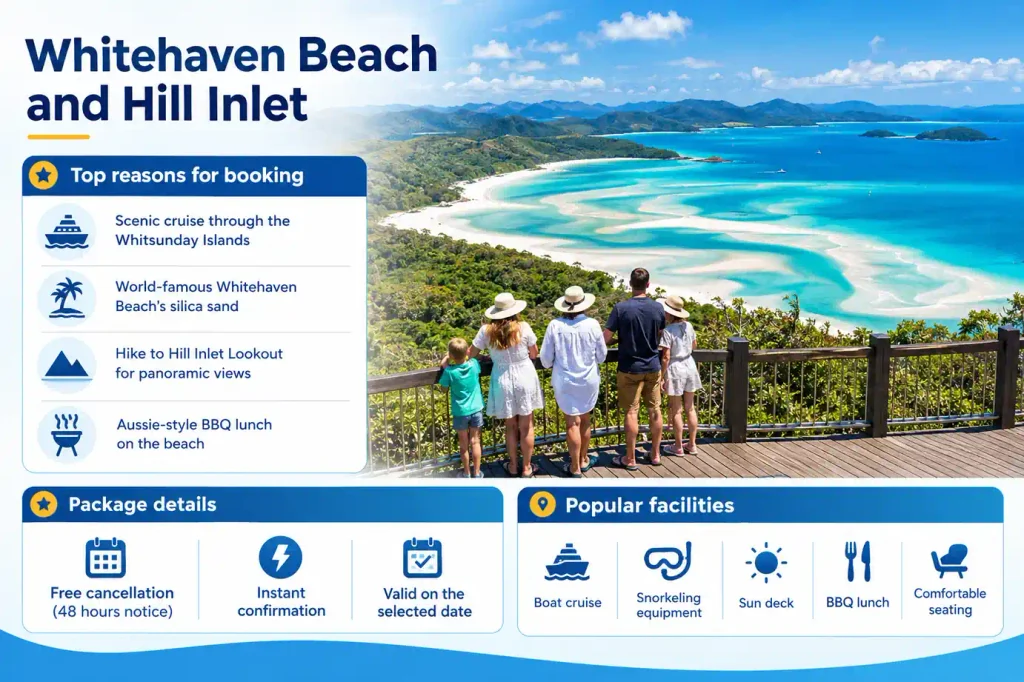
Whitehaven Beach deserves more than a rushed visit. Take your time exploring the beach, walk to Hill Inlet Lookout, and soak up the Whitsundays at your own pace.
Best Time to Visit Hill Inlet
Tide levels shape the entire Hill Inlet experience more than any other single factor. Mid to low tide generally exposes more of the pale sandbanks, which creates the strong swirl contrast seen in famous photographs.
High tide covers more of the sand with water, softening the pattern but still producing a calm, glassy scene. Neither extreme is wrong exactly, but photographers usually chase the mid-tide window for maximum contrast between sand and water.
Dry season, from around May to September, brings calmer winds, lower humidity, and generally clearer skies across the Whitsundays. Tourism and Events Queensland lists the cooler months as the region’s most reliable stretch for outdoor activity and photography.
This quick seasonal breakdown helps with timing your trip around weather and crowds.
| Season | Months | Conditions | Crowd Levels |
| Dry season | May – September | Cooler, clearer, less humid | Higher, peak tourist months |
| Shoulder season | March–April, October | Warm, occasional rain | Moderate |
| Wet season | November – February | Hot, humid, storm risk | Lower on rainy days |
Early morning tours often land at Tongue Bay before the midday heat and before most boats arrive. Late afternoon light can also work well, though fewer operators run departures timed for that window.
What to Do at Hill Inlet
Photography draws most visitors to this stretch of coastline, and the lookout platforms exist mainly for that purpose. Wide-angle shots from the top capture the full swirl, while a longer lens picks out individual channel patterns closer to the water.
Walking down toward the sandbanks at low tide lets visitors get closer to the swirl pattern rather than only viewing it from above. Guides on most tours will point out where it’s safe to walk without disturbing the shifting sand or wandering into deeper channels.
Beyond photography, a handful of other activities suit the area:
- Bushwalking the full lookout track at your own pace
- Wading in the shallow inlet edges during a rising tide
- Watching for wildlife, including sea eagles and the occasional turtle
- Kayaking across parts of the inlet on tours that offer it
- Combining the lookout visit with beach time at Whitehaven’s northern end
Scenic flights offer a completely different angle on the same landscape. Seaplanes and helicopters departing from Airlie Beach or Hamilton Island circle over the inlet, showing the full swirl pattern from directly above in a way no ground-level photo can match.

If Whitehaven Beach is on your Whitsundays list, make a full day of it. Cruise across the islands, wander through Hill Inlet, and enjoy the scenery along the way. It’s an easy way to experience more in one trip.
Can You Swim at Hill Inlet?
Hill Inlet itself functions as a viewing spot rather than a dedicated swimming beach. Shallow water, shifting sandbanks, and strong tidal currents through the narrow channels make casual swimming impractical in most conditions.
Wading in ankle- to knee-deep water near the inlet’s edge is common during calmer, rising tides. Swimming laps or floating around, the way you might at a typical beach, doesn’t really work here because the water depth and current change constantly.
Is It Safe to Swim at Hill Inlet?
Swimming directly inside Hill Inlet is not recommended due to shifting currents and shallow, changeable sandbanks. Visitors wanting an actual swim should head to the main stretch of Whitehaven Beach, particularly the calmer southern section.
Marine stingers add another layer of caution across the whole region. Stinger season generally runs from around October through May, and jellyfish such as box jellyfish and Irukandji can appear in Whitsundays waters during that window. Most licensed tours supply lightweight stinger suits during these months, and wearing one is the standard, sensible precaution.
The Great Barrier Reef Marine Park Authority advises checking current conditions and following crew guidance on any tour before entering the water, since local conditions can shift with weather and tide.
Hill Inlet vs Whitehaven Beach
Confusing these two names is easy, and it’s the single most common mix-up in trip planning for this part of the Whitsundays. A short comparison clears up which feature does what.
| Feature | Hill Inlet | Whitehaven Beach |
| Type | Tidal lagoon and lookout | 7km swimming beach |
| Main activity | Photography, walking | Swimming, sunbathing |
| Access | Tongue Bay track | Boat landing along the shore |
| Best tide | Mid to low tide | High tide, calm conditions |
| Swimming | Not recommended | Popular, especially south end |
Whitehaven Beach itself splits roughly into northern and southern sections. The southern end tends to offer calmer, more sheltered water, making it the more practical spot for an actual swim after visiting the lookout.
Booking a tour that includes both experiences gives the fullest picture of the area. Missing one or the other means either skipping the famous swirl view or missing out on the long stretch of swimmable white sand further south.
Tips for Visiting Hill Inlet
Planning makes a real difference on an island with no shops, no shade shelters beyond the forest track, and limited facilities. A few practical points cover most of what catches first-time visitors off guard.
- Check the tide chart before booking, since mid to low tide gives the strongest swirl contrast
- Wear sturdy, closed shoes for the boardwalk and stair sections
- Bring reef-safe sunscreen, since coverage on the track is limited
- Carry drinking water, as no shops exist on the island
- Pack a stinger suit or confirm your tour provides one during stinger season
- Charge your camera or phone fully, since the lookout is the main photo stop of most trips
- Arrive on an early departure for a quieter platform and softer light
Basic composting toilets exist near the national park camping area at Whitehaven Beach, but nothing similar sits directly at the Hill Inlet lookout itself. Planning bathroom stops before the walk avoids an awkward wait.
Two Sights, One Island: Final Notes
Hill Inlet Whitehaven Beach combines two distinct experiences on the same island: a swirling tidal lookout and a long, swimmable stretch of silica sand further south. Location and access both run through Tongue Bay or Airlie Beach departures, with no independent road access. The lookout walk covers about 1.3 kilometres and rewards a moderate climb with sweeping views. Timing around tide and dry season months shapes both the photos and the crowd levels. Photography, wading, and occasional kayaking fill most visits, while actual swimming belongs down at Whitehaven Beach instead of inside the inlet. Knowing the difference between the two features, packing sensibly, and checking current conditions rounds out a trip that consistently lives up to the photos.
Hill Inlet Whitehaven Beach FAQs
Is Hill Inlet the same as Whitehaven Beach?
No. Hill Inlet is the tidal lagoon and lookout at the northern tip of Whitsunday Island, while Whitehaven Beach is the separate 7-kilometre swimming beach that runs along the same island further south.
How do you get to Hill Inlet?
Most visitors reach Hill Inlet on a boat tour departing from Airlie Beach or Hamilton Island, anchoring near Tongue Bay before a short tender ride to shore and a walking track to the lookout platforms.
How long is the walk to Hill Inlet Lookout?
The return walk covers approximately 1.3 kilometres from Tongue Bay and takes most visitors between 30 and 45 minutes, including stops at the viewing platforms along the boardwalk and stairs.
Can you swim at Hill Inlet?
Swimming directly inside Hill Inlet is not recommended because of shifting sandbanks and tidal currents. Visitors wanting to swim should head to Whitehaven Beach itself, particularly the calmer southern section.
What is the best time to visit Hill Inlet?
Mid to low tide during the dry season, roughly May through September, generally gives the clearest skies and the strongest swirl contrast between the white sand and turquoise water.
Is there stinger season at Hill Inlet Whitehaven Beach?
Yes. Stinger season generally runs from around October through May across the Whitsundays, and most tours provide lightweight stinger suits for guests entering the water during these months.





3 Responses