

The best time to visit Whitehaven Beach is June to October, when dry-season weather brings clear skies, low humidity, and calm seas for the boat trip out. These winter months also fall outside the peak stinger season, so swimming feels safer and more relaxing.
Water temperatures stay comfortable, sitting around 22 to 24 degrees Celsius, and visibility is at its best for spotting the turquoise swirl at Hill Inlet. September and October are still among the best times to visit Whitehaven Beach, with warmer air temperatures and low stinger numbers, though it’s wise to check current advisories before you swim.
Whitehaven Beach Weather (Best Time to Visit Whitehaven Beach)
Whitehaven Beach has a tropical climate with two real seasons instead of four. Air temperatures average around 21°C on winter nights and climb to 31°C on summer afternoons, while sea temperatures rarely drop below 23°C even in July. According to the Bureau of Meteorology, Australia’s national weather authority, the Whitsundays sit inside the official tropical cyclone zone, with cyclone season running from November through April.
Rainfall follows the same pattern. Wet season months bring short, heavy afternoon storms, while dry season months can go weeks without a drop. A few quick facts to keep in mind:
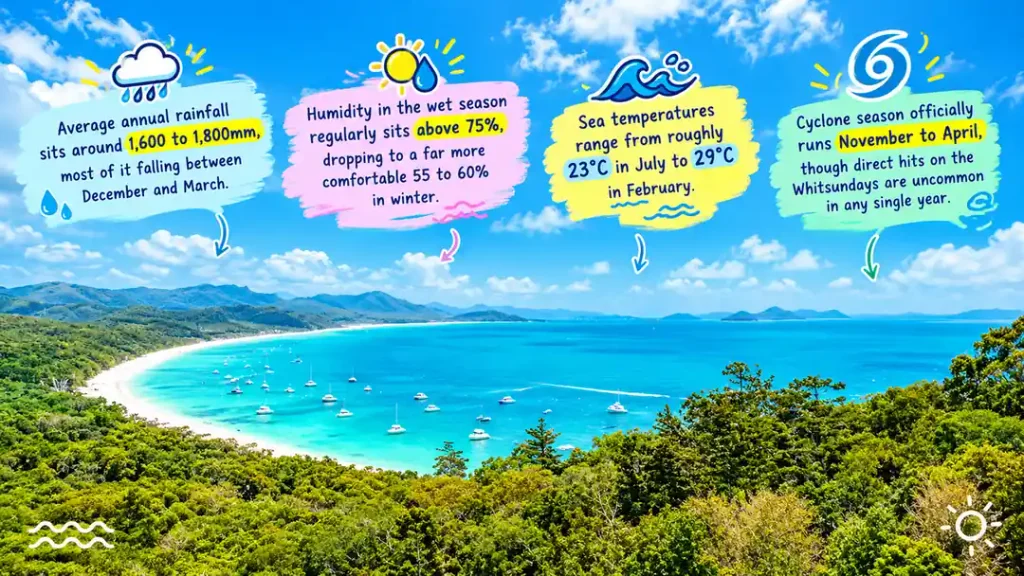
- Average annual rainfall sits around 1,600 to 1,800mm, most of it falling between December and March.
- Humidity in the wet season regularly sits above 75%, dropping to a far more comfortable 55 to 60% in winter.
- Sea temperatures range from roughly 23°C in July to 29°C in February.
- Cyclone season officially runs November to April, though direct hits on the Whitsundays are uncommon in any single year.
Sun exposure matters as much as rainfall here. The UV index stays high year-round, so reef-safe sunscreen, a hat, and a shirt for the boat ride are worth packing whichever month you choose.
What Is the Best Time to Visit Whitehaven Beach?
The dry season, from June to October, gives the clearest skies, calmer seas, and the lowest stinger risk of the year. September and October usually bring the best visibility for photographing the swirling sands at Hill Inlet. December through March, by contrast, brings heat, humidity, and a real chance of tropical downpours.
Whitehaven Beach Weather by Month
Monthly conditions swing more than most visitors expect, and picking the right month shapes everything from crowd size to swimming comfort. The table below breaks the year down season by season.
| Month | Season | Avg. Temp | Rain Days (approx.) | Notes |
| December to February | Wet, Summer | 25 to 31°C | 15 to 18 | Hot, humid, stinger season underway |
| March to May | Shoulder | 23 to 29°C | 8 to 12 | Rain easing, water still warm |
| June to August | Dry, Winter | 21 to 26°C | 3 to 5 | Clearest skies, whale season |
| September to October | Late Dry | 22 to 27°C | 3 to 6 | Best visibility, low humidity |
| November | Early Wet | 24 to 29°C | 6 to 9 | Stinger season begins, fewer crowds |
Rain-day figures are approximate and can shift year to year, so check a current forecast close to your travel dates. Families with young children often lean toward June to August for the cooler air and stinger-free water, while photographers tend to chase September and October for the sharpest colour contrast at Hill Inlet.
Whitehaven Beach in Summer
Summer in the Whitsundays runs from December through February, and it comes with real heat. Daytime temperatures regularly hit the low 30s, humidity climbs, and afternoon thunderstorms are common rather than occasional. This is also peak stinger season, so swimming outside protected areas means wearing a stinger suit.
On the upside, summer covers the Christmas and New Year school holidays, so accommodation and tours book out fast despite the weather. Sea temperatures peak around this time too, sitting near 29°C, which some travellers genuinely prefer over cooler winter water. A few things stand out about visiting in summer:
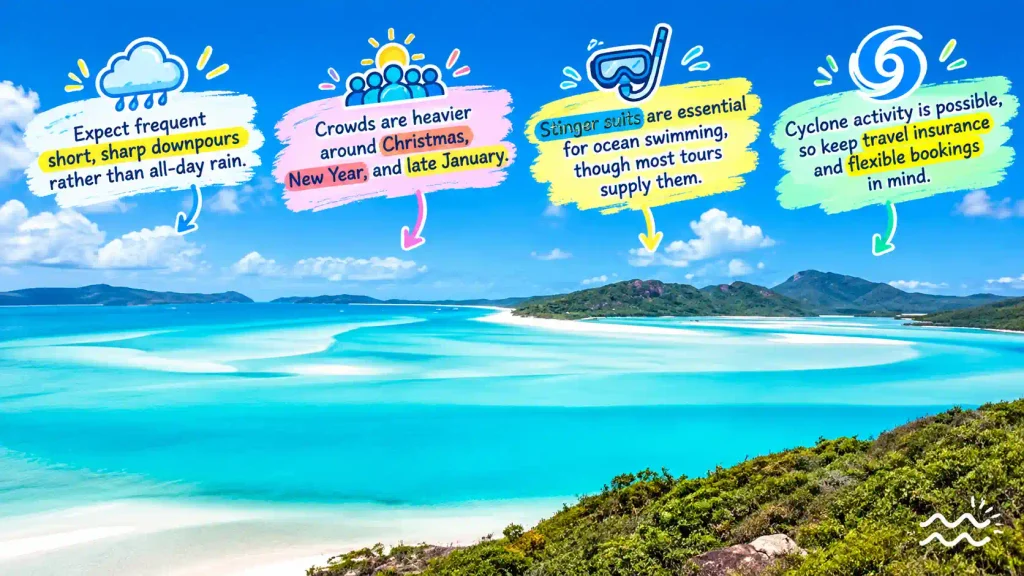
- Expect frequent short, sharp downpours rather than all-day rain.
- Crowds are heavier around Christmas, New Year, and late January.
- Stinger suits are essential for ocean swimming, though most tours supply them.
- Cyclone activity is possible, so keep travel insurance and flexible bookings in mind.
Summer does have a quieter side worth mentioning: fewer overseas visitors travel during the hottest months, so a few operators run smaller groups.
Whitehaven Beach in Winter
Winter, from June through August, is when most travel guides and locals point people toward. Daytime temperatures hover in a comfortable 22 to 26°C range, rainfall drops sharply, and humidity feels far lighter than the wet season. This is also stinger-free water for most of the season, which makes a genuine difference for swimmers.
Winter overlaps with the humpback whale migration, adding another reason the season stays busy despite cooler evenings. Expect these conditions if you travel in winter:
- Cooler nights, sometimes dropping to the high teens in July.
- Calm seas, making boat transfers to Whitehaven Beach noticeably smoother.
- Peak tourist season, so book tours and accommodation well ahead.
- Excellent visibility for snorkelling and Hill Inlet photography.
The trade-off is competition. School holidays, particularly late June and July, push boat availability and accommodation prices upward across Airlie Beach and Hamilton Island.
Whitehaven Beach Stinger Season
Stinger season runs roughly from late October through May, covering the warmer half of the year. During these months, box jellyfish and the much smaller Irukandji can appear in Whitsundays waters, including around Whitehaven Beach. Neither is common on the open beach itself, but tour operators and national park signage still treat the whole season with caution.
The standard protection is a full-body stinger suit, a lightweight lycra layer that most day tours and overnight charters supply free of charge or for a small hire fee. The Great Barrier Reef Marine Park Authority advises swimmers throughout the marine park to wear protective clothing during stinger season and to follow posted warnings at any beach. Outside the season, roughly June to mid-October, encounters are rare enough that most swimmers skip the suit entirely.
Is Whitehaven Beach Safe During Stinger Season?
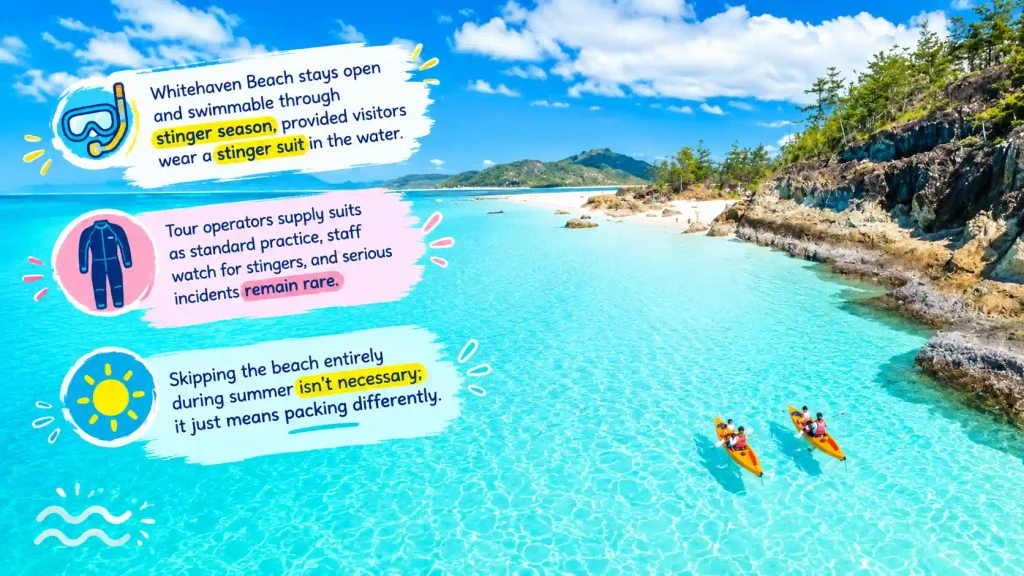
Whitehaven Beach stays open and swimmable through stinger season, provided visitors wear a stinger suit in the water. Tour operators supply suits as standard practice, staff watch for stingers, and serious incidents remain rare. Skipping the beach entirely during summer isn’t necessary; it just means packing differently.
Irukandji jellyfish measure only around a centimetre across, making them almost impossible to spot before a sting occurs. That’s why full-body coverage, not spot-checking the water, remains the standard safety approach along this coastline during these months.
Whitehaven Beach Tides
Tides around Whitehaven Beach can swing several metres between high and low, and that swing changes how the beach and Hill Inlet actually look. At high tide, water covers most of the sandbanks near the inlet, leaving a fairly ordinary-looking bay. As the tide drops, the famous swirling patterns of white sand and turquoise water gradually appear.
Here’s a quick guide to what each tide stage means for your visit, worth checking before you plan your day.
| Tide Stage | What You’ll See | Best For |
| High tide | Sandbanks mostly submerged | Swimming, paddleboarding |
| Mid, dropping tide | Sand patterns starting to emerge | Photography, walking the shoreline |
| Low tide | Full swirling sand and colour contrast | Hill Inlet views, best photos |
| Very low tide | Sand exposed, channels narrow | Walking, exploring tidal flats |
Tide times shift daily and vary by several hours across a single week, so cross-check a current tide chart or ask your tour operator rather than relying on a fixed schedule. Whitsundays tides follow a semi-diurnal pattern, meaning two high tides and two low tides occur roughly every 24 hours, which gives most day trips at least one workable window regardless of what time the boat departs.
Best Time to Visit Hill Inlet
Hill Inlet sits at the northern end of Whitehaven Beach, reached by a short uphill walk from Tongue Bay through a rainforest boardwalk. The swirling sand pattern that makes this spot famous depends almost entirely on tide, not time of year, so timing the visit matters more than picking a particular month.
Visiting on a mid- to low-tide, dropping tide gives the clearest view of the sand ribbons and colour contrast. Morning visits also tend to bring softer light and thinner crowds, since the lookout gets busiest between 10 am and 2 pm when most day-tour boats arrive together.
The walk runs about 20 to 30 minutes each way on a formed boardwalk and gravel track, suitable for most fitness levels, with three viewing platforms along the way. Cloudy weather flattens the colours, so a sunny forecast matters here almost as much as the tide.
Is Whitehaven Beach Better at High Tide or Low Tide?
Whitehaven Beach and Hill Inlet look their best on a tide that’s dropping from high toward low. Full high tide hides most of the sandbanks, while a dropping or low tide reveals the swirling white sand against turquoise water that the area is known for.

Want to see more than just Whitehaven Beach? This full-day cruise pairs the famous sands with Hill Inlet and plenty of time to explore. It’s the kind of day you’ll be talking about long after the cruise ends.
Best Time of Day to Visit Whitehaven Beach
Morning generally offers the calmest conditions at Whitehaven Beach. Wind tends to pick up through the afternoon, and boat trips scheduled early avoid the choppier seas that can develop later in the day. Most day tours depart Airlie Beach between 7:30 am and 9 am for this exact reason.
Late afternoon has its own appeal, with softer light and the chance of a striking sunset from the cliff trail or lookout points. A rough guide to the day:
- Early morning (7:00 to 9:30 am): calmest seas, best light, smallest crowds.
- Midday (10am to 2 pm): busiest window, most tour boats overlap here.
- Late afternoon (3:30 to 5:30 pm): softer light, wind sometimes easing again.
Wind speed, not just cloud cover, decides how enjoyable the crossing feels. Southeasterly trade winds tend to build through the day, so an early departure generally means a smoother ride out and a smoother ride back.
Whitehaven Beach Tours
No public ferry runs directly to Whitehaven Beach, so almost every visitor arrives by tour boat, private charter, or scenic flight from Airlie Beach or Hamilton Island. Options range from a few hours on the sand to multi-day sailing trips around the wider Whitsunday Islands.
The table below compares the main ways to reach and experience the beach.
| Tour Type | Duration | Highlights |
| Half-day cruise | 4 to 5 hours | Beach time, quick swim, basic snorkel stop |
| Full-day cruise | 7 to 9 hours | Beach, Hill Inlet lookout, lunch, snorkelling |
| Overnight sailing | 2 to 3 days | Multiple islands, sunset and sunrise at anchor |
| Scenic flight | 1 to 1.5 hours | Aerial views of Hill Inlet, no time on sand |
| Camping permit | Self-planned | Basic national park sites, fully self-sufficient |
Camping directly on Whitehaven Beach requires a permit through the Queensland Parks and Wildlife Service, which manages the Whitsunday Islands National Park and sets site limits to protect the dunes and vegetation. Tour prices and permit fees change with the season and operator, so confirm current rates directly with the tour company or the national park booking system before travelling.
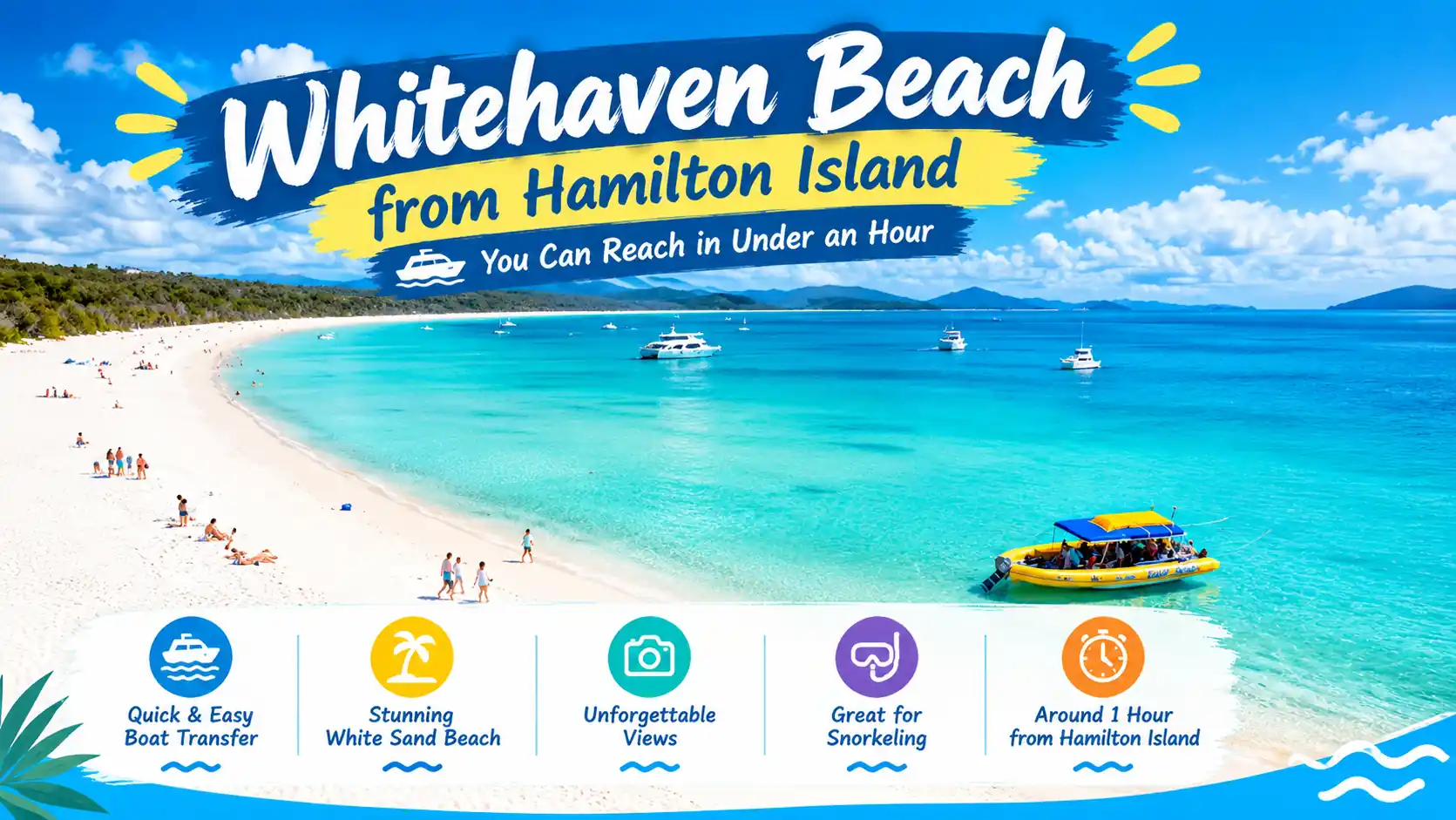
Hamilton Island offers a shorter crossing than Airlie Beach for travellers already staying on the island. Whichever departure point you choose, ask the operator how they plan the day around the tide, since the better ones adjust their Hill Inlet stop rather than running a fixed schedule.
Booking ahead matters more during winter and school holidays, when demand for boats to Whitehaven Beach runs highest.
Bottom Line: When Whitehaven Beach Is at Its Best
Whitehaven Beach rewards a bit of planning more than most beaches do. Dry season months bring the calmest weather, while summer trades comfort for warmer water and bigger crowds. Checking the monthly weather pattern, watching the tide chart, and picking a dropping tide for Hill Inlet all shape how the swirling sands actually look on the day. Stinger season doesn’t rule out swimming; it just means packing a suit, and mornings generally beat midday for calmer seas and thinner crowds. Choosing the right tour, whether a half-day cruise or an overnight sail, rounds out a trip that depends as much on timing as it does on the destination itself.
Best Time to Visit Whitehaven Beach FAQs
What is the best time to visit Whitehaven Beach?
June through October, during the dry season, gives the clearest skies, calmest seas, and lowest stinger risk of the year.
What is the best month to visit Whitehaven Beach?
September and October generally offer the best combination of low rainfall, clear water, and strong visibility at Hill Inlet.
What is the weather like at Whitehaven Beach?
Whitehaven Beach has a tropical climate with a dry season from roughly June to October and a warmer, wetter season from November to April.
When is stinger season at Whitehaven Beach?
Stinger season runs from late October through May, when visitors are advised to wear a stinger suit while swimming.






One Response