

Whitehaven Beach weather stays warm all year, with temperatures between 21°C in winter and 30°C in summer. The dry season runs from May to September, bringing sunny skies, low humidity, and steady southeast winds that are perfect for photos and calm water crossings. From November to April, the wet season takes over, with higher humidity, warmer air, and short but heavy bursts of rain. Rainfall totals around 1712mm a year, though most of it falls during the summer months rather than winter.
Wind matters just as much as temperature here, since strong gusts can stir up the sand at Hill Inlet and make the water choppy by afternoon. Checking Whitehaven Beach weather before you travel helps you pick the right month, pack the right clothes, and plan your beach day around calm morning conditions instead of afternoon squalls.
Whitehaven Beach Weather by Month
Hamilton Island Airport, roughly 20 kilometres from Whitehaven Beach, has recorded official climate data since 1985, giving the clearest month-by-month picture available for the wider Whitsundays. The table below combines Bureau of Meteorology air-temperature and rainfall averages with regional water-temperature data, since ocean conditions matter just as much as the sky when planning a beach day. Numbers reflect long-term averages rather than exact daily forecasts, so always check a live forecast close to travel dates.
The chart below lines up air temperature, water temperature, and rainfall side by side, making it easy to spot the driest, warmest, and calmest stretches at a glance.
| Month | Avg Max (°C) | Avg Min (°C) | Water Temp (°C) | Rainfall (mm) |
| January | 30.4 | 24.9 | 28.0 | 281.4 |
| February | 30.1 | 24.9 | 28.8 | 329.3 |
| March | 28.8 | 24.0 | 27.0 | 270.9 |
| April | 27.1 | 22.6 | 26.0 | 192.1 |
| May | 24.8 | 20.8 | 24.0 | 122.1 |
| June | 22.4 | 18.4 | 22.0 | 80.5 |
| July | 21.9 | 17.6 | 21.0 | 64.8 |
| August | 22.9 | 18.1 | 23.0 | 39.6 |
| September | 25.4 | 19.8 | 26.0 | 25.8 |
| October | 27.6 | 21.8 | 26.0 | 38.3 |
| November | 29.1 | 23.3 | 27.0 | 90.2 |
| December | 30.0 | 24.4 | 28.0 | 181.9 |
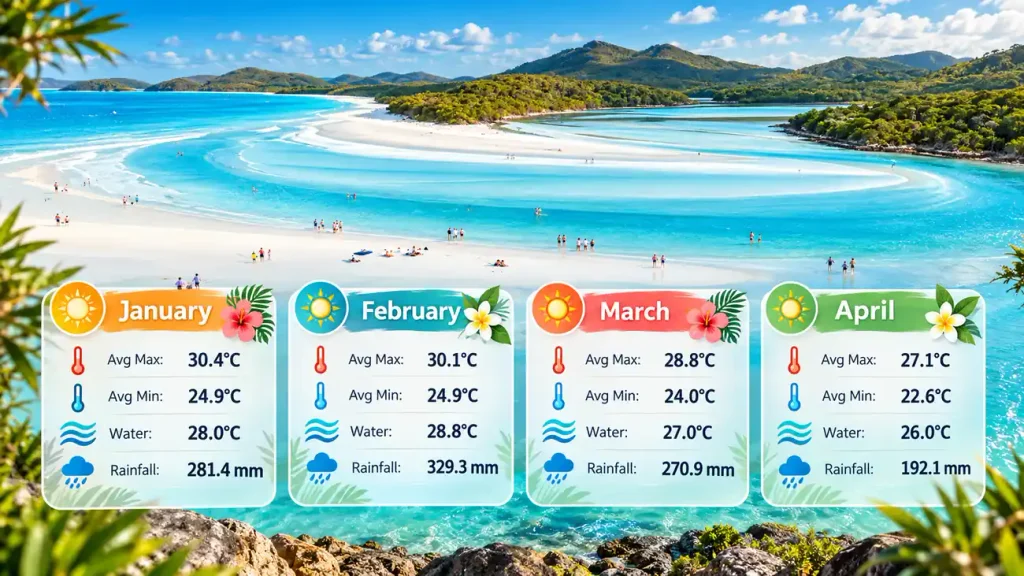
A few patterns stand out immediately. Air temperature barely dips below 22°C even in the coolest month, and the ocean never turns cold by most standards. Rainfall is the variable that moves the most, swinging from under 30mm in September to more than 300mm in February. That single fact shapes almost every other section below.
Whitehaven Beach Weather Snapshot
Whitehaven Beach stays warm all year, with air temperatures rarely dropping under 18°C even in July. Rainfall and wind vary far more than temperature does, so the best conditions cluster around the dry season from April to September, according to Bureau of Meteorology records for Hamilton Island, the closest official weather station to the beach.
Whitehaven Beach Temperature
Temperature at Whitehaven Beach stays warm across all twelve months, typical for a location this close to the Tropic of Capricorn. Daytime highs hover between 22°C and 30°C year-round, while overnight lows rarely fall under 17°C, even during the cooler months of June and July.
January holds the highest average maximum temperature on record, at 30.4°C, closely followed by December and February. July sits at the opposite end, with an average maximum of 21.9°C and an average minimum near 17.6°C. That’s a comfortable range for sightseeing, though early mornings on the water can feel cooler once the wind picks up.
- Peak heat: December through February, with highs regularly touching 30°C
- Coolest stretch: June through August, highs around 22°C
- Smallest daily swing: wet season months, when humidity keeps nights warm
- Largest daily swing: dry season months, when clear skies let nights cool faster
How Hot Does Whitehaven Beach Get?
Whitehaven Beach reaches an average daily high of about 30°C during December and January, the hottest points of the year. Humidity adds to the heat during these months, so the heat index often runs higher than the thermometer alone suggests. Reef-safe sunscreen and shade breaks matter more in summer than at any other time of year.
Whitehaven Beach Rainfall
Rainfall drives most of the seasonal contrast at Whitehaven Beach. The wet season runs roughly from December through March, when monsoon troughs push moisture down from the tropics and afternoon storms become common. February is the wettest month on record, averaging 329.3mm, with rain falling on around 14 days of the month.
Rainfall drops sharply once the dry season sets in around April. By September, the driest month, average rainfall falls to just 25.8mm across roughly three rain days. That eight-month stretch from April to November is when most tour operators, tracked by regional bodies including Tourism and Events Queensland, report their highest booking numbers, since dry skies make reef trips and beach landings far more predictable.
The table below splits rainfall into wet-season and dry-season halves, showing total rainfall and average rain days per month so the size of the seasonal swing is easy to see.
| Season | Months | Total Rainfall | Avg per Month | Avg Rain Days/Month |
| Wet Season | December–March | 1,063.5mm | 265.9mm | 12.2 |
| Dry Season | April–November | 653.4mm | 81.7mm | 7.2 |
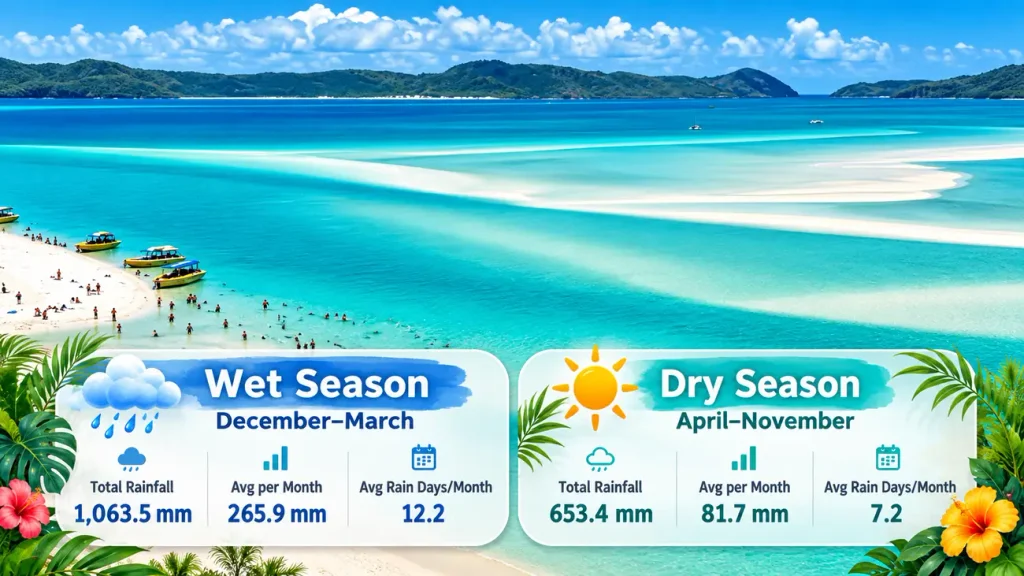
The gap is stark. Wet-season months deliver more than three times the rainfall of dry-season months, and almost twice as many rainy days. None of this means avoiding the wet season entirely, since storms are usually short and afternoon-focused, but it does mean packing a light rain jacket for trips between December and March.
Whitehaven Beach Water Temperature
Water temperature at Whitehaven Beach stays swimmable in every month of the year, a rare feature for an Australian beach. The ocean peaks around 28.8°C in February and dips to its coolest point, about 21°C, in July. Even at its coolest, the water sits well within comfortable swimming range for most visitors.
Warm water year-round also means marine stingers are a genuine consideration rather than a minor footnote. According to the Great Barrier Reef Marine Park Authority and regional tour operators, stinger season across the Whitsundays runs from late October through May, covering box jellyfish and the smaller, more dangerous Irukandji. Most boat tours provide full-body stinger suits during this window, and Whitehaven Beach itself has no permanent lifeguard patrol, so caution matters more than usual.
Can You Swim At Whitehaven Beach All Year?
Yes, water temperature at Whitehaven Beach never drops low enough to rule out swimming, staying between 21°C and 29°C across the year. The bigger factor is stinger season, which runs October to May, when a stinger suit is strongly recommended rather than optional.
Whitehaven Beach Wind
Wind shapes the Whitehaven Beach experience more than most visitors expect, since the beach sits fully exposed with no built shelter. Southeast trade winds dominate for most of the year, generally strongest from March through June and calmer from September through January.
- Windiest months: April through June, averaging 25–26 km/h at 9 am
- Calmest months: October through January, averaging 19–20 km/h at 9 am
- Prevailing direction: southeast trade winds for most of the year
- Wind effect: choppier boat transfers and drifting sand across the dunes on gustier days
The table below shows average wind speeds recorded at 9 am and 3 pm across the year, both measured at the nearby Hamilton Island weather station.
| Month | 9 am Wind (km/h) | 3 pm Wind (km/h) |
| January | 20.0 | 23.2 |
| February | 21.1 | 23.8 |
| March | 24.7 | 26.5 |
| April | 25.9 | 26.5 |
| May | 25.3 | 25.0 |
| June | 26.1 | 24.5 |
| July | 23.9 | 22.4 |
| August | 22.6 | 22.8 |
| September | 20.4 | 23.4 |
| October | 19.0 | 22.8 |
| November | 19.3 | 23.3 |
| December | 19.8 | 23.7 |
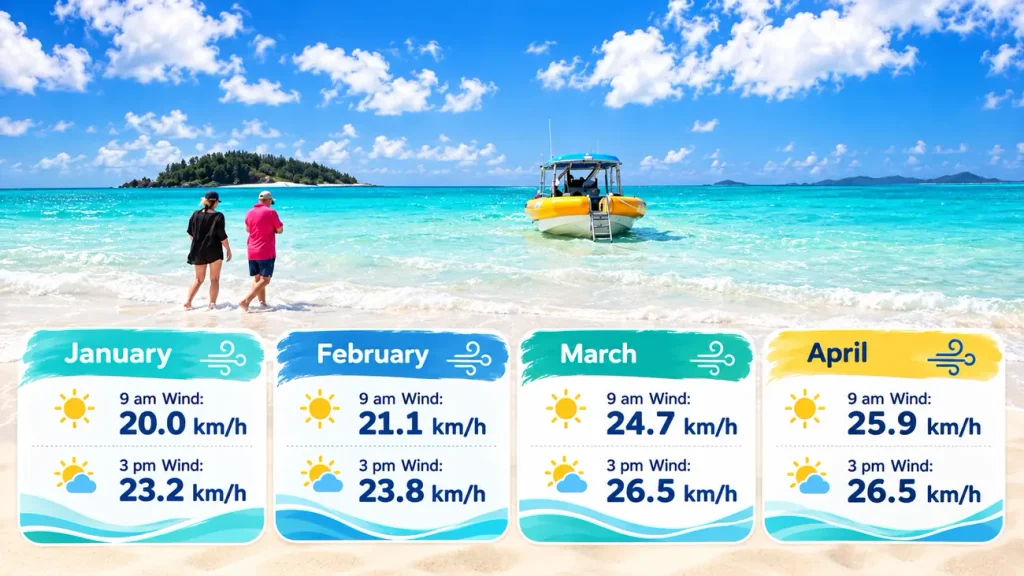
Strong trade winds during autumn and winter help keep humidity down and skies clear, part of why those months rank among the most popular for reef trips. Gusty days can make the crossing from Airlie Beach or Hamilton Island choppier, so anyone prone to seasickness may prefer the calmer wind window from October to January.
Whitehaven Beach Weather in Summer
Summer at Whitehaven Beach runs from December through February, the hottest, wettest, and most humid stretch of the year. Daytime highs regularly reach 29–30°C, water temperature climbs to its yearly peak, and afternoon storms become a near-daily possibility.
Peak stinger season and cyclone season both fall within these months, worth factoring into any summer booking. Australia’s official tropical cyclone season runs from November to April, and while the Whitsundays aren’t hit every year, tour operators monitor conditions closely during this window. Humidity sits at its highest, so afternoons can feel heavier than the thermometer alone suggests.
- Pros: warmest water, lush green scenery inland, fewer crowds on quieter beaches
- Cons: highest rainfall, highest stinger risk, possible cyclone disruptions
- Best move: book morning tours, since storms typically build in the afternoon
Whitehaven Beach Weather in Winter
Winter, spanning June through August, is widely considered the most comfortable season for visiting Whitehaven Beach. Rainfall drops to its lowest point of the year, humidity eases off, and skies stay clear for long stretches at a time.
Daytime temperatures settle in the low-to-mid twenties, mild rather than cold, especially with the sun overhead for most of the day. Water temperature cools to around 21–23°C, still comfortable for swimming, though a rash vest helps on breezier days. Winter also brings whale-watching season, with humpbacks migrating through the Whitsundays from roughly June to September.
- Driest air of the year, minimal chance of rain disrupting a day trip
- Best underwater visibility for snorkelling and diving
- Cooler mornings and evenings, so pack a light layer for boat rides
- Peak tourist season, meaning earlier bookings are worth making
Whitehaven Beach Weather in Spring
Spring runs from September through November and edges out even winter as the single best window for many travellers. Rainfall stays low, particularly in September, which holds the record for the driest month of the year across the region.
Temperatures climb steadily through the season, moving from the low twenties in September toward the high twenties by November. Wind eases compared with the autumn peak, and stinger season hasn’t fully ramped up until closer to November, giving a short window of lower marine-stinger risk alongside dry skies.
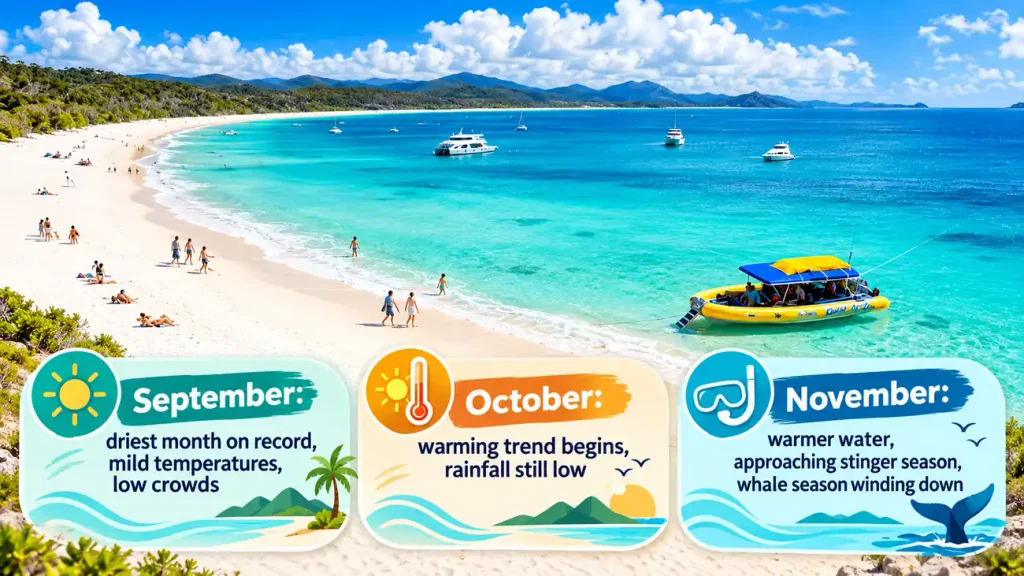
- September: driest month on record, mild temperatures, low crowds
- October: warming trend begins, rainfall still low
- November: warmer water, approaching stinger season, whale season winding down
Whitehaven Beach Weather in Autumn
Autumn covers March through May and marks the transition out of the wet season. March still carries wet-season leftovers, with rainfall well above 250mm on average, while May settles into much drier, cooler conditions.
Wind speeds peak during this season, particularly in April and May, as the southeast trade winds strengthen ahead of winter. Water temperature remains warm, generally between 24°C and 27°C, making autumn a solid choice for anyone who wants dry-season conditions without the peak-season crowds of July and August.
- March: still wet-season influenced, warmest lingering rain
- April: rainfall drops fast, winds pick up
- May: dry, breezy, comfortable temperatures, good underwater visibility
Whitehaven Beach Weather Forecast
Long-term averages are useful for planning months, but they can’t replace a short-term forecast once travel dates get closer. The Bureau of Meteorology publishes daily and seven-day forecasts for the Whitsundays region, including marine and wind forecasts relevant to boat transfers out to Whitehaven Beach.
Conditions can shift quickly this close to the coast, especially during the wet season, so checking a forecast 48 to 72 hours before departure gives the most reliable picture. Tour operators typically monitor swell, wind, and rain forecasts directly and will reschedule or adjust itineraries if conditions turn unsafe, so booking through an established operator adds a layer of built-in monitoring.
- Check the official Bureau of Meteorology forecast for Whitsundays coastal waters
- Look at wind and swell forecasts, not just rain, before a boat day
- Confirm cancellation and rescheduling policies with the tour operator
- Reconfirm the forecast again on the morning of departure
Timing Your Trip to Whitehaven Beach
Whitehaven Beach weather never gets truly cold, but it does swing enough between seasons to shape how your trip actually feels. Warm water, mild winters, and hot summers mean there’s no wrong time of year to visit, only a better or worse fit for what you want to do. If dry skies, calm seas, and clear underwater visibility matter most, aim for the winter or spring months between June and November. If you don’t mind afternoon storms in exchange for warmer water and thinner crowds, summer still has its own appeal. Whatever month you choose, checking a short-term forecast close to your travel date, alongside the long-term averages in this guide, is the simplest way to pack right, book smart, and make the most of a day on the sand.
Whitehaven Beach Weather FAQs
What is the weather like at Whitehaven Beach?
Whitehaven Beach has a warm, subtropical climate with average highs between 22°C and 30°C across the year. Rainfall concentrates in the wet season from December to March, while April through November stays comparatively dry. Southeast trade winds blow for most of the year, strongest through autumn.
What is the best weather for Whitehaven Beach?
September through November generally offers the most reliable conditions, combining low rainfall, moderate wind, and comfortable temperatures. Winter, from June to August, runs a close second thanks to dry skies and clear water, though mornings feel cooler.
What is the hottest month at Whitehaven Beach?
January is the hottest month on record, with an average maximum temperature of 30.4°C at the nearby Hamilton Island weather station, according to Bureau of Meteorology data. February and December sit close behind.
What is the wettest month at Whitehaven Beach?
February is the wettest month, averaging 329.3mm of rain across roughly 14 rainy days, based on long-term Bureau of Meteorology records for Hamilton Island.
What is the driest month at Whitehaven Beach?
September is the driest month, averaging just 25.8mm of rain across about three rainy days, making it one of the most reliable months for outdoor plans.
Is Whitehaven Beach warm in winter?
Yes, winter stays mild rather than cold, with daytime highs around 22°C and water temperature between 21°C and 23°C. Evenings can feel cool in the breeze, so a light layer is worth packing for boat trips.







One Response