

Whitehaven Beach Silica Sand is about 98% pure silica, which is why the beach looks so bright and feels cool even at midday. The grains are very fine and round, so they reflect sunlight instead of absorbing heat. This sand is not made from broken shells or coral. It comes from quartz-rich rock that wore down over millions of years and was carried to the coast by wind and water.
Ocean currents then sorted the grains by size and left only the lightest, whitest ones on the shore. Because the sand is so pure, it squeaks when you walk on it and stays soft and powdery. Whitehaven Beach Silica Sand is also protected by strict park rules, so visitors cannot take any sand home. Rangers use these rules to keep the beach clean and unchanged for future travelers.
Whitehaven Beach Silica Sand Purity
Whitehaven Beach stretches about 7 km along Whitsunday Island in Queensland, Australia. The sand is made of roughly 98% silica, and some sources say 98–99%. Ordinary beach sand is usually a mix of crushed coral, shell bits, and other minerals.
Silica grains are small, smooth, and pale. That is why the beach glows against the water. Sand like this reflects sunlight strongly, so sunglasses help.
Purity also changes texture. Grains are finer than on most beaches, so the sand feels soft and powdery. Bare feet sink in gently instead of getting scratched.
Quick facts about the sand:
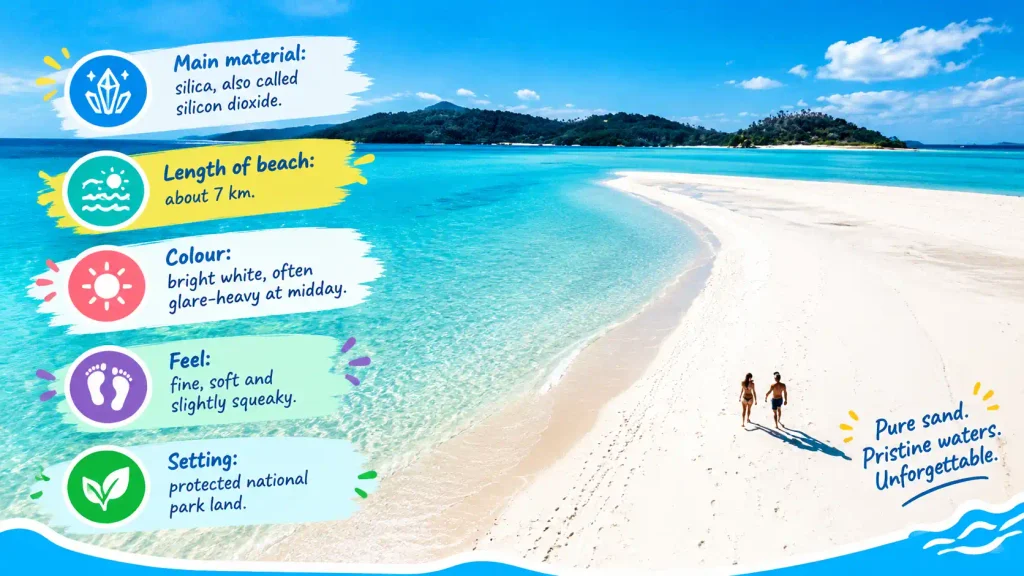
- Main material: silica, also called silicon dioxide.
- Length of beach: about 7 km.
- Colour: bright white, often glare-heavy at midday.
- Feel: fine, soft and slightly squeaky.
- Setting: protected national park land.
Purity numbers come from tourism and travel sources, not a single lab report. Treat them as strong estimates. Anyone quoting an exact figure to the decimal is probably guessing.
What Is the Whitehaven Beach Silica Sand Percentage?
The sand at Whitehaven Beach is about 98% pure silica (silicon dioxide). Some sources give a range of 98–99%. Exact figures can vary by spot and by sample, so treat the number as a widely quoted estimate.
Where Whitehaven Beach Sits in the Whitsunday Islands
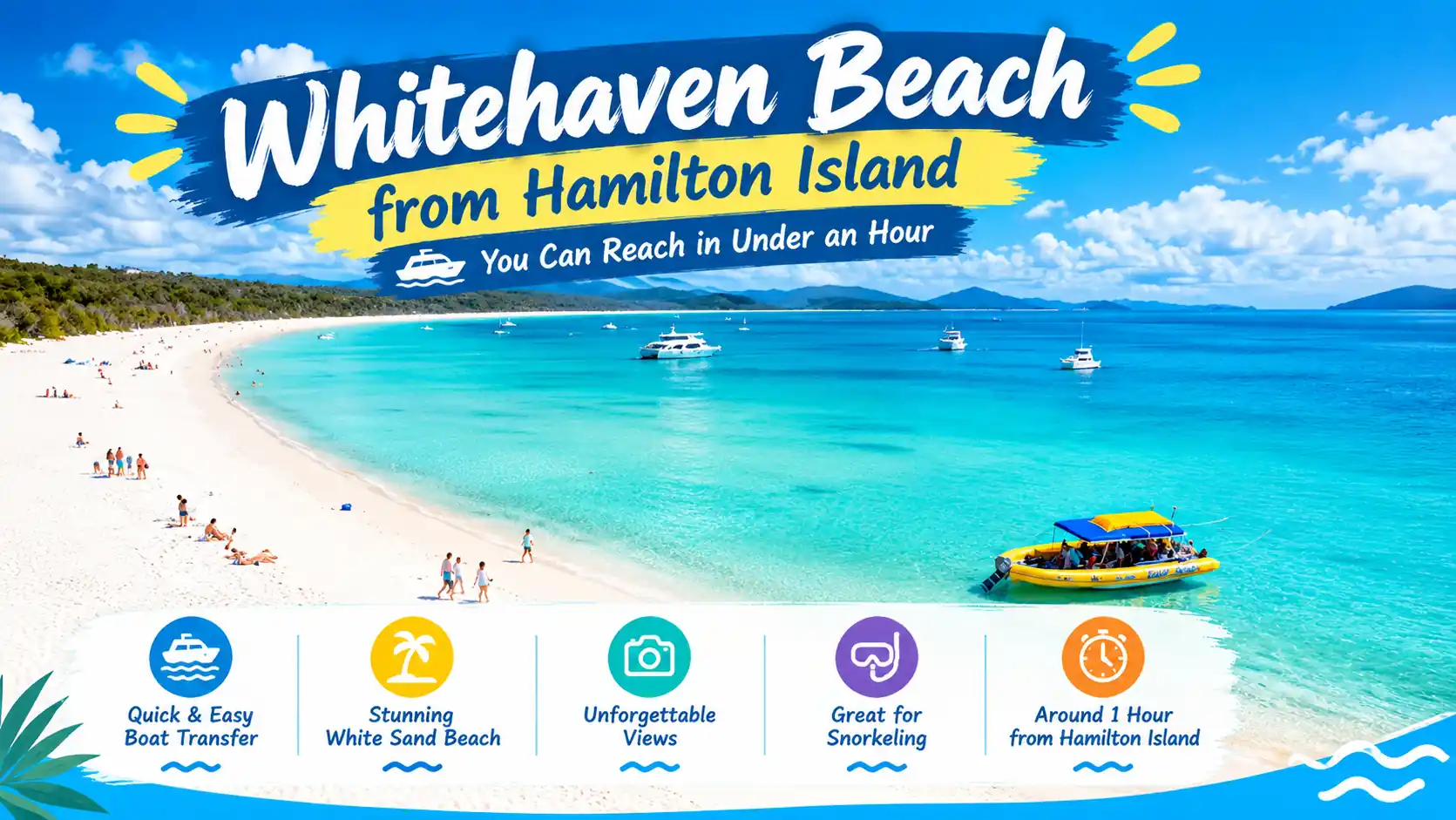
Whitehaven Beach lies on the eastern side of Whitsunday Island, the largest of the 74 Whitsunday Islands off the Queensland coast. No road reaches it, so most visitors leave from Airlie Beach or Hamilton Island by boat, seaplane or helicopter. Boat crossings often take over an hour, while seaplanes and helicopters are faster but cost more and depend on weather.
The beach is inside the Whitsunday Islands National Park, so there are no resorts, shops or restaurants. Bring drinks and snacks with your tour, and expect little shade. At the northern end, a short bush track leads to Hill Inlet Lookout, where many of the famous swirling sand photos are taken. Check whether your tour includes both the beach and the lookout.
How the Sand Formed Over Millions of Years
Whitehaven Beach’s geology is puzzling because silica is rare in the rocks around Whitsunday Island. The most accepted explanation is that ocean currents carried silica grains here over millions of years, and tides sorted and settled them along the shore.
The beach keeps changing. Storms can move large amounts of sand, and Cyclone Debbie in 2017 caused heavy erosion that needed repair work at the southern end. Daily tides also reshape the white sand bars, so photos of Hill Inlet never look the same twice.
This arrived sand looks very different from the darker, greyer material that coral and rock produce on nearby islands. The beach was named by British naval surveyor Staff Commander E.P. Bedwell in 1879, long after the Ngaro people first lived in the area.
Why the Sand Stays Cool and Feels Soft Underfoot
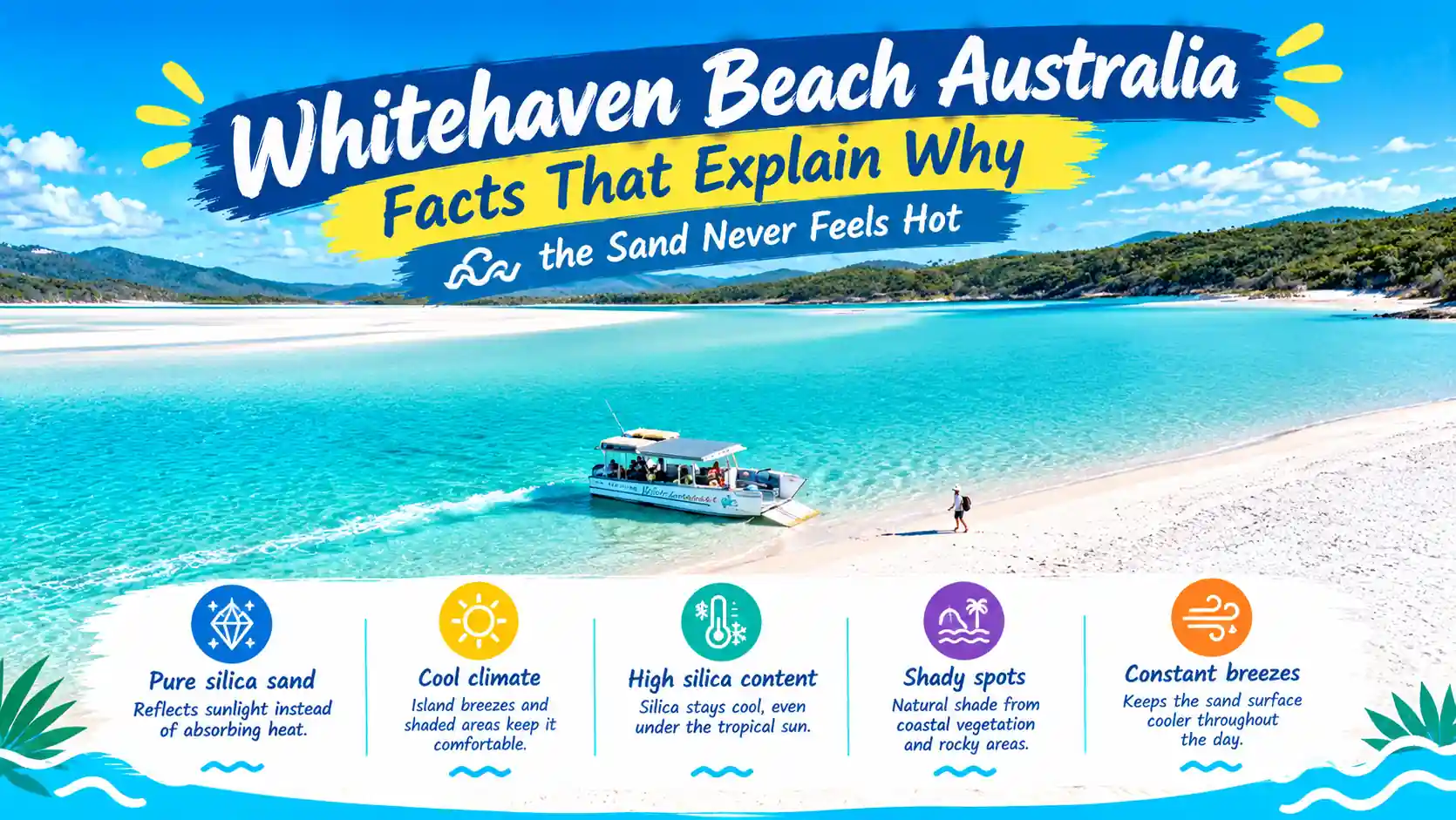
Silica does not hold heat well. Sun-baked sand on other beaches can burn bare feet by midday. Whitehaven stays comfortable, even in summer.
Fine grains also feel smooth instead of gritty. Kids and adults can walk barefoot without much trouble. Sunscreen still matters, because the bright sand reflects light upward. Hats and sunglasses help just as much. A light long-sleeve shirt is another simple option.
Cool sand does not mean cool air. Queensland sun is strong, and shade is limited on open stretches. Water bottles and breaks in the shelters make a long beach day easier.
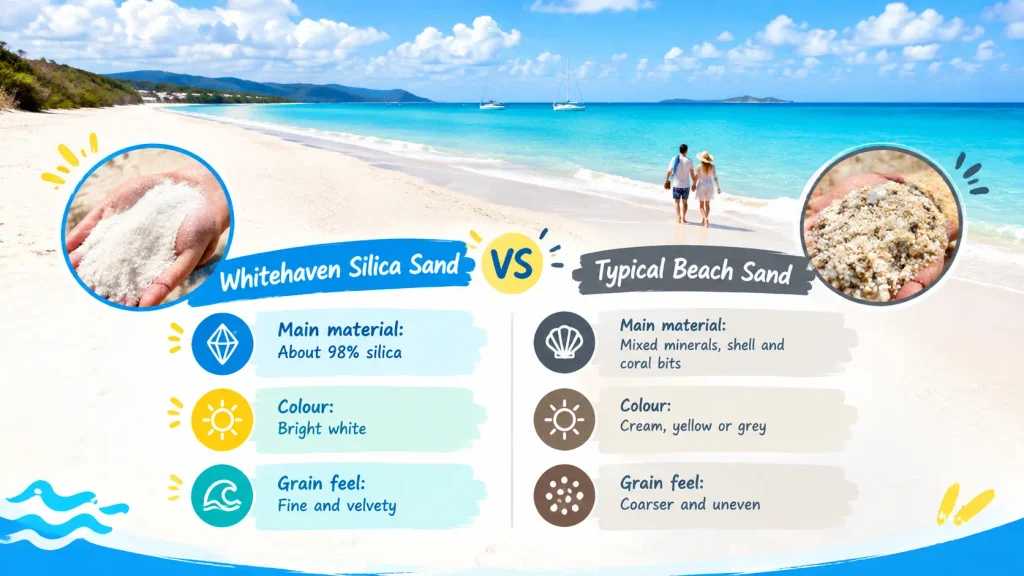
The table below compares silica sand with typical beach sand, based on the traits most often reported by travel and science writers.
| Feature | Whitehaven Silica Sand | Typical Beach Sand |
| Main material | About 98% silica | Mixed minerals, shell and coral bits |
| Colour | Bright white | Cream, yellow or grey |
| Grain feel | Fine and velvety | Coarser and uneven |
| Heat in sun | Stays cooler | Heats up fast |
| Sound underfoot | Light squeak | Usually quiet |
Why Does Whitehaven Beach Sand Stay Cool?
Silica does not absorb and hold heat the way darker or mixed sands do. The pale colour reflects sunlight, and the fine grains release warmth quickly. Feet stay comfortable even on hot Queensland days, though the glare still needs sunglasses.
Turquoise Water and the Swirling Sands of Hill Inlet
White sand reflects light through the water, giving the shallows a turquoise glow while deeper water turns a richer blue. Hill Inlet is the best place to see this contrast. As the tides rise and fall, they push sand into curved patterns that keep changing the view from the lookout.
The lookout walk takes about ten minutes from the northern end and passes through tropical bush. Wear shoes with grip, as some steps are uneven. Guides often share tide and timing tips before you go.
Swimming conditions change with wind, tide and season, and lifeguards are not guaranteed on remote beaches, so follow crew briefings closely. Snorkelers usually go to reefs near the islands, while the water by the sand is best for wading and swimming. Stinger season can affect swimming, and many tours supply stinger suits when needed.
For photos, the lookout gives a wide view, while walking at water level shows the ripples and colour bands up close.
Quick facts to keep in mind:
- The beach is about 7 km long.
- Water colour changes with tide and sun angle.
- Hill Inlet is best seen from the lookout.
- Some cruises skip Hill Inlet entirely.
- Stinger suits are commonly provided in warmer months.
Best Time to Visit Whitehaven Beach
Whitehaven Beach can be visited all year, but conditions shift. Tropical Queensland has a warmer, wetter season and a cooler, drier one. Forecasts from the Australian Bureau of Meteorology give the most reliable short-term picture.
Winter and early spring are often chosen for milder heat and easier walking. Summer brings hotter days and possible rain, plus stinger risk. Tide timing matters more than the month if Hill Inlet swirls are the goal.
The table below summarises what to expect by season, based on common tour and tourism guidance rather than fixed rules.
| Season | What to Expect | Good to Know |
| Summer (Dec–Feb) | Hot, humid, higher rain chance | Stinger suits commonly used |
| Autumn (Mar–May) | Warm, weather gradually settles | Check tide times for Hill Inlet |
| Winter (Jun–Aug) | Milder days, often drier | Popular season, book ahead |
| Spring (Sep–Nov) | Warming up again | Stinger season may start |

Time of day counts too. Mid-morning light usually makes the water look brightest. Late afternoon can be calmer and less crowded, depending on the tour.
Tide tables are worth checking before booking. Hill Inlet looks most dramatic when tide movement is strong. Tour operators usually plan visits around this, but schedules are not always flexible. Ask the operator which tide window applies on the chosen date.
How to Get to Whitehaven Beach and What It Costs
Access is by water or air only. Standard options include day cruises, sailing trips, seaplane flights and helicopter tours. Private charters also exist.
How Do You Get to Whitehaven Beach?
Whitehaven Beach is reached by boat, seaplane or helicopter from Airlie Beach or Hamilton Island. No public road leads there. Day cruises from Port of Airlie are the most common choice, and most operators include return transport.
Prices vary by operator, season, and demand. The figures below are rough USD conversions of 2026 AUD listings, so exact amounts may differ.
| Option | Approx. Adult Price (USD) | Notes |
| Half-day cruise from Airlie Beach | About $90–$105 | Up to 2 hours on the beach; may skip Hill Inlet |
| Full-day cruise with lunch | About $130–$135 | Longer beach time plus Hill Inlet lookout |
| Scenic flight or helicopter combo | Higher, varies widely | Check operator for current pricing |
Fares often include a Great Barrier Reef environmental charge. That money supports the Great Barrier Reef Marine Park Authority, which manages the marine park. Always confirm inclusions before paying, because lunch, transfers and stinger suits differ.
Prices also change with demand and season. Family fares can lower the cost per person. Child fares are often much cheaper, and infants often travel free, but rules differ by company.
Useful booking questions:
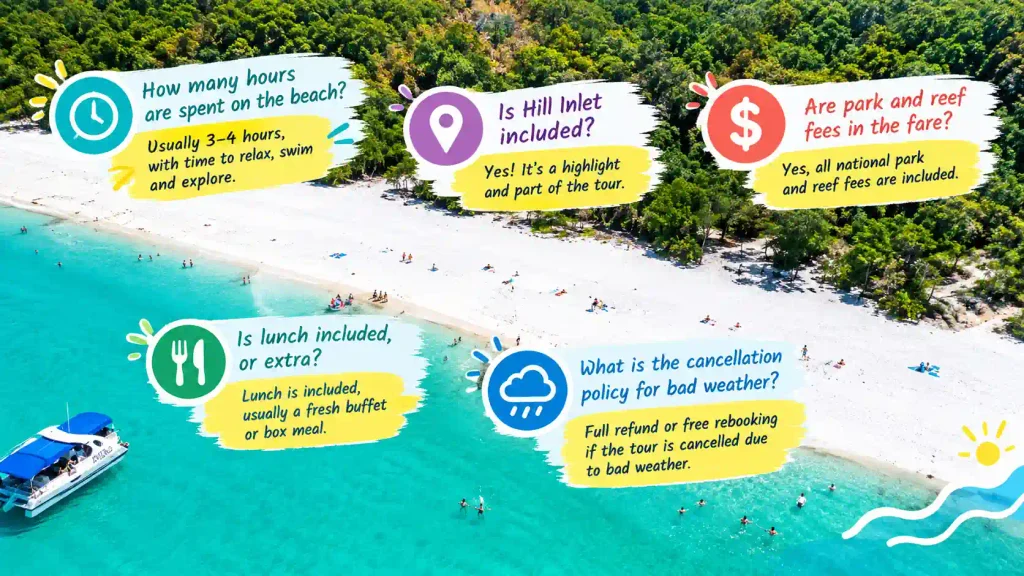
- How many hours are spent on the beach?
- Is Hill Inlet included?
- Are park and reef fees in the fare?
- Is lunch included, or extra?
- What is the cancellation policy for bad weather?
Rules That Protect the Silica Sand
The beach sits in a national park, and rules are strict. Dogs are banned. Smoking and campfires are also not allowed.
All rubbish must be taken home. Nothing should be dug up or removed, including sand and shells. Park managers use these rules to keep the sand clean and the ecosystem stable.
Small actions add up on a busy beach. Thousands of visitors walk the same sand every year. Litter, cigarette butts and souvenirs would damage the look that draws people here.
Camping is possible at the southern end of the beach, but permits are required. Rules and fees can change, so check the Queensland Parks and Wildlife Service before planning an overnight stay.
Fines and penalties can apply for breaking park rules. Exact amounts change, so the official park website is the place to check. Tour crews also brief guests on arrival, and those instructions are worth following.
Simple habits help:
- Carry out every piece of litter.
- Use reef-safe sunscreen.
- Stay on marked tracks.
- Follow crew instructions on tours.
- Leave shells and sand where they are.
Ready to See Whitehaven Beach Silica Sand for Yourself?
Whitehaven Beach’s purity, about 98% silica, explains the glowing white colour and the soft feel. Its place in the Whitsunday Islands means access is by water or air only. Ocean currents carried the grains here over millions of years, and storms still reshape the shore. Cool sand keeps bare feet comfortable, while turquoise water and Hill Inlet complete the view.
Season and tide decide what the scene looks like on the day. Tour type sets the cost, so check current prices with the operator. Strict park rules protect the beach, so follow every one of them and leave the sand exactly where it belongs.
FAQs
What is Whitehaven Beach sand made of?
The sand is about 98% pure silica, with some sources saying 98–99%.
2. Can you take sand from Whitehaven Beach?
No. The beach is inside a national park, and removing sand or shells is not allowed.
3. Is Whitehaven Beach open all year?
Trips generally run year-round, but weather and tides can change schedules. Check with the tour operator.
4. Are dogs allowed at Whitehaven Beach?
No. Dogs are banned on the beach.
5. Do you need a permit to visit Whitehaven Beach?
Day visitors usually book a tour that covers park fees. Camping needs a permit, so check the official park source.
6. Does every tour include Hill Inlet?
No. Some half-day cruises skip it, so confirm the itinerary before booking.


One Response