
Boracay Island weather follows a tropical climate with two main seasons: dry season from December-May and wet season from June-November. During the dry months, temperatures usually stay between 25°C and 32°C, with plenty of sunshine and light winds, making this the most popular time to visit.
The wet season brings higher humidity, frequent rain showers, and occasional storms, though sunny mornings are still common even in July and August. Boracay Island weather can change quickly, so it’s smart to check daily forecasts if you plan outdoor activities like island hopping or diving. Overall, the island stays warm year-round, rarely dropping below 24°C even during cooler nights.
Boracay Island Weather
Boracay sits roughly 315 km south of Manila in the Western Visayas, a small 10.32-square-kilometer island wrapped in coral reef and famous for its powder-white sand. Tropical conditions define the climate here year-round, with air temperatures rarely dropping below 24°C or climbing much past 33°C. Two monsoon winds, however, completely reshape the experience depending on when a traveler arrives. Amihan, the cool and dry northeast monsoon, blows from around November through May and keeps White Beach calm and sunny.
Habagat, the warm and wet southwest monsoon, takes over from June through November and brings heavier rain along with rougher seas on the western coast. Humidity stays high year-round, averaging around 75%, so even the cooler months feel warm compared to temperate climates. Because the two seasons behave so differently, understanding this rhythm is the real starting point for planning any trip.
Boracay Island Weather by Month
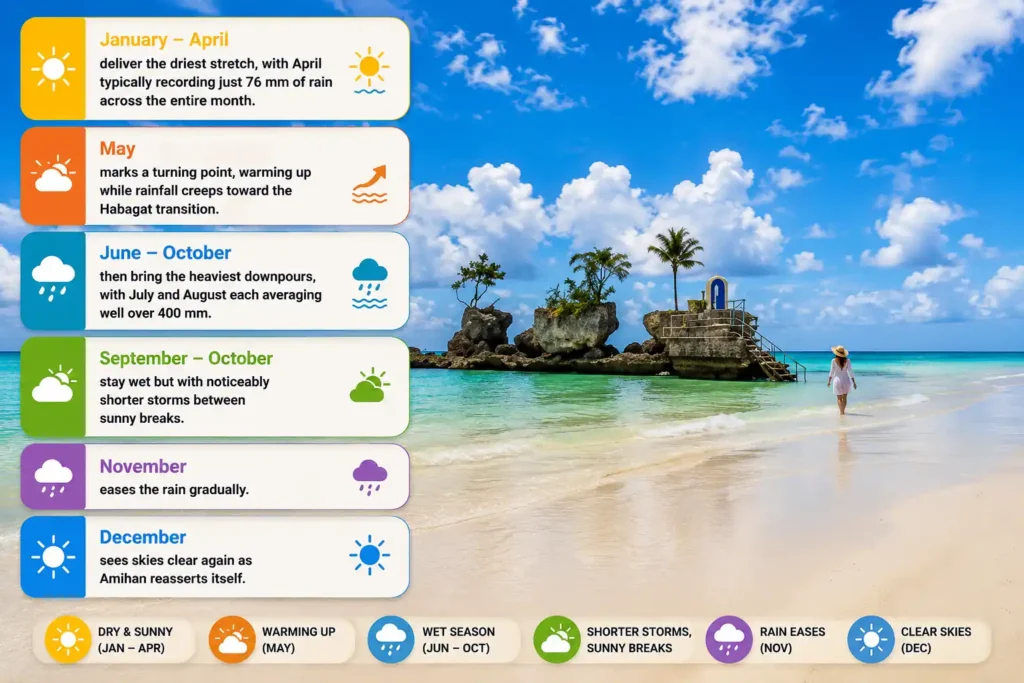
Twelve months on Boracay break down into distinct micro-patterns once rainfall, temperature, and sunshine hours get compared side by side. January through April deliver the driest stretch, with April typically recording just 76 mm of rain across the entire month. May marks a turning point, warming up while rainfall creeps toward the Habagat transition.
June through October then bring the heaviest downpours, with July and August each averaging well over 400 mm. September and October stay wet but with noticeably shorter storms between sunny breaks. November eases the rain gradually, and December sees skies clear again as Amihan reasserts itself. The table below lays out the averages for a fast month-by-month comparison.
| Month | Avg. High | Rainfall | Sunshine |
| January | 28°C (82°F) | ~90 mm | 7 hrs/day |
| February | 28°C (82°F) | ~65 mm | 8 hrs/day |
| March | 29°C (84°F) | 51 mm | 8 hrs/day |
| April | 30°C (86°F) | 76 mm (driest) | 9 hrs/day |
| May | 30°C (86°F) | 191 mm | 8 hrs/day |
| June | 31°C (88°F) | 350 mm | 6 hrs/day |
| July | 31°C (88°F) | 429 mm (wettest) | 6 hrs/day |
| August | 31°C (88°F) | 460 mm | 6 hrs/day |
| September | 30°C (86°F) | ~400 mm | 6 hrs/day |
| October | 31°C (88°F) | 356 mm | 6 hrs/day |
| November | 30°C (86°F) | ~220 mm | 7 hrs/day |
| December | 29°C (84°F) | ~120 mm | 7 hrs/day |
Boracay January Weather
January’s average high sits around 28°C (82°F), with cooler evenings near 24°C (75°F). Peak Amihan winds keep White Beach flat and clear, ideal for swimming, while Bulabog Bay turns into a strong kitesurfing spot. Rainfall stays modest at around 90 mm, though New Year crowds keep rates tight until mid-month.
Boracay Island Weather in February
February holds the title of Boracay’s driest, coolest month, with sea temperatures dipping to roughly 26°C, the lowest reading of the year. Daytime highs still reach a comfortable 28°C, and rainfall averages under 70 mm. Fewer holiday crowds combined with dependable sunshine make this a strong pick for predictable weather.
Boracay Island Weather in March
March signals the shift from Boracay’s cool-dry period into its hotter stretch, with average highs climbing to 29°C and sunshine reaching 8 hours a day. Rainfall drops to near 51 mm, one of the lowest points of the year. Water clarity stays excellent, making this month well suited to snorkeling.
Boracay Island Weather in April
April brings the driest month of the year, averaging just 76 mm of rain, with sunshine peaking near 9 hours a day and highs around 30°C. Holy Week, which usually falls in this window, draws heavy domestic tourism and sharply higher prices. Natural green algae, locally called lumot, can also appear along parts of the shoreline; it’s seasonal, not pollution.
Boracay August Weather
August sits deep inside Habagat, averaging around 460 mm of rain across roughly 19 rainy days, one of the wettest stretches on record. Daytime highs still reach 31°C between showers, and storms tend to arrive in short, intense bursts. Typhoon activity across the Philippine basin also peaks around this period, so tracking forecasts before booking matters.
Boracay Weather July
July typically records the heaviest rainfall of the year, averaging close to 429 mm over about 20 rainy days, as southwest winds push choppier water onto White Beach. Daytime temperatures stay warm at roughly 31°C despite the rain. Lower hotel rates and thinner crowds offset the wetter conditions, appealing to budget-focused travelers.
Boracay Island Weather in September
September keeps the wet pattern going, though storm intensity eases slightly compared to July and August. Sea temperatures often peak around this time, reaching close to 30°C, among the warmest readings of the year. Fewer tourists mean noticeably lower accommodation prices for anyone comfortable planning around the rain.
Boracay Island Weather in October
October remains one of the rainier months, averaging around 356 mm, with storm systems in the wider Pacific occasionally brushing past the Visayas region. Rain tends to fall in shorter afternoon bursts rather than continuous downpours, leaving usable beach time most days. Prices stay low compared to the December through April peak.
Boracay in November Weather
Visiting Boracay in November means catching the island mid-transition, somewhere between the tail end of Habagat and the return of calmer Amihan conditions. Early November can still bring scattered storm remnants, so flexible plans work better than a fixed itinerary. Late November usually settles into sunny, breezy weather, offering some of the best value of the year before December’s rates climb.
Boracay Island Weather in December
December opens Boracay’s cool-dry season, with average highs around 29°C and noticeably lower humidity than the wet months. Amihan winds are fully established, keeping White Beach calm and skies mostly clear. Rainfall drops to around 120 mm, though Christmas and New Year push demand, and prices, to their yearly peak.
Boracay Wet Season/Boracay Rainy Season
Habagat, the southwest monsoon, drives Boracay’s wet season from roughly June through November, according to PAGASA’s official seasonal classification. Rain during these months rarely falls continuously; instead, short, heavy bursts interrupt otherwise sunny stretches. White Beach, facing west, absorbs the brunt of Habagat’s wind and swell, while the eastern Bulabog side often stays calmer than usual.
Typhoon risk also climbs during this window, peaking between August and October when storm systems frequently track through the Visayas region. Humidity intensifies alongside the rain, often making the air feel heavier than the thermometer suggests. Hotel rates, however, drop noticeably, and the island empties considerably compared to the December through April rush. The breakdown below highlights how conditions shift across the six-month wet season.
| Period | Months | Rain Pattern | Typhoon Risk |
| Early Habagat | June–July | Frequent afternoon storms | Low to Moderate |
| Peak Habagat | August–September | Heaviest, most consistent rain | Moderate to High |
| Late Habagat | October–November | Shorter storms, gradual clearing | Moderate, declining |
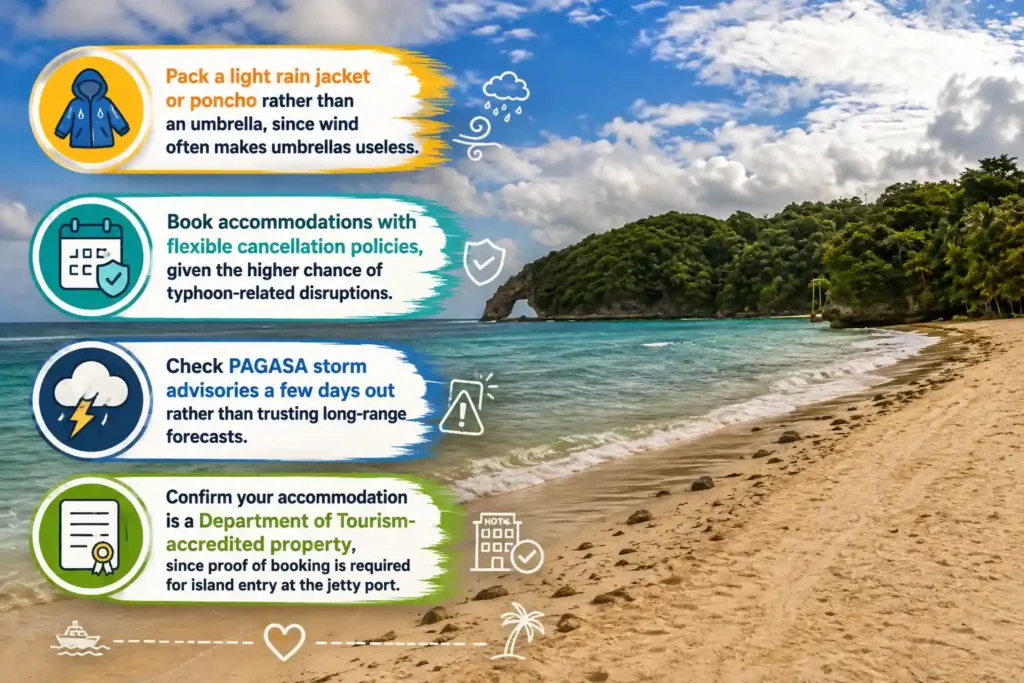
- Pack a light rain jacket or poncho rather than an umbrella, since wind often makes umbrellas useless.
- Book accommodations with flexible cancellation policies, given the higher chance of typhoon-related disruptions.
- Check PAGASA storm advisories a few days out rather than trusting long-range forecasts.
- Confirm your accommodation is a Department of Tourism-accredited property, since proof of booking is required for island entry at the jetty port.
How Long Does Boracay’s Rainy Season Last?
Six months, roughly, cover Boracay’s rainy season, running from June through November under PAGASA’s classification. Peak intensity concentrates in August and September, when monthly rainfall regularly tops 400 mm. Storms rarely last all day, and sunny mornings followed by afternoon downpours remain the more common pattern. Rainfall tapers off sharply by late November, as Amihan begins reasserting control.
Boracay Dry Season
Amihan, the cool and dry northeast monsoon, governs Boracay’s dry season from roughly December through May, split by PAGASA into a cool-dry phase and a hot-dry phase. December through February stays comparatively mild, with lower humidity and evening temperatures that feel genuinely pleasant after sunset. March through May then heats up considerably, becoming the country’s hottest, most humid stretch, sometimes called tag-init locally.
White Beach stays consistently calm throughout Amihan, since the wind blows from the opposite, eastern side of the island. Bulabog Bay, meanwhile, catches those northeast winds directly, turning it into a reliable kitesurfing destination from roughly November through March. Rainfall across the entire six-month stretch stays minimal, with April alone averaging under 80 mm. Because conditions stay so dependable, this window attracts the vast majority of Boracay’s annual visitors.
- Cool-dry (December–February): Milder heat, lower humidity, comfortable evenings, and the busiest holiday crowds.
- Hot-dry (March–May): Intense sun, the calmest seas of the year, and the highest average temperatures, alongside Holy Week congestion in April.
Best Time to Visit Boracay for Good Weather
December through April is widely considered the Best time to visit Boracay Island for travelers who want sunshine, calm seas, and more reliable travel plans. During these months, the Amihan season brings lower rainfall and clearer skies. White Beach often stays calm and glassy, making it ideal for swimming, paddleboarding, and island-hopping tours. However, every traveler has different priorities, so the best travel window can vary depending on what you want to experience.
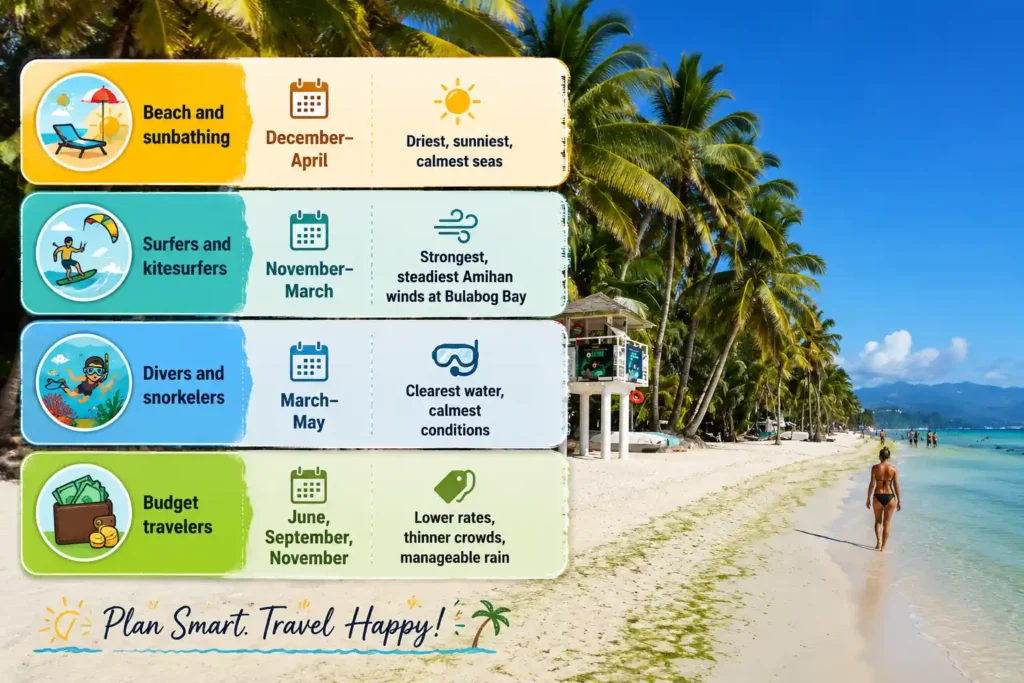
Surfers and kitesurfers generally prefer November through March, when steady northeast winds hit Bulabog Bay at their strongest. Divers and snorkelers often favor March through May instead, since visibility peaks when the sea sits at its calmest. Budget-conscious travelers, meanwhile, find better deals during shoulder months like November and May, or deeper into the wetter months if flexibility allows. The table below matches traveler types with their strongest weather windows.
| Traveler Type | Best Months | Why It Works |
| Beach and sunbathing | December–April | Driest, sunniest, calmest seas |
| Surfers and kitesurfers | November–March | Strongest, steadiest Amihan winds at Bulabog Bay |
| Divers and snorkelers | March–May | Clearest water, calmest conditions |
| Budget travelers | June, September, November | Lower rates, thinner crowds, manageable rain |
What Is Boracay’s Hottest Month?
May typically ranks as Boracay’s hottest month, with average highs near 30°C and heat index values that can feel considerably warmer given the humidity. High temperatures actually persist from March through May, right before Habagat’s rain arrives and cools things down slightly. January, by contrast, brings the coolest air, though even then, highs rarely dip below 28°C.
Plan Your Perfect Boracay Island Getaway. Read more in 9 Reasons Boracay Island Is Famous but Not for Everyone.
Boracay Temperature Throughout the Year
Air temperature on Boracay barely swings across the calendar, ranging from around 24°C on cool January nights to roughly 33°C during humid afternoons in May. Sea temperature follows a similarly narrow band, averaging 28.8°C annually, consistent with long-term averaging methods used by the World Meteorological Organization. February typically produces the coolest water, dipping to about 26°C, while readings closer to 30°C show up around September.
Daytime highs stay within just two or three degrees of each other most months, which makes humidity, rainfall, and wind the real deciding factors rather than raw heat. Nighttime temperatures rarely drop below 23°C, even during the coolest stretch of the dry season. Because the temperature range stays so narrow, travelers should weigh rainfall and wind patterns far more heavily than degrees when picking dates.
Boracay Weather FAQs
What is the best time to visit Boracay?
December through April offers the most reliable weather, combining low rainfall, calm seas, and consistent sunshine under the Amihan monsoon.
Is Boracay rainy in July?
Yes, July usually ranks among Boracay’s wettest months, averaging close to 429 mm of rain across roughly 20 rainy days, though showers tend to arrive in short bursts.
When does Boracay’s dry season start and end?
PAGASA classifies Boracay’s dry season from December through May, split into a cooler phase from December to February and a hotter phase from March to May.
Does Boracay experience typhoons?
Yes, typhoon risk peaks between August and October, when storm systems frequently track through the Visayas region, so monitoring PAGASA advisories close to departure is recommended.
Is Boracay hot in December?
December stays comfortably warm rather than hot, with average highs near 29°C and noticeably lower humidity than the wet season months.
What are Amihan and Habagat?
Amihan is the cool, dry northeast monsoon that governs Boracay’s dry season, while Habagat is the warm, wet southwest monsoon responsible for the rainy season.
Do hotel prices change with the seasons?
Yes, rates typically peak during the December through April dry season, especially around Christmas, New Year, and Holy Week, while the wet season brings noticeably lower prices and thinner crowds.
Armed with month-by-month data instead of guesswork, planning a Boracay trip around the right weather window becomes considerably easier.