
If you’ve landed on this guide, you’re probably planning a trip to Nusa Penida, and Crystal Bay is near the top of your list. Good call. But here’s what you need to know upfront: the crystal bay travel tips you’ll find on most travel blogs stop at “it’s beautiful, go at sunrise.” This guide doesn’t do that.
These crystal bay travel tips cover tides, real costs, where exactly to stand in the water, and the parts of the beach the tour groups completely miss. Crystal Bay earns its reputation. You just need to show up prepared.
Why Crystal Bay Feels Different From Other Nusa Penida Beaches
Most Nusa Penida beaches are dramatic but difficult. Kelingking requires a near-vertical descent. Broken Beach is more of a lookout than a swim spot. Crystal Bay is the one place on the island where you can actually get into the water comfortably, if you know what you’re doing.
The bay sits on the western coast of Nusa Penida, sheltered naturally by two rocky headlands. That sheltering effect keeps the water calmer here than the open coastline. But “calmer” doesn’t mean always calm. The bay still responds to tidal shifts, and visibility for snorkeling can drop dramatically depending on the time of day. That’s the part most visitors don’t expect.
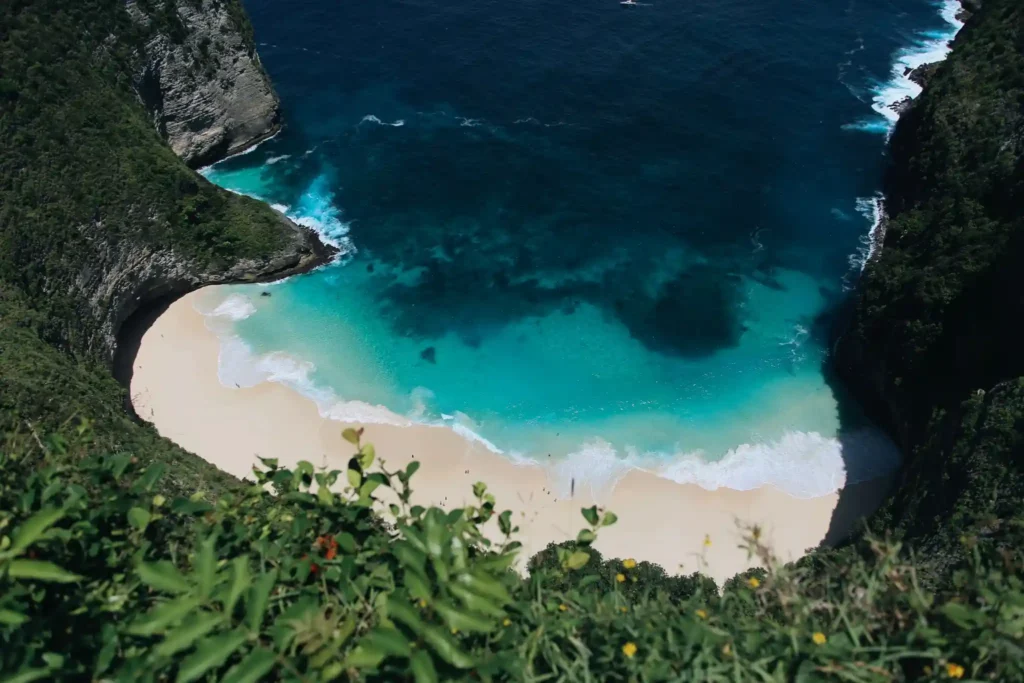
There’s also something intangible about the place. The water shifts between shades of turquoise and deep blue depending on depth, the cliffs feel genuinely wild, and it earns its name honestly. You feel it immediately when you arrive.
Where Is Crystal Bay and How to Get There
Crystal Bay (Pantai Crystal Bay) is on the western side of Nusa Penida, roughly 10 km from the main port at Toyapakeh. Take a fast boat from Sanur Beach in Bali, the crossing takes around 30–45 minutes and costs approximately 150,000–200,000 IDR each way with operators like Maruti Fast Boat or Caspla Bali Express.
From the port, you have two realistic options: rent a scooter (~75,000 IDR/day) for independent travel, or book a guided tour that includes Crystal Bay as part of a west coast circuit. Most tours bundle Crystal Bay, Kelingking, Broken Beach, and Angel’s Billabong for around 400,000–550,000 IDR per person.
The road to Crystal Bay is steep and winding in sections. If you’re not a confident scooter rider on hilly terrain, the tour option is genuinely the safer call, not just for convenience.
Find Crystal Bay and the easiest way to reach it: Read more in Crystal Bay Nusa Penida Guide: Before You Go, Read These Local Tips First.
Best Time to Visit Crystal Bay (By Season, Weather & Crowd Levels)
Use this seasonal breakdown to choose the right month; it’s the single most important decision for a good Crystal Bay experience.
| Season | Months | Water Visibility | Crowd Level | Recommendation |
| Dry Season | May – September | Excellent (15–25m+) | High in peak | Best for snorkeling |
| Shoulder | March / October | Good | Moderate | Sweet spot value |
| Wet Season | November – February | Variable / lower | Low | Check conditions first |
| Peak Crowd | July – August | Great | Very high | Arrive before 7:30 AM |
May and June are the underrated sweet spot months. According to BMKG Indonesia’s official climate records for Bali, the dry season typically begins in late April. By May, sea conditions around Nusa Penida are consistently good, with excellent visibility and manageable crowds. September is similarly underrated.
What Time of Day Is Best for Crystal Bay?
Early morning, between 6:30 AM and 9:00 AM, is by far the most rewarding window. The light is soft, the water surface is glassy, and the Mola Mola ocean sunfish is most commonly spotted in the deeper waters near Crystal Bay during these early hours between July and October.
Midday brings the tours. From around 10:00 AM to 2:00 PM, Crystal Bay gets genuinely crowded. Underwater visibility can decrease as more people enter the water and disturb sediment near the shore. The difference between 7 AM and 11 AM snorkeling is noticeable.
Afternoon has its own quiet appeal. By 4:30 PM, the crowds thin noticeably, and the light shifts to golden. The sunset from the small hill on the right headland is exceptional. If you can stay late, stay late.
Entry Fees, Parking Costs & Other Small Expenses to Expect
Quick cost reference for Crystal Bay, bring IDR cash in small denominations; card payment is not available here.
| Expense | Approximate Cost (IDR) | Notes |
| Beach Entry | 10,000 – 15,000 | Per person, collected at the gate |
| Parking (scooter) | 5,000 | Near beach entrance |
| Parking (car/van) | 10,000 – 20,000 | Limited spots available |
| Sun Lounger Rental | 50,000 – 80,000 | Includes an umbrella at most spots |
| Snorkel Gear Rental | 30,000 – 50,000 | Available from beachside stalls |
| Local Warung Meal | 20,000 – 45,000 | Nasi goreng, mie goreng, fresh fish |
| Cold Drink / Coconut | 15,000 – 30,000 | Varies by vendor |
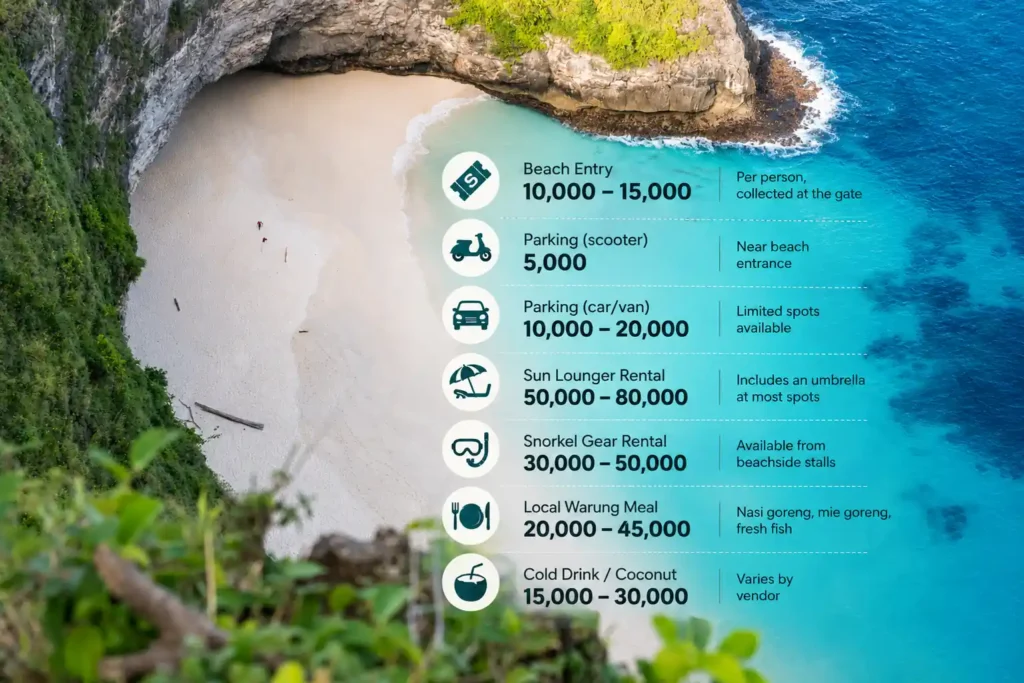
Bring small denomination IDR bills; 10,000 and 20,000 notes are your best friends here. Vendors don’t always have change for large bills, and there are no ATMs at Crystal Bay itself. The nearest reliable ATM is back in Toyapakeh.
What Are the Entry Fees at Crystal Bay Nusa Penida?
Crystal Bay charges a beach entry fee of approximately 10,000–15,000 IDR per person. Parking adds 5,000 IDR for scooters and 10,000–20,000 IDR for cars. Total expected spend at the gate: around 25,000–35,000 IDR per person, including parking. Bring cash; there are no card payment options on site.
What to Pack for a Smooth Crystal Bay Day Trip
Keep your bag light because you’ll be carrying it down uneven steps to the beach. Essential packing list:
- Reef-safe sunscreen SPF 50+: the sun is intense on the open sand between 10 AM and 2 PM
- Reef shoes or aqua socks: the entry points around the bay are rocky and uneven
- Snorkel mask and fins: even budget gear from home beats rental quality here
- Reusable water bottle: heat and sun fatigue hit faster than expected
- Waterproof phone case or dry bag: for photos in and near the water
- Cash in IDR: small denominations only, see above
- Lightweight cover-up or sarong: useful at the warung and for the walk back up
Wear This, Skip That: Clothing Tips for Comfort
A quick rash guard over a swimsuit is the ideal Crystal Bay outfit. You’ll be in and out of the water, possibly climbing over rocks, and maybe hiking the headland path for sunset. Flip flops are fine for the beach, but reef shoes become essential once you’re entering the water.
Skip white or light-colored swimwear if you plan to snorkel close to the reef, algae and sediment near the rocks will stain it. And honestly, don’t wear anything you’re particularly attached to. Crystal Bay has a way of being rougher on clothes than it looks.
Swimming at Crystal Bay: What First-Time Visitors Should Know
Crystal Bay is swimmable, but it’s not a flat, calm pool. The Nusa Penida Marine Protected Area management plan confirms the bay sits within a designated conservation zone, which means the reef is relatively healthy. That also means you need to be careful about coral underfoot in shallower areas.
The sandy central part of the bay is the safest and most comfortable swimming zone. Water depth here at high tide is typically 1–2 metres, manageable for confident swimmers. The two headlands create gentle current channels. If you feel a sideways pull, swim parallel to shore rather than fighting it.
A personal note: the first time I swam out toward the deeper section of the bay, I was surprised by how quickly the temperature dropped. Warm water, then suddenly a noticeably cold layer. That’s the upwelling effect that draws the Mola Mola here in season. It’s not dangerous, just unexpected.
Stay safe in Crystal Bay’s waters with these first-time swimming tips. Read more in Crystal Bay Swimming Conditions: It Looks Calm, But Here’s What You’re Not Seeing.
Is Crystal Bay Safe for Swimming?
Yes. Crystal Bay is considered safe for swimming in the central sandy section during high tide and dry season conditions. Avoid the rocky headland zones where currents run stronger, and always observe conditions before entering. Non-swimmers and beginners should stay in the shallower area near shore and avoid the deeper open water.
Snorkeling Tips for Clear Water and Better Visibility
Crystal Bay’s reputation as one of Bali’s top snorkeling spots is genuinely earned, but visibility varies. What actually affects it:
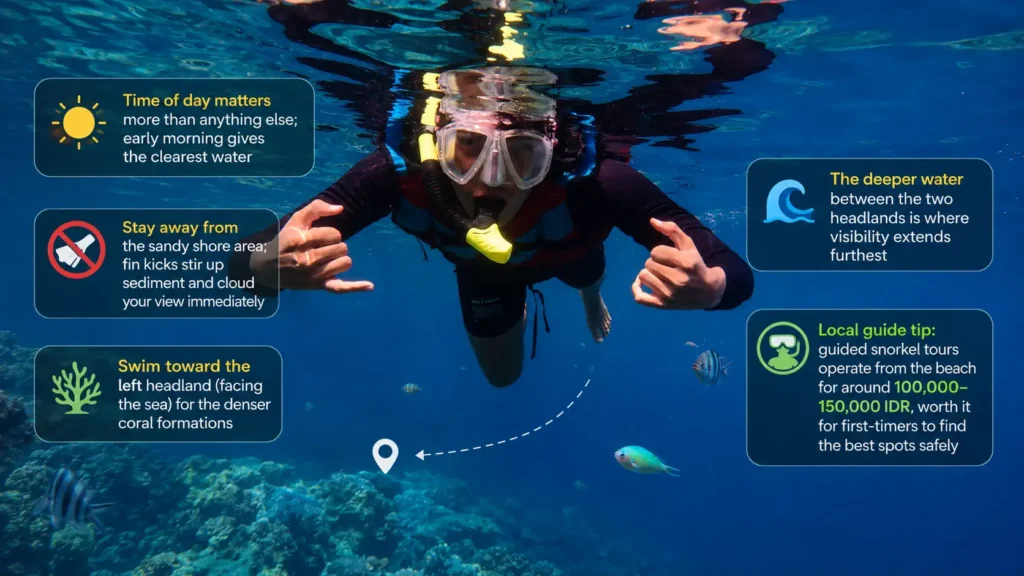
- Time of day matters more than anything else; early morning gives the clearest water
- Stay away from the sandy shore area; fin kicks stir up sediment and cloud your view immediately
- Swim toward the left headland (facing the sea) for the denser coral formations
- The deeper water between the two headlands is where visibility extends furthest
- Local guide tip: guided snorkel tours operate from the beach for around 100,000–150,000 IDR, worth it for first-timers to find the best spots safely
According to Lonely Planet’s Indonesia guide, Crystal Bay is one of the few accessible snorkeling sites on Nusa Penida where Mola Mola sightings are possible without scuba certification. The fish appear between July and October in the deeper upwelling zone. Sightings aren’t guaranteed, but the possibility is real, and it’s a reasonable reason to go early.
Understanding Tides and Ocean Conditions Before You Enter
Tide conditions at Crystal Bay directly affect snorkeling quality and swimming safety. Check this before you wade in.
| Tide Level | Water Clarity | Swimming Safety | Best For |
| High tide (above 1.2m) | Excellent | Most suitable | Swimming + snorkeling |
| Mid tide | Good | Manageable | Casual snorkeling |
| Low tide | Variable | Use caution | Rock pool exploration |
| Very low tide | Lower | Not recommended | Photography from the shore |
Check tides using apps like Tide Alert or Tides Near Me before you leave your accommodation. The difference between high tide and low tide snorkeling at Crystal Bay is significant, not just for safety but for the actual underwater experience.
What Are the Best Tide Conditions for Snorkeling at Crystal Bay?
High tide provides the best snorkeling conditions at Crystal Bay. The water sits deeper over the reef, visibility is clearer, and rocky entry points are easier to navigate. Mid tide is manageable for confident snorkelers. Low tide exposes reef sections and reduces visibility significantly, making it not recommended for snorkeling or casual swimming.
Areas to Avoid While Swimming
The headland zones on both sides of the bay carry stronger currents than the central area. Rocky cliff bases can create unexpected wave surges even on calmer days. Avoid these specific areas:
- The far left headland: current channels here can pull swimmers sideways unexpectedly
- Zones where surges are hitting rocks: wave surge exists even when the bay looks calm
- Directly under cliff faces: falling debris is a genuine risk after rainfall
- The deeper water beyond the bay opening: currents become unpredictable past the headlands
How to Find the Best Spot on the Beach
The beach divides roughly into three zones. The far right (facing the sea) has a mix of sand and rock, more sheltered but shadier in the early morning. The central section is the widest, most popular, and where tour groups set up their bases. The left side, closer to the small hill, is slightly quieter and has better access to the coral-rich snorkeling zones.
If you arrive early, claim a spot on the left side; you’ll have shade from the hill in the afternoon, plus proximity to the best underwater areas. The central beach fills up fast after 9:30 AM during peak season.
Where Is the Best Spot to Snorkel at Crystal Bay, Nusa Penida?
The best snorkeling at Crystal Bay is found along the left headland (as you face the sea), where coral formations are denser, and fish life is more active. Swim there in the early morning at high tide for maximum visibility. Avoid the central sandy zone for snorkeling; there’s less coral and significantly more foot traffic from tour groups.
Crystal Bay for Sunset: Is It Worth Staying Late?
Yes, and it’s one of those travel experiences that surprises you even when you go in with high expectations. The small hill on the right headland has a visible path (about 8 minutes to climb) that opens onto a viewpoint facing directly west. On clear evenings from May to September, the sunset here is genuinely spectacular.
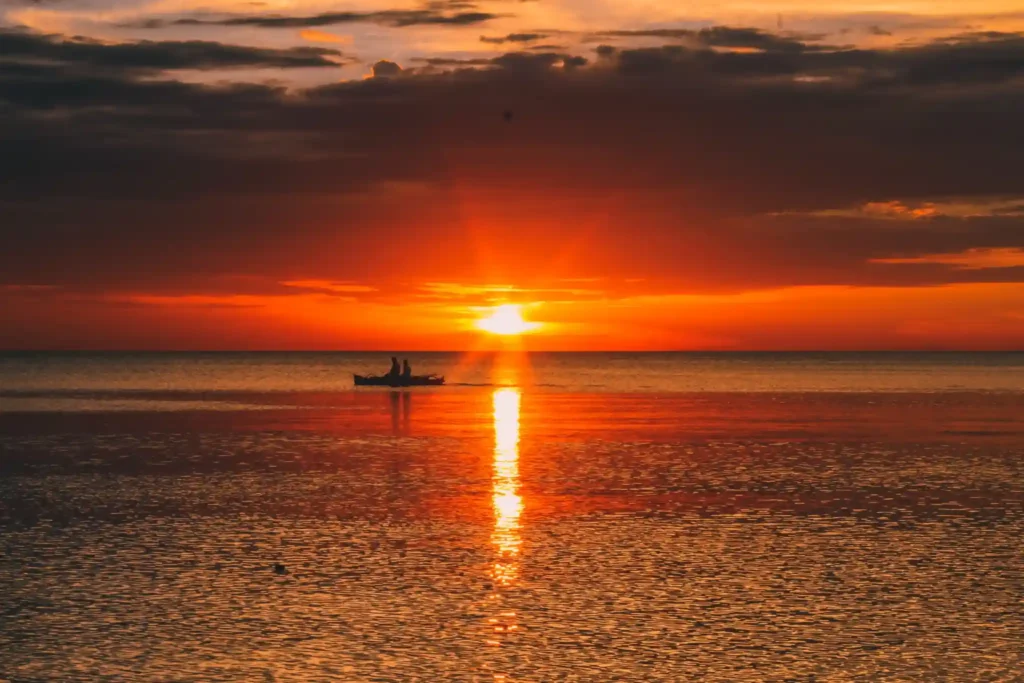
Most day-trippers leave by 4:00 PM. Stay until 5:30–6:30 PM, and you’ll have the beach and viewpoint nearly to yourself. The light on the cliffs during golden hour, with the bay still lit up in turquoise below, is worth the extra time, even if it means catching a slightly later boat back to Bali.
Food, Drinks & Facilities Available Nearby
The warung situation at Crystal Bay is basic but genuinely decent. You’ll find three to five warungs depending on the season, most serving nasi goreng, mie goreng, fresh grilled fish, cold drinks, and coconuts. A full meal runs 25,000–45,000 IDR.
Toilets and a basic changing area are available near the beach entrance; conditions vary, but they’re functional. There are no showers, but some warungs have a freshwater rinse bucket. Bring your own small toiletry bag as backup.
How Much Time Do You Actually Need at Crystal Bay?
Two to three hours is the honest answer for a satisfying visit covering swimming, snorkeling, and a warung lunch. If you’re adding the sunset viewpoint, plan for four to five hours total.
Most west coast Nusa Penida tours allocate 1.5–2 hours at Crystal Bay. That’s enough to swim and grab lunch, but not enough to properly explore the snorkeling. If Crystal Bay is your main priority, consider booking a more focused half-day itinerary rather than a full west coast circuit.
How Long Should You Spend at Crystal Bay Nusa Penida?
Allow at least 2–3 hours at Crystal Bay for a proper visit, including swimming and snorkeling. If you want to add the sunset viewpoint walk and a relaxed warung lunch, 4–5 hours is more realistic. Most standard tour packages allocate 1.5–2 hours, tight for snorkeling enthusiasts who want to explore the reef properly.
Things People Regret Not Knowing Before Visiting
- Not checking the tide: arriving at low tide for snorkeling is a real disappointment. The reef is shallower and more exposed, and clarity drops. A tide check takes 30 seconds on an app.
- Underestimating the heat: the beach has limited shade from 10 AM to 2 PM. Without sunscreen and water, you’ll be retreating to the warung much sooner than planned.
- Leaving too early: most visitors clear out by 2–3 PM and miss the afternoon light entirely — and the sunset viewpoint that most tour groups never reach.
- Not bringing reef shoes: the water entry involves rocks. It’s preventable, and the difference is significant.
- Bringing too much: the walk from the parking to the beach is short but uneven. A heavy bag makes it genuinely annoying.
Photography Tips Without Fighting the Crowds
The two best times for photography at Crystal Bay are early morning (before 8:30 AM) and late afternoon (after 4:30 PM). During peak hours, tour groups fill the background, and the beach becomes difficult to shoot cleanly.
- The hill viewpoint looking down at the bay, the most dramatic angle; go up for the wide shot
- Shooting from waist-deep water looking back at the cliffs gives an unexpectedly dramatic perspective
- Early morning light from the eastern side of the bay gives the cleanest, most saturated turquoise tones
For drone use: Nusa Penida’s MPA has informal restrictions near the water for commercial drone use. Check current local rules with your boat operator before flying.
Visiting Crystal Bay With Kids: Helpful Things to Plan Ahead
Crystal Bay is family-friendly with realistic caveats. The shallow central section is manageable for older children comfortable in the sea. For very young children or non-swimmers, the beach is great for playing on the sand, exploring rock pools at low tide, and watching the fish from the shallows.
Warung food is generally mild enough for kids. The toilet facilities are very basic, worth managing expectations ahead of time. Bring snacks from Bali as backup.
Is Crystal Bay Suitable for Non-Swimmers?
Completely. The beach itself is beautiful regardless of whether you enter the water. The cliff viewpoint walk is accessible for most fitness levels. The warungs have good food and genuine ocean views. Watching snorkelers and the occasional local fisherman pass by is genuinely enjoyable.
Non-swimmers can also explore the tidal pools at the base of the left headland during low tide; small sea life is visible there without getting properly wet.
Common Mistakes Travelers Make at Crystal Bay
- Arriving at 10 AM expecting an empty beach, the crowds have been building since 9 AM
- Assuming the boat crossing is cancelled if it looks cloudy, most operators run in light rain
- Only visiting Crystal Bay and skipping the headland viewpoint entirely
- Booking the cheapest fast boat without checking operator reviews, safety standards vary
- Bringing a full-size bag to the beach instead of a lightweight day pack
How to Visit Crystal Bay Responsibly
Crystal Bay sits inside the Nusa Penida Marine Protected Area, designated in 2010 to protect one of Indonesia’s most biodiverse reef ecosystems. This matters practically: standing on coral damages it, chemical sunscreens bleach it. Respect for the environment is what keeps this place worth visiting at all. As noted by Conservation International’s reef monitoring reports, the Nusa Penida MPA is considered one of the more successfully managed marine reserves in Southeast Asia, and visitor behavior is a key factor.
- Use reef-safe sunscreen (mineral-based, biodegradable): standard chemical formulas damage coral actively
- Don’t stand on or touch coral: a single contact can kill the section you touched
- Take all rubbish back with you: infrastructure for waste collection is limited on the island
- Don’t chase, touch, or ride any marine life, including sea turtles and Mola Mola
- Buy food from local warungs rather than bringing everything packaged from Bali
Is Crystal Bay Part of a Marine Protected Area?
Yes. Crystal Bay falls within the Nusa Penida Marine Protected Area (MPA), designated in 2010 to preserve one of Indonesia’s richest reef systems. Visitors are expected to use reef-safe sunscreen, avoid touching or standing on coral, and refrain from feeding or chasing marine life, including the Mola Mola ocean sunfish that the bay is famous for.
Nearby Places You Can Combine With Crystal Bay
The west coast of Nusa Penida has three other landmarks that most visitors combine into a single day. Each is genuinely worth seeing: just manage your time carefully, because the roads between them take longer than maps suggest.
Broken Beach
About 15–20 minutes from Crystal Bay by scooter. Broken Beach (Pasih Uug) is a natural archway in the cliffs where the ocean has carved through the limestone. You can’t swim here; it’s a viewpoint only, but it’s dramatic and highly photogenic. Allow 20–30 minutes.
Angel’s Billabong
Right next to Broken Beach. A natural infinity pool carved into rock by wave action. At low tide, it’s calm enough to wade in; at high tide or during swells, entry is unsafe and sometimes physically blocked by local staff. Check conditions before making it a swim priority.
Kelingking Beach
The iconic T. rex-shaped cliff that appears on every Nusa Penida travel post. The descent to the actual beach is extremely steep (roughly 45 minutes down, longer back up in the heat). The viewpoint at the top is free, takes about 5 minutes to reach, and is worth it regardless of whether you descend.
Sample Half-Day Crystal Bay Plan
This timeline works best from May to September for optimal conditions. Adjust the start time slightly for shoulder or wet season visits.
| Time | Activity | Notes |
| 6:00 AM | Catch a fast boat from Sanur | 30–45 min crossing |
| 7:00 AM | Arrive at Toyapakeh, rent a scooter or join a tour | Bring cash for the scooter deposit |
| 7:30 AM | Arrive at Crystal Bay, enter the water | Tide should be mid-to-high, with the best visibility window |
| 9:30 AM | Snorkeling along the left headland | Avoid the central area as crowds build after 10 AM |
| 11:00 AM | Warung lunch, rest on the beach | Try fresh grilled fish with rice |
| 12:30 PM | Head to Broken Beach + Angel’s Billabong | ~20 min drive each way |
| 2:00 PM | Kelingking viewpoint | No descent needed for the iconic view |
| 3:30 PM | Return to Crystal Bay for the sunset viewpoint | Optional but strongly recommended |
| 5:30 PM | Head back to Toyapakeh for the evening boat | Last boats typically around 6:30–7:00 PM |
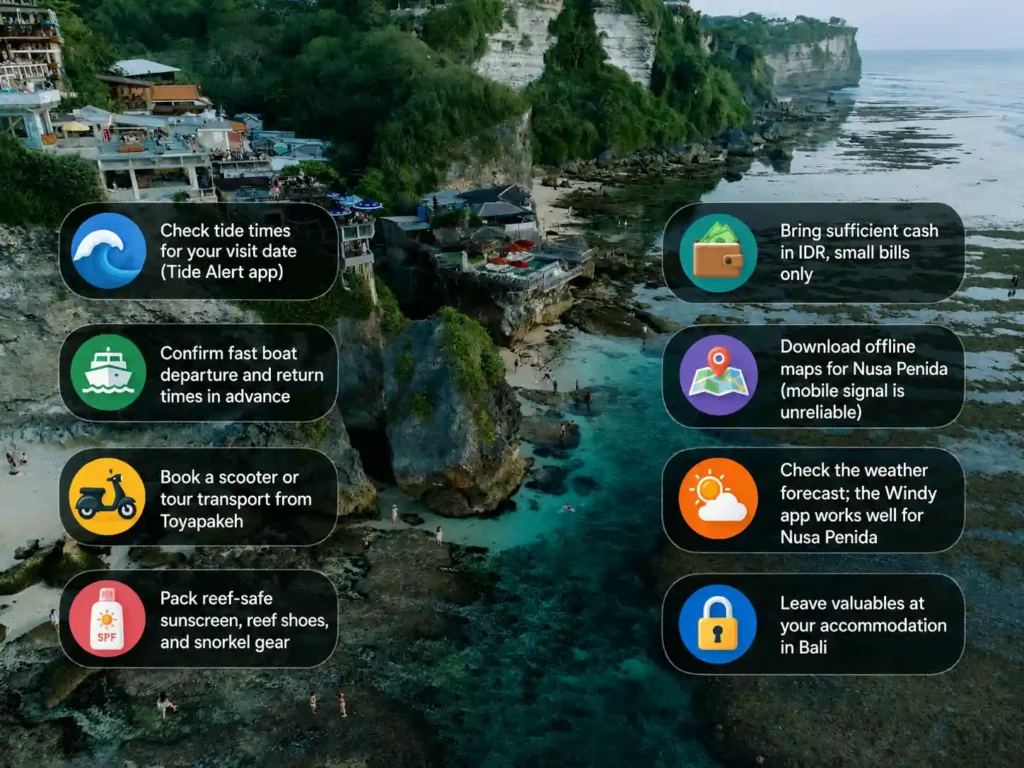
Quick Crystal Bay Travel Checklist
- Check tide times for your visit date (Tide Alert app)
- Confirm fast boat departure and return times in advance
- Book a scooter or tour transport from Toyapakeh
- Pack reef-safe sunscreen, reef shoes, and snorkel gear
- Bring sufficient cash in IDR, small bills only
- Download offline maps for Nusa Penida (mobile signal is unreliable)
- Check the weather forecast; the Windy app works well for Nusa Penida
- Leave valuables at your accommodation in Bali
Final Thoughts: Small Tips That Make a Big Difference
The best Crystal Bay travel tips come down to one simple principle: this beach rewards preparation. Not over-preparation, you don’t need to stress. But arriving with the right information genuinely changes the experience compared to showing up without context.
Go early. Check the tide. Bring reef shoes. Stay for sunset if you possibly can. Buy lunch from the warung family that’s been working the beach for years rather than eating packaged food from your bag. These are small things, but collectively they’re the difference between Crystal Bay being a checkbox on a tour itinerary and being a memory.
It earns its reputation. You just need to meet it on its own terms. And when you do, it tends to exceed whatever you were expecting.
FAQs About Crystal Bay Nusa Penida
Is Crystal Bay good for snorkeling?
Yes. Crystal Bay is considered one of the best accessible snorkeling spots in Nusa Penida. The reef around the left headland hosts coral formations and diverse fish life. Between July and October, Mola Mola sightings are possible in the deeper water. Best visibility is in early morning at high tide during the dry season (May–September).
What is the best month to visit Crystal Bay?
May, June, and September offer the best balance of good water visibility, manageable crowds, and reliable weather. July and August have excellent conditions but significantly higher crowds. Avoid November through February if snorkeling is your priority, as swell and reduced visibility make conditions less predictable.
How do I get to Crystal Bay from Bali?
Take a fast boat from Sanur Beach to Toyapakeh on Nusa Penida (30–45 min, around 150,000–200,000 IDR each way). From Toyapakeh, Crystal Bay is approximately 10 km west, reachable by rented scooter, private car, or as part of an organized west coast tour.
Can you swim at Crystal Bay?
Yes. The central sandy section of Crystal Bay is suitable for confident swimmers during high tide and dry season conditions. The bay is sheltered by two headlands, which moderate the waves compared to an open coastline. Avoid the headland zones where currents are stronger, and always check conditions before entering.
Are there facilities at Crystal Bay?
Yes, basic facilities are available: local warungs serving food and drinks, basic toilets and changing areas near the beach entrance, sun lounger and umbrella rentals (~50,000–80,000 IDR), and snorkel gear rental from beachside stalls. There are no ATMs; bring cash from Bali.
Is Crystal Bay suitable for non-swimmers?
Completely. The beach, warung area, cliff viewpoint walk, and tidal pool exploration at low tide are all enjoyable without entering deep water. Many visitors spend several hours at Crystal Bay without swimming and find it fully worthwhile.
What is the entry fee for Crystal Bay, Nusa Penida?
The beach entry fee is approximately 10,000–15,000 IDR per person. Parking adds 5,000 IDR for scooters or 10,000–20,000 IDR for cars. Total entry, including parking, is typically 25,000–35,000 IDR per person.
Can You See Mola Mola at Crystal Bay Without Scuba Diving?
Mola Mola (ocean sunfish) are sometimes visible to snorkelers in the deeper water off Crystal Bay between July and October, when cold water upwelling brings them closer to the surface. Sightings are not guaranteed but are reported by snorkelers during early morning sessions. Most Mola Mola dive trips depart from Crystal Bay specifically because of this seasonal upwelling effect.