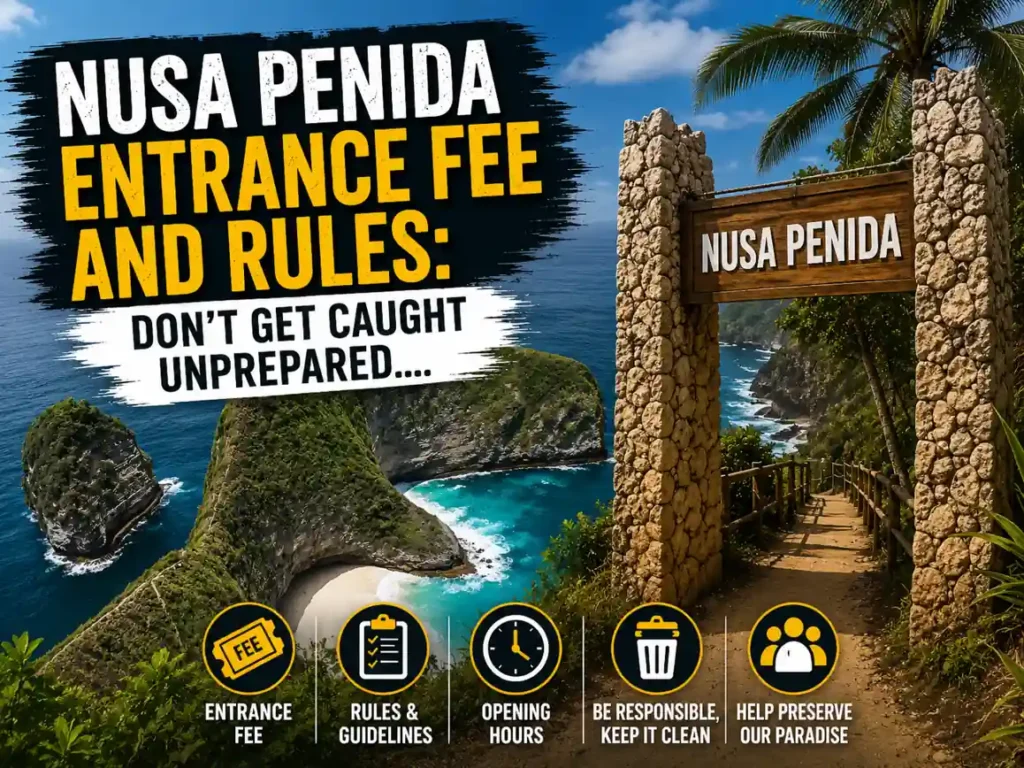
Planning a trip to Nusa Penida? Smart move. But here’s the thing: understanding the Nusa Penida entrance fee and rules before you go can save you from some very avoidable surprises. I’ve seen tourists show up completely unprepared, paying twice what they should, getting turned away from beaches, or nearly drowning at spots with no lifeguards. The island is stunning, no question.
But it has its own system, and you need to know how it works. This guide covers every Nusa Penida entrance fee and rule you’ll actually encounter, with real numbers, real advice, and a few honest warnings.
Do You Need to Pay an Entrance Fee for Nusa Penida?
Short answer: yes, but it’s not always charged the same way at every spot. Nusa Penida is part of the Klungkung Regency in Bali, and since around 2019, local authorities and village cooperatives have been collecting conservation and environmental fees from visitors. The goal is to fund beach cleanup, infrastructure, and reef protection, and honestly, the island needs it.
Most fees are collected at specific beaches or through tour operators when you book a fast boat from Sanur or Padang Bai. If you’re visiting independently, you’ll pay directly at the entrance gates of individual attractions.
Current Nusa Penida Entrance Fees
Here’s a quick overview of what you can expect to pay at the most popular spots. These are the standard rates as of 2025:
The table below gives you a full cost breakdown per attraction. Use it to budget your trip properly.
| Attraction | Entrance Fee (IDR) | Approx. USD |
| Kelingking Beach | IDR 20,000 | ~$1.30 |
| Angel’s Billabong | IDR 20,000 | ~$1.30 |
| Broken Beach (Pasih Uug) | IDR 20,000 | ~$1.30 |
| Crystal Bay Beach | IDR 10,000 | ~$0.65 |
| Atuh Beach | IDR 20,000 | ~$1.30 |
| Diamond Beach | IDR 20,000 | ~$1.30 |
| Environmental/Conservation Levy | IDR 100,000 per person | ~$6.50 |
Note: The IDR 100,000 conservation levy is separate from individual attraction fees and is often collected on arrival via fast boat or at the harbor.
Where and How to Pay the Entrance Fee
Most visitors pay the IDR 100,000 environmental levy either at the Nusa Penida harbor when they arrive or through their fast boat operator. This fee was introduced following a collaborative effort between the Klungkung local government and POKDARWIS (local village tourism groups) to manage overtourism sustainably.
According to Bali Tourism Board guidelines, this levy should come with an official receipt — always ask for one. Some informal collectors exist near beaches, and having your receipt means you won’t be charged twice.
Individual beach fees are paid directly at the entrance gate of each spot, usually in cash. There are no card payment options at most gates, so bring small Indonesian rupiah bills. ATMs are limited on the island, with only a handful in Toyapakeh town.
How does the entrance fee process Work? Read more in Kelingking Beach Guide: I Almost Turned Back on Bali’s Famous T-Rex Hike.
Extra Costs to Expect Besides the Entry Fee
The entrance fees are honestly the smallest part of what you’ll spend. Here’s what catches people off guard:
- Scooter rental: IDR 60,000–80,000 per day (most popular way to get around)
- Driver hire: IDR 300,000–500,000 for a full-day private tour
- Fast boat from Sanur or Padang Bai: IDR 150,000–250,000 each way per person
- Parking fees at each beach: IDR 2,000–5,000 per bike
- Food and drinks: Very affordable, expect IDR 30,000–60,000 per meal at local warungs
- Snorkeling gear rental near Crystal Bay: Around IDR 50,000 per set
Budget roughly IDR 600,000–900,000 (around $40–60 USD) per person for a comfortable one-day visit, including boat, transport, fees, and food.
The table below breaks down costs for both options so you can pick what fits your style.
| Option | Average Cost | Best For |
| Full-Day Tour Package | IDR 350,000–550,000 per person | First-timers, hassle-free experience |
| Independent (scooter) | IDR 200,000–350,000 per person | Experienced travelers, flexible itinerary |
| Private Car + Driver | IDR 500,000–700,000 per day (whole car) | Groups of 3–4, comfort-focused visitors |
A breakdown of costs beyond the Entrance Fee; Read more in Kelingking Beach Cost: What You’ll Actually Pay From Start to Finish.
Nusa Penida Entry Rules: Visitors Should Know
Beyond the fees, there are actual rules that apply to everyone entering the island. Some are enforced strictly. Others… less so. But ignorance won’t protect you.
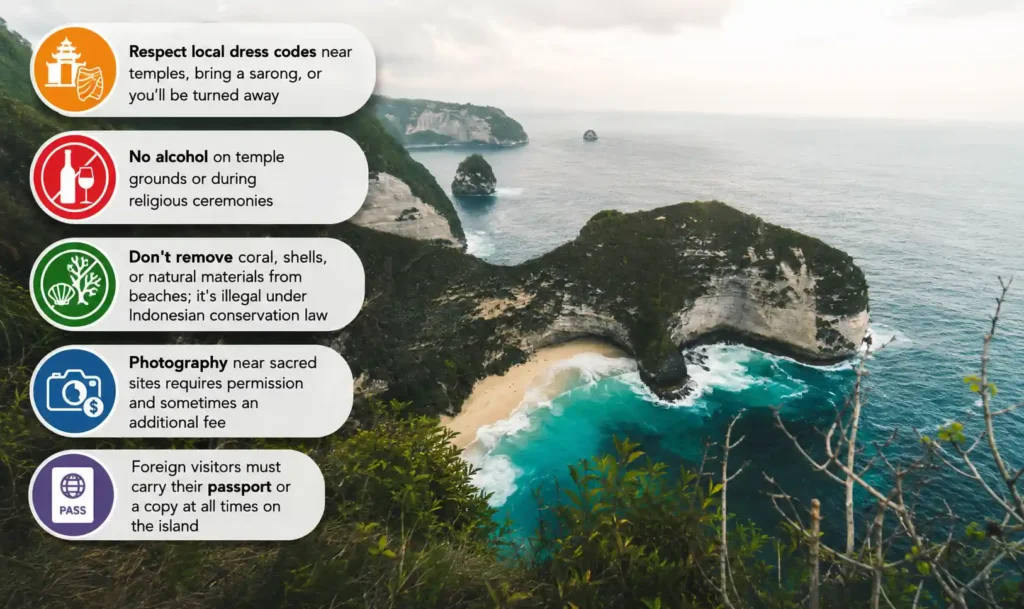
- Respect local dress codes near temples, bring a sarong, or you’ll be turned away
- No alcohol on temple grounds or during religious ceremonies
- Don’t remove coral, shells, or natural materials from beaches; it’s illegal under Indonesian conservation law
- Photography near sacred sites requires permission and sometimes an additional fee
- Foreign visitors must carry their passport or a copy at all times on the island
One thing I didn’t know on my first visit: some beaches close temporarily during Nyepi (Balinese Day of Silence) and local Odalan festivals. Check the Balinese Hindu calendar before booking.
Beach and Attraction Rules in Nusa Penida
Each beach has its own micro-rules, often posted on signboards at the entrance, which most visitors walk right past. Here’s what the signs usually say:
- No littering, fines can be issued, though enforcement varies
- No campfires or overnight stays on protected beaches
- Kelingking Beach viewpoint: Do NOT attempt to climb down to the beach without a guide; the path is extremely steep, and several accidents have occurred
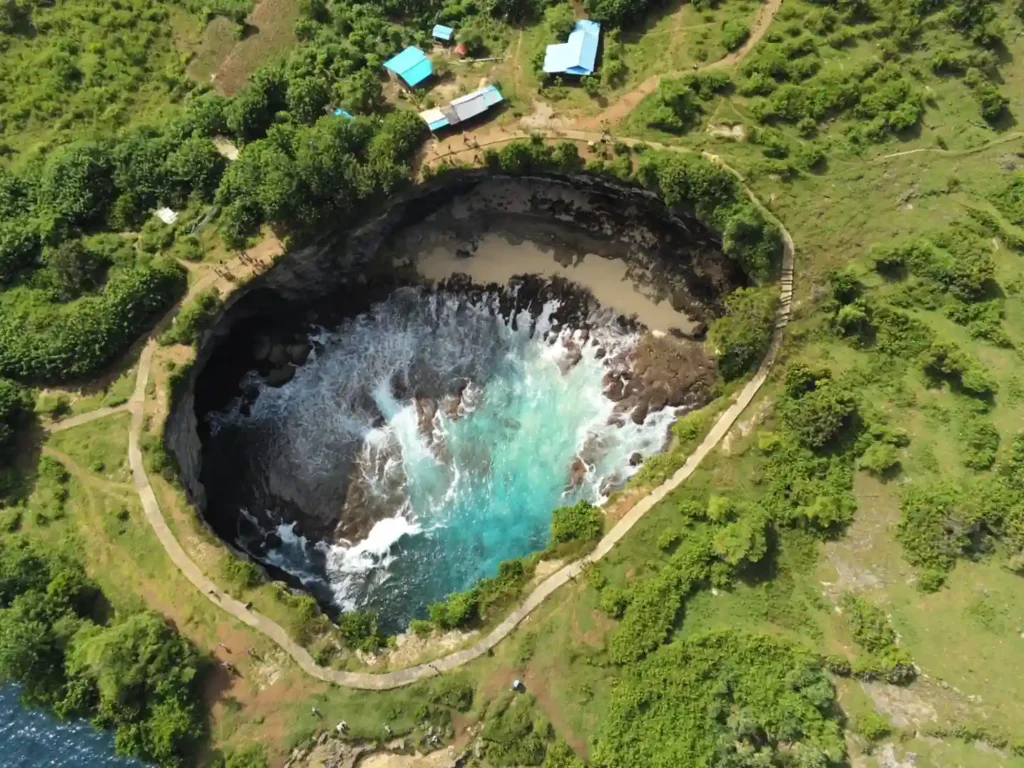
- Broken Beach: Swimming is strictly prohibited due to strong undercurrents and the closed lagoon structure
- Angel’s Billabong: Check tide times before swimming, the pool is safe only at low tide; high tide makes it dangerously turbulent
The Bali BKSDA (Natural Resources Conservation Agency) has classified several Nusa Penida zones as marine protected areas, meaning spearfishing, anchoring on coral, and collecting marine life are all banned and carry heavy penalties.
Safety Rules for Swimming and Exploring
This is honestly the most important section. Nusa Penida has some of the most beautiful swimming spots in Southeast Asia, but also some of the most dangerous currents in Bali. The ocean here is not forgiving.
- Only swim at Crystal Bay, Atuh Beach, and Gamat Bay; these are the safest spots for swimming
- Never swim alone, currents shift without warning, especially between June and September
- No lifeguards are present at most beaches; if something goes wrong, response time is slow
- Do not swim during high tide at Angel’s Billabong, as visitors have been swept away
- Strong rip currents at Kelingking Beach: swimming is strongly discouraged even for experienced swimmers
- Children should only enter the water at designated, calm beach areas with adult supervision
Manta Ray Point near Toyapakeh is popular for snorkeling, but currents can be extreme. Always go with a local guide who knows the tidal patterns. This isn’t something to wing on your own.
Drone Rules and Photography Guidelines
Drones are popular on Nusa Penida; the views genuinely deserve it. But there are rules, and they’re getting stricter.
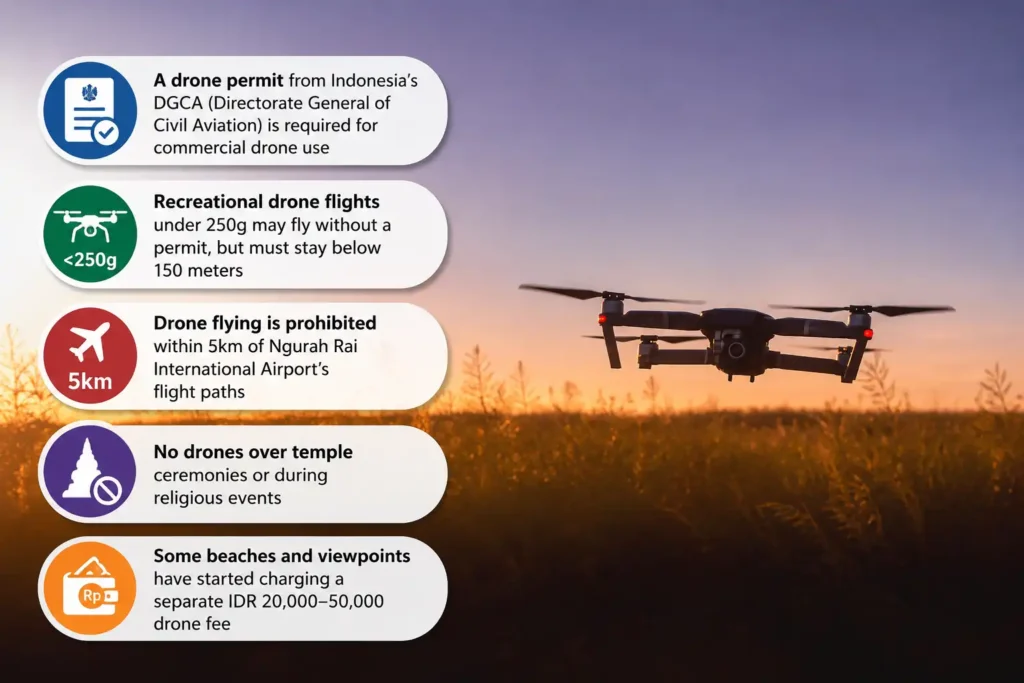
- A drone permit from Indonesia’s DGCA (Directorate General of Civil Aviation) is required for commercial drone use
- Recreational drone flights under 250g may fly without a permit, but must stay below 150 meters
- Drone flying is prohibited within 5km of Ngurah Rai International Airport’s flight paths
- No drones over temple ceremonies or during religious events
- Some beaches and viewpoints have started charging a separate IDR 20,000–50,000 drone fee
According to Indonesia’s DGCA regulations updated in 2023, all drones above 250g must be registered, and operators must carry proof of registration while flying. Fines for unauthorized commercial drone use can reach IDR 5,000,000.
Best Time to Avoid Crowds in Nusa Penida
Timing your visit matters more than most travel guides admit. Here’s what’s actually true from on-the-ground experience:
The island gets genuinely overwhelming between July and August, these are peak European and Australian holiday months. Kelingking Beach viewpoint can have 200+ tourists at once. It loses a lot of its magic.
Visit between May and June or September and October for the sweet spot: decent weather, calmer seas, and far fewer people. The dry season runs May through October overall, but the edges of the season are your best bet for both good conditions and breathing room.
Arrive at the beaches by 7:00–8:00 AM to beat the tour groups. Most day-trip tourists from Bali arrive between 10 AM and noon.
Best Time to Visit to Avoid Crowds
Beyond just timing your day, here’s a seasonal breakdown to help you plan smarter:
The table below compares each season so you can pick the right window for your trip.
| Month | Weather | Crowd Level | Best For |
| January–March | Rainy, rough seas | Low | Budget travelers, quiet beaches |
| April–May | Transitional, mild | Moderate | Best balance, great conditions |
| June–August | Dry, calm | Very High | Peak season, expect crowds |
| September–October | Dry, pleasant | Moderate | Second-best window |
| November–December | Rain starts | Low | Budget deals, fewer tourists |
Tips to Make Your Nusa Penida Visit Smoother
A few practical things that make a real difference:
- Book your fast boat in advance during peak season, boats from Sanur depart between 7 AM and 3 PM, and popular services sell out
- Download offline maps (Maps.me or Google Maps offline area) before arriving, as mobile data is patchy in many parts of the island
- Carry enough cash in rupiah; most beach vendors and warungs don’t accept cards or GoPay
- Rent a scooter only if you’re an experienced rider; the roads in the southern part of the island are steep, narrow, and poorly maintained
- If visiting Kelingking, wear shoes with grip, the path is slippery even when dry
- Don’t overschedule. Three to four stops per day is realistic. Five is exhausting and usually means rushing each one
Here’s a quick cost comparison to help you decide between a tour package and going independent.
FAQs About Nusa Penida Entrance Fee and Rules
How much is the entrance fee for Nusa Penida in 2025?
The main environmental conservation levy is IDR 100,000 per person. Individual beaches charge an additional IDR 10,000–20,000 per spot. Budget IDR 150,000–200,000 total for all entrance fees in a day.
Is the Nusa Penida conservation fee mandatory?
Yes. The IDR 100,000 environmental levy is mandatory for all foreign visitors. It is typically collected at the harbor or through your boat operator. Always request a receipt.
Can I visit Nusa Penida without a tour?
Absolutely. Renting a scooter for IDR 60,000–80,000 per day and navigating independently is popular. However, it’s only advisable if you’re confident on a motorbike; the roads can be rough and steep.
What should I NOT do at Nusa Penida beaches?
Avoid swimming at Broken Beach and during high tide at Angel’s Billabong. Use caution on the Kelingking Beach trail. Leave coral, shells, and marine life untouched. Dispose of waste properly, as fines may be imposed for littering.
Is drone flying allowed in Nusa Penida?
Recreational drones under 250g can fly without a permit below 150 meters. Larger drones require DGCA registration. Flying over temples or ceremonies is prohibited at all times.
What is the best month to visit Nusa Penida?
May, June, September, and October offer the best combination of good weather, calm seas, and manageable crowds. Avoid July and August if you dislike busy tourist spots.
Are there ATMs on Nusa Penida?
There are a few ATMs in Toyapakeh town, but they run out of cash during peak season. Bring sufficient rupiah from Bali before crossing.