Planning a Sri Lanka south coast travel guide can feel confusing because every beach town offers something different. This guide breaks down the best stops from Bentota to Tangalle, including beaches, costs, travel routes, surf towns, whale watching, food, safety tips, and sample itineraries.
This Sri Lanka south coast travel guide is for travelers who want more than the usual Mirissa-and-Galle checklist. You’ll find river safaris in Bentota, snorkeling in Hikkaduwa, beginner surf days in Weligama, and quiet turtle beaches near Tangalle that many visitors rush past too quickly.
What is the best Sri Lanka south coast travel route?
The best Sri Lanka south coast route starts in Bentota and continues through Hikkaduwa, Galle, Unawatuna, Mirissa, Weligama, Ahangama, and Tangalle. Most travelers need 5 to 7 days for this route, while November to April is the best season for beaches, snorkeling, surfing, and whale watching.
What Is the Sri Lanka South Coast?
The Sri Lankan south coast runs roughly 250 km from Bentota in the west to Tangalle in the east, hugging the Indian Ocean. It includes major towns like Hikkaduwa, Unawatuna, Galle, Mirissa, Weligama, Ahangama, and Tangalle. The region is famous for colonial history, surf breaks, whale watching, temple sites, and some of the most photogenic beaches in South Asia. Most travelers base themselves in 2–3 spots and explore from there.
Why the South Coast Should Be on Your Sri Lanka Itinerary
Let me be honest, Sri Lanka’s south coast is a bit of a gift. You’ve got colonial history in Galle, world-class surf at Weligama, blue whale sightings off Mirissa, and quiet, almost-empty beaches near Tangalle.
Sri Lanka’s south coast is one of the country’s busiest travel areas, attracting both local and international visitors every year. In 2023 alone, Sri Lanka welcomed over 1.2 million foreign tourists. But the surprising part is this: drive just 15 minutes away from the main road, and you can still find quiet beaches where it feels like nobody else has been.
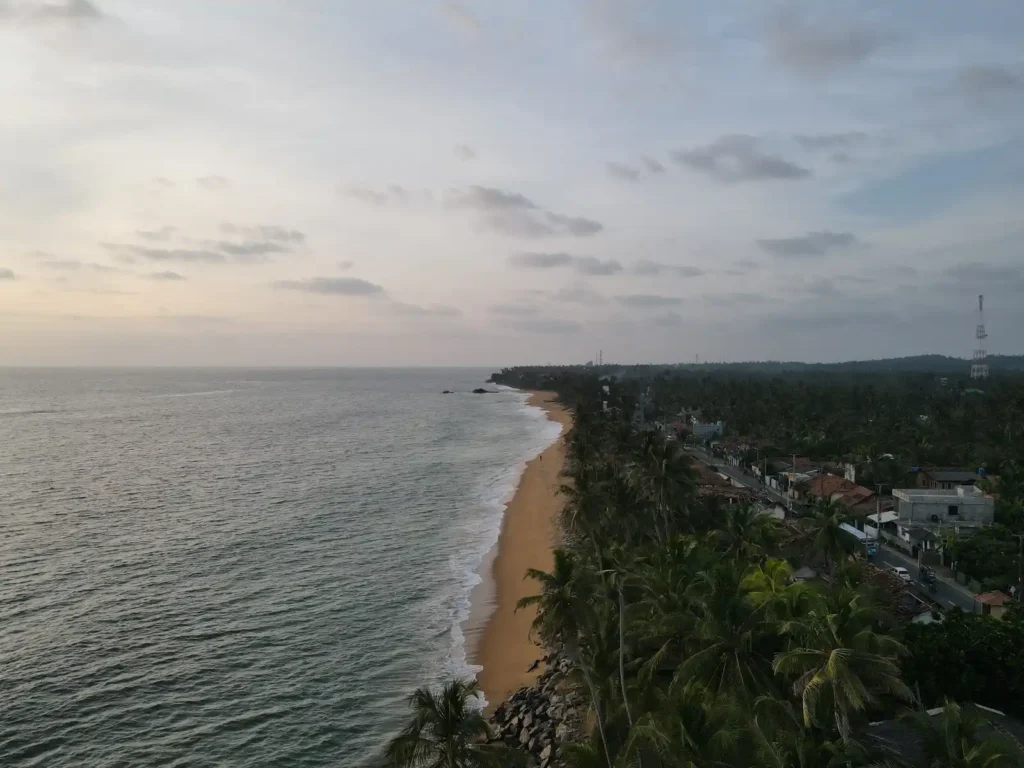
The southern province is also one of the safest and most traveler-friendly zones in Sri Lanka, according to the Ministry of Tourism’s 2023 safety index. Infrastructure is solid. English is widely spoken. And the food, oh, the food. Kottu roti at midnight, fresh crab curry by the sea, rice and curry on a banana leaf for LKR 250 (․0.75). It’s all there.
South Coast at a Glance
| Destination | Best For | Avg. Cost/Night (USD) | Distance from Colombo |
| Bentota | River safaris, watersports | $30–70 | 65 km |
| Hikkaduwa | Snorkeling, surf, nightlife | $20–60 | 98 km |
| Unawatuna | Family beach, diving | $25–80 | 125 km |
| Galle | Colonial history, cafes | $40–150 | 116 km |
| Mirissa | Whale watching, sunsets | $30–100 | 150 km |
| Weligama | Beginner surfing | $20–70 | 158 km |
| Tangalle | Quiet beaches, turtles | $25–80 | 196 km |
Best Time to Visit Sri Lanka’s South Coast
The short answer: November through April is the sweet spot. The southwest monsoon hits the south coast hard between May and October, so if you show up in June expecting blue skies, you might be disappointed. The Department of Meteorology Sri Lanka, officially classifies November to April as the dry season for the southern and western provinces.
That said, I visited in late October once and had four consecutive sunny days. The weather is unpredictable in the shoulder months. My advice? Build flexibility into your plans.
- November to April: Dry season, best beach and surf conditions
- December to March: Peak whale watching season off Mirissa (blue whales, sperm whales)
- May to September: Monsoon season, fewer crowds, lower prices
- October to November: Shoulder season, hit or miss weather
Planning a trip to Sri Lanka’s South Coast? Read more in Best Time to Visit Goyambokka Beach (And Why Timing Changes Everything).
Best Month to Visit the South Coast of Sri Lanka
January and February are widely considered the best months to visit Sri Lanka’s south coast. Rainfall is minimal, sea conditions are calm for snorkeling and diving, and whale watching is at its peak near Mirissa. Average temperatures sit around 29–32°C. December is also excellent but busier and pricier due to the holiday season.
Planning Your Route Along the Coast
Most people arrive via Colombo Bandaranaike International Airport (CMB), which handles all major international flights. From Colombo, you can take the coastal train, honestly one of the most scenic train rides in Asia, or hire a tuk-tuk driver for short hops between towns. The train from Colombo Fort to Galle takes about 2–2.5 hours and costs around LKR 200–500 (roughly $0.60–1.50).
The classic route goes west to east: Bentota → Hikkaduwa → Unawatuna → Galle → Mirissa → Weligama → Ahangama → Tangalle. Most travelers spend 1–2 nights per stop, though Galle easily absorbs 2–3 days on its own.
Suggested Route & Travel Times
| Route Leg | Transport | Approx. Time | Approx. Cost |
| Colombo → Bentota | Train / Tuk-tuk | 1.5 hrs | LKR 200–500 |
| Bentota → Hikkaduwa | Bus / Train | 45 min | LKR 80–200 |
| Hikkaduwa → Galle | Train / Bus | 30–45 min | LKR 60–150 |
| Galle → Mirissa | Tuk-tuk / Bus | 45 min–1 hr | LKR 200–600 |
| Mirissa → Tangalle | Bus / Tuk-tuk | 1–1.5 hrs | LKR 150–400 |
The Best Stops on the South Coast
Now that you know the route, here are the stops actually worth building your itinerary around.
Bentota: Where the River Meets the Sea
Bentota is a bit of a surprise. Most people pass through it on the way south, which is a mistake. The Bentota River runs right behind the beach, and the river safaris here are genuinely excellent; you’ll spot monitor lizards, kingfishers, and, if you’re lucky, crocodiles. The Bentota River Safari is operated by several licensed tour operators approved by the SLTDA. I went at 6 am on a boat with three other travelers and saw more wildlife than I expected. The beach itself is wide, calm, and far less crowded than spots further south.
Hikkaduwa: Surf, Snorkeling, and Real Beach Vibes
Hikkaduwa has a reputation as the rowdy sibling of the south coast, but it’s earned that rep for good reason. The coral reef at Hikkaduwa National Park, designated by the Central Environmental Authority of Sri Lanka, is a 10-minute swim from the beach and home to hawksbill turtles, reef fish, and soft corals. The surf is consistent, especially from October to April, and the beach road has cheap guesthouses, surf schools, and restaurants that stay open late. It’s fun. Not fancy, but fun.
Galle: Colonial Streets and Ocean Views
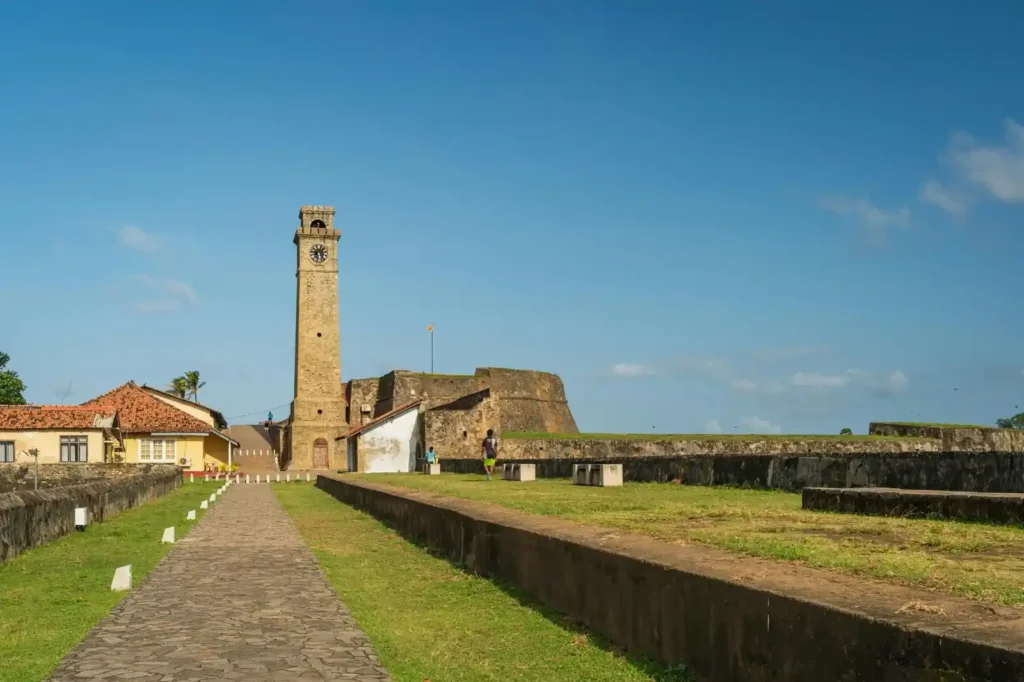
Galle Fort is the standout. A UNESCO World Heritage Site since 1988, the Dutch colonial fort sits on a rocky peninsula jutting into the Indian Ocean. Inside the walls, you’ve got boutique hotels, art galleries, the Galle National Museum, and some of the best coffee in Sri Lanka.
I spent half a day just walking the ramparts at sunset. The fort authority has maintained the site well, and there’s a small entrance fee for the museum (around LKR 500). Outside the fort, the city is busy and chaotic in the best way.
Mirissa: Whale Watching Capital of Sri Lanka
Mirissa is the place to come if whale watching is on your list, and it should be. Blue whales, the largest animals on Earth, pass through these waters between December and April.
The Mirissa Fisheries Harbour operates licensed whale watching tours, and operators like Raja and the Whales (recommended by Lonely Planet and verified by SLTDA) run early-morning departures at around $30–40 per person. Go early, bring seasickness tablets, and don’t book the cheapest option; there’s a real variation in boat quality here.
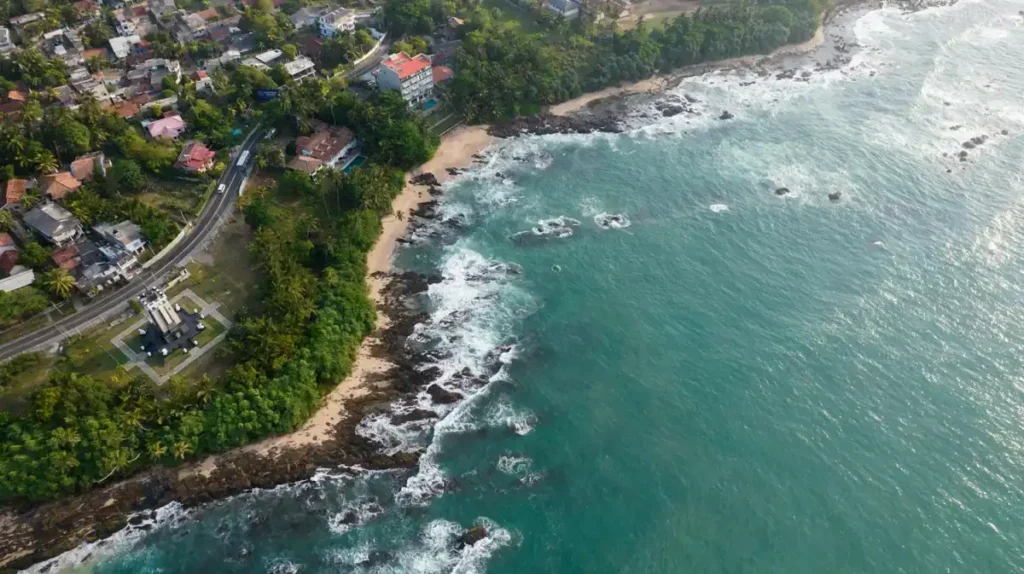
The beach itself is a crescent shape, pretty but gets crowded. Sunset from the coconut tree hill above the beach is the real free thing worth doing here. Locals have been doing it for years, and it’s not overrated.
Weligama: The Best Place to Learn Surfing in Sri Lanka
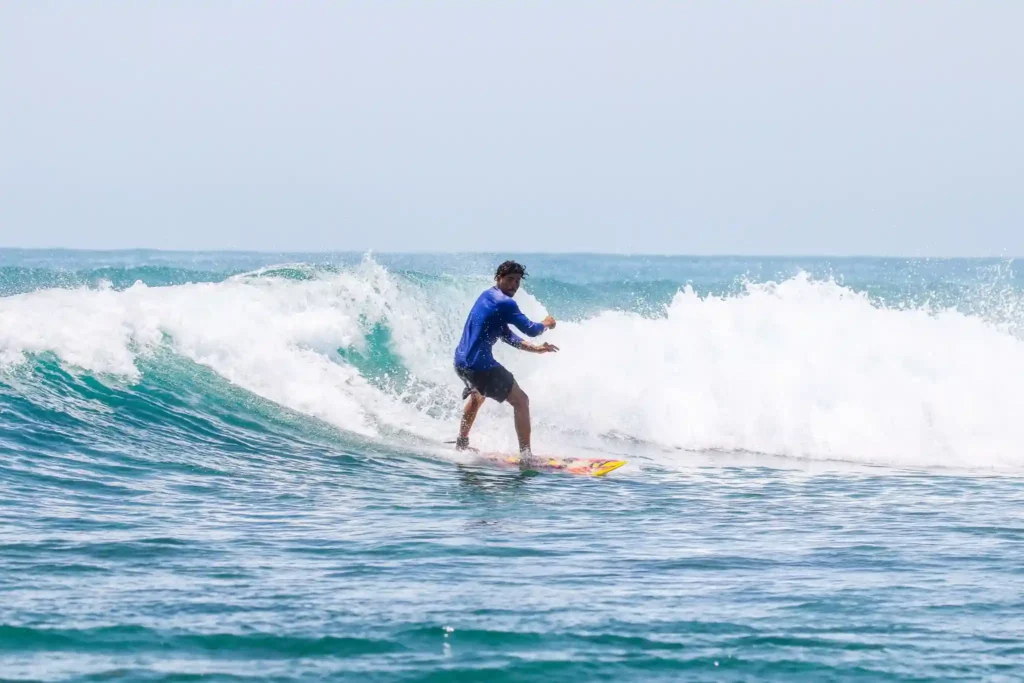
If you’ve never surfed before, Weligama is where you start. The bay is wide and protected, the waves are gentle and forgiving, and surf schools line the beach offering 2-hour lessons for around $15–20. The Sri Lanka Surfing Association has certified several instructors here. Even intermediate surfers come to Weligama for the consistency. After your lesson, eat at one of the small seafood shacks near the beach, grilled fish with lime and chili, around LKR 500.
Ahangama: Low-Key and Quietly Trendy
Ahangama sits just east of Weligama and has quietly become one of the more interesting stops on the coast. There’s a growing community of surfers, digital nomads, and long-stay travelers who have set up here, bringing with them good cafes, yoga studios, and a noticeably relaxed energy. The surf at Kabalana Beach is more powerful than at Weligama, at an intermediate level. Prices are lower than in Galle or Mirissa.
Tangalle: Quiet Beaches and Sea Turtles
Tangalle is the end of the road for most south coast trips, and it’s the right note to end on. The beaches are wide, empty, and edged with casuarina trees. Rekawa Beach, about 10 km east of Tangalle town, is one of the most important sea turtle nesting sites in Sri Lanka.
The Rekawa Turtle Conservation Project, run in partnership with the IUCN, allows visitors to observe nesting turtles at night under the supervision of trained guides. It’s one of the most memorable things I’ve done anywhere.
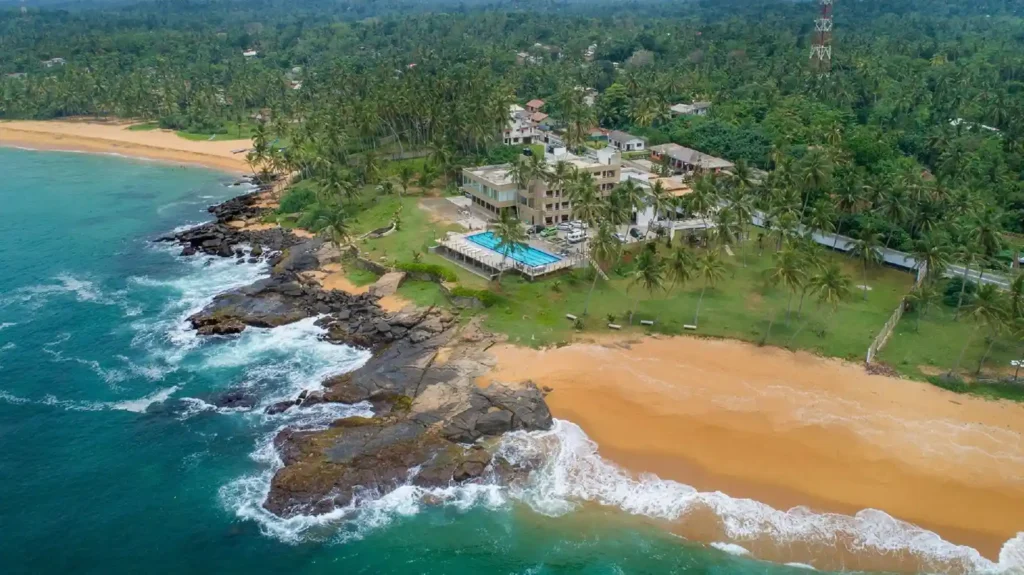
Not sure where to stop along Sri Lanka’s South Coast? Read more in Sri Lanka Secret Beaches Guide: 11 Hidden Shores Most Tourists Miss to discover the destinations worth your time.
The Best Beaches on Sri Lanka’s South Coast
| Beach | Location | Best For | Crowd Level |
| Unawatuna Beach | Unawatuna | Families, snorkeling | High |
| Mirissa Beach | Mirissa | Sunsets, whale watching base | Medium–High |
| Jungle Beach | Near Unawatuna | Snorkeling, seclusion | Low |
| Talalla Beach | Near Matara | Swimming, quiet escape | Very Low |
| Rekawa Beach | Tangalle | Turtle nesting, nature | Very Low |
| Induruwa Beach | Bentota | Calm water, families | Low–Medium |
Is Unawatuna or Mirissa Better?
Unawatuna is better for families and calm swimming; the bay is sheltered and safe year-round. Mirissa is better for atmosphere, whale watching access, and nightlife. If you only have one night in the area, Mirissa edges it for most solo travelers and couples. For families or snorkelers, Unawatuna wins.
Top Things to Do Beyond the Beach
- Visit Galle Fort and walk the Dutch ramparts at sunset
- Take a Bentota River safari (book with SLTDA-licensed operators)
- Go whale watching from Mirissa Fisheries Harbour (December–April)
- Snorkel at Hikkaduwa Coral Sanctuary (10-min swim from the beach)
- Watch sea turtles nest at Rekawa Beach with the IUCN conservation project
- Take a cooking class in Galle or Mirissa (many guesthouses offer these)
- Visit Martin Wickramasinghe Folk Museum in Koggala, one of Sri Lanka’s best cultural museums
- Surf or take lessons at Weligama Bay
What Are the Best Things to Do in Galle, Sri Lanka?
The top things to do in Galle include walking the UNESCO-listed Dutch Fort, visiting the Galle National Museum, exploring the independent boutiques and cafés inside the fort walls, and watching cricket being played on the famous Galle International Cricket Stadium, one of the most scenic cricket grounds in the world. Outside the fort, the Dutch Reformed Church (built 1755) and the Old Dutch Hospital complex are also worth seeing.
What to Eat Along the South Coast
The food here is part of the experience. Full stop. Rice and curry are the foundation; at local spots, you’ll get 6–8 curries alongside white rice for around LKR 300–500. Kottu roti, shredded flatbread stir-fried with vegetables, egg, and often chicken or beef, is the ultimate street food, especially late at night. In Galle Fort, you’ll find higher-end restaurants serving modern Sri Lankan cuisine; Mama’s Rooftop Restaurant and The Fort Printers are consistently mentioned by travelers and in publications like the Lonely Planet Sri Lanka guide.
Fresh seafood is everywhere on the coast. Crab curry in Tangalle, grilled fish near Mirissa, prawn kottu in Hikkaduwa. Eat where locals eat, and you’ll be fine. One honest tip: if the menu has photos and the prices are in US dollars, expect tourist markup. Walk one street back, and you’ll find the same quality for a third of the price.
Getting Around the South Coast Without Stress
How Do You Get Around Sri Lanka’s South Coast?
The coastal train is the best and most scenic option for longer distances. Sri Lanka Railways runs regular services from Colombo Fort station south through Aluthgama (Bentota), Hikkaduwa, and Galle, with connections onward. Tickets are cheap, the views are stunning, and the trains are mostly on time. For shorter hops, Galle to Mirissa, Mirissa to Weligama, tuk-tuks are ideal.
Agree on the fare before you get in; a 10-15 minute ride should cost LKR 200–400. Intercity buses are also widely available and very cheap (LKR 50–200 for most routes), but can be crowded.
Planning to travel between beaches and towns? Read more in Goyambokka Beach Sri Lanka Travel Guide: This Beach Feels Like a Secret to make getting around simple
Where to Stay for Every Budget
| Budget Level | Type | Price Range/Night | Recommended Areas |
| Budget | Guesthouse / Hostel | $10–25 | Hikkaduwa, Weligama |
| Mid-range | Boutique hotel / B&B | $30–80 | Unawatuna, Mirissa, Ahangama |
| Luxury | Boutique resort / Villa | $100–300+ | Galle Fort, Tangalle, Bentota |
| Backpacker | Hostel dorm | $8–15 | Hikkaduwa, Unawatuna |
Is Sri Lanka’s South Coast Expensive?
Sri Lanka’s south coast is affordable by most global standards. Budget travelers can get by on $25–40 per day (accommodation, food, and local transport). Mid-range travelers typically spend $60–100/day. Luxury resorts in Galle or Tangalle start at $100–150 per night. The highest costs are usually accommodation and activities like whale watching ($30–40/person) or diving ($50–80 for two dives).
Common Travel Mistakes to Avoid
- Visiting during monsoon season (May–September) without checking specific forecasts
- Booking whale watching with unlicensed operators: stick to SLTDA-certified companies
- Underestimating how long Galle Fort deserves: most people allocate 2 hours, but need a full day
- Not carrying cash: many local guesthouses and restaurants are cash-only
- Skipping Tangalle and Ahangama because they’re “less famous.”
- Trusting overly optimistic weather apps: pack a light rain jacket regardless of season
Sample South Coast Itineraries
3-Day South Coast Itinerary
- Day 1: Galle Fort; explore the ramparts, visit the National Museum, eat at Pedlar’s Inn
- Day 2: Mirissa; whale watching at dawn, beach afternoon, sunset from coconut hill
- Day 3: Weligama surf lesson, then back to Colombo via coastal train
5-Day South Coast Itinerary
- Day 1: Hikkaduwa; coral sanctuary snorkel, beach, local kottu
- Day 2: Galle Fort; full day exploring
- Day 3: Unawatuna; Jungle Beach, diving or snorkeling
- Day 4: Mirissa; whale watching, relax
- Day 5: Weligama surf + Ahangama cafés
7-Day South Coast Itinerary
- Days 1–2: Bentota; river safari, Induruwa Beach, relaxation
- Day 3: Hikkaduwa; snorkel, surf, nightlife
- Day 4: Galle Fort; colonial history, shopping, great food
- Day 5: Mirissa; whale watching, coconut hill sunset
- Day 6: Weligama + Ahangama
- Day 7: Tangalle; Rekawa turtle beach at night
Is Sri Lanka’s South Coast Safe for Travelers?
Yes. Sri Lanka’s south coast is widely considered safe for solo travelers, families, and couples. The Ministry of Tourism and the local police maintain a visible presence in tourist areas. Standard precautions apply: watch your belongings on the beach, use licensed tuk-tuks at night, and check travel advisories from your home government before departure.
The most common issues reported to the Tourist Police (reachable at 1912 in Sri Lanka) are minor theft and overcharging, not violent crime.
Quick Final Tips Before You Go
- Buy a local SIM card at the airport (Dialog or Mobitel offer reliable data)
- Download maps offline, Google Maps works well for the south coast, even in rural areas
- Carry LKR cash for local restaurants, tuk-tuks, and small guesthouses
- Book whale watching in advance during peak season (January–March)
- Respect temple dress codes: cover shoulders and knees at Buddhist and Hindu sites
- Learn 2–3 Sinhala phrases, locals genuinely appreciate it
Final Thoughts on Sri Lanka’s South Coast
Sri Lanka’s south coast is the kind of trip that gives you a little bit of everything: calm beaches, surf towns, colonial streets, wildlife moments, local food, and quiet corners that still feel untouched. You can keep it simple with Galle, Mirissa, and Weligama, or slow down and add Bentota, Hikkaduwa, Ahangama, and Tangalle for a fuller coastal route.
The real beauty of this stretch is that you do not need a perfect plan to enjoy it. Take the train, stop where the sea looks good, eat where the locals are eating, and leave space for those unexpected beach days that usually become the best part of the journey. If you want a Sri Lanka trip that feels easy, warm, scenic, and full of small surprises, the south coast deserves a serious place on your itinerary.
Frequently Asked Questions
How many days do you need for Sri Lanka’s south coast?
A minimum of 5 days lets you cover the highlights (Galle, Mirissa, Weligama). Seven to ten days is ideal if you want a relaxed pace with time for Bentota, Hikkaduwa, and Tangalle.
What is the best beach on Sri Lanka’s south coast?
Choose Unawatuna for family-friendly swimming, Mirissa for vibrant atmosphere and whale watching, and Talalla or Rekawa Beach near Tangalle for a peaceful getaway. Unawatuna is ideal for families and swimming, Mirissa stands out for its lively atmosphere and whale watching, while Talalla and Rekawa Beach near Tangalle are perfect for a peaceful retreat. There’s no single best; it depends on what you’re after.
Can you do a day trip from Colombo to the south coast?
You can day-trip to Galle (2 hours by train) or Hikkaduwa, but it feels rushed. Overnight stays let you see the coast properly, especially for whale watching, which requires a 5 am departure from Mirissa.
Is Sri Lanka’s south coast good for solo female travelers?
Generally yes. Galle, Unawatuna, and Mirissa have established tourist infrastructure and a welcoming atmosphere. Standard travel safety practices apply. The Sri Lanka Tourism Board’s official safety guidelines for solo travelers are a useful reference.
How do I get from Colombo to the south coast?
The most scenic and affordable option is the coastal train from Colombo Fort Station. Services run multiple times daily to Hikkaduwa, Galle, and beyond. Taxis and private transfers are also available, but cost significantly more.
What currency does Sri Lanka use, and should I exchange money?
Sri Lanka uses the Sri Lankan Rupee (LKR). Exchange at the airport or at licensed money changers in Galle or Mirissa. ATMs are widely available in larger towns. Exchange rates change regularly, so check the latest LKR to USD rate before your trip.