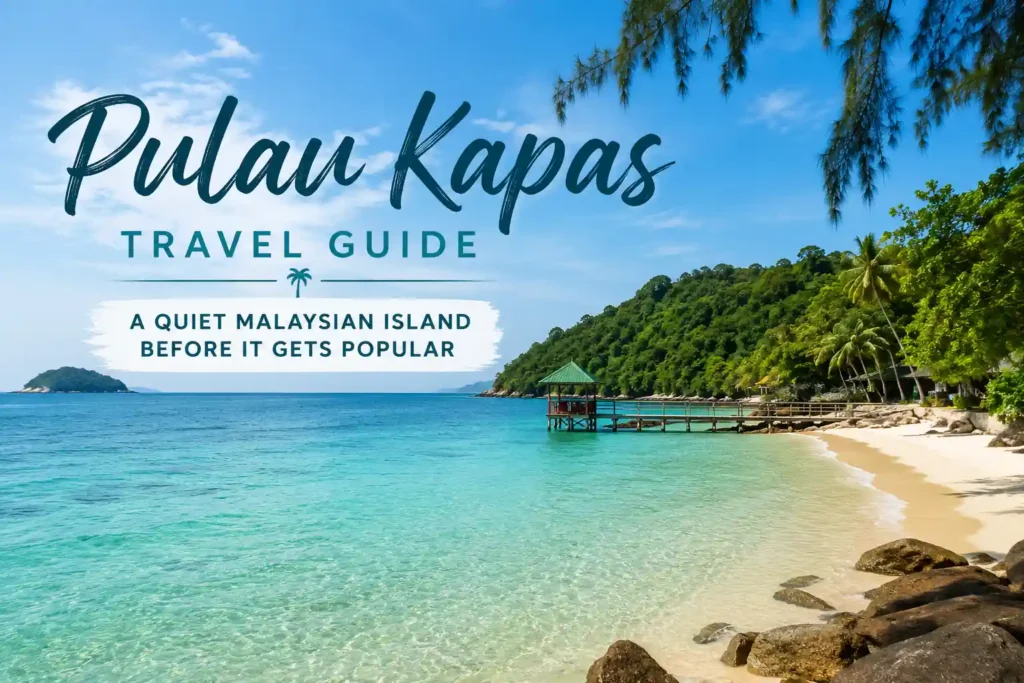
Pulau Kapas is a small island off the coast of Terengganu, about 6 kilometres from Marang Jetty on Malaysia’s east coast. The boat ride takes only 15 to 20 minutes, making it one of the easiest islands to reach from Kuala Terengganu. Unlike Langkawi or the Perhentian Islands, Pulau Kapas stays quiet even during peak season, with clear turquoise water, white sand beaches, and no large resorts or crowded beach clubs.
These hidden islands in Malaysia still offer empty beaches, crystal-clear water, and a level of peace most travelers never experience.
The island has no roads or cars, so all movement is on foot along its sandy paths connecting the guesthouses and jetty. Most boat operators run daily trips between 9am and 5pm, and the island is usually closed to visitors during the monsoon season from November to February. Prices here are also lower than on Malaysia’s more popular islands, which makes it a good choice for budget travellers who still want a peaceful beach experience.
How to Get to Pulau Kapas

Getting to Pulau Kapas is actually pretty simple once you know the route. Most travellers arrive by bus or car to Kuala Terengganu first, then take a short taxi or Grab ride south to Marang Jetty. From there, it’s a 15 to 20-minute boat ride to the island. The whole journey from Kuala Lumpur takes around five to six hours, depending on your transport.
Read more: The easiest way to reach Pulau Kapas from Kuala Lumpur — flights, boats, costs, local tips, and travel mistakes to avoid.
If you’re flying, the nearest airport is Sultan Mahmud Airport in Kuala Terengganu. Flights from KL take under an hour, and from the airport, a taxi to Marang Jetty costs around RM 30 to RM 50. Alternatively, the overnight bus from KL’s TBS terminal to Kuala Terengganu is popular with budget travellers and costs between RM 35 and RM 60.
How do I take the ferry to Pulau Kapas?
Ferries to Pulau Kapas depart from Marang Jetty in Terengganu. The boat ride takes about 15 to 20 minutes. Ferries usually run between 8 AM and 5 PM, with more frequent departures during peak season. A return ticket costs around RM 35 to RM 50 per person.
Pulau Kapas Ferry Guide

The ferry service isn’t operated on a fixed published schedule, the way bigger tourist islands are. Instead, boats depart when they have enough passengers, which usually means every 30 to 60 minutes during busy periods. During quieter times, you might wait a bit longer.
Read about Pulau Kapas Entrance Fee and Rules
| Jetty Location | Marang Jetty, Terengganu |
| Ferry Duration | 15 to 20 minutes |
| Operating Hours | Approx. 8 AM – 5 PM daily |
| Return Ticket Price | RM 35 – RM 50 per person |
| Best Time to Board | Morning (before 10 AM) |
| Off-Season Note | Ferries stop Oct–Feb (monsoon) |
One thing worth knowing: ferries stop operating during the monsoon season, roughly from October to February. The Malaysia Tourism Promotion Board confirms that most east coast islands, including Pulau Kapas, are effectively closed to visitors during this period due to rough seas and safety concerns. Always check before you plan your trip.
Read more before taking the Pulau Kapas ferry and discover what first-time visitors are usually never told.
Best Time to Visit Pulau Kapas
The ideal time to visit Pulau Kapas is between March and September, when the sea is calm, the skies stay mostly clear, and snorkeling visibility is at its best. March to May is especially rewarding because the island feels quieter while the weather remains excellent. During my visit, the water was so clear in the morning that I could see small reef fish moving near the jetty before even stepping onto the beach.
Read more: From calm turquoise seas to peaceful island sunsets, here’s the best time to experience Pulau Kapas at its absolute best.
July and August bring more visitors, especially Malaysian families during school holidays and backpackers traveling around Southeast Asia. If you prefer a slower atmosphere, April or early June is usually the sweet spot. Locals at Marang Jetty told me weekdays in June can feel surprisingly empty, with stretches of beach where you hear little besides waves, cicadas from the jungle trail, and long-tail boat engines in the distance.
What is the best month to visit Pulau Kapas?
The best months are March to September, with March to May being especially good for fewer crowds and calm seas. Avoid October to February due to the northeast monsoon, which brings heavy rain and rough water, and ferry services are suspended.
Pulau Kapas vs Perhentian Islands: Which Should You Choose?
This is one of the most common questions I hear from travellers planning a trip to East Coast Malaysia. Both islands are stunning. But they offer genuinely different experiences, and the right choice depends on what you’re looking for.
The Perhentian Islands are more developed, better known, and have a livelier backpacker scene. Pulau Kapas, on the other hand, is smaller, quieter, and significantly cheaper. In my experience, Pulau Kapas suits travellers who want peace, nature, and value. Perhentian suits those who want a more social atmosphere and diving infrastructure.
| Crowd Level | Low – very quiet | Moderate to high |
| Accommodation Cost | RM 60 – RM 200/night | RM 80 – RM 350/night |
| Ferry Access | Marang Jetty (easy) | Kuala Besut (extra travel) |
| Snorkeling Quality | Very good | Excellent |
| Nightlife | None | Some beach bars |
| Best For | Budget, peace, nature | Diving, backpacker scene |
Ultimately, if you have time for only one island on the east coast and you care more about quietness than party vibes, Pulau Kapas is the stronger pick. But if you’re a serious diver or want a more social experience, Perhentian delivers more in those areas.
Pulau Kapas vs Langkawi: A Different Kind of Comparison

Read more Pulau Kapas vs Langkawi
Comparing Pulau Kapas to Langkawi is like choosing between a quiet beach escape and a busy tourist island. Langkawi has resorts, shopping, nightlife, and easier transport, so it suits families and first-time visitors. Pulau Kapas is smaller, quieter, and less developed, with clear water, simple beaches, and a more relaxed atmosphere. If you enjoy nature and peaceful travel, Pulau Kapas is the better option.
Pulau Kapas Hotels and Resorts
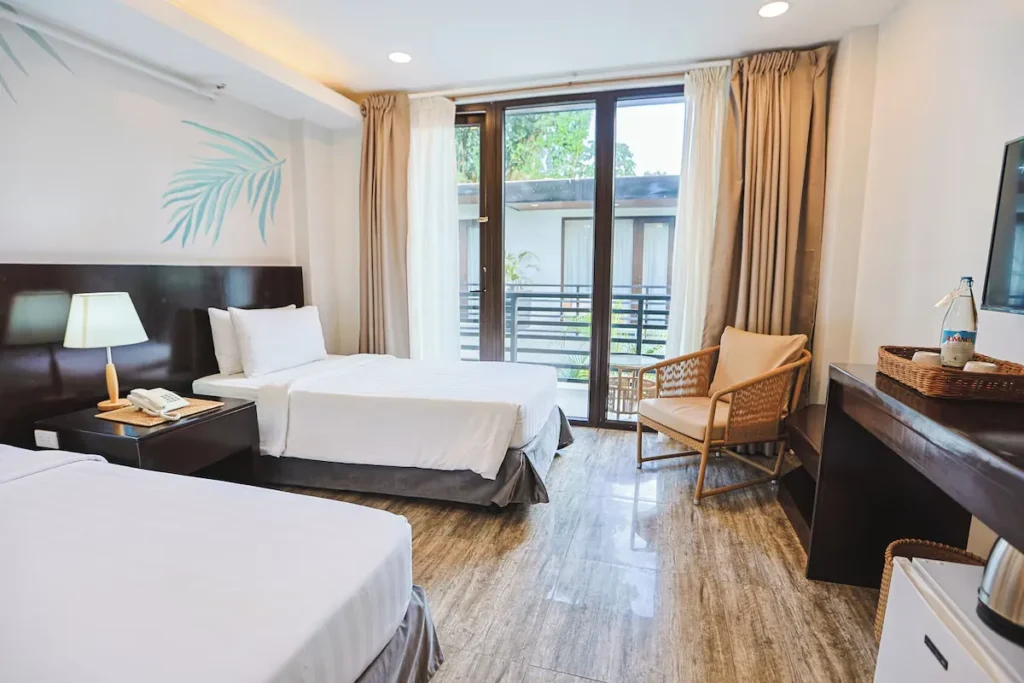
Accommodation on Pulau Kapas is limited but perfectly suited to the island’s relaxed character. There are no chain hotels or international resorts here. What you’ll find instead are simple beach chalets, small guesthouses, and a few mid-range resorts that sit right on the beachfront.
Read more about the best Pulau Kapas hotels & resorts for peaceful beachfront stays and quiet island escapes.
Based on recent traveller reports and my own stay, here’s a broad overview of what’s available:
- Kapas Island Resort – One of the more established options, offering basic beach chalets with meals available on-site. Good location and friendly staff.
- Lighthouse Kapas – Popular with divers and snorkelers. Simple but clean, with dive packages available.
- Pak Ya Chalet – Budget-friendly option with basic amenities, great for backpackers.
- Kapas Turtle Valley – A step above the rest in terms of comfort, with better-furnished rooms and a pleasant garden setting.
Most resorts operate on a half-board or full-board basis because options for independent meals are limited on the island. Booking in advance is strongly recommended during peak season.
Read more about the best Pulau Kapas hotels and resorts, from quiet beachfront chalets to peaceful island stays with sea views.
Pulau Kapas Cost Breakdown: What to Actually Expect

How much does a trip to Pulau Kapas cost per day?
A budget traveller can comfortably spend RM 80 to RM 150 per day on Pulau Kapas, including accommodation, meals, affordable beach destinations in Malaysia, and ferry. Mid-range travellers should budget RM 200 to RM 350 per day. The island is one of the most.
Read more about Selong Belanak entrance fees, beach rules, and tips to know before you go.
| Accommodation (per night) | 60 – 100 | 150 – 250 |
| Meals (3 per day) | 30 – 50 | 60 – 100 |
| Ferry (return ticket) | 35 – 50 | 35 – 50 |
| Snorkeling Trip | 40 – 60 | 60 – 80 |
| Miscellaneous / Water / Tips | 10 – 20 | 20 – 40 |
| Daily Total (approx.) | RM 80 – RM 150 | RM 200 – RM 350 |
These figures are based on real traveller experiences and current pricing as of 2024 to 2025. Prices can fluctuate slightly during peak periods, but overall, Pulau Kapas remains one of the most affordable island destinations in the region.
Learn more about what a Pulau Kapas trip actually costs, from ferries and beach stays to snorkeling, food, and hidden island expenses.
Budget Travel Malaysia Islands: Tips for Spending Less
Malaysia’s east coast islands are genuinely accessible on a tight budget. Here are the most effective strategies for keeping costs down:
Think Malaysia’s islands are expensive? This budget travel guide reveals
- Travel during shoulder season (March–June or September) to get lower accommodation rates and avoid crowds.
- Book a half-board package at your resort; it’s usually cheaper than paying for meals separately.
- Group together with other travellers for snorkeling trips, as most operators charge per group rather than per person.
- Bring your own snacks and water from the mainland, as everything on the island costs more due to transport.
- Consider a day trip from Marang instead of staying overnight if you’re on a very tight budget.
According to Tourism Selangor and several Malaysian travel bloggers with verified on-ground reporting, east coast islands, including Pulau Kapas, consistently rank as some of the most cost-effective beach destinations in Southeast Asia compared to Thai islands or Bali.
Things to Do in Pulau Kapas

Don’t let the island’s size fool you. There’s plenty to keep you busy, though ‘busy’ here means leisurely and enjoyable rather than rushed. The main activities revolve around the sea and the natural environment, which is exactly how it should be.
- Snorkeling around the coral reefs near the island’s edges
- Swimming in the calm, clear lagoon near the main beach
- Trekking the short jungle trail that connects the two sides of the island
- Kayaking around the coastline (equipment available from some resorts)
- Photography, the island offers genuinely spectacular compositions.
- Relaxing on the beach and watching the sunset over the South China Sea
One thing that surprised me: the jungle trail that cuts across the island takes about 20 to 30 minutes and gives you a completely different perspective. The path is simple but rewarding, and the view from the other side of the island is far less visited and genuinely lovely.
Is snorkeling good at Pulau Kapas?
Yes, snorkeling at Pulau Kapas is excellent. The water is clear, the coral reefs are healthy, and marine life, including reef fish, sea turtles, and occasional black-tip sharks, can be spotted. The best visibility is between April and August.
Pulau Kapas Snorkeling Guide Read more to see why Pulau Kapas is one of Malaysia’s most rewarding island escapes, offering more than just beautiful beaches.
Pulau Kapas Snorkeling Guide

The snorkeling around Pulau Kapas is genuinely impressive. During peak season, visibility can reach 10 to 15 metres, clear enough to spot coral patterns and schools of reef fish straight from the boat before you even enter the water. The reefs on the eastern and northern sides of the island feel surprisingly untouched, with colourful coral, clownfish, parrotfish, and occasional black-tip reef sharks moving through the shallows.
One thing I still remember clearly was drifting above a coral patch while tiny blue fish moved around in every direction, and the water stayed almost completely silent except for the sound of breathing through the snorkel. Locals also mentioned that sea turtles sometimes nest on the quieter beaches during certain months, and a few snorkelers on my boat claimed they spotted turtles near the deeper reef edge that same morning.
Most resorts and independent operators offer snorkeling trips covering three or four reef spots around the island. Trips usually cost RM 40 to RM 60 per person and include equipment. If you already have your own mask and fins, some operators will lower the price slightly.
The waters around Pulau Kapas are protected under Malaysia’s marine park system, which helps explain why the reefs still look healthy compared to many overcrowded beach destinations in Southeast Asia. Fishing and anchoring near coral zones are restricted, and you can genuinely see the difference once you’re in the water.
Thinking about snorkeling in Pulau Kapas? Read more in our complete Pulau Kapas Snorkeling Guide covering the best reefs, real costs, and what to actually expect underwater.
Pulau Kapas Itinerary: 2 Days on the Island
Two days is the perfect amount of time to experience Pulau Kapas without rushing. Here’s a practical plan:
Day 1 – Arrive and Explore
- Morning: Take the ferry from Marang Jetty, arrive before 10 AM
- Late Morning: Check in, head straight to the beach
- Afternoon: Join a snorkeling trip around the island
- Evening: Watch the sunset from the beach, simple dinner at your resort
Day 2 – Go Deeper
- Early Morning: Walk the jungle trail to the other side of the island
- Morning: Snorkeling independently at the north reef
- Afternoon: Kayaking or simply relaxing on the beach
- Late Afternoon: Return ferry to Marang before 4 PM
This schedule is flexible and easy to adjust based on your energy and interests. The island is small enough that you won’t feel like you’re missing anything, even with just two days.
Read more about this Pulau Kapas 2-day itinerary and discover the island route that most travelers completely overlook.
Is Pulau Kapas Worth Visiting?
Absolutely, with one honest caveat. Pulau Kapas is worth visiting if you value natural beauty, quiet, and genuine value for money. It’s not worth visiting if you need nightlife, luxury amenities, or heavy tourist infrastructure. The island offers a raw, unplugged experience. For the right traveller, that’s worth more than any five-star resort.
The pros are clear: incredible water, healthy reefs, almost no crowds, affordable prices, and a pace of life that forces you to slow down. The cons are just as straightforward: limited accommodation options, no ATMs on the island, meals are basic, and you need to plan your ferry carefully.
I’d recommend Pulau Kapas to solo travellers, couples, snorkeling enthusiasts, and anyone who’s been disappointed by over-developed beach destinations. It delivers on its promise every single time.
Read more and learn the insider tips most travel guides skip, helping you decide if Pulau Kapas deserves a spot on your itinerary.
Uncovered Islands in Malaysia, similar to Pulau Kapas

If Pulau Kapas appeals to you, these quieter Malaysian islands are also worth exploring:
- Tenggol – Excellent diving and marine life
- Redang – Beautiful reefs with more facilities
- Besar – Peaceful beaches and fewer tourists
- Sibu – Relaxed island escape near Johor
- Manukan – Easy snorkeling near Kota Kinabalu
All offer the same thing travellers love about Pulau Kapas: natural beauty without heavy crowds.
Pulau Kapas Travel Tips: Practical Advice Before You Go

- Bring enough cash; there are no ATMs on the island. Withdraw at Marang or Kuala Terengganu before boarding.
- Pack reef-safe sunscreen. Regular sunscreen damages coral reefs and is discouraged in marine park areas.
- Charge all devices before you arrive. Power cuts happen, and not all resorts offer 24-hour electricity.
- Book accommodation in advance, especially for weekends and Malaysian school holiday periods.
- Check the weather forecast before you leave. The island can be cut off during storms.
- Bring insect repellent, evenings can bring sandflies near the beach.
- Respect the marine park rules: don’t touch or step on coral, and don’t feed the fish.
One local tip I picked up: the morning ferry is almost always calmer than the afternoon return. If you’re prone to seasickness, plan accordingly.
Pulau Kapas vs Other East Coast Islands
| Crowd Level | Very Low | Moderate | Very Low |
| Avg Daily Cost | RM 80–150 | RM 150–300 | RM 150–250 |
| Snorkeling | Excellent | Excellent | World-class |
| Accommodation | Basic to Mid | Mid to High | Basic to Mid |
| Ease of Access | Easy | Moderate | Moderate |
| Best For | Budget/Peace | Balanced Trip | Diving/Nature |
Does Pulau Kapas Still Feel Special?
Yes. A hundred times, yes. Pulau Kapas is the kind of place that reminds you why you started travelling in the first place. It’s not trying to impress anyone. There are no glossy brochures or Instagram-optimised infinity pools. What it offers instead is something harder to find: a genuinely unspoiled island that feels like it belongs to you, even if just for a day or two.
The water is clear, the reefs are healthy, the prices are fair, and the experience is real. In a region where beach destinations are increasingly being developed beyond recognition, Pulau Kapas stands out precisely because it hasn’t been. Visit while it’s still exactly this way.
Plan carefully, pack smart, respect the environment, and this small island off the Terengganu coast will give you something that’s genuinely rare in modern travel: a perfect, peaceful beach day with no compromises.
Frequently Asked Questions About Pulau Kapas

Q1: Is Pulau Kapas suitable for families with young children?
Yes, Pulau Kapas is suitable for families. The main beach has calm, shallow water that’s safe for kids during the dry season. However, facilities are basic, so families should come prepared with essentials like snacks, sunscreen, and entertainment for children.
Q2: Can you visit Pulau Kapas as a day trip?
Yes, a day trip is possible. Take an early morning ferry, spend the day on the beach and snorkeling, then return on the afternoon ferry. However, staying overnight allows you to experience the island’s peaceful evenings and morning calm, which are genuinely special.
Q3: Is there WiFi on Pulau Kapas?
WiFi availability is limited and often unreliable. Some resorts offer basic connectivity, but signal strength varies. Most visitors treat the lack of connectivity as part of the experience. If you need to stay connected, get a Malaysian SIM card. Celcom typically has the best coverage in Terengganu.
Q4: Are there any dangerous animals on the island?
No dangerous land animals exist on Pulau Kapas. In the water, black-tip reef sharks are occasionally spotted, but they pose virtually no threat to swimmers and snorkelers. Monitor jellyfish levels before swimming, particularly during certain months.
Q5: How do I book ferry tickets to Pulau Kapas?
Ferry tickets are purchased at Marang Jetty on the day of travel. There is no advance online booking system for the public ferries. Some resorts can arrange boat transfers as part of a package, which adds convenience.
Q6: What should I pack for Pulau Kapas?
Pack light but smart: reef-safe sunscreen, a rashguard, snorkeling mask (optional but worth it), insect repellent, cash (no ATMs on the island), a reusable water bottle, basic medications, and a power bank. Leave anything heavy or expensive at home.