
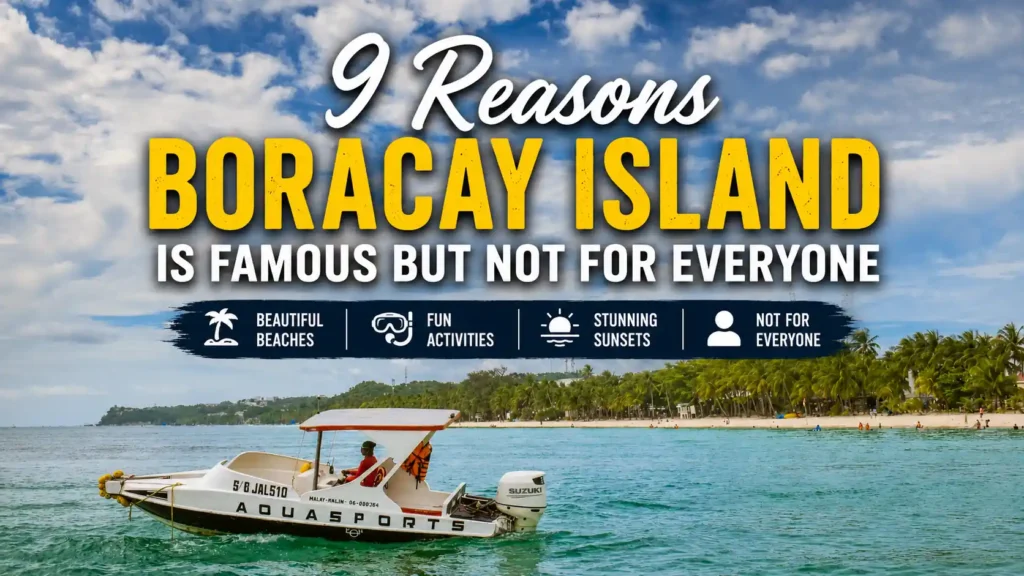
Boracay Island is one of the Philippines’ most popular beach destinations, known for its 4-kilometer White Beach, clear water, water activities, and famous sunsets. In 2026, Boracay Island remains a strong choice for travelers who want beautiful beaches, modern resorts, and plenty of things to do, but the best experience depends on your budget, travel dates, and tolerance for crowds.
The island offers everything from quiet beach walks and island hopping to nightlife, diving, and luxury stays. With improved environmental rules and controlled tourism, it is cleaner and better managed than it was before its major rehabilitation.
Where Is Boracay Island
Boracay sits in the Western Visayas region of the Philippines, wedged between the larger islands of Panay and Mindoro. Administratively, the island belongs to the Malay municipality in Aklan province. Two gateway airports serve visitors: Caticlan’s Godofredo P. Ramos Airport, just a short boat ride from the shore, and Kalibo International Airport, roughly ninety minutes away by land. From Manila, flights land in either airport in about an hour, making the island reachable in a single day of travel.
What Is Boracay Known For
Boracay built its global reputation on White Beach, a four-kilometer stretch of sand so fine it feels like flour underfoot. Beyond the beach, the island has landed on more than one international “best beaches” reader poll over the years. Sunsets here draw a nightly crowd along the shoreline. Water sports, a lively food scene, and an easy, walkable layout round out the reputation.
Best Places to Visit in Boracay
Boracay offers more than its famous White Beach, with scenic viewpoints, quieter shores, water sports, shopping, and iconic landmarks spread across the island. Most attractions are easy to reach, making it possible to explore several of them during a short stay. White Beach remains the headline attraction, split into three distinct stations. Beyond it, a handful of spots round out a well-rounded visit:
- Puka Shell Beach, quieter and less developed, on the island’s northern tip
- Mount Luho, the highest point, with a 360-degree island viewpoint
- Bulabog Beach, the kitesurfing and windsurfing hub on the eastern shore
- D’Mall, the open-air shopping and dining strip near Station 2
- Willy’s Rock, a small islet accessible on foot at low tide
Plan Your Perfect Boracay Adventure With These Top Places. Read more in 10 Boracay Island Places to Visit That Prove Boracay Is More Than One Beach.
Things to Do in Boracay
Boracay offers far more than its famous white sand and clear water. From water sports and island activities to local food and nightlife, there are plenty of ways to fill a full day on the island.
Beyond lounging on the sand, Boracay keeps visitors busy from sunrise to well past sunset. Paddleboarding and kayaking suit calm mornings, while sunset sailing on a traditional paraw boat has become something of a signature experience. Food tours through the local carinderias give a taste of Filipino home cooking away from resort menus. Evening fire-dancing shows line the beachfront most nights, drawing crowds who linger long after dinner.
Explore the Best Things to Do on Your Boracay Trip. Read more in 24 Things to Do in Boracay Before Your Flight Makes You Regret It.
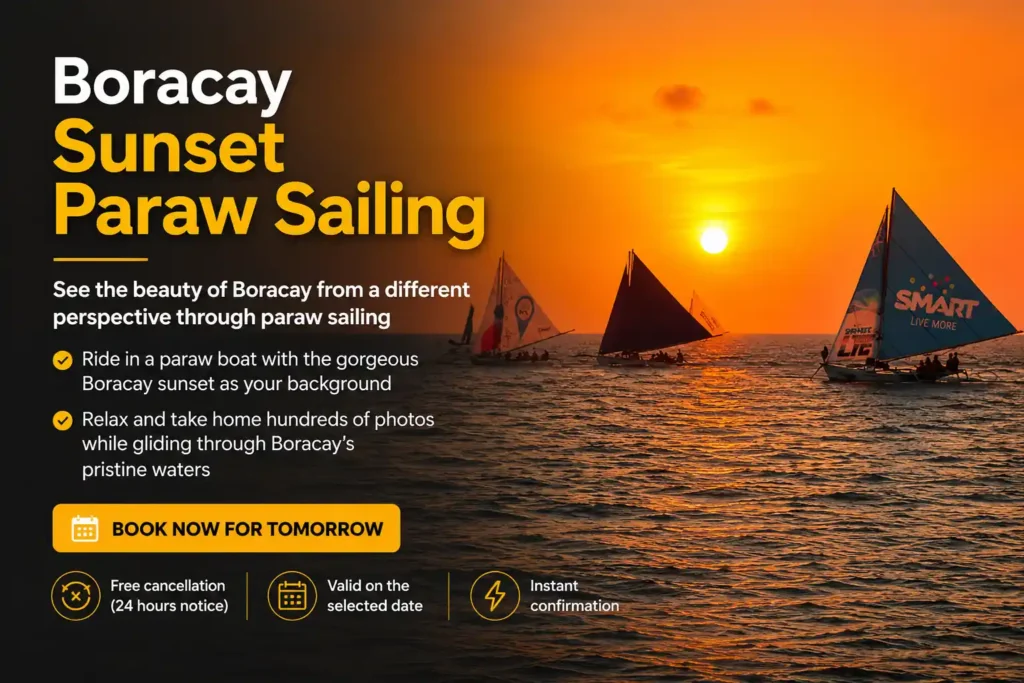
For a really beautiful Boracay evening, take a paraw out around sunset. It’s peaceful, fun, and gives you some amazing views without taking up much of your day.
Top Activities in Boracay
For travelers looking for more than beaches and sunsets, Boracay also offers several adventure activities on land, in the air, and on the water. Most experiences are easy to book locally, with prices varying by season and operator.
• Parasailing above the bay, roughly $45–$60 USD for 10–12 minutes
• Cliff jumping at Ariel’s Point, usually bundled with a boat tour
• ATV rides across the island’s hilly interior
• Helmet diving for a beginner-friendly underwater walk
• Zip-lining near Bulabog Beach with ocean views
Find the Must-Try Experiences for Your Boracay Trip. Read more in Best Indoor Activities in Boracay When It Rains.
Discover Exciting Adventures and Relaxing Experiences in Boracay. Read more in Activities in Boracay and Prices That Actually Match What You Pay on Arrival.
These run through licensed operators along the beachfront, and prices are almost always negotiable outside peak season.
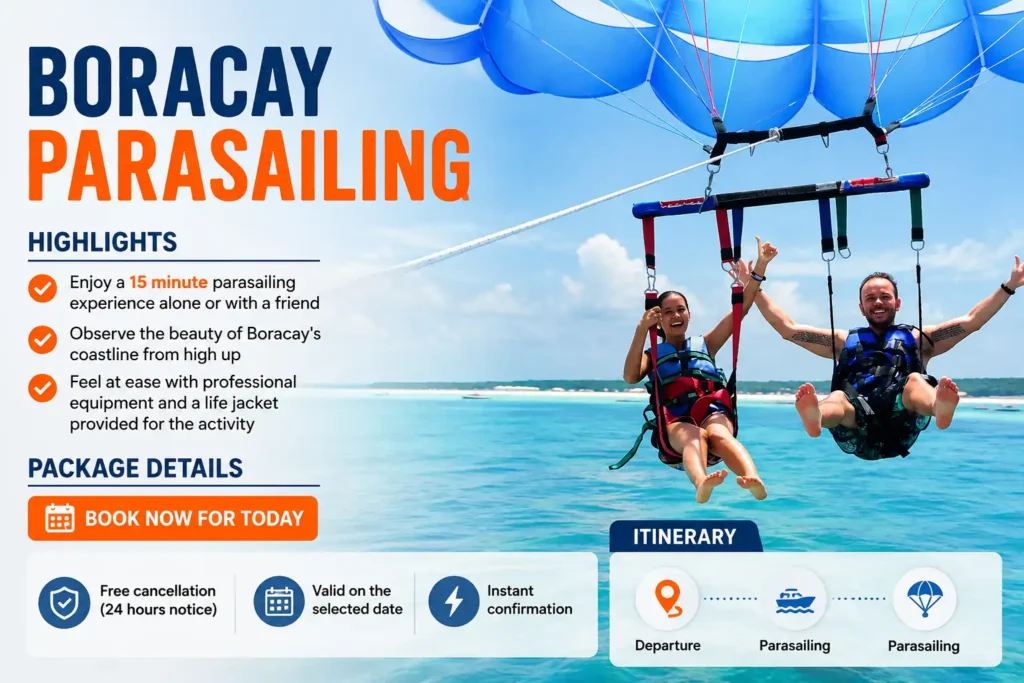
Want to add a little adventure to your Boracay trip? This parasailing ride gives you gorgeous coastline views without taking up much of your day.
How to Get to Boracay
Most international travelers reach Boracay through Manila or Cebu, connecting onward by domestic flight. This table breaks down the gateway routes so you can pick the faster or cheaper option.
| Gateway | Flight Time from Manila | Transfer to Boracay | Total Door-to-Door |
| Caticlan Airport | ~1 hour | 5-15 min | ~1.5-2 hours |
| Kalibo Airport | ~1 hour | 1.5-2 hours | ~3-3.5 hours |
| Manila via Batangas | N/A (by road) | ~10-12 hours | Full day, budget option |
Once you land, tricycles and boats handle the final stretch. Budget travelers can also reach the island by bus and ferry from Manila via Batangas, though that route eats up most of a travel day.
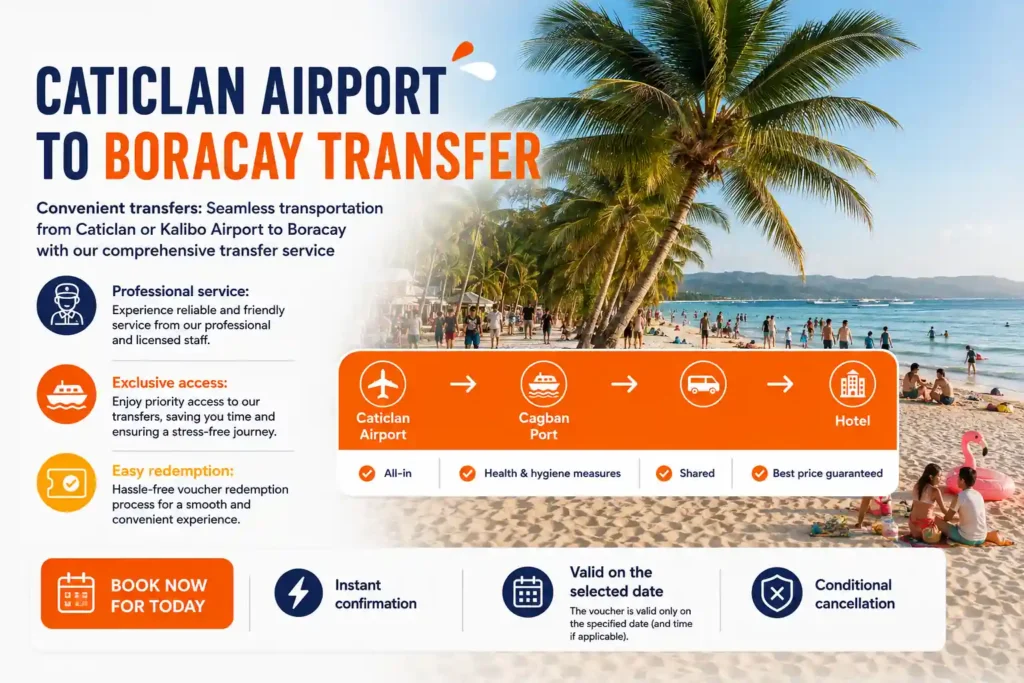
Getting to Boracay involves a few different transfers, but this package keeps them all together. It’s an easy way to go from Kalibo or Caticlan Airport straight to your hotel.
Getting Around Boracay
Getting around Boracay is simple because the island is compact and most major areas are easy to reach without private transport. Your main options are walking, tricycles, and e-trikes, depending on the distance and where you are staying.
Boracay has no rental cars, and only a handful of official routes exist for motorized transport. Tricycles and e-trikes handle most point-to-point trips, charging around 100–150 pesos ($2–$3 USD) across the island. Walking remains the easiest way to move along White Beach, since the whole stretch runs about 20–25 minutes end to end.
Find the Best Transport Options for Exploring Boracay. Read more in How to Get to Boracay Island Without Wasting a Travel Day.
Planning a Trip to Boracay? Check the Entrance Fee First. Read more in Boracay Island Entrance Fee and Rules Aren’t as Simple as One Flat Price.
Boracay Hotels: Where to Stay
White Beach is divided into three stations, and each offers a different mix of prices, atmosphere, and hotel options. Station 1 is generally the most upscale, Station 2 puts you close to restaurants and nightlife, while Station 3 is usually quieter and more budget-friendly. The table below compares them to help you choose the best area for your budget and travel style.
| Station | Vibe | Best For | Price Range (per night) |
| Station 1 | Quiet, upscale, wide beach | Couples, luxury travelers | $80-$300+ |
| Station 2 | Busy, D’Mall, nightlife | First-timers, nightlife fans | $40-$150 |
| Station 3 | Budget-friendly, quieter | Backpackers, families | $20-$70 |
Find Your Ideal Boracay Hotel Before You Book. Read more in 7 Boracay Island Hotels That Feel Way More Expensive Than They Are.
Planning a Luxury Escape? Discover Boracay’s Top Hotels. Read more in 8 Boracay Luxury Hotels From Budget Luxury to Ultra Luxury.
What Is the Boracay Environmental Fee in 2026?
As of 2026, foreign visitors pay a one-time 300-peso ($5 USD) environmental fee plus a 150-peso ($2.75 USD) terminal fee each way, collected at Caticlan Jetty Port. Filipino tourists pay a reduced 150-peso fee, and children five and under are exempt. The Provincial Government of Aklan now processes most payments digitally through the Boracay iPass system.
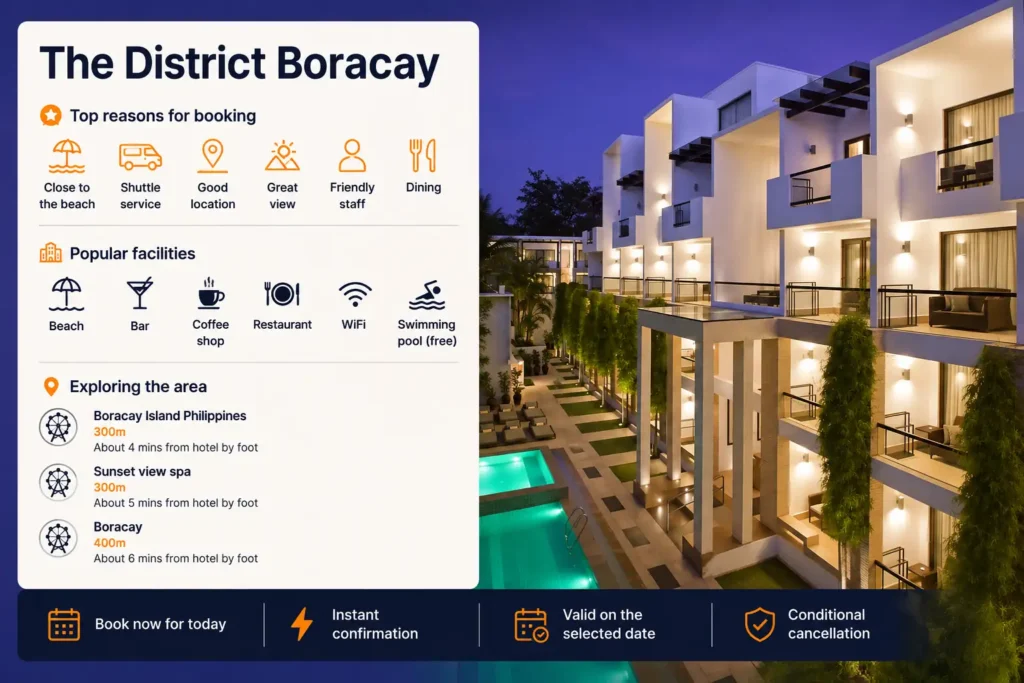
The District Boracay looks like a really comfortable choice for staying around Station 2. It’s close to the beach, has a great location, and the rooms start at around US$85 per night.
Boracay Philippines Accommodation
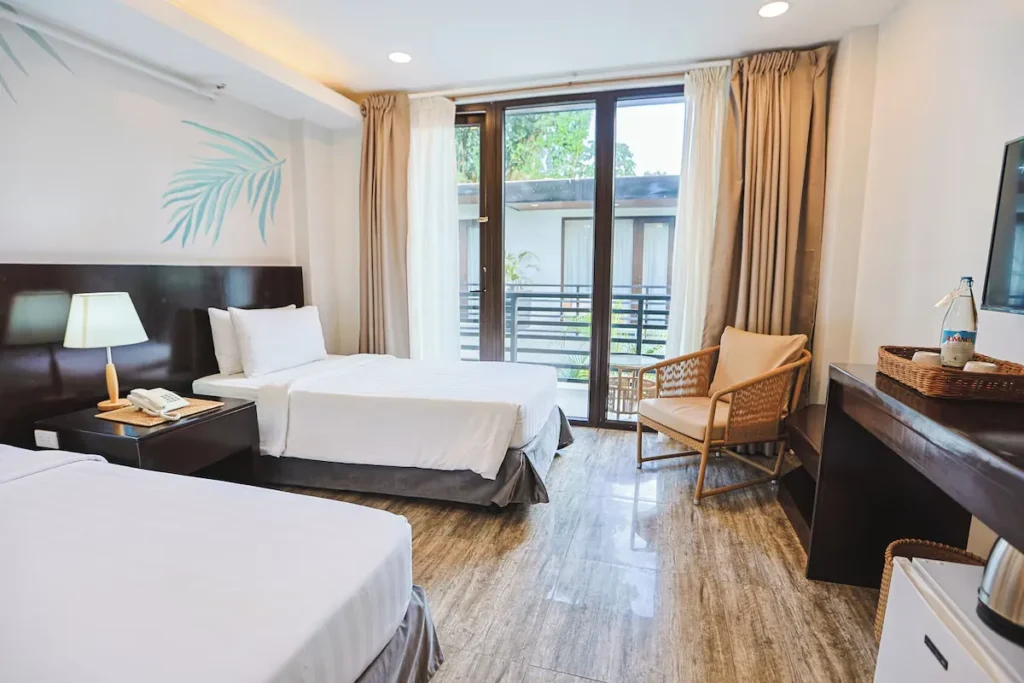
Accommodation in Boracay Philippines ranges from budget hostel dorms starting at around $15 a night to five-star resort suites costing more than $400. Mid-range boutique hotels, usually priced between $60 and $120 per night, often offer the best balance of comfort, location, and value. For December and January, book at least one month in advance, as affordable rooms and well-located hotels can fill up quickly during peak season.
Boracay Food You Need to Try
Boracay’s food scene runs from beachfront barbecue stalls to fine dining with ocean views. Local specialties worth seeking out include chicken inasal, grilled seafood by the kilo, and halo-halo for dessert. Talipapa Market lets visitors buy fresh catch and have it grilled to order nearby, often for less than a restaurant plate.
Vegetarian and vegan options have expanded noticeably, especially around Station 2. Street food lovers can also find grilled skewers, fresh fruit shakes, and Filipino snacks at small stalls across the island. For the best value, eat at local restaurants away from the busiest beachfront areas, where prices are usually lower and portions are often more generous.
Explore Boracay’s Must-Try Dishes and Local Flavors. Read more in Boracay Island Food That Locals Eat Away from the Tourist Traps.

Looking for somewhere a little different for dinner? Kasbar brings Moroccan and Mediterranean flavors right to Station 1, with the beach and sunset making the whole experience even better.
Best Boracay Restaurants
A handful of spots consistently earn repeat visits from travelers and locals alike:
• Sunny Side Café, known for hearty all-day breakfasts
• Smoke, a beachfront barbecue spot with nightly live grilling
• True Food, a reliable vegetarian and vegan kitchen
• Aria, upscale Italian with a Station 1 sunset view
Reservations help during peak months, especially for beachfront tables at sunset. Prices vary widely, with casual local meals costing far less than beachfront restaurants and resort dining. For better value, explore restaurants away from the busiest parts of White Beach and compare menus before choosing a table.
Boracay Bars Worth Visiting
Station 2 holds most of the island’s bar scene, with beachfront lounges spilling onto the sand by early evening. Long-running beach clubs draw large crowds for sunset happy hour, and cocktails typically run $4-$8 USD, noticeably higher than mainland rates.
Quieter bars near Station 1 suit travelers who want a drink without the noise. Many venues also offer live music, DJs, and fire performances after sunset. Happy hour is usually the best time to find lower drink prices and enjoy the beach before the evening crowds arrive.
Explore Boracay’s Top Bars for Drinks, Music, and Nightlife. Read more in Boracay Bars That Look the Same but Hit Completely Different.
Boracay Nightlife Guide
Nightlife centers around Station 2’s main strip, where beach clubs run fire shows, live bands, and DJ sets well past midnight. Station 1 stays noticeably calmer, favoring lounge bars over dance floors, and Wednesday and Saturday nights typically draw the biggest crowds islandwide.
Happy hours and sunset drinks usually start in the late afternoon, making it easy to move from the beach straight into the evening scene. Prices vary widely, with beachfront venues generally costing more than smaller bars away from the main strip.
Plan the Perfect Night Out on Boracay Island. Read more in Boracay Island Nightlife That Changes Completely Station by Station.
Best Time to Visit Boracay
Weather shapes almost everything about a Boracay trip, from beach conditions to hotel prices. This table breaks down what each season actually looks like on the ground.
| Season | Months | Weather | Best For |
| Dry Season | Nov-May | Sunny, low rainfall | Best overall conditions |
| Peak Season | Dec-Feb | Driest, busiest | Book 1-2 months ahead |
| Wet / Green Season | Jun-Oct | Rain showers, occasional typhoons | Fewer crowds, lower rates |
December through February brings the best combination of dry weather and manageable heat, though it’s also the busiest and priciest stretch of the year.
Learn When Boracay Has the Best Weather and Beach Conditions. Read more in Best Time to Visit Boracay Depends on More Than Just Sunshine.
Island Hopping Tours in Boracay
A standard island-hopping tour covers Crystal Cove, Crocodile Island, and Puka Beach in a half-day trip, typically $15-$25 USD per person including snorkeling gear. Private charters cost more, usually $80-$150 USD for a small group, but allow a flexible schedule. Most tours depart early morning, before the afternoon wind picks up. Weather and sea conditions can affect the route, especially during the rainy season. Booking through licensed operators is recommended to avoid unregistered boats and unexpected extra fees.
Discover the Best Island-Hopping Tours in Boracay. Read more in Boracay Island Hopping Tour That Costs Less Than You Think.
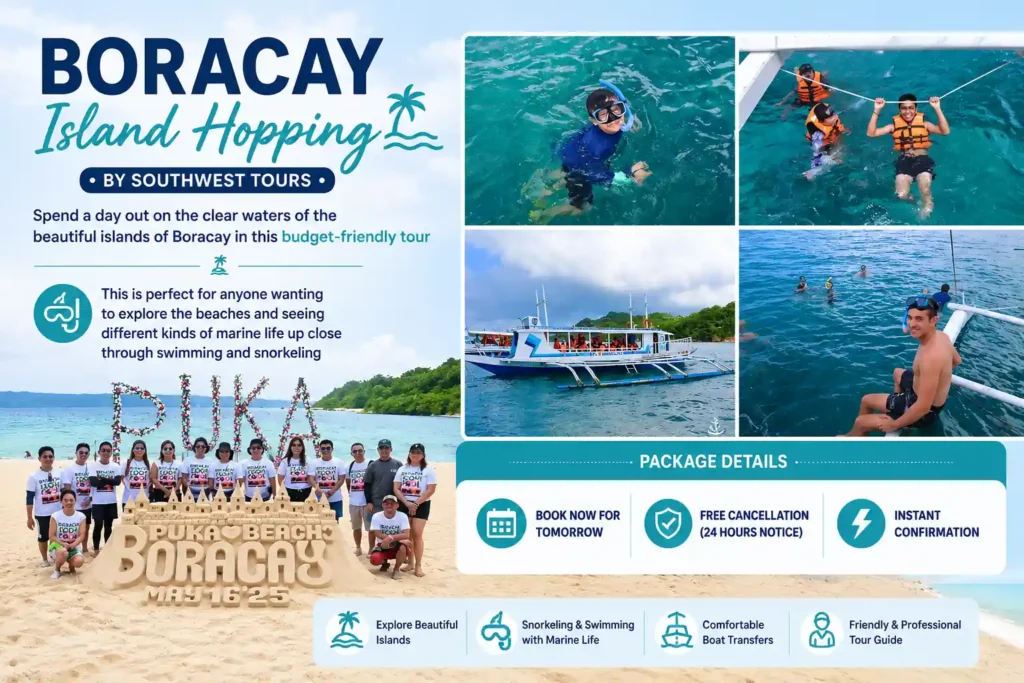
I’d definitely put this island-hopping tour on your Boracay list. You get to see some beautiful spots, snorkel in clear water, and enjoy a good lunch along the way.
Snorkeling in Boracay
Crystal Cove and the reef near Balinghai Beach offer the clearest snorkeling, with visibility often exceeding 15 meters on calm days. Gear rental runs around $5–$8 USD, and fish feeding is officially discouraged to protect the reef. Morning trips, before boat traffic picks up, consistently offer the calmest water.
Water shoes are useful around rocky reef areas and can make entry into the water safer and more comfortable. For the best experience, choose a guided trip that follows local marine protection rules and avoids damaging coral.
Find the Best Places to Snorkel Around Boracay Island. Read more in Snorkeling in Boracay With 7 Spots From Beginner to Advanced.
Scuba Diving in Boracay
Over 20 dive sites surround the island, from shallow reef walls suited to beginners to deeper sites like Yapak, known for larger pelagic sightings. An introductory dive typically costs $40-$60 USD, while a full PADI Open Water certification runs $350-$450 USD over three to four days. Dive shops cluster around Station 1 and Station 3.
Explore Boracay’s Incredible Underwater World. Read more in Boracay Island Scuba Diving Has 25+ Sites That Beginners and Pros Both Love.
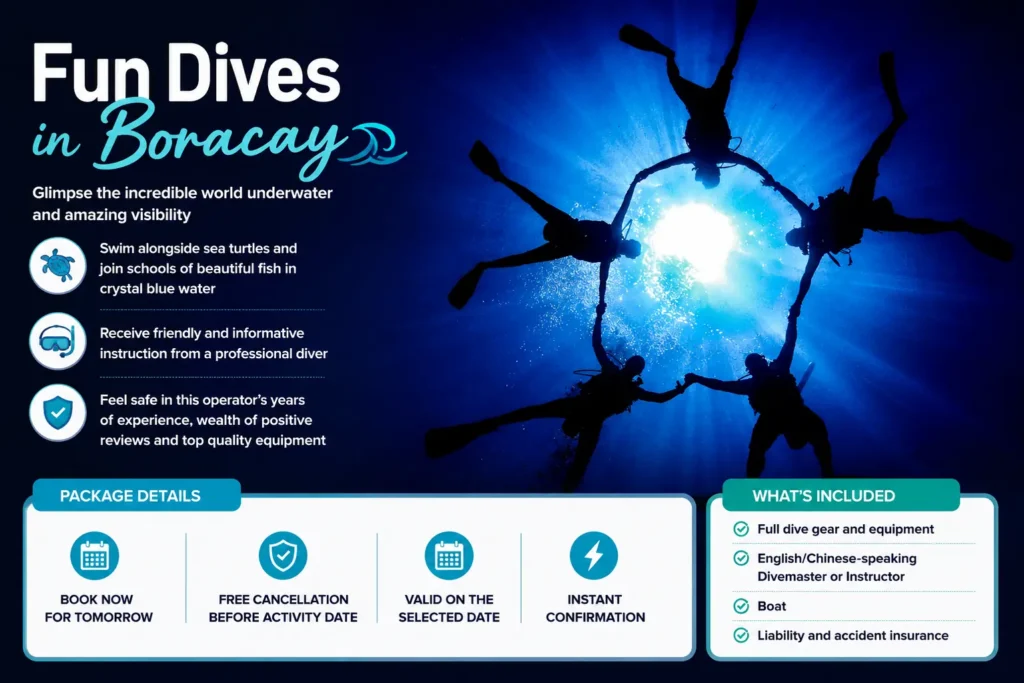
Want to see a whole different side of Boracay? This fun dive takes you beneath the blue to explore colorful coral, marine life, and crystal-clear water.
Boracay Sunset
Station 1 offers the widest, least obstructed sunset views, which is why it draws the biggest evening crowds. Paraw sailing tours time their return around golden hour, giving passengers an unobstructed water-level view, and Willy’s Rock becomes a popular photo backdrop as the light turns orange.
Arriving thirty minutes early secures a decent spot on the sand. For a quieter experience, walk farther from the busiest sections of White Beach before sunset. Most evenings, the sky changes quickly from bright gold to deep orange and pink, making the final minutes before sunset the best time for photos.
Discover the Perfect Time and Place for a Boracay Sunset. Read more in 7 Boracay Sunset Spots That Look Postcard Perfect but Feel Even Better Live.
How Much Does a Boracay Trip Cost Per Day?
A realistic daily budget runs $40-$60 USD for budget travelers covering a hostel bed, street food, and local transport. Mid-range travelers should plan for $100-$150 USD a day, including a boutique hotel and restaurant meals, while luxury stays with resort dining easily exceed $250 USD.
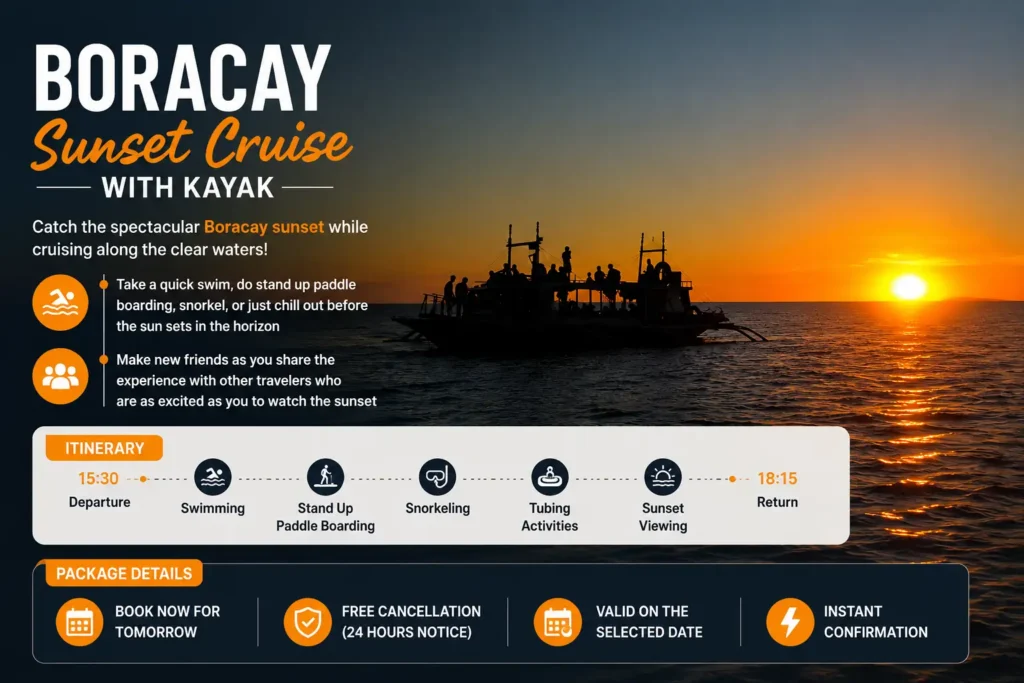
A sunset cruise is already a beautiful way to spend the evening, but this one adds kayaking, snorkeling, paddle boarding, and even a mermaid-tail photo op.
Day Trips From Boracay
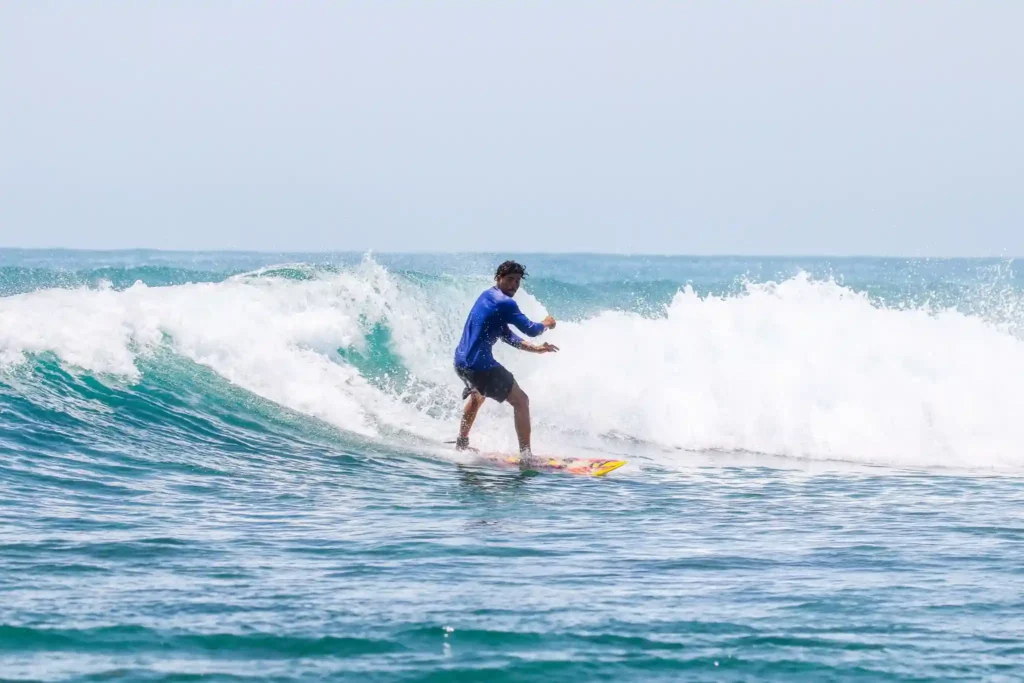
Tablas Island, roughly ninety minutes away by boat, offers a quieter alternative with fewer tourists and its own airport for onward travel. Carabao Island appeals to surfers chasing bigger swells. Both trips need a full day given limited boat departures, so travelers with only a few days on Boracay may find they cut too deeply into beach time. Check boat schedules and weather conditions before leaving, as crossings can be affected by rough seas. For a short stay, these islands are best treated as optional day trips rather than must-see stops.
Ready to Explore Beyond the Island? Read more in Day Trips From Boracay That Sound Similar but Feel Completely Different.
Places to Visit Near Boracay
Panay Island, just across the strait, holds Kalibo’s Ati-Atihan festival grounds and several waterfalls worth combining with a trip. Iloilo City, roughly two hours further south, offers colonial architecture and a distinct food scene. Guimaras Island, known nationally for its mangoes, makes an easy add-on beyond the beach.
Antique Province is another option for travelers who want hot springs, mountain scenery, and quieter coastal areas. These nearby destinations can turn a short Boracay Island stay into a longer trip with more culture, nature, and local food.
Things to Buy in Boracay
D’Mall and the local markets stock souvenirs travelers actually use back home:
- Dried mango, a Philippine specialty sold by the bag
- Capiz shell crafts and jewelry made from local shells
- Handwoven bags and beachwear from local vendors
- Barako coffee beans from nearby Batangas and Aklan
- Locally made coconut oil and soap
Bargaining is expected at market stalls, less so at fixed-price boutiques.
Discover the Best Things to Buy in Boracay. Read more in Things to Buy in Boracay That Locals Buy for Half What Tourists Pay.
Boracay Weather Guide
Boracay sits within the typhoon belt, and the PAGASA weather bureau tracks the wet season closely between June and November. Temperatures hover between 25–32°C (77–90°F) year-round, with humidity peaking during the rainy months. Typhoon activity, while less frequent than in northern Luzon, can still disrupt boat schedules for a day or two in September and October.
The driest and sunniest conditions usually arrive between December and May, making this the busiest period for beach trips. Travelers visiting during the wet season can often find lower hotel rates and fewer crowds, but should keep their plans flexible around changing weather conditions.
Plan Your Trip Around Boracay’s Best Weather Conditions. Read more in Boracay Island Weather That Decides Your Perfect Trip Timing.
Boracay Safety Tips
Boracay ranks among the safer tourist destinations in the Philippines, with visible tricycle marshals, lifeguards on main beaches, and a task force monitoring the shoreline. The Boracay Inter-Agency Task Force enforces environmental and safety ordinances islandwide, including fines for littering.
Standard precautions still apply: watch belongings on crowded sections, avoid unlicensed water-sport operators, and check swell conditions before swimming in the wet season. Keep emergency contacts and your hotel address saved on your phone, especially if you are traveling at night. For water activities, confirm prices and safety equipment before paying, and follow all local weather warnings.
Find Out What to Know About Safety Before Visiting Boracay. Read more in Boracay Island Safety That Every Traveler Should Know Before Booking.
Boracay Itinerary: How Many Days Do You Need
Three full days covers the essentials: one for White Beach and sunset, one for island hopping and snorkeling, and one for Puka Beach or Mount Luho. Five to seven days suits travelers adding a diving certification or a day trip to Tablas or Guimaras. Beyond a week usually means slowing down rather than adding new activities.
Is Boracay Worth Visiting?
Boracay earns its reputation, even with the fees, the crowds, and the higher-than-average prices by Philippine standards. What makes it worth the trip is the consistency: reliably clear water, dependable infrastructure, and a sunset that genuinely lives up to the photos. Visitors who plan around the seasons, book early, and budget realistically for fees and food tend to leave satisfied rather than overwhelmed. It isn’t the cheapest island in the Philippines, but for a first Philippine beach trip in 2026, it remains one of the most reliable choices around.
Planning a Boracay Trip? Find Out If It’s Worth It. Read more in Is Boracay Worth Visiting or Is It Too Crowded Now?.
FAQs About Boracay
What are the best things to do in Boracay?
Sunset sailing, island hopping to Crystal Cove and Puka Beach, snorkeling, and evening walks along White Beach top most visitors’ lists.
How to get to Boracay Island?
Fly into Caticlan’s Godofredo P. Ramos Airport or Kalibo International Airport from Manila or Cebu, then take a short tricycle and boat transfer to reach the island.
What is the best time to visit Boracay?
December through February offers the driest weather and calmest seas, though it’s also the busiest and priciest stretch. April and May bring similar weather with smaller crowds.
Is Boracay worth visiting?
Yes, for most travelers. The beach quality and range of activities generally outweigh the entrance fees and crowds, especially outside the December-February peak.
Is Boracay Island safe?
Yes, Boracay is generally safe for tourists, with visible security presence and low rates of violent crime. Standard precautions around valuables and swimming still apply.
How many days do you need in Boracay?
Three days covers the main highlights comfortably. Add diving certification or a nearby day trip, and plan for five to seven days instead.
What are the best places to visit in Boracay?
White Beach, Puka Shell Beach, Mount Luho, and Bulabog Beach cover the island’s main highlights, from postcard sand to the best viewpoint.
How to get around Boracay Island?
Tricycles and e-trikes cover the main road for $2-$3 USD per ride, while walking remains easiest along White Beach itself.



3 Responses